Shop on Lazada
White Castle products
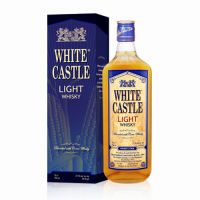
White Castle Light Whisky with free Box 700ml.
₱172.00
Buy on Lazada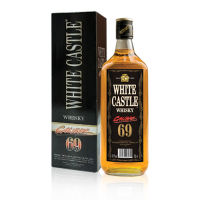
White Castle Calibre 69 - 700ml
₱223.00
Buy on Lazada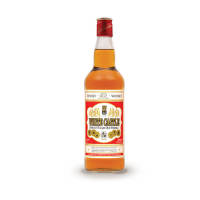
White Castle 5 Years Old Whisky 700ml.
₱329.00
Buy on Lazada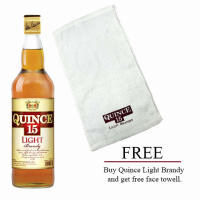
Quince Light Brandy 700ml Bundle with FREE Towel – Refreshing & Rewarding
₱165.00
Buy on Lazada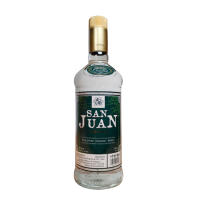
San Juan Lambanog (Philippine Coconut Spirit) 750ml.
₱1,250.00
Buy on Lazada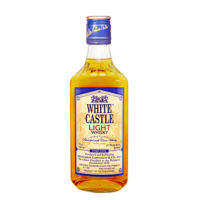
White Castle Light Whisky 350ml.
₱89.00
Buy on Lazada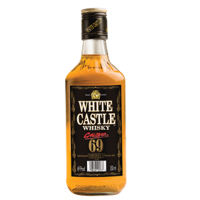
White Castle 69 Whisky 350ml.
₱118.00
Buy on Lazada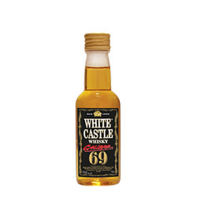
White Castle 69 Whisky Miniature 50ml
₱108.00
Buy on LazadaAbout White Castle
White Castle is an American fast-food restaurant chain best known for its small, square hamburgers called Sliders. Founded in 1921 in Wichita, Kansas, it is widely regarded as the first fast-food hamburger chain in the United States and one of the businesses that helped establish the modern fast-food industry.1
Unlike many modern fast-food companies, White Castle remains family-owned and has traditionally emphasized company-operated restaurants rather than franchising. The brand is particularly associated with its distinctive white, castle-inspired restaurants, inexpensive small hamburgers, “sack” ordering, and a highly standardized approach to food preparation.1
Infobox
| Category | Information |
|---|---|
| Brand name | White Castle |
| Industry | Fast food / Quick-service restaurants |
| Founded | 1921 |
| Founders | Walter “Walt” Anderson and E. W. “Billy” Ingram |
| First location | Wichita, Kansas, U.S. |
| Headquarters | Columbus, Ohio, U.S. |
| Signature product | Original Slider |
| Specialty | Small square hamburgers |
| Ownership | Ingram family |
| Brand concept | Sliders, value, consistency, nostalgia |
| Famous slogan | “The Crave Is a Powerful Thing” |
| Industry significance | Pioneer of standardized American fast food |
History
Origins
The story of White Castle begins with Walter Anderson, a short-order cook who began selling hamburgers in Wichita, Kansas, in 1916. Anderson experimented with ways to make hamburgers smaller, faster to cook, and easier to serve. His method of cooking thin beef patties with onions on a hot griddle became the foundation of the White Castle product.
In 1921, Anderson partnered with E. W. “Billy” Ingram, a businessman who supplied the financial and marketing expertise. Together they opened the first White Castle restaurant in Wichita. The company began with an unusually simple proposition for its time: inexpensive, standardized hamburgers that could be prepared rapidly and served consistently.1
The original hamburger sold for just five cents. The small square burgers eventually became known as Sliders, and customers frequently purchased them in large quantities “by the sack.”
Why “White Castle”?
The name and architecture were carefully chosen to make hamburgers appear clean, respectable, and trustworthy.
At the time, hamburgers did not necessarily have the wholesome reputation they have today. Concerns about meat quality and sanitation made some consumers skeptical of hamburger stands. White Castle responded by creating restaurants that looked unusually clean and orderly, using white exteriors, castle-like architecture, stainless-steel interiors, and uniformed employees.
The company’s castle appearance became one of the earliest examples of restaurant branding through architecture.
White Castle has said that Ingram chose the name partly to communicate cleanliness and modeled the restaurant’s appearance on Chicago’s Water Tower.
The birth of the fast-food model
White Castle’s importance goes far beyond its hamburgers.
The company helped establish many principles that later became fundamental to the fast-food industry:2
- Standardized food preparation
- Limited menus
- High-volume production
- Fast service
- Uniform restaurant design
- Consistent portion sizes
- Highly controlled employee procedures
- Take-out food
- Low prices
- Centralized purchasing and supply systems
The kitchen was organized almost like an assembly line. Employees performed specialized tasks, while customers could often see the food being prepared. This approach reflected the broader American fascination with industrial efficiency during the 1920s.
In this sense, White Castle was not simply a hamburger restaurant. It helped transform food preparation into a standardized production system.
Expansion
White Castle expanded rapidly during the 1920s and 1930s. The company opened restaurants outside Wichita and eventually established a presence across several states. By 1931, White Castle had reportedly expanded to 116 locations in 11 states.
The company also developed systems for controlling the design and construction of its restaurants and for supplying its growing chain with standardized materials. This was an important step toward the modern concept of a national restaurant chain.2
One particularly unusual aspect of White Castle’s strategy was its resistance to franchising. Rather than relying heavily on independent franchisees, the company maintained direct control over its restaurants. That approach contributed to the consistency of its brand and operating system.
The Slider
The Original Slider is the central product of the White Castle identity.
It is a small, square hamburger consisting traditionally of a thin beef patty cooked with onions, served on a soft bun and accompanied by a pickle. White Castle describes its current Original Slider as using a 100% USDA beef patty with onions and pickle.
The small size was not merely a novelty. It was part of White Castle’s original business model: small burgers could be produced rapidly, sold inexpensively, and purchased in multiples.
That is why White Castle customers are often called “Cravers”, and why the company developed products such as the Crave Case, a large package designed to hold multiple Sliders.
Important innovations
White Castle introduced or popularized a number of ideas that became influential in American restaurant culture.
Carry-out
In 1927, White Castle promoted the concept of buying hamburgers to take away, using the famous phrase “Selling ’em by the Sack.”
This helped establish the idea that restaurant food did not necessarily have to be eaten inside the restaurant.
Standardized packaging
White Castle developed individual boxes for transporting its hamburgers. Packaging became an important part of the company’s operating system and brand identity.
Newspaper advertising
The company became an early pioneer in restaurant advertising, including newspaper coupons. In 1933, it advertised five hamburgers for ten cents.
Perforated patties
In 1947, White Castle introduced the distinctive practice of putting five holes in the hamburger patty. The holes allowed the thin patty to cook more rapidly and evenly. The design became a recognizable characteristic of White Castle’s hamburger.
Drive-through service
White Castle introduced drive-thru service in 1980, adapting its historic take-out concept to automobile-oriented American food culture.
Menu evolution
White Castle originally had an extremely limited menu. Its early offerings consisted primarily of hamburgers, coffee, Coca-Cola, and apple pie.
Over time, however, the company expanded beyond the original hamburger.
The modern menu includes:
- Original Sliders
- Cheese Sliders
- Double Cheese Sliders
- Chicken Sliders
- Fish Sliders
- Breakfast Sliders
- Chicken Rings
- French fries and other sides
- Hash Brown Nibblers
- Desserts
- Soft drinks
- Combo meals
The company has also experimented with alternative proteins. In 2018, White Castle became the first fast-food chain to introduce the Impossible Slider, using plant-based meat.
White Castle and American culture
White Castle occupies an unusual place in American popular culture. While much larger chains such as McDonald’s eventually became internationally dominant, White Castle retained a strong cult following.
The brand’s distinctive combination of:
- tiny hamburgers,
- white castle-shaped restaurants,
- inexpensive bulk orders,
- late-night eating,
- nostalgia,
- and regional availability
has given it a cultural identity quite different from conventional hamburger chains.
The word “Crave” became central to White Castle’s branding. The company refers to its customers as Cravers and describes the desire for its food as “The Crave.”
White Castle in popular media
White Castle has appeared in American films, television, music, and popular culture.
One of its most famous appearances came through the 2004 comedy film Harold & Kumar Go to White Castle. The movie revolves around two friends’ obsessive journey to find White Castle hamburgers, turning the restaurant into an important pop-culture symbol.
The company’s own history also notes appearances and references involving Saturday Night Fever, the Beastie Boys, and other cultural figures.
The 2004 film was particularly significant because it introduced the White Castle brand to audiences who might not have lived near one of its restaurants.
Family ownership
One of White Castle’s most distinctive corporate characteristics is its continued family ownership.
Billy Ingram’s family retained control of the business, with ownership and leadership passing through generations. The company describes itself as a family-owned business and notes that the fourth generation of the Ingram family has continued to oversee it.1
This makes White Castle unusual compared with many major American fast-food chains, which became publicly traded corporations or large franchise organizations.
Corporate headquarters
White Castle is headquartered in Columbus, Ohio.
Although the company was born in Kansas, its restaurant footprint eventually shifted away from its original home state. The Kansas Historical Society notes that White Castle restaurants are no longer located in Kansas and are concentrated primarily in the Midwest and eastern United States.
Geographic presence
White Castle is primarily a regional American chain, rather than a globally ubiquitous fast-food company.
Its restaurants are concentrated in parts of the Midwest and Eastern United States. This limited geographic footprint has actually contributed to the brand’s cult status: people who grew up with White Castle often have a strong emotional connection to it, while people from areas without White Castle may encounter it primarily through popular culture.
The company itself says it is seeking additional sites for expansion within its existing operating areas as it approaches its centennial.
Major historical milestones
| Year | Event |
|---|---|
| 1916 | Walter Anderson begins selling hamburgers in Wichita |
| 1921 | Anderson and Billy Ingram establish White Castle |
| 1921 | First White Castle restaurant opens in Wichita |
| 1927 | Carry-out/”Selling ’em by the Sack” concept promoted |
| 1931 | Chain reaches 116 locations in 11 states |
| 1933 | Early newspaper coupon campaign |
| 1947 | Five-hole perforated hamburger patty introduced |
| 1961 | White Castle sells its first billion hamburgers |
| 1962 | Cheeseburger added to the menu |
| 1977 | White Castle appears in Saturday Night Fever |
| 1980 | Drive-thru service introduced |
| 1987 | Frozen White Castle Sliders introduced for retail sale |
| 1996 | WhiteCastle.com launches |
| 2001 | Crave Case introduced |
| 2004 | Harold & Kumar Go to White Castle released |
| 2012 | Online ordering introduced |
| 2013 | Crave Mobiles introduced |
| 2018 | Impossible Slider introduced |
| 2021 | White Castle celebrates its 100th anniversary |
The company’s official history provides the detailed chronology behind these milestones.1
Business philosophy
White Castle’s original philosophy can be summarized around several principles:
Consistency: Customers should receive essentially the same product regardless of location.
Efficiency: Food should be produced rapidly using a carefully designed system.
Value: The small size of the Slider allows customers to purchase multiple burgers at once.
Cleanliness: The restaurant’s architecture and operating procedures were deliberately designed to communicate cleanliness and trust.
Brand recognition: The white castle architecture, square hamburger, paper packaging, and “Crave” terminology make the restaurant immediately recognizable.
These principles were remarkably influential. Historians have described White Castle as an important precursor to the standardized production and service systems later used by chains such as McDonald’s.
Relationship to McDonald’s and modern fast food
It is important to distinguish White Castle’s historical importance from its present-day size.
McDonald’s ultimately became vastly larger and more globally influential as a corporation. However, White Castle appeared decades earlier and developed many of the fundamental concepts associated with modern fast food.2
White Castle demonstrated that a restaurant could:
- Produce food using standardized procedures.
- Maintain consistent portions.
- Design restaurants around a recognizable corporate identity.
- Purchase and distribute standardized supplies.
- Serve large volumes of inexpensive food quickly.
- Build a chain across multiple cities.
- Market a particular food product as a recognizable national brand.
For this reason, White Castle is frequently described as a pioneer of the American fast-food industry.
Brand identity
Today, White Castle’s identity is built around heritage and nostalgia as much as food.
Its key brand assets include:
- The white castle-shaped restaurant
- The square Slider
- The five-hole beef patty
- Grilled onions
- Pickles
- “Sack” and Crave Case packaging
- The term Craver
- The concept of “The Crave”
- Its 1921 heritage
- Family ownership
- Its strong association with American fast-food history
The brand therefore occupies a somewhat unusual position: it is simultaneously a functioning fast-food restaurant, a historic American institution, and a pop-culture icon.
Legacy
White Castle’s greatest contribution may not be the Slider itself, but the system behind the Slider.
Before White Castle, hamburgers were commonly associated with inexpensive stands and informal food service. White Castle helped turn the hamburger into a standardized, branded, repeatable commercial product.
Its white buildings communicated cleanliness. Its kitchens introduced standardized production. Its small burgers allowed rapid cooking and inexpensive sales. Its packaging enabled take-out. Its advertising created brand recognition. Its chain structure demonstrated that the same restaurant concept could be reproduced across cities.
In doing so, White Castle helped create the basic template from which the modern American fast-food industry developed.
Summary
White Castle is one of the foundational companies in American fast-food history. Established in Wichita, Kansas, in 1921 by Walter Anderson and Billy Ingram, the company transformed the humble hamburger into a standardized, inexpensive, highly recognizable commercial product.1
Its Original Slider became its signature food, while its white castle architecture became one of America’s earliest examples of strong restaurant branding. Through standardized kitchens, take-out service, packaging, advertising, centralized operations, and consistent products, White Castle pioneered many practices that would later become fundamental to fast food.2
More than a century after its founding, White Castle remains family-owned and continues to build its identity around the Slider, the Crave, and its place in American culinary history.1