Shop on Lazada
WISH products
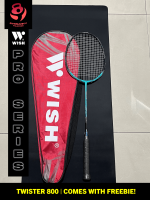
WISH Brand Badminton Rackets | Singles & Sets
₱2,000.00
Buy on Lazada
Wish Alumtec Steeltec Badminton Single Rackets and Set Rackets with Shuttlecocks
₱699.00₱799.00
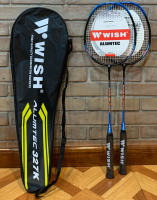
Wish Firestar Alumtec Aluminum Badminton Racket with Half Cover
₱699.00
Buy on Lazada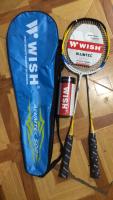
NEW LOOK WISH Badminton Racket with 2 pcs free Shuttlecock
₱699.00₱799.00
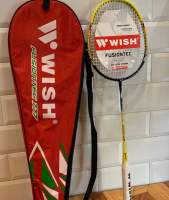
WISH Fusiontec Graphite Carbon Badminton Racket with Racket Case
₱800.00
Buy on Lazada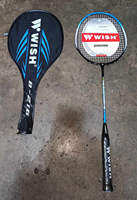
BADMINTON RACKET WISH B-216 (STEELTEC)
₱279.00
Buy on Lazada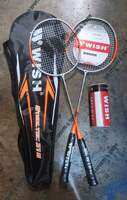
WISH BADMINTON RACKET SET B-216k STEELTEC (2pc racket with shuttlecock)
₱565.00
Buy on Lazada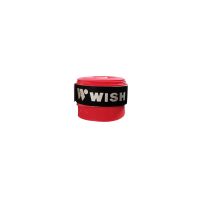
Wish WOG-107 Overgrip Badminton Racket Grip Anti-Slip
₱45.00
Buy on LazadaAbout WISH
Wish is a global online shopping marketplace and mobile commerce platform recognized for its personalized product discovery experience and focus on affordable merchandise. Rather than operating as a traditional retailer that purchases and warehouses its own inventory, Wish functions as a digital marketplace connecting consumers directly with independent merchants worldwide.1
Note: The name “WISH” may refer to several unrelated brands. This article specifically covers Wish, the international e-commerce platform at Wish.com.
Overview
| Field | Information |
|---|---|
| Brand | Wish |
| Industry | E-commerce / online marketplace |
| Founded | 2010 |
| Founders | Peter (Piotr) Szulczewski and Danny Zhang |
| Original company | ContextLogic |
| Headquarters / base | San Francisco, California, United States |
| Business model | Online marketplace connecting merchants and consumers |
| Main platform | Website and mobile applications |
| Products | Fashion, electronics, home goods, hobbies, beauty, accessories and more |
| Global reach | Customers and merchants across numerous international markets |
| Current ownership | Wish’s operating business was acquired by Qoo10 in 2024 |
| Official website | Wish |
History
Founding
Wish traces its origins to 2010, when engineers and entrepreneurs Peter Szulczewski and Danny Zhang established the business that would become associated with ContextLogic and Wish. The two founders first met while studying at the University of Waterloo in Canada.2
The original concept focused on helping consumers discover products rather than simply search for them. This distinction became central to Wish’s identity, allowing users to browse a continuously evolving selection of items that the platform’s algorithms deemed relevant to their specific interests.
Wish initially developed from a wish-list concept where users could save products they found interesting. The company subsequently evolved into a full e-commerce marketplace, enabling merchants to list products directly for consumers.
Growth
Throughout the 2010s, Wish experienced rapid international expansion. Its mobile-first approach and algorithmically personalized product feed helped distinguish it from conventional online shopping websites.
Instead of requiring shoppers to know exactly what they wanted, Wish emphasized product discovery. Users could scroll through recommendations and encounter inexpensive products across numerous categories. This model proved particularly effective on smartphones, where an image-driven feed functioned similarly to a personalized shopping magazine.
Business model
Wish operates fundamentally as a marketplace rather than a conventional retailer.
Independent merchants list products on the platform, while Wish provides the digital marketplace, discovery tools, payment infrastructure, and other services necessary to facilitate transactions. Wish itself generally does not manufacture the third-party products sold by merchants.3
This structural distinction is significant:
Traditional retailer
Manufacturer → Retailer → Customer
Wish marketplace
Independent merchant → Wish marketplace → Customer
Consequently, Wish does not need to maintain the same type of inventory infrastructure as a traditional retailer.
Product categories
Wish has historically offered an extremely broad selection of merchandise. Its current shopping platform includes categories such as:
- Fashion and clothing
- Shoes and bags
- Jewelry and accessories
- Electronics
- Smart devices
- Home and décor
- Gardening
- Automotive products
- Sports and outdoor equipment
- Toys and collectibles
- Beauty products
- Hobbies and DIY
- Gifts and novelty products
Wish describes itself as a destination for “home and life,” featuring products ranging from everyday necessities to unusual or unexpected items.4
Shopping experience
A defining characteristic of Wish is its personalized product feed.
When a user browses, searches for products, or makes purchases, the platform utilizes those interactions to refine subsequent recommendations. Wish describes this process as learning about a customer’s interests, style, and budget to personalize the shopping experience.5
The experience can be summarized as:
Browse → Discover → Personalize → Purchase
This differs from the traditional model used by many online retailers:
Search → Find → Purchase
Brand positioning
Wish has historically positioned itself around several core concepts:
Affordability
The platform became particularly associated with inexpensive products and deals. Its appeal has traditionally been strongest among consumers seeking products at relatively low price points.
Discovery
Wish’s identity is closely linked to the idea of discovering products that shoppers did not necessarily intend to search for.
Variety
Because Wish operates as a marketplace with many independent merchants, its catalog spans a vast range of product categories.
Mobile commerce
Wish was built with a strong emphasis on smartphones and personalized feeds, helping establish it as a notable example of mobile-first e-commerce.
Technology
Technology is central to the Wish business model.
Rather than simply displaying a static catalog, Wish uses customer activity to determine which products should appear in an individual’s shopping experience. Its help center describes recommendations based on factors including previous browsing, searches, and purchases.6
This makes Wish part marketplace, part recommendation engine. The platform’s primary technological challenge is not merely how to sell products online, but specifically which products a particular customer should see. This distinction became one of the defining characteristics of the Wish experience.
Mobile application
Wish operates through both its website and mobile applications.
The current app describes itself as a shopping destination covering fashion, electronics, home products, hobbies, automotive products, and other categories. It also emphasizes personalized feeds and product discovery.7
The Android version remains actively distributed, with listings showing 500 million+ downloads and an update in July 2026.8
International presence
Wish was designed as an international marketplace rather than a service limited to a single country.
Its help center has described the platform as connecting millions of customers with merchants across more than 60 countries, while its merchant ecosystem includes sellers from various parts of the world.9 This international structure is one reason Wish has historically been associated with cross-border e-commerce.
Relationship with merchants
Merchants on Wish are independent businesses selling through the marketplace.
The platform provides tools for merchants to create listings and reach customers, while merchants remain responsible for their products and applicable regulatory requirements. Wish explicitly states that it is not generally the manufacturer, brand owner, seller, distributor, or importer of third-party merchant products.10
Wish has also established a Brand Partner Program intended to help trademark owners identify and report potentially infringing listings.11
Rebranding
Wish underwent a significant brand refresh in the 2020s.
In 2024, Wish announced a new brand identity following an extensive period of strategic reassessment. The refresh included a new logo, app icon, typography, iconography, imagery, and color palette. The company described the effort as part of creating a “new Wish” focused on improving the experience for both customers and merchants.12
This represented an attempt to move the brand beyond its earlier perception as simply a destination for extremely cheap products toward a broader shopping and discovery proposition.
Acquisition by Qoo10
One of the most significant developments in Wish’s corporate history occurred in 2024.
On April 19, 2024, ContextLogic announced that it had completed the sale of substantially all of its operating assets and liabilities associated with Wish to Qoo10 Pte. Ltd. The transaction was valued at approximately US$161 million in cash after purchase-price adjustments. The assets principally included the Wish e-commerce platform.13
The deal changed the corporate structure behind Wish while the Wish brand and platform continued to operate. Wish’s documentation subsequently confirmed that the platform remained available to customers.14
Key distinctions regarding ownership include:
- ContextLogic: Historically the company behind Wish
- Qoo10: Acquired the operating Wish business in 2024
- Wish: Continues as the consumer-facing brand and platform
Wish and ContextLogic
The history of Wish is closely tied to ContextLogic Inc.
ContextLogic was the corporate entity associated with the development and operation of Wish and became publicly traded under the ticker WISH. However, following the 2024 transaction, the operating Wish business was separated from the remaining ContextLogic corporate entity. ContextLogic subsequently pursued a different corporate strategy, including its transformation into a business-ownership platform and the acquisition of US Salt in 2026.
Consequently, “Wish” and “ContextLogic” should not automatically be treated as the same company today, despite being historically inseparable.
Brand identity
The Wish brand can broadly be characterized by the following attributes:
- Affordable: Competitive pricing and frequent deals.
- Discoverable: Products are presented through personalized recommendations.
- Unexpected: The platform encourages users to encounter products they were not necessarily searching for.
- Global: A marketplace connecting customers and merchants across borders.
- Mobile-first: The app has historically been central to the Wish experience.
Competitive position
Wish belongs to the broader category of global marketplace e-commerce, alongside platforms such as Amazon Marketplace, eBay, AliExpress, Temu, and other cross-border shopping services.
Its historical differentiation has been less about being the largest general-purpose retailer and more about algorithmic discovery, mobile shopping, and low-cost merchandise.
| Platform type | Primary shopping behavior |
|---|---|
| Traditional retailer | Search for known products |
| Search-driven marketplace | Search and compare |
| Social commerce | Discover through social content |
| Wish | Discover through personalized shopping feeds |
Criticism and challenges
Wish’s rapid growth brought challenges typical of large cross-border marketplaces. These have included concerns regarding:
- Product quality variation
- Delivery times
- Merchant reliability
- Product descriptions
- Counterfeit or infringing merchandise
- Customer expectations regarding inexpensive goods
- Product safety and regulatory compliance
Wish has subsequently emphasized trust and safety measures, including merchant policies, product reporting, and its Brand Partner Program for intellectual-property protection.15 These issues are not necessarily representative of every Wish merchant or product; the marketplace model means that experiences can vary considerably between individual sellers.
Current status
As of 2026, Wish remains an active consumer shopping platform. Its website continues to offer products across fashion, electronics, home, hobbies, and other categories, while its mobile application remains available.16
The key historical change is its ownership: Wish’s operating business is now part of the Qoo10 ecosystem, following the 2024 acquisition from ContextLogic.17
Summary
Wish is a global, mobile-oriented e-commerce marketplace founded in 2010 by Peter Szulczewski and Danny Zhang, best known for combining highly personalized product discovery with inexpensive merchandise from independent merchants around the world; its operating business was acquired by Qoo10 in 2024.18
See also
- Official Wish marketplace
- Wish Help Center
- Wish Merchant Help Center
- ContextLogic investor information
References
- What is Wish? – Wish Help Center
- Wish Overview – Wish Help Center
- Wish: Shop and Save App – App Store
- Wish: Shop and Save – Apps on Google Play
- Searching on Wish – Wish Help Center
- Wish: Shop and Save – Aplikasi di Google Play
- undefined
- What is the Brand Partner Program? – Wish Merchant Help Center
- The new and improved Wish – Wish Merchant Help Center
- ContextLogic Completes Sale of Substantially All Operating Assets and Liabilities Associated with Wish to Qoo10 | ContextLogic Holdings Inc.
- Qoo10 and Wish – Wish Help Center
- ContextLogic Completes $907.5 Million Acquisition of US Salt, Marking Transformation into Business Ownership Platform | ContextLogic Holdings Inc.
- Wish | Shop and Save
- WISHARAWISH | Rakuten Fashion Week TOKYO
- Wish: Shop and Save – Apps on Google Play
- Wish: Shop and Save – Apps on Google Play
- Wish ✅ Juli 2026 100% Original – Official Store Indonesia
- ContextLogic Holdings Inc. Reports First-Quarter 2026 Financial Results | ContextLogic Holdings Inc.