Shop on Lazada
WURTH products
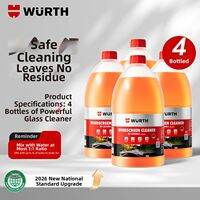
WURTH | Anti-Dirty Anti-Grease Anti-Insect Residue Car Glass Water
₱2,247.31₱4,143.19
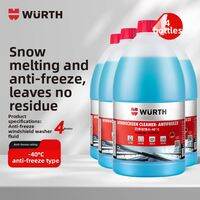
WURTH | Concentrated Decontaminating Automotive Glass Water with Anti-freeze and Ethanol
₱3,444.04₱5,429.80
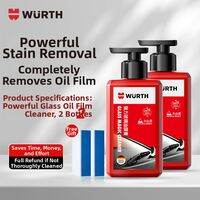
WURTH | Oil Film Removal Car Windshield Cleaner
₱1,607.97₱3,202.00
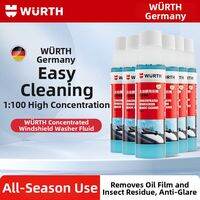
WURTH | All-Season Windshield Washer Fluid for Oil Film Removal and Insect Residue Cleaning
₱811.41₱2,000.09
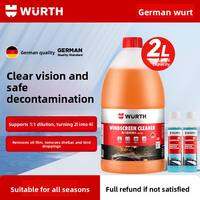
WURTH | Powerful Cleaning Windshield Washer Fluid
₱1,010.73₱1,565.58

WURTH | High Foam Strong Cleaning Car Wash Liquid
₱1,518.08₱3,133.86
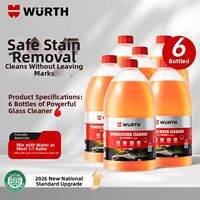
WURTH | Strong Decontaminant & Oil Film Remover Concentrated Windshield Washer Fluid
₱3,655.46₱4,661.40
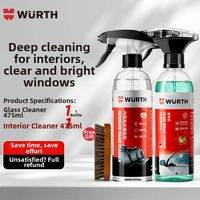
WURTH | Oil Film Removal Interior Auto Glass Cleaner Stain Remover
₱1,580.27₱2,009.90
About WURTH
WURTH (officially the Würth Group; German: Würth-Gruppe) is a German family-owned multinational corporation headquartered in Künzelsau, Baden-Württemberg, Germany. It is primarily known for supplying fastening and assembly products—including screws, bolts, anchors, tools, chemicals and workshop equipment—to professional customers in the construction, automotive, manufacturing and maintenance sectors. The group positions itself as a global market leader in assembly and fastening materials.
Although the name WURTH is frequently associated with its red-and-white product branding, the organisation extends well beyond hardware retailing. The Würth Group comprises more than 400 companies operating in 80 countries, with business interests spanning electrical wholesale, electronics, financial services and other related industries.
Key Facts
| Category | Information |
|---|---|
| Full name | Würth Group (Würth-Gruppe) |
| Founded | 16 July 1945 |
| Founder | Adolf Würth |
| Founded in | Künzelsau, Germany |
| Headquarters | Künzelsau, Baden-Württemberg, Germany |
| Industry | Industrial distribution, fastening, assembly, tools and related products |
| Core business | Fastening and assembly technology |
| Ownership | Family-owned |
| Global presence | 80 countries |
| Companies | 400+ |
| Employees | 86,415 (end of 2025) |
| Customers | Approximately 4.5 million |
| 2025 Sales | €20.7 billion |
| Physical shops/branches | More than 2,800 |
| Main sales model | Direct sales, physical shops, digital/e-commerce and procurement solutions |
Figures for the 2025 fiscal year are derived from the group’s latest published corporate data.
History
Establishment in 1945
WURTH was established in the immediate aftermath of the Second World War. On 16 July 1945, Adolf Würth founded a wholesale business specialising in screws and nuts in Künzelsau, a town in the Hohenlohe region of southern Germany. Registered as Adolf Würth GmbH & Co. KG, the enterprise began as a two-person operation that would eventually form the core of the wider Würth Group.
Expansion under Reinhold Würth
A pivotal transition occurred in 1954 when Adolf Würth died unexpectedly at the age of 45. His son, Reinhold Würth, assumed management of the family business at just 19 years old. At that time, the company employed only two staff members and generated annual sales equivalent to approximately €80,000 in modern terms.
Reinhold Würth oversaw the transformation of the regional wholesaler into an international corporation. His management philosophy prioritised direct customer contact, a comprehensive sales force, international expansion, decentralised management, product availability, customer service, innovation and long-term relationships. This direct-sales approach became a defining characteristic of the WURTH business model.
International Growth
International expansion commenced in 1962 with the establishment of the first foreign subsidiary in the Netherlands, followed by operations in Switzerland and Austria within the same year. Subsequent milestones included entry into North America in 1969, South Africa in 1970, Australia in 1982, and Japan and Malaysia in 1987. By the late 1980s, WURTH had secured a presence across all major inhabited continents.
In 2000, the group surpassed €5 billion in annual sales, achieving the “Vision 2000” target set by Reinhold Würth in 1987 when group revenue stood at approximately €700 million.
21st Century Diversification
Throughout the 2000s and 2010s, WURTH expanded its scope beyond traditional fasteners. The group developed capabilities in construction, automotive supply, industrial production, electrical distribution, electronics, chemicals, logistics, financial services, specialised industrial services and digital procurement. Significant investments were also directed towards e-commerce, digital purchasing systems, logistics infrastructure and multi-channel distribution networks.
Product Portfolio
WURTH is not solely a screw manufacturer; its portfolio encompasses a vast array of products designed for professional tradespeople and industrial enterprises. The core Würth Line alone includes more than 125,000 products across multiple categories.
Fastening Products
The historical foundation of the business includes screws, nuts, bolts, washers, threaded rods, anchors, rivets, dowels, fastening systems and installation hardware.
Tools
The tool range comprises hand tools, power tools, cordless equipment, torque tools, measuring instruments, cutting tools, drilling equipment and workshop machinery.
Chemical Products
Chemical-technical offerings include lubricants, cleaners, adhesives, sealants, sprays, corrosion protection agents, thread-locking compounds and maintenance chemicals.
Automotive Products
For professional workshops and vehicle-related industries, WURTH supplies workshop tools, repair materials, fasteners, diagnostic and service equipment, automotive chemicals, consumables and body-repair products.
Construction Supplies
Products for construction professionals cover structural fastening, installation materials, anchors, screws, concrete applications, timber construction components, drywall systems, roofing materials, sealing solutions and personal protective equipment.
Personal Protective Equipment
Safety offerings include safety footwear, workwear, gloves, helmets, eye protection, hearing protection, respiratory equipment and fall protection systems.
Business Model and Distribution
Direct Sales Philosophy
Historically, WURTH distinguished itself through a robust direct-sales organisation rather than relying exclusively on conventional hardware store distribution. Sales representatives visit professional customers directly, fostering strong relationships, deep product knowledge and recurring orders supported by an extensive distribution network. Approximately 44,000 employees worldwide engage directly with customers daily through various sales channels. Consequently, the company operates as a hybrid of an industrial distributor, sales organisation, manufacturer, logistics provider and technology platform.
Multi-Channel Strategy
Contemporary operations utilise a multi-channel approach:
- Sales Representatives: Traditional field representatives continue to visit workshops, construction sites, factories and other professional clients.
- Physical Shops: Customers may purchase products directly at physical branches and pick-up shops. The group currently operates more than 2,800 branches and shops across 80 countries.
- E-commerce: Digital business has grown through online shops, mobile applications, electronic catalogues, customer portals and digital ordering platforms. In 2025, digital channel sales reached €5.2 billion, representing 25.2% of total group revenue.
- E-procurement: For large industrial clients, WURTH integrates with external purchasing systems and procurement processes to facilitate high-volume recurring orders of consumables.
Corporate Structure
The Würth Group is organised into two primary operational divisions:
Würth Line
This division represents the core business, focusing on fastening and assembly materials for skilled trades and industry. It encompasses the products most commonly associated with the WURTH brand.
Allied Companies
These entities operate in related or diversified fields, including electrical wholesale, electronics, financial services and other specialised industrial businesses. This diversification contributes significantly to the overall scale of the Würth Group beyond its core hardware and fastener operations.
Global Scale
By 2025, WURTH had evolved substantially from its origins as a two-person enterprise. The group reported €20.7 billion in sales for the fiscal year and employed 86,415 people at year-end. Serving approximately 4.5 million customers worldwide, its international network spans more than 400 companies in 80 countries and over 2,800 shops and branches, positioning it among the world’s most significant specialised industrial distribution groups.
Ownership and Leadership
WURTH remains a family-owned enterprise, a factor central to its corporate culture. Reinhold Würth, who took control at age 19, is credited with building the multinational group over several decades. He stepped back from operational management in 1994 to become Chairman of the Advisory Board, with leadership subsequently transitioning to the next generation and professional management. His daughter, Bettina Würth, was appointed Chairwoman of the Advisory Board in 2006. The family retains close involvement in the group’s strategic direction and ownership structure.
Reinhold Würth fundamentally reshaped the company’s identity from a screw seller to a partner solving technical and procurement challenges for professional customers. His principle, “We are the employees of our customers,” underscores a philosophy centred on understanding client needs and aligning products, services and distribution accordingly. This customer-centric focus drove the development of the group’s extensive sales organisation.
Brand Identity and Market Position
The WURTH brand is highly recognisable in professional trades due to its distinctive red-and-white visual identity. Products are ubiquitous in automotive workshops, construction sites, factories, maintenance departments, electrical and mechanical workshops, woodworking businesses and industrial production facilities. Unlike consumer brands, WURTH’s strongest recognition lies among professional users such as mechanics, electricians and construction workers.
Competitively, WURTH occupies a unique position overlapping with industrial distributors, hardware suppliers, tool brands, fastener manufacturers, automotive suppliers, construction product companies and MRO suppliers. Its advantage stems from combining a broad product range with direct sales, local inventory, logistics, technical advice, relationship management and digital ordering. This integrated offering creates higher switching costs for professional customers who source diverse categories—from tools and chemicals to gloves and abrasives—from a single supplier.
As primarily a B2B company, WURTH serves construction firms, automotive repair shops, industrial manufacturers, electricians, plumbers, HVAC technicians, metalworkers, carpenters, maintenance departments and machinery manufacturers. Its value proposition focuses on professional productivity and ensuring continuous workflow through comprehensive supply, distinguishing it from consumer-oriented brands.
Logistics and Digital Transformation
For professional customers, product availability often outweighs price considerations; a missing €2 component can halt production and incur significant losses. WURTH therefore emphasises inventory management, logistics, local availability, automated ordering, delivery reliability and digital procurement solutions. Its extensive physical and digital distribution network forms a critical part of its value proposition.1
While historically renowned for its sales force, WURTH has increasingly evolved into a digital B2B platform. The strategy integrates sales representatives, physical shops, online stores, mobile apps, e-procurement systems and automated logistics rather than replacing traditional channels with e-commerce. Digital channel sales of €5.2 billion in 2025 highlight the significance of this transformation.
Art, Culture and Corporate Values
An unusual aspect of WURTH is its substantial engagement with art and culture. Reinhold Würth began collecting art in 1962 with the purchase of a painting by Emil Nolde. This collection has grown into the Würth Collection, comprising more than 20,000 works.2 The Würth Group and associated foundations support museums, exhibitions, contemporary art, music, cultural institutions, education and social initiatives, embedding a significant cultural component within its corporate identity.
Corporate culture is defined by values including openness, gratitude, respect, curiosity, responsibility, humility and modesty. Consistent with its family-owned status, the company prioritises long-term development over short-term financial performance.
Current Status
As of 2026, WURTH has transformed over eight decades from a small screw wholesaler in Künzelsau into a global B2B distribution and industrial services ecosystem. Through phases of domestic expansion, internationalisation, diversification and digitalisation, it has grown into a multinational group reporting €20.7 billion in sales and employing 86,415 people across more than 400 companies in 80 countries.