Shop on Lazada
Mercedes-Benz products

100% Photochromic Anti Radiation Glasses For Men Replace Lens Computer Glasses Anti Blue Light Eyewear Day Night All Use
₱450.00₱2,350.00

Upgrade Original Style Smoke Turn Signal Lights
₱14,217.00
Buy on Lazada
mercedes-benz | Factory Recommended Fully Synthetic Lubricant 5W-30
₱15,812.76
Buy on Lazada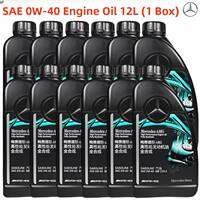
mercedes-benz | Full Synthetic High-Performance Motor Oil
₱15,351.66
Buy on Lazada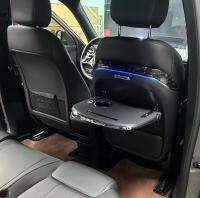
mercedes-benz | Rear Seat Foldable Tray Table
₱10,499.00
Buy on Lazada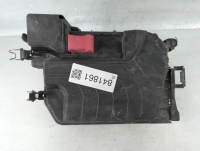
Mercedes Benz CLA Fusebox/2013-2018/1st Generation/C117/X117/2014 2015 2016 2017/EZ Auto
₱3,029.00₱5,062.00
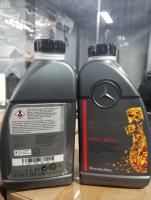
MERCEDEZ BENZ ATF 1L
₱900.00
Buy on Lazada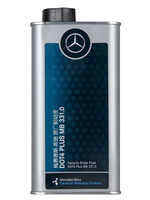
mercedes-benz | Universal DOT4 Brake Fluid
₱1,016.37
Buy on LazadaAbout Mercedes-Benz
Mercedes-Benz is a German luxury and premium automotive marque renowned for its passenger cars, SUVs, performance vehicles, electric vehicles, and premium vans. Its heritage is intrinsically linked to the invention of the modern automobile in the 1880s and the pioneering work of Carl Benz and Gottlieb Daimler. Today, the brand serves as the flagship marque of Mercedes-Benz Group AG, which is headquartered in Stuttgart, Germany.1
As of 2026, Mercedes-Benz marks two significant milestones: the 140th anniversary of the automobile and the 100th anniversary of the Mercedes-Benz brand itself.2
Overview
| Category | Information |
|---|---|
| Brand name | Mercedes-Benz |
| Parent company | Mercedes-Benz Group AG |
| Industry | Automotive |
| Founded as a brand | 1926 |
| Origins | 1886 |
| Headquarters | Stuttgart, Germany |
| Founding figures | Carl Benz, Gottlieb Daimler, Wilhelm Maybach, Emil Jellinek and others associated with predecessor companies |
| Main products | Luxury cars, SUVs, EVs, performance cars, vans |
| Performance division | Mercedes-AMG |
| Ultra-luxury marque | Mercedes-Maybach |
| Classic division | Mercedes-Benz Classic |
| Logo | Three-pointed star |
| Parent-company CEO | Ola Källenius |
| Major markets | Europe, China, North America, Asia-Pacific and other global markets |
| Corporate headquarters | Stuttgart, Baden-Württemberg, Germany |
Mercedes-Benz Group positions itself as one of the world’s leading automotive manufacturers, providing high-end passenger cars and premium vans alongside financing, leasing, insurance, charging infrastructure, and various mobility services.3
Origins of Mercedes-Benz
The history of Mercedes-Benz predates the adoption of the name itself, rooted in the work of two independent German inventors who were central to the development of the automobile:
- Carl Benz in Mannheim
- Gottlieb Daimler in Stuttgart
In 1886, both men independently developed early automobiles. Benz’s three-wheeled Patent-Motorwagen is historically significant because his patent application filed on January 29, 1886, is widely recognized as the birth certificate of the automobile. In that same year, Daimler developed a four-wheeled motor carriage.4
Although Benz and Daimler never personally met, their respective companies eventually merged to form the primary predecessors of Mercedes-Benz.5
Carl Benz
Carl Benz (1844–1929) was an engineer and inventor based in Mannheim. His Patent-Motorwagen utilized an internal-combustion engine and was designed specifically as a motor vehicle, distinguishing it from horse-drawn carriages retrofitted with engines. This invention laid one of the fundamental technological foundations for the modern automobile.
Gottlieb Daimler
Gottlieb Daimler (1834–1900) was an engineer operating in the Stuttgart area. Collaborating with Wilhelm Maybach, he developed compact, high-speed internal-combustion engines suitable for transport applications. Their experimentation with engines for motorcycles, automobiles, boats, and other uses helped establish the concept of the versatile high-speed petrol engine.6
Origin of the name “Mercedes”
The name Mercedes did not originally refer to a corporate entity. It was derived from Mercédès Jellinek, the daughter of businessman and automobile enthusiast Emil Jellinek. As a prominent early customer and promoter of Daimler automobiles, Jellinek used his daughter’s first name when racing and selling Daimler cars. The name subsequently became synonymous with Daimler’s automobiles before evolving into the Mercedes-Benz brand.
Creation of the brand
The two major predecessor companies were Benz & Cie. and Daimler-Motoren-Gesellschaft (DMG). These entities began preparing for closer cooperation during the 1920s. The Mercedes-Benz word mark was registered in 1925, and the companies formally merged in 1926 to establish Daimler-Benz AG.7
This merger united the engineering traditions of Benz and Daimler, allowing Mercedes-Benz to trace its technological ancestry directly to both Carl Benz and Gottlieb Daimler.
The Mercedes-Benz logo
The brand’s most recognizable feature is the three-pointed star. Originally associated with the Daimler family, the star was later combined with the laurel wreath symbolism of Benz. The modern Mercedes-Benz trademark was created in 1925, coinciding with the emergence of the brand following the 1926 merger.8
Symbolism of the three-pointed star
The three points traditionally represented Daimler’s ambition for universal motorization across three domains:
- Land
- Water
- Air
Over time, the star has evolved into one of the most universally recognized symbols in the automotive industry.
Brand identity and positioning
Historically, Mercedes-Benz has defined itself through several core characteristics:
- Luxury
- Engineering excellence
- Innovation
- Safety
- Performance
- Comfort
- Design
- Reliability
- Technological leadership
The company’s historical narrative consistently emphasizes technical excellence, quality, reliability, distinctive design, and innovation as recurring brand pillars.9 Consequently, Mercedes-Benz occupies a distinct position compared to mass-market manufacturers, adhering to a traditional philosophy that combines the automobile with engineering, luxury, and prestige.
Automotive innovation
A primary factor in the historical significance of Mercedes-Benz is its sustained contribution to automotive technology. The company and its predecessors have been instrumental in numerous developments across key areas.
Safety
Mercedes-Benz has played a pivotal role in developing and commercializing automotive safety technologies. Notable innovations include crumple zones, advanced passenger protection, safety-body structures, anti-lock braking systems, airbags, electronic stability systems, driver-assistance technologies, PRE-SAFE systems, and advanced emergency braking with collision avoidance. For instance, Mercedes-Benz USA highlights the crumple zone, airbag, and PRE-SAFE braking among its most significant contributions to automotive safety.10
Aerodynamics
The marque has invested heavily in aerodynamic engineering, particularly for high-performance and high-efficiency vehicles.
Powertrains
The company’s history encompasses major advancements in petrol engines, diesel engines, supercharging, turbocharging, hybrid powertrains, electric motors, and fuel-cell technology.
Electronics and software
Modern Mercedes-Benz vehicles increasingly rely on digital cockpits, advanced driver assistance, connected services, artificial intelligence, over-the-air software updates, and digital operating systems. The company identifies MB.OS and newer digital driver-assistance technologies as central to its current technological direction.11
Motorsport heritage
Motorsport has been integral to the history of Mercedes-Benz. The marque and its predecessors have competed in Grand Prix racing, Formula 1, sports-car racing, endurance racing, touring-car racing, rallying, hill climbs, and GT racing.
Traditionally, motorsport has served two purposes for Mercedes-Benz:
- Competition: Competing against other major manufacturers and racing teams.
- Technology development: Utilizing racing as a laboratory for developing engines, aerodynamics, materials, braking systems, suspension, electronics, and hybrid powertrains.
Mercedes-AMG
Mercedes-AMG serves as the high-performance division of Mercedes-Benz. AMG originated as an independent performance and motorsport engineering firm founded by Hans Werner Aufrecht and Erhard Melcher. The initials AMG stand for Aufrecht, Melcher and Großaspach, with Großaspach being Aufrecht’s birthplace.12
AMG gained renown for transforming standard Mercedes-Benz vehicles into high-performance machines. Modern Mercedes-AMG products typically emphasize high-output engines, performance-oriented suspension, aggressive styling, powerful braking systems, motorsport-inspired technology, enhanced handling, and performance exhaust systems. Essentially, AMG represents the performance dimension of the Mercedes-Benz brand.
Mercedes-Maybach
Mercedes-Maybach represents the ultra-luxury segment of the Mercedes-Benz portfolio. The Maybach name traces its historical roots to Wilhelm Maybach, a key engineer associated with Daimler.
Modern Mercedes-Maybach vehicles are positioned above conventional Mercedes-Benz models, focusing on exceptional comfort, luxury materials, rear-seat experiences, bespoke details, advanced technology, and prestige. Key examples include the Mercedes-Maybach S-Class and Mercedes-Maybach GLS. Mercedes-Benz identifies both Mercedes-AMG and Mercedes-Maybach as major components of its overall brand portfolio.13
Major vehicle families
Mercedes-Benz maintains an extensive model range covering various segments.
A-Class
The A-Class represents the smaller passenger-car segment, historically targeting customers seeking a more compact entry point into the brand.
C-Class
The C-Class is one of the marque’s most critical model lines. It occupies the compact executive and luxury sedan segment, competing directly with vehicles such as the BMW 3 Series and the Audi A4/A5 family.
E-Class
Traditionally positioned between the C-Class and S-Class, the E-Class has long been associated with business executives, long-distance comfort, luxury, technology, rear-seat accommodation, and advanced safety features.
S-Class
The S-Class serves as the flagship luxury sedan. For decades, it has functioned as a technological showcase, often introducing or popularizing technologies that eventually become common throughout the automotive industry.
G-Class
The G-Class, or Geländewagen, is the iconic luxury off-road vehicle. Originally designed as a rugged military and off-road vehicle, it has evolved into a luxury status symbol while retaining its distinctive boxy design and off-road capabilities.
SUVs
Mercedes-Benz has developed a comprehensive SUV portfolio, including models within the GLA, GLB, GLC, GLE, and GLS families.
Electric vehicles
Under its modern EV strategy, Mercedes-Benz has developed dedicated electric and electrified vehicles. The current product strategy emphasizes the transition toward electric mobility while continuing to develop internal-combustion and hybrid technologies for diverse markets.14
Naming convention
Mercedes-Benz model names follow a specific nomenclature. For example, Mercedes-Benz S 580 can generally be understood as:
- S: Model/class family
- 580: Position within the powertrain/performance range
Additional letters or designations may indicate body style, drivetrain, or technology:
- 4MATIC: All-wheel-drive system
- AMG: High-performance version
- Maybach: Ultra-luxury version
- EQ: Electric/electrification branding
- d: Historically associated with diesel engines
- e: Commonly associated with plug-in hybrid/electrified variants
Badge meanings have evolved over time, so designations do not always correspond directly to engine displacement.
Design philosophy
Mercedes-Benz has cultivated a distinctive design language throughout its history. Classic design elements often include long proportions, elegant surfaces, chrome details, three-pointed-star symbolism, conservative luxury, and strong road presence.
Modern design increasingly blends traditional luxury with smooth aerodynamic surfaces, large digital displays, minimalist interiors, ambient lighting, prominent grille and star treatments, and aerodynamic efficiency. The company views design as a vital part of its identity, extending beyond automobiles into lifestyle products and architecture.15
Interior philosophy
Interiors have traditionally emphasized comfort and luxury. Typical modern features include leather or premium upholstery, large displays, digital instrument clusters, ambient lighting, advanced sound systems, heated and ventilated seats, massage functions, advanced climate control, voice assistants, smartphone integration, and driver-assistance systems. Flagship models, particularly long-wheelbase and Maybach variants, offer highly sophisticated rear-seat environments.
Electrification strategy
Mercedes-Benz is actively participating in the automotive industry’s transition toward electrification. The company has developed electric vehicles utilizing battery-electric powertrains, high-voltage batteries, fast charging, energy-management software, regenerative braking, electric motors, and advanced thermal management.
Mercedes-Benz describes electromobility, digitalization, and sustainability as critical future-oriented themes.16 Furthermore, the company is integrating software more deeply into its vehicles, increasingly treating the automobile as a software-enabled digital platform.
Current corporate scope
Mercedes-Benz operates beyond simple automobile manufacturing. The wider Mercedes-Benz Group encompasses businesses related to passenger cars, premium vans, financial services, vehicle financing, leasing, insurance, fleet management, charging-related digital services, and other mobility solutions. The Group remains headquartered in Stuttgart, Germany.17
In 2025, Mercedes-Benz Group reported that Top-End Vehicles represented 15% of Mercedes-Benz Cars sales. Concurrently, the company initiated what it described as its largest-ever product and technology launch programme, planning to debut more than 40 new Mercedes-Benz models over a two-year period.
Global presence
Mercedes-Benz is a global brand with sales across Europe, North America, South America, China, Japan, South Korea, Southeast Asia, the Middle East, Africa, Australia, and New Zealand. According to Mercedes-Benz USA, vehicles are manufactured in 17 countries across five continents and distributed globally.18 China, Europe, and the United States remain particularly significant markets for the luxury automotive sector.
Cultural impact
The three-pointed star has become a global symbol associated with wealth, success, luxury, engineering, and prestige. Consequently, Mercedes-Benz cars appear extensively in films, television, music videos, professional sports, business culture, celebrity culture, political and diplomatic settings, and advertising.
Models such as the S-Class, G-Class, SL, 190E, 300 SL Gullwing, and various AMG vehicles have developed particularly strong cultural identities.
Famous models
Several Mercedes-Benz automobiles hold particular historical significance:
- Mercedes-Benz 300 SL Gullwing: One of the most famous sports cars of the 1950s, distinguished by its upward-opening gullwing doors.
- Mercedes-Benz 600: An ultra-luxurious limousine associated with heads of state, celebrities, and wealthy clientele.
- Mercedes-Benz 190E: A pivotal compact executive sedan that established the brand firmly in the smaller premium segment.
- Mercedes-Benz S-Class: The flagship luxury sedan and one of the world’s best-known executive cars.
- Mercedes-Benz SL: A long-running family of luxury sports cars.
- Mercedes-Benz G-Class: An iconic luxury off-roader with a remarkably consistent visual identity.
- Mercedes-AMG GT: A modern high-performance sports-car family.
Mercedes-Benz Museum
The Mercedes-Benz Museum in Stuttgart offers a comprehensive overview of the company’s history. Housing more than 1,500 exhibits across approximately 16,500 square metres, it covers automotive history from the earliest vehicles to modern times.19 The museum is particularly significant because Mercedes-Benz can legitimately present its own history as part of the broader history of the automobile.
Corporate structure
It is useful to distinguish between three related entities:
- Mercedes-Benz: The consumer-facing brand.
- Mercedes-Benz AG: The major operating company responsible for passenger cars and vans.
- Mercedes-Benz Group AG: The publicly traded German parent company overseeing the wider group.
Formerly known as Daimler AG, the parent company changed its name to Mercedes-Benz Group AG as part of a strategic transformation after Daimler Truck became a separate entity.20 While closely connected, Mercedes-Benz and Mercedes-Benz Group AG are distinct.
Relationship with Daimler Truck
Historically, Daimler’s corporate structure included both passenger and commercial vehicles. In 2021, Daimler separated its truck and bus business into Daimler Truck. Following this spin-off, Mercedes-Benz Group became more focused on passenger cars, vans, luxury vehicles, and mobility and financial services, describing itself as a more focused “pure-play” car and van business.21
Competitive landscape
Mercedes-Benz is considered one of the major German luxury automotive brands. Its traditional principal competitors include:
| Mercedes-Benz Entity | Main Competitor |
|---|---|
| Mercedes-Benz | BMW |
| Mercedes-Benz | Audi |
| Mercedes-Benz | Porsche |
| Mercedes-Benz | Lexus |
| Mercedes-Benz | Jaguar/Land Rover |
| Mercedes-Maybach | Bentley |
| Mercedes-Maybach | Rolls-Royce |
| Mercedes-AMG | BMW M |
| Mercedes-AMG | Audi Sport |
The classic German luxury rivalry is often characterized as Mercedes-Benz vs BMW vs Audi, with each brand cultivating a distinct identity:
- Mercedes-Benz: Luxury, comfort, technology, and prestige.
- BMW: Driving dynamics, sportiness, and driver engagement.
- Audi: Technology, design, quattro/all-wheel drive, and modernism.
While these are broad generalizations rather than absolute descriptions, they illustrate how the brands have traditionally positioned themselves.
Historical significance
Mercedes-Benz is unique among automotive brands because its history is deeply intertwined with the invention of the automobile itself. Unlike companies that merely claim over a century of car manufacturing, Mercedes-Benz traces its heritage directly to the individuals and companies involved in creating the first practical automobiles.
This provides the brand with a strong historical narrative:
- 1886: Automobile invented
- Benz and Daimler develop independent automotive technologies
- 1925: Mercedes-Benz name registered
- 1926: Daimler-Benz formed
- 20th century: Leadership in luxury, safety, motorsport, and engineering
- 21st century: Digitalization, electrification, and software
- 2026: 140 years of automobile history
Historical timeline
| Year | Event |
|---|---|
| 1885 | Daimler and Maybach develop an early high-speed petrol engine |
| 1886 | Carl Benz patents his Patent-Motorwagen |
| 1886 | Daimler develops a four-wheeled motor carriage |
| 1888 | Bertha Benz undertakes her famous long-distance journey in a Benz automobile |
| 1890 | Daimler-Motoren-Gesellschaft is established |
| 1890s | Benz and Daimler companies expand automobile production |
| 1900 | The Mercedes name becomes associated with Daimler automobiles |
| 1901 | Mercedes automobiles gain major attention through motorsport |
| 1925 | Mercedes-Benz trademark is registered |
| 1926 | Benz & Cie. and DMG merge; Daimler-Benz AG is established |
| 1930s | Mercedes-Benz becomes prominent in luxury cars and motorsport |
| 1950s | Major expansion of safety and luxury technologies |
| 1954 | 300 SL Gullwing becomes an automotive icon |
| 1959 | Mercedes-Benz introduces important crumple-zone safety technology |
| 1970s–80s | Expansion of safety, diesel, and engineering technologies |
| 1980s–90s | Major global expansion and new vehicle segments |
| 1990s | Mercedes-Benz expands into smaller cars and SUVs |
| 1998 | Daimler-Benz merges with Chrysler |
| 2000s | DaimlerChrysler relationship eventually unwinds |
| 2007 | DaimlerChrysler becomes Daimler AG |
| 2010s | Strong growth in SUVs, AMG, and digital technology |
| 2021 | Daimler Truck becomes a separate company |
| 2022 | Daimler AG becomes Mercedes-Benz Group AG |
| 2020s | Major transition toward EVs and software-defined vehicles |
| 2025 | Mercedes-Benz begins a major new product and technology offensive |
| 2026 | 140 years since the automobile’s invention and 100 years of the Mercedes-Benz brand |
Brand philosophy
The Mercedes-Benz philosophy can be summarized through several core concepts:
- Engineering: Identity rooted in mechanical and technological engineering.
- Luxury: Combining transportation with comfort, craftsmanship, and prestige.
- Safety: One of the brand’s strongest historical technological themes.
- Innovation: Repeated introduction of new automotive technologies.
- Performance: Maintained through Mercedes-AMG and motorsport.
- Status: The three-pointed star as an internationally recognizable symbol of prestige.
- Future mobility: Increasing focus on electric vehicles, software, connectivity, automation, and sustainable mobility.23
Distinctive characteristics
The uniqueness of Mercedes-Benz lies in its combination of history and modern luxury. The brand promotes a broader concept of automotive excellence rather than mere transportation. Its identity synthesizes the invention of the automobile, German engineering, luxury, safety, performance, technological innovation, and prestige. Few automotive brands can connect their modern products directly to the origins of the automobile in the 1880s.
Summary
Mercedes-Benz is a German luxury automotive brand whose roots go back to Carl Benz and Gottlieb Daimler, two pioneers who independently developed early automobiles in 1886. The Mercedes-Benz brand was established through the merger of their companies in 1926, bringing together the traditions of Benz & Cie. and Daimler-Motoren-Gesellschaft. Recognized worldwide by its three-pointed-star logo, Mercedes-Benz has built its reputation around luxury, engineering, safety, performance and technological innovation. Its portfolio today encompasses luxury cars, SUVs, electric vehicles and premium vans, while Mercedes-AMG represents high performance and Mercedes-Maybach represents ultra-luxury. The brand is part of Mercedes-Benz Group AG, headquartered in Stuttgart, and in 2026 is marking 140 years since the invention of the automobile and 100 years of the Mercedes-Benz brand.24
References
- Company History | Mercedes-Benz Group > Company > Tradition > Company History
- The Mercedes-Benz brand history | Mercedes-Benz Group > Company > Tradition > Mercedes-Benz Brand
- Tradition, transformation and technological leadership | Mercedes-Benz Group > Company > Tradition > Company History
- Pioneering spirit in the DNA since 1886 | Mercedes-Benz Group > Company > Tradition > Company History
- Mercedes-Benz Group
- Beginnings of the automobile: The predecessor companies (1886-1920) | Mercedes-Benz Group > Company > Tradition > Company History
- About Us | Mercedes-Benz USA
- AMG – The History
- History & Brand World | Mercedes-Benz
- Full Year Results 2025 | Mercedes-Benz Group > Investors > Reports & News > Annual Reports > 2025
- Tradition | Mercedes-Benz Group > Company > Tradition
- Mercedes-Benz AG – Annual Report 2025 | FinancialReports.eu
- Mercedes-Benz AG – Annual Report 2025 | FinancialFilings
- Ergebnisse Geschäftsjahr 2025 | Mercedes-Benz Group > Investoren > Berichte & News > Geschäftsberichte > 2025
- Mercedes-Benz verkauft 2,2 Millionen Pkw und Vans in 2025; Rekordjahr für die G-Klasse und +7% Kundenauslieferungen bei Mercedes-AMG | Mercedes-Benz Media
- Annual Reports of Mercedes-Benz Group AG and its predecessor companies since 1979 | Mercedes-Benz Group > Investors > Reports & News > Annual Reports > more
- Unternehmensgeschichte | Mercedes-Benz Group > Unternehmen > Tradition > Geschichte
- Mercedes-Benz Corporate history
- Tradition, Transformation und Technologieführerschaft | Mercedes-Benz Group > Unternehmen > Tradition > Geschichte
- Reports & News | Mercedes-Benz Group > Investors > Reports & News
- Founders and pioneers | Mercedes-Benz Group > Company > Tradition > Founders & Pioneers
- Mercedes-Benz History
- Investor Relations Media Center | Mercedes-Benz Group > Investors > Services > Media Center
- Investor Relations | Mercedes-Benz Group > Investors