Shop on Lazada
XDS products
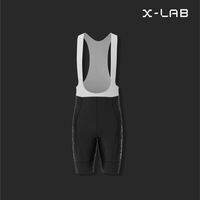
XDS | Moisture Wicking Quick Drying Cycling Bib Shorts
₱4,633.91₱5,755.29
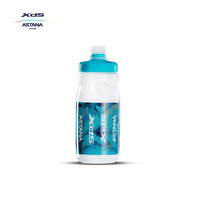
XDS | Astana Team Edition Water Bottle 620ml
₱852.70₱1,188.56
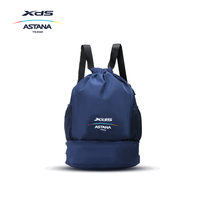
XDS | Tour de France Team Edition Rope-Drawstring Waterproof Large-Capacity Backpack
₱1,319.40₱2,448.66
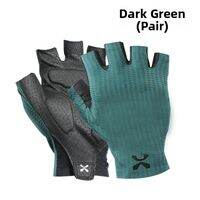
XDS | Anti-slip Breathable Shockproof Riding Gloves
₱1,732.92₱1,955.49
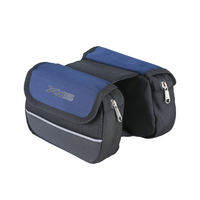
XDS | Front Tube Bicycle Pouch
₱546.07₱1,223.45
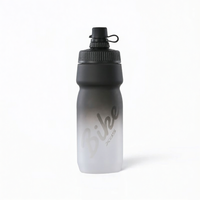
XDS | Lightweight Universal Bike Water Bottle Cage
₱643.34
Buy on Lazada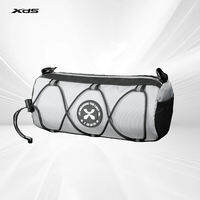
XDS | Waterproof Bike Handlebar Bag
₱1,115.94
Buy on Lazada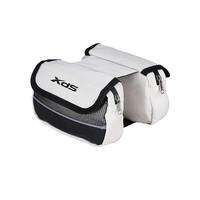
XDS | Universal Bike Bag for Mountain and Road Bikes
₱870.50
Buy on LazadaAbout XDS
XDS, also known as Xidesheng (喜德盛), is a Chinese bicycle manufacturer headquartered in Shenzhen, Guangdong. Founded in 1995, the company has evolved from a domestic manufacturer into a large vertically integrated cycling enterprise encompassing research and development, materials science, frame manufacturing, complete bicycle production, sales, and after-sales service.1
XDS is particularly associated with carbon-fiber bicycle technology, lightweight frames, road bikes, mountain bikes, electric bicycles, and performance cycling. Its international profile has risen significantly in recent years through the development of the X-LAB performance brand and its partnership with the XDS Astana Team in the UCI WorldTour.2
Basic information
| Field | Information |
|---|---|
| Brand name | XDS |
| Chinese name | 喜德盛 |
| Company | Shenzhen Xidesheng Bicycle Co., Ltd. (深圳市喜德盛自行车股份有限公司) |
| Founded | 1995 |
| Headquarters | Shenzhen, Guangdong, China |
| Industry | Bicycle manufacturing and cycling products |
| Main products | Road bikes, MTB, e-bikes, city bikes, folding bikes, children’s bikes and components |
| Performance brand | X-LAB |
| Major materials | Carbon fiber, aluminum and magnesium alloys |
| International presence | Products distributed in 50+ countries/regions |
| Professional team | XDS Astana Team |
| Positioning | From mass-market bicycles to high-performance racing bicycles |
Government sources in Shenzhen describe XDS as one of the world’s top three bicycle manufacturers, operating five production bases with products sold in more than 50 countries and regions.3
History
Foundation — 1995
XDS traces its origins to 1995 in Shenzhen. The company initially focused on bicycle manufacturing before gradually developing capabilities in research, materials, and production.1 The Chinese name 喜德盛 (Xǐdéshèng) is commonly romanized as Xidesheng, while XDS serves as the international brand abbreviation.
Over subsequent decades, XDS expanded from conventional bicycle production into a broader manufacturing ecosystem. Its activities grew to include:
- Bicycle R&D
- Carbon-fiber development
- Aluminum-alloy technology
- Frame engineering
- Automated manufacturing
- Complete-bike assembly
- Electric bicycles
- Component manufacturing
- Testing and certification
- Domestic and international distribution
This vertical-integration strategy became a defining characteristic of the company.
Manufacturing and technology
XDS distinguishes itself by operating as a manufacturer rather than solely a marketing brand, having invested heavily in manufacturing infrastructure and materials technology. Industry and government sources describe its operations as integrating R&D, manufacturing, sales, and services.3
Carbon fiber
Carbon fiber is central to the XDS identity. The company has developed proprietary carbon-fiber manufacturing capabilities and promotes lightweight carbon frames as a key technological strength. XDS has claimed more than 300 national and international patents, though exact totals vary depending on the date and counting methodology used.4
Engineering work includes:
- Carbon-fiber layup
- Frame molding
- Lightweight frame construction
- Structural optimization
- Aerodynamic development
- Carbon components
- Carbon forks and composite parts
A Shenzhen government publication detailing XDS’s Olympic-bike development reported the use of high-grade T1100 carbon fiber and independently developed weaving technology in specific racing-bike projects.
Aluminum
XDS maintains a substantial aluminum-bike business alongside its carbon offerings. The company promotes lightweight aluminum technologies such as its X6/X7 alloy series, positioning them as cost-effective alternatives to carbon that retain relatively low weight.2 This ensures the product range extends from affordable aluminum bicycles to high-end carbon racing machines.
Product range
XDS maintains a broad product portfolio serving various market segments.
Mountain bikes
Mountain bikes have traditionally been one of the most recognizable categories for XDS. The MTB range includes:
- Recreational hardtails
- Performance hardtails
- Cross-country bikes
- High-specification competition bikes
- Models equipped with varying levels of Shimano components
Consequently, the brand occupies both the everyday recreational MTB and competitive MTB markets.
Road bikes
Road cycling has become increasingly important to the company’s strategy. XDS produces:
- Endurance-oriented road bikes
- Climbing bikes
- Aero road bikes
- Racing-oriented carbon bikes
- High-end professional racing platforms
The development of X-LAB has further pushed XDS toward the premium road-bike market.
Electric bicycles
XDS manufactures electric bicycles (e-bikes) covering transportation, fitness, and recreational applications. The broader manufacturing portfolio includes electric and lithium-battery bicycles.1
City and recreational bikes
The company also produces bicycles intended for everyday transportation and leisure rather than competition. These include:
- City bicycles
- Commuter bicycles
- Recreational bicycles
- Folding bikes
- Cruiser-style bicycles
- Children’s bicycles
This extensive range positions XDS as a large bicycle manufacturer and brand group rather than a niche racing-bike company.
X-LAB: Premium performance brand
X-LAB represents a significant development in the modern history of XDS. Created as a high-performance bicycle brand, it brings the company’s advanced manufacturing and racing technology under a distinct premium identity. XDS describes X-LAB as being founded on more than three decades of engineering and manufacturing experience.2
The current X-LAB range includes models such as:
- AD9 — aero road racing bike
- AD8 — performance aero road bike
- RT9 — lightweight road platform
- GT8 — gravel bike
- RS7 — all-road/performance road bike
- RS5 — road bike
- ST5+ — electric bike
- SP5+ — fitness e-bike
- SP3 — city/fitness bicycle2
Through X-LAB, XDS is no longer positioning itself solely as a value-oriented manufacturer but is attempting to compete directly in the international high-performance bicycle market.
Professional racing
Professional cycling is a cornerstone of the international strategy for XDS. In December 2024, the company announced a strategic partnership with the Astana professional cycling team, creating the XDS Astana Team. This partnership was presented as a major step in bringing a Chinese bicycle brand to the highest level of international road cycling.3
Participation in the WorldTour, the highest level of professional men’s road cycling, allows XDS to test and promote its technology under demanding conditions. The racing program provides:
- Aerodynamic testing
- Frame development feedback
- Component testing
- Professional athlete feedback
- International brand exposure
- Credibility among enthusiast cyclists
The official XDS website describes its WorldTour involvement as integral to the development of its championship-oriented X-LAB bicycles.2
Olympic and national-team involvement
XDS has been involved with elite Chinese cycling, supplying and developing bicycles for national-level athletes, including mountain-bike racing projects. Reports on Olympic bicycle development describe the use of advanced carbon construction and lightweight engineering in competition bicycles. This involvement supports an effort to build a reputation based on technology proven in elite competition rather than merely manufacturing volume.
Manufacturing scale
XDS operates at a significantly larger scale than many consumer-facing bicycle brands. Current company-reported figures claim:
- 5 global factories
- 3,000+ retail stores
- 190 distributors
- 14,000+ employees
- Presence in 50 countries
- Approximately 8 million bikes sold annually5
While these figures are self-reported and may vary across different sources and years, they indicate a manufacturing scale substantially larger than that of typical boutique bicycle brands.
Business model
The XDS business model combines several levels of the bicycle industry:
- Manufacturing: Producing frames, bicycles, and components at significant scale.
- Technology development: Investing in carbon fiber, aluminum alloys, frame engineering, and manufacturing processes.
- Own-brand sales: Selling bicycles under the XDS name rather than remaining solely an OEM/ODM manufacturer.
- Premium branding: Moving into the high-end performance market through X-LAB.
- Professional racing: Utilizing the XDS Astana project as an international technology and marketing platform.
The strategy can be summarized as a progression from manufacturing scale to technology, own-brand development, premium products, professional racing, and finally global brand recognition.
XDS vs. X-LAB
It is useful to distinguish between the main brand and the performance sub-brand.
| XDS | X-LAB | |
|---|---|---|
| Role | Main bicycle brand/manufacturer | Premium performance brand |
| Market | Broad | High-performance |
| Products | MTB, road, city, e-bike, folding, etc. | Primarily performance road/gravel/e-mobility |
| Price range | Broad | Generally higher |
| Target rider | Everyday through enthusiast | Performance/enthusiast/racing |
| Technology | XDS manufacturing platform | Advanced XDS technology |
| Racing identity | Growing | Very strong |
| WorldTour connection | XDS Astana | Major platform for X-LAB |
The official site explicitly describes X-LAB as a championship-oriented line built on the company’s long engineering history.2
Brand positioning
Historically, the primary competitive advantage of XDS has been value combined with manufacturing capability. While Chinese bicycle brands have often been perceived as inexpensive OEM producers with limited brand recognition, XDS is attempting to shift this paradigm through Chinese engineering, vertical manufacturing, carbon technology, proprietary branding, and WorldTour racing.
International media coverage, such as reviews of the X-LAB AD9, has noted the brand’s emergence as a competitor to established Western performance brands, citing its WorldTour presence as evidence of increasing credibility for Chinese bicycle manufacturers.
Strengths
Manufacturing capability
The scale of XDS allows for development and manufacturing volumes impossible for smaller boutique brands.
Carbon expertise
Carbon-fiber engineering remains one of the company’s most critical technical strengths.
Vertical integration
XDS emphasizes control over materials, frame production, testing, and assembly rather than relying entirely on outsourcing.
Broad product range
The company serves diverse customers, from buyers of inexpensive recreational bikes to serious road racers.
Racing development
The XDS Astana program provides a vital real-world environment for product development.
Value
Compared to some established European and American performance brands, XDS and X-LAB products often offer competitive specifications for their price, although newer X-LAB models are no longer positioned as budget options.
Weaknesses and challenges
Brand recognition
In markets like Europe and North America, competitors such as Trek, Specialized, Giant, Cannondale, Canyon, Pinarello, and Cervélo possess much longer histories of consumer recognition.
Premium-brand perception
Transitioning from a large-scale manufacturer to a premium racing brand requires consumers to associate the name with high-end engineering and desirable products rather than just good value.
Dealer network
High-end bicycles rely heavily on professional dealers for fitting, service, and after-sales support. Building this infrastructure internationally is a time-intensive process.
Chinese-brand perception
Despite the deep embedding of Chinese manufacturing in the global bicycle industry, Chinese consumer-facing brands remain relatively young internationally. The WorldTour strategy is partly an attempt to address this perception gap.
XDS in Singapore
XDS products are available in neighboring Singapore, where Pro Bike Singapore identifies itself as an official distributor. This market is notable for its strong cycling culture despite a small geographical size, with demand spanning road cycling, recreation, commuting, folding bikes, MTB, e-bikes, and performance cycling. For buyers in the Philippines, the regional availability and distributor networks in Southeast Asia may be relevant considerations regarding specifications, pricing, and warranty support.
Evolution and assessment
XDS is best understood as a large-scale Chinese bicycle manufacturer transitioning into a globally recognized brand. Its evolution can be traced as follows:
- 1995: Established as a Chinese bicycle manufacturer.
- 2000s: Expansion of manufacturing, materials, and domestic branding.
- 2010s: Increased emphasis on carbon fiber, lightweight engineering, and international markets.
- 2020s: Expansion of premium performance bicycles and international racing.
- Today: Combination of XDS, X-LAB, WorldTour racing, and global distribution.
The XDS Astana partnership serves as a primary symbol of this transformation, with Shenzhen government sources describing it as a historic step for Chinese bicycle brands seeking greater global influence.3
XDS represents a significant case study in the transition from large-scale manufacturing to technology ownership and global consumer branding. The company operates across multiple layers: mass-market and enthusiast bicycles under XDS; carbon fiber, aluminum, and frame production via its manufacturing arm; premium performance bicycles under X-LAB; and international technology validation through XDS Astana. This combination of major manufacturer scale with an ambitious premium-brand and professional-racing strategy makes XDS a distinctive entity in the global bicycle industry.