Shop on Lazada
Yoshimura products
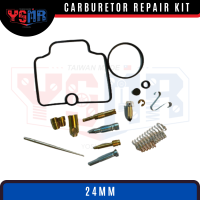
Carburator Repair Kit 24MM / 28MM / 30MM
₱79.00₱120.00
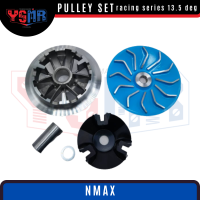
Yoshimura (YSMR) Pulley Set Racing Series 13.5 Deg for NMAX
₱1,699.00₱3,500.00
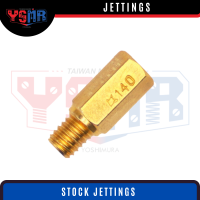
Yoshimura (YSMR) Stock Jettings
₱60.00₱200.00
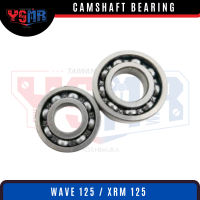
Yoshimura (YSMR) Camshaft Bearing for Wave 125 / XRM 125
₱167.00₱500.00
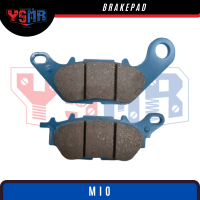
Yoshimura (YSMR) Brake Pad for MIO
₱99.00₱300.00
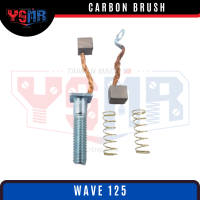
CARBON BRUSH FOR WAVE 125
₱50.00
Buy on Lazada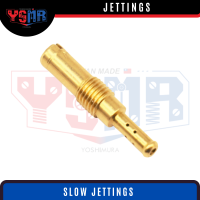
Yoshimura (YSMR) Slow Jettings
₱60.00₱200.00
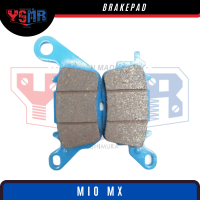
Yoshimura (YSMR) Brake Pad for MIO MX
₱99.00₱300.00
About Yoshimura
Yoshimura is a Japanese motorcycle-performance and racing brand best known internationally for high-performance exhaust systems, engine tuning, racing technology, and performance parts. Founded in 1954 by Hideo “Pop” Yoshimura in Fukuoka, Japan, the company grew from a small tuning operation into one of the most recognizable names in motorcycle racing and the aftermarket performance industry.1
Today, “Yoshimura” functions as a global group centred on Yoshimura Japan, with major operations including Yoshimura R&D of America in the United States and Yoshimura Asia in Thailand. The group integrates racing, engineering, manufacturing, and sales of motorcycle performance products.2
Overview
| Item | Information |
|---|---|
| Brand | Yoshimura |
| Japanese name | ヨシムラ |
| Founded | 1954 |
| Founder | Hideo “Pop” Yoshimura |
| Original location | Fukuoka, Japan |
| Current Japanese company | Yoshimura Japan Co., Ltd. |
| Industry | Motorcycle performance, motorsport, engineering |
| Best known for | Performance exhausts, engine tuning, racing |
| Major markets | Japan, United States, Europe, Asia and other global markets |
| Major related companies | Yoshimura R&D of America, Yoshimura Asia |
| Major racing association | Suzuki, particularly superbike and endurance racing |
| Current racing involvement | FIM Endurance World Championship and Japanese racing activities |
Yoshimura Japan currently lists its business activities as research and development for motorcycle and automobile parts, racing, and the manufacturing and sales of motorcycle and automobile performance parts. Its headquarters are located in Aikawa, Kanagawa Prefecture, Japan.3
Origins: Hideo “Pop” Yoshimura
The history of Yoshimura begins with Hideo Yoshimura, commonly known as “Pop” Yoshimura.
Born in 1922 in Fukuoka Prefecture, Hideo originally had an interest in aviation and became involved with aircraft engineering. His mechanical background later became fundamental to his approach to motorcycle tuning.4
After World War II, Yoshimura developed a reputation for working on motorcycles, particularly machines belonging to American servicemen stationed in Japan. He became especially skilled at extracting more performance from existing engines rather than simply replacing components.
In 1954, he established Yoshimura Motors in Fukuoka. The company’s early customers included American military personnel, and Yoshimura’s tuning abilities quickly earned a strong reputation. The company states that he eventually acquired the nickname “God Hand” because of his extraordinary tuning ability.5
This philosophy—careful mechanical work, experimentation, racing, and extracting maximum performance from an engine—became the foundation of the Yoshimura brand.
The early racing years
Racing was never merely advertising for Yoshimura; it was effectively part of the company’s engineering-development process.
Pop Yoshimura participated in Japanese road and drag racing while developing engines and motorcycles. One of the company’s earliest major achievements came in 1964, when a Yoshimura-prepared Honda CB72/CB77-based machine won the Suzuka 18 Hours Endurance Race.6
That victory was significant because endurance racing provided exactly the sort of environment in which Yoshimura’s approach could be demonstrated:
- engine performance;
- durability;
- cooling;
- exhaust efficiency;
- fuel delivery;
- chassis setup;
- reliability under sustained high load.
The company’s racing activities subsequently became an essential part of its identity.
Move to Tokyo
In 1965, Yoshimura moved from Fukuoka to Fussa, Tokyo, near the U.S. Yokota Air Base.
The company became known as Yoshimura Competition Motors. During this period, Pop expanded beyond motorcycles and worked on automobile engines as well, including those of Honda’s S600 and S800 sports cars.7
This era was significant because Yoshimura was evolving from a local motorcycle tuner into a more sophisticated motorsport engineering company.
The company also developed a distinctive identity around the Japanese ヨシムラ name and logo, which would eventually become recognisable throughout the global motorcycle community.8
Honda CB750 and the birth of the Yoshimura exhaust legend
One of the most important chapters in Yoshimura’s history arrived with the Honda CB750.
The CB750’s inline-four engine presented an enormous opportunity for performance tuning. Yoshimura worked on the engine itself—developing high-performance cylinder-head and camshaft modifications among other things—and created a 4-into-1 exhaust system.
In 1971, a Yoshimura-tuned Honda CB750 engine was supplied to Krause Honda for Daytona competition, while a prototype Yoshimura 4-into-1 racing exhaust was tested in competition in Ontario.9
In 1972, Yoshimura began selling a 4-into-1 exhaust system commercially for motorcycles such as the Honda CB and Kawasaki Z1. Yoshimura Japan describes this as the world’s first commercially available 4-into-1 exhaust system.10
This marked a turning point. Yoshimura was no longer simply a tuner building special racing engines; it had begun creating performance technology that ordinary motorcycle owners could purchase.
Expansion into the United States
Yoshimura’s ambitions extended beyond Japan.
In late 1972, Yoshimura Racing was established in Simi Valley, California, as a joint venture involving the Yoshimura family and American partners.11
The American market was extremely important due to the rapid development of large-displacement Japanese motorcycles and American superbike racing.
In 1973, Yoshimura’s American operation achieved a series of impressive results, including speed records with the Kawasaki Z1 at Daytona and Bonneville, as well as strong international racing performances.12
In 1975, the American operation was reorganised as Yoshimura Research & Development of America, Inc., commonly abbreviated Yoshimura R&D.13
The Kawasaki Z1 era
The Kawasaki Z1 became another landmark motorcycle for Yoshimura.
The Z1’s 903 cc inline-four engine was one of the most important Japanese superbike engines of the era. Yoshimura developed performance modifications and exhaust systems specifically for it.
In 1973, Yoshimura-prepared Kawasaki Z1 machines established multiple speed records at Daytona and elsewhere. Consequently, the company’s performance reputation spread far beyond Japan.14
The Z1 demonstrated one of Yoshimura’s defining philosophies:
Take an already powerful production motorcycle and turn it into a significantly more capable machine through engineering.
That philosophy remains visible in Yoshimura products today.
The Suzuki partnership
Perhaps the most important manufacturer relationship in Yoshimura’s history is its long association with Suzuki.
The relationship became particularly significant in 1978, when Yoshimura switched its American racing efforts to Suzuki.
The results were immediate. Yoshimura-built Suzuki GS1000 motorcycles became extremely competitive in American superbike racing. According to Yoshimura R&D, Steve McLaughlin won the Daytona Superbike race in 1978, and Yoshimura/Suzuki then won four consecutive Daytona Superbike races from 1978 through 1981.15
The partnership also produced championship success. Wes Cooley won the AMA Superbike Championship in 1979 and 1980 on Yoshimura-prepared Suzuki machinery.16
This period effectively established Yoshimura as one of the defining names of early American superbike racing.
Suzuka 8 Hours
Yoshimura’s racing history is closely connected with the Suzuka 8 Hours, one of the world’s most prestigious motorcycle endurance races.
Although the company had already won the Suzuka 18-hour endurance race in 1964, its later relationship with Suzuki elevated its endurance-racing profile considerably.
In 1978, Yoshimura entered the Suzuka 8 Hours with the new Suzuki GS1000. The team won the race, securing one of Yoshimura’s most famous victories.17
The significance of this victory extended beyond a single race. Yoshimura demonstrated that the same engineering philosophy used for American superbike racing could succeed in a demanding international endurance event. Suzuka subsequently became one of the most important stages in the Yoshimura story.
Yoshimura Japan
While the American operation developed its own identity around U.S. racing, the Japanese side continued developing products and racing technology.
The company eventually became Yoshimura Japan Co., Ltd. in 1984.18
Yoshimura Japan subsequently developed numerous exhaust technologies, including:
- Cyclone exhaust systems;
- Duplex Cyclone;
- Tri-Oval silencers;
- Duplex exhaust technology;
- MJN carburetors;
- engine components;
- chassis components;
- racing parts.
The company describes its Duplex exhaust, MJN carburettor and Tri-Oval silencer as technologies developed from its engineering philosophy and subsequently used in racing.19
Yoshimura and exhaust technology
Although Yoshimura is fundamentally a performance-engineering brand, the public generally knows it best for its exhaust systems.
This is because the exhaust became one of the most accessible ways to bring Yoshimura’s racing technology to production motorcycles.
A Yoshimura exhaust is generally designed around several objectives:
Performance
The exhaust is engineered to influence exhaust gas flow and the engine’s overall breathing characteristics.
Weight reduction
Racing-oriented exhaust systems can substantially reduce weight compared with stock systems.
Sound
Yoshimura exhausts have traditionally placed considerable emphasis on producing a distinctive performance-oriented exhaust note while meeting applicable noise requirements for street-legal products.
Appearance
The exhaust is treated as a design component rather than simply a functional pipe. Yoshimura has developed distinctive shapes and finishes, including the company’s well-known oval and multi-section silencer designs.
Racing-derived development
Most importantly, Yoshimura’s product development has historically been connected to racing. The company explicitly describes its philosophy as creating products derived from racing for motorcycle users.
Yoshimura product range
Yoshimura today is considerably broader than an exhaust manufacturer.
Yoshimura Japan’s current product categories include:20
Exhaust
The company’s most famous category:
- full systems;
- slip-ons;
- racing exhausts;
- street exhausts;
- Cyclone systems;
- various silencer configurations.
Engine
Performance-oriented components and engine-development products.
Electrical
Electrical and electronic performance components.
Chassis
Components intended to improve motorcycle handling and chassis performance.
Kit Parts
Competition-oriented components intended for racing or specialised applications.
Complete motorcycles
Yoshimura has also produced complete or highly modified motorcycle packages.
Maintenance
Parts and products associated with maintaining Yoshimura-equipped motorcycles.
Merchandise
Clothing, accessories, decals and other Yoshimura-branded goods.
Automobile parts
Although motorcycles remain the core of the brand, Yoshimura Japan also maintains an automobile-performance category.21
Yoshimura R&D of America
The American branch deserves separate treatment because it developed a particularly strong identity around American motorcycle racing.
The company moved its American headquarters from North Hollywood to Chino, California, in 1981, where Yoshimura R&D remains based.22
Its American racing history includes:
- AMA Superbike;
- motocross;
- Supercross;
- off-road racing;
- endurance racing;
- manufacturer partnerships;
- aftermarket performance development.
Yoshimura R&D states that its racing programmes have accumulated more than 30 AMA, WORCS and GNCC titles since 1999, in addition to championships from earlier periods.23
Yoshimura and Suzuki
The Yoshimura–Suzuki relationship is one of the most recognisable partnerships in motorcycle racing.
It produced famous machines based on models such as:
- GS1000;
- GSX-R750;
- GSX-R1100;
- GSX-R1000.
The partnership was particularly influential in the development of the GSX-R racing legacy. Yoshimura’s racing success helped establish a connection between Suzuki’s production motorcycles and high-level racing performance.
The relationship also extended into endurance racing and eventually became associated with the Yoshimura Suzuki Endurance Racing Team, commonly known as Yoshimura SERT Motul.
Yoshimura SERT Motul
In modern international racing, one of the most important Yoshimura operations is Yoshimura SERT Motul, competing in the FIM Endurance World Championship (EWC) with Suzuki machinery.
The team represents the continuation of a relationship spanning decades: Yoshimura engineering, Suzuki motorcycles, and endurance racing.
As of the 2026 EWC season, Yoshimura SERT Motul continues to compete internationally. At the 2026 24 Heures Motos, the team finished second, while at the 2026 Suzuka 8 Hours it finished sixth after a difficult, weather-affected race.24
Major Yoshimura technologies
Several technologies have become closely associated with the Yoshimura name.
4-into-1 exhaust
One of the technologies that established Yoshimura’s reputation. Four exhaust headers converge into a single collector, allowing the exhaust system to be optimised for performance.
The CB750 and Z1 helped make Yoshimura’s 4-into-1 systems famous in the 1970s.25
Cyclone
The Cyclone became one of Yoshimura’s signature exhaust-system families. It represented the company’s effort to combine performance-oriented exhaust engineering with practical street-bike requirements.
Duplex Cyclone
Yoshimura later developed Duplex Cyclone, an evolution of its exhaust technology. The company identifies its invention as part of its historical engineering milestones.26
Tri-Oval
The Tri-Oval silencer became another recognisable Yoshimura design. Its distinctive triangular/oval form helped differentiate Yoshimura exhausts visually as well as mechanically.
MJN
MJN, or Multiple Jet Nozzle, is associated with Yoshimura’s carburettor technology. It represents the company’s broader philosophy that performance improvement is not limited to exhaust systems; fuel delivery and engine behaviour are equally important.
The Yoshimura engineering philosophy
Yoshimura’s identity can essentially be summarised as:
Racing → experimentation → engineering → production product.
Rather than treating racing and consumer products as completely separate activities, Yoshimura has historically used racing as a laboratory.
The company’s current philosophy emphasises:
“Persistence is Power!”
and maintains a commitment to racing and to creating products derived from racing.27
This philosophy explains why Yoshimura products tend to be marketed around performance, engineering, craftsmanship and racing heritage, rather than simply styling.
The Yoshimura family
Yoshimura is unusual among major motorcycle-performance brands because the family itself is central to its history.
Hideo “Pop” Yoshimura
Founder and original technical figure. He established the company in 1954 and built its reputation as an engine tuner and racer.
Fujio Yoshimura
Pop’s son, Fujio Yoshimura, became an important second-generation leader. He helped develop Yoshimura’s American operations and later returned to Japan to lead Yoshimura Japan. His influence was particularly important in the company’s product development and international expansion.28
Later generations
Yoshimura Japan remains a family-associated company while operating as a professional engineering and manufacturing organisation. Its current corporate information lists Yohei Kato as president, with Fujio Yoshimura as corporate adviser and Yusaku Yoshimura as a director.29
Corporate structure
“Yoshimura” is not simply one factory or one exhaust company. The broader Yoshimura Group includes regional operations.
According to Yoshimura Japan, the principal group structure includes:
Yoshimura Japan
🇯🇵 Japan
Yoshimura R&D of America
🇺🇸 United States
Yoshimura Asia
🇹🇭 Thailand
The group states that these operations cooperate in people, technology, information and products while maintaining distinct regional cultures and activities.30
Yoshimura Japan currently lists 80 employees, ¥50 million in capital, and its headquarters in Aikawa, Kanagawa.31
Relationship with motorcycle manufacturers
Yoshimura has worked with many major Japanese motorcycle manufacturers throughout its history.
Its history is particularly associated with:
- Honda
- Suzuki
- Kawasaki
- Yamaha
The company’s current Japanese operations list major business relationships with Suzuki, Honda Motorcycle Japan, Kawasaki Motors Japan and other companies.32
However, Suzuki is by far the most historically important manufacturer association in Yoshimura’s racing identity, particularly because of the company’s superbike and endurance-racing successes.
Reputation
Among motorcycle enthusiasts, Yoshimura is generally regarded as a premium, racing-derived performance brand.
Its reputation stems from several factors working together:
Racing heritage
Decades of competition at international and national levels.
Engineering
A history that began with hands-on engine tuning rather than merely selling accessories.
Manufacturing
The company develops and manufactures performance components rather than simply rebadging generic parts.
Exclusivity
Yoshimura products are generally positioned above ordinary aftermarket components.
Brand recognition
The Yoshimura logo, exhaust shapes and racing colours have become strongly associated with Japanese superbikes.
Manufacturer relationships
Its long association with Suzuki gives the brand particular credibility among Suzuki enthusiasts.
Yoshimura in modern motorcycles
Today, Yoshimura produces parts for a very broad range of motorcycles.
Current Yoshimura Japan applications include iconic models such as:
- Suzuki Hayabusa;
- Suzuki Katana;
- Suzuki GSX-R models;
- Kawasaki Z1;
- Kawasaki Z900RS;
- Honda CT125;
- Honda Dax 125;
- Honda Monkey 125;
- Honda GB350/GB350S;
- Kawasaki Ninja 1100SX/Ninja 1000SX.
The company’s current catalogue also includes modern performance parts, racing-only components and accessories.33
Yoshimura and the changing motorcycle industry
Yoshimura has acknowledged the industry’s movement towards electrification.
In its 70th-anniversary message, the company noted the global shift from internal-combustion engines towards electric motors but emphasised that it continues to see strong enthusiasm for internal-combustion motorcycles among enthusiasts and industry participants.34
This is particularly relevant to Yoshimura because the company’s identity is deeply connected with internal-combustion-engine performance.
For Yoshimura, an exhaust is not merely an accessory. It represents decades of development around:
airflow → combustion → power → sound → racing.
Important historical timeline
| Year | Event |
|---|---|
| 1922 | Hideo “Pop” Yoshimura is born in Fukuoka |
| 1954 | Yoshimura Motors established in Fukuoka |
| 1964 | Yoshimura wins the Suzuka 18 Hours |
| 1965 | Moves to Fussa, Tokyo; becomes Yoshimura Competition Motors |
| 1971 | Yoshimura 4-into-1 exhaust prototype appears in CB750 racing |
| 1972 | Commercial 4-into-1 exhaust systems introduced; U.S. expansion begins |
| 1973 | Yoshimura Racing established in California; major Z1 speed-record successes |
| 1975 | U.S. operation becomes Yoshimura R&D of America |
| 1978 | Major Yoshimura–Suzuki racing relationship begins |
| 1978 | Yoshimura/Suzuki wins Suzuka 8 Hours |
| 1979–80 | Wes Cooley wins AMA Superbike championships |
| 1978–81 | Yoshimura/Suzuki wins four consecutive Daytona Superbike races |
| 1981 | U.S. operation moves to Chino, California |
| 1984 | Company becomes Yoshimura Japan Co., Ltd. |
| 1986 | Duplex Cyclone developed |
| 1989 | Hideo Yoshimura becomes chairman; Fujio Yoshimura becomes president |
| 1995 | Pop Yoshimura dies |
| 2017 | Yoshimura Asia begins full-scale operations in Thailand |
| 2024 | Yoshimura celebrates 70 years |
| 2026 | Yoshimura continues FIM EWC competition with Yoshimura SERT Motul |
The historical milestones are compiled primarily from Yoshimura Japan’s official history and Yoshimura R&D’s historical material.35
What makes Yoshimura different
A useful way to understand Yoshimura is to compare it with a standard aftermarket exhaust manufacturer.
A typical exhaust company might primarily manufacture replacement exhaust systems.
Yoshimura’s historical model differs:
Racing
↓
Engine development
↓
Exhaust development
↓
Testing
↓
Manufacturing
↓
Production performance parts
↓
Racing again
That cycle has existed since Pop Yoshimura’s earliest days.
This explains why Yoshimura’s brand identity is much more closely tied to motorsport engineering than to simple aftermarket customisation.
Legacy
Yoshimura’s greatest contribution to motorcycle culture may be the way it helped connect Japanese production motorcycles with professional-level performance tuning.
Pop Yoshimura began with relatively simple resources in postwar Japan. Over the following decades, the name became associated with:
- Honda CB-series tuning;
- Kawasaki Z1 performance;
- Suzuki GS-series superbikes;
- GSX-R racing;
- AMA Superbike;
- Daytona;
- Suzuka 8 Hours;
- FIM endurance racing;
- high-performance exhaust systems;
- Japanese motorcycle culture.
The company has now existed for more than seven decades, while continuing to combine racing and product development.36
Yoshimura is a Japanese motorcycle-performance company founded by Hideo “Pop” Yoshimura in 1954 that evolved from a small Fukuoka engine-tuning shop into a globally recognised racing and performance brand, particularly famous for its exhaust systems, engine technology, and decades of success with motorcycles such as the Honda CB750, Kawasaki Z1 and Suzuki GSX-R/GS series.
If one encounters a Yoshimura exhaust on a motorcycle, they are looking at more than an aftermarket muffler: the product represents a brand whose identity was built around engine tuning, racing, experimentation, and translating race-developed technology into production motorcycle parts.37
References
- History | Yoshimura Japan
- Outline | Yoshimura Japan
- ヨシムラ グループ | ヨシムラジャパン
- Yoshimura history – 01 | ヨシムラジャパン
- 沿革・歴史 | ヨシムラジャパン
- Yoshimura History #06 – Yoshimura R&D of America, Inc
- Yoshimura History #05 – Yoshimura R&D of America, Inc
- Part #08: 1972-1973 Riding into the U.S. Market on CB & Z1 – Yoshimura R&D of America, Inc
- Yoshimura history – 08 | ヨシムラジャパン
- Yoshimura History Part #09: 1972~1975 Starting Over as Yoshimura R&D – Yoshimura R&D of America, Inc
- About Us – Yoshimura R&D of America, Inc
- YOSHIMURA HISTORY #13 Behind the First Suzuka 8H Victory – Yoshimura R&D of America, Inc
- Greeting | Yoshimura Japan
- Yoshimura | Yoshimura Japan
- Race | Yoshimura Japan
- Rd.3 – 8 Hours of Suzuka 2026- Final | Yoshimura Japan
- 会社概要 | ヨシムラジャパン
- ヨシムラジャパン
- Yoshimura Japan
- 2026 FIM世界耐久選手権(EWC) Rd.3 鈴鹿8時間耐久ロードレース 予選 | ヨシムラジャパン
- 2026 FIM世界耐久選手権(EWC) Rd.2 スパ8時間レース 決勝 | ヨシムラジャパン
- 2026 FIM世界耐久選手権(EWC) Rd.2 スパ8時間レース 予選 | ヨシムラジャパン
- Rd.2 – 8 Hours of Spa Motos – Qualifying | Yoshimura Japan
- Rd.1 – 24 Heures Motos 2026 – Final | Yoshimura Japan
- Yoshimura History Series – Yoshimura R&D of America, Inc
- Yoshimura History Series – Part 27: Polen Makes His All-Japan Debut and Wins 2nd Place in Suzuka 8H – Yoshimura R&D of America, Inc
- Yoshimura Japan Announces New President | Yoshimura Japan
- Part #19: The Dawn of the 750cc Era – Yoshimura R&D of America, Inc
- Part #20: 1985 New Kids on a New Weapon – Yoshimura R&D of America, Inc
- Part #18: From the 8V GS to the 16V GSX Katana – Yoshimura R&D of America, Inc
- YOSHIMURA HISTORY #15 The Crankshaft that Swept the Daytona – Yoshimura R&D of America, Inc
- YOSHIMURA HISTORY #14 Pierce, Cooley, and Emde Complete a 1-2-3 Finish – Yoshimura R&D of America, Inc
- Yoshimura is building a YZF-R7, and we’re going to race it – Yoshimura R&D of America, Inc
- YOSHIMURA BLOG: ヨシムラヒストリー17紹介!
- Yoshimura History #12 1978: The Family’s First Victory in AMA Superbik – Yoshimura R&D of America, Inc
- Yoshimura History #11 1976~1977: The Dawn of Yoshimura Suzuki – Yoshimura R&D of America, Inc
- Yoshimura History Part 10: 1973~1977 Taming the Four-cylinder Monster – Yoshimura R&D of America, Inc