Shop on Lazada
ZEISS products
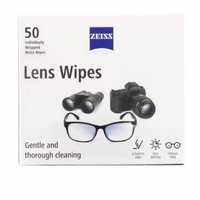
Zeiss Lens Glasses Screen Wipes
₱500.00
Buy on Lazada
Zeiss | Zeiss Lens Cleaner 100 Sheets Eyeglasses Sunglasses Smartphone Screen
₱802.12₱1,415.51
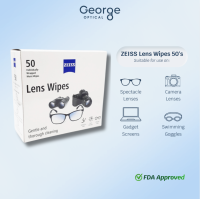
ZEISS Lens Cleaning Wipes / Eyeglasses and Screen cleaner / Box of 50 individual pre-moistened packets of lens cloth
₱500.00
Buy on Lazada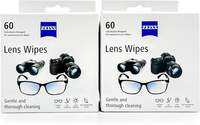
Zeiss Lens Wipe new formula 120s per box
₱2,571.00₱3,829.00
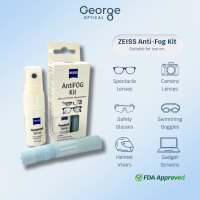
ZEISS AntiFog kit / Anti-fog spray / Fog-free vision up to 72 hours
₱750.00
Buy on Lazada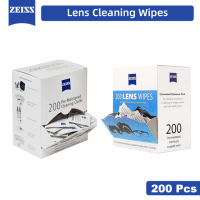
ZEISS Lens Cleaning Wipes Glasses cleaning paper 200pcs
₱1,888.00₱4,831.00
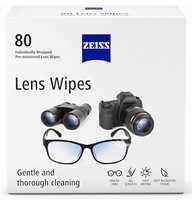
ZEISS Pre-Moistened Lens Cleaning Wipes 10 20 50 80 Count
₱700.00
Buy on Lazada
AntiFOG Kit (Spray 15ml+Wiper) by Zeiss
₱600.00₱750.00
About ZEISS
ZEISS is the global brand and corporate identity of Carl Zeiss AG, a German technology company specialising in optics, precision mechanics, optoelectronics, photonics, medical technology, microscopy, industrial metrology, semiconductor manufacturing equipment, and vision care. Founded by Carl Zeiss in Jena, Germany, in 1846, the company evolved from a small microscope workshop into one of the world’s leading research-driven optical technology groups.1 Headquartered in Oberkochen, Baden-Württemberg, Germany, ZEISS operates in approximately 50 countries and employs roughly 46,600 people worldwide. The company is ultimately owned by the Carl Zeiss Foundation, distinguishing it from conventional shareholder-owned corporations through its unique foundation-owned structure.2 ZEISS defines itself as a technology company with a portfolio concentrated on future-oriented markets in optics, precision mechanics, and optoelectronics.3 Its official website is zeiss.com.
Basic Information
| Item | Information |
|---|---|
| Full corporate name | Carl Zeiss AG |
| Brand | ZEISS |
| Founded | 1846 |
| Founder | Carl Zeiss |
| Origin | Jena, Thuringia, Germany |
| Headquarters | Oberkochen, Baden-Württemberg, Germany |
| Industry | Optics, optoelectronics, precision mechanics, photonics, medical technology |
| Ownership | Carl Zeiss Foundation |
| Main markets | Semiconductor technology, industrial metrology, microscopy, medical technology, vision care, optics |
| Global presence | Around 50 countries |
| Employees | Around 46,600 |
| Current CEO | Andreas Pecher |
| Major corporate entity | Carl Zeiss AG |
| Website | zeiss.com |
Brand and Corporate Structure
A distinction exists between ZEISS as a brand and the individual companies operating within the ZEISS Group. Carl Zeiss AG serves as the strategic management holding company, overseeing specialised businesses in semiconductor manufacturing, industrial quality, microscopy, medical technology, and vision care.4 While consumer associations often link ZEISS primarily to camera lenses, this represents only a portion of the modern ecosystem. ZEISS technology is integral to advanced semiconductor lithography optics, scientific and electron microscopy, ophthalmology and eye surgery, eyeglass lenses, industrial coordinate-measuring machines, cinematography, spectroscopy, planetariums, mobile-phone imaging, hunting and observation optics, and research laboratory equipment.
Foundation and Early History
The company was established by Carl Zeiss (1816–1888), who opened a workshop in Jena in 1846 specialising in precision mechanics and optical instruments.5 Initially functioning as a precision workshop rather than a large corporation, the business increasingly focused on microscopes, which became the foundation of its scientific reputation. The transformation into a major technological enterprise began when Zeiss started collaborating with scientists, moving beyond traditional craftsmanship.
Ernst Abbe and Scientific Optics
Ernst Abbe (1840–1905) joined Carl Zeiss in 1866 as a physicist and fundamentally changed the company’s approach to optical design.6 Rather than relying on trial-and-error methods, Abbe applied mathematical and scientific principles to microscope construction. This collaboration between Carl Zeiss (entrepreneur and instrument maker), Ernst Abbe (physicist and optical scientist), and Otto Schott (chemist and glass specialist) created the technological foundation of the modern company. Zeiss provided the industrial base, Abbe contributed optical science, and Schott supplied advanced optical glass, collectively establishing ZEISS as a scientific technology enterprise.7
Relationship with SCHOTT
The history of ZEISS is intrinsically linked to SCHOTT, another prominent German technology company. Otto Schott developed new types of optical glass with properties that significantly improved lens performance, enabling more sophisticated optical systems than geometry alone could achieve.8 This collaboration was pivotal because optical performance depends heavily on the material properties of the glass. The partnership between ZEISS and Schott helped establish the broader optical industry in Jena.
The Carl Zeiss Foundation
Following the death of Carl Zeiss, Ernst Abbe established the Carl Zeiss Foundation in 1889.9 This ownership structure ensures the company remains independent of private heirs or public stock market shareholders. The Foundation’s mandate connects the company’s success to science, education, social welfare, and long-term technological progress. Dividends generated by the company support scientific and research programmes,10 reinforcing a corporate philosophy oriented towards long-term innovation rather than short-term financial returns. This model underpins the company’s emphasis on science, innovation, and sustained technological investment.
Historical Breakthroughs in Microscopy
Microscopy is considered the technological birthplace of modern ZEISS. Production of simple microscopes began in the 1840s, followed by compound microscopes in the 1850s.11 After Ernst Abbe joined, development became increasingly scientific. A significant milestone was the introduction of homogeneous oil-immersion objectives in the late 1870s, which improved optical resolution by placing a liquid with a higher refractive index between the specimen and the objective lens.12 This innovation helped establish ZEISS as a key supplier to scientific research, and microscopy remains a core business area today.
Expansion into Optical Technology
During the late 19th and 20th centuries, ZEISS expanded well beyond microscopy into diverse fields. These include:
- Microscopy: Light microscopes, confocal microscopy, electron microscopy, digital microscopy, and imaging software.
- Photography: Camera lenses, photographic optics, and optical systems.
- Cinematography: Cinema lenses, professional filmmaking optics, and specialised imaging systems.
- Vision Care: Eyeglass lenses, ophthalmic instruments, and vision-testing technology.
- Medical Technology: Ophthalmic surgery, eye diagnostics, surgical microscopes, and visualisation systems.
- Industrial Technology: Coordinate measuring machines, optical inspection, industrial metrology, and quality-control systems.
- Scientific Technology: Spectroscopy, research microscopes, optical measurement, and laboratory imaging.
- Astronomy and Planetariums: Planetarium projectors, astronomical optics, and specialised observation systems.
- Semiconductor Manufacturing: Advanced optical systems for lithography, metrology, and inspection technologies.
ZEISS identifies planetariums, camera and cine lenses, microscopy, industrial metrology, spectroscopy, eyeglass lenses, lithography optics, electron microscopy, and medical technology as key historical milestones.13
World War II and Division
Following World War II, the division of Germany resulted in the split of the ZEISS organisation. The historical company in Jena fell within the Soviet occupation zone (East Germany), while key personnel established a new operation in Oberkochen (West Germany).14 For decades, two competing entities existed: Carl Zeiss Jena in East Germany and Carl Zeiss Oberkochen in West Germany, both inheriting parts of the original technological tradition.
Reunification
After German reunification, the two organisations were gradually reintegrated. In 1991, Carl Zeiss in Oberkochen acquired parts of the former VEB Carl Zeiss Jena, leading to the reorganisation and integration of business areas.15 This restructuring formed the basis of the modern ZEISS Group. Jena remains a critical location, serving as the company’s second-largest site worldwide with approximately 3,500 employees.16
Modern Business Segments
Contemporary ZEISS organises its principal activities into four segments: Semiconductor Manufacturing Technology, Industrial Quality & Research, Medical Technology, and Consumer Markets. Additionally, specialised businesses are grouped under ZEISS Photonics & Optics.17
Semiconductor Manufacturing Technology
This segment involves the manufacture of highly sophisticated optical systems used in semiconductor lithography and inspection to produce smaller, more powerful, and energy-efficient microchips.18 ZEISS technology supports the infrastructure behind smartphones, computers, GPUs, artificial-intelligence accelerators, servers, automotive electronics, data centres, and modern semiconductor devices.
Industrial Quality & Research
ZEISS develops industrial metrology systems that allow manufacturers to verify the precision of components. Technologies include coordinate measuring machines, optical and 3D measurement, industrial inspection, surface measurement, and quality-control software.19 These solutions serve the automotive, aerospace, mechanical engineering, electronics, medical device, and precision manufacturing industries. Industrial metrology activities within ZEISS trace their origins to 1919.
Medical Technology
Medical activities focus on ophthalmology and microsurgery, aiming to improve clinical workflows and patient outcomes through optical and digital technologies.20 Key areas include eye examination, retinal imaging, cataract and refractive surgery, glaucoma diagnosis, surgical visualisation, neurosurgery, and precision surgical applications. The company’s medical-optics history dates to the late 19th century; in 1893, Carl Zeiss produced a monocular corneal microscope for ophthalmologist Fritz Schanz.21
Vision Care
ZEISS is a major global manufacturer of ophthalmic lenses. The Vision Care business develops prescription lenses, progressive lenses, single-vision lenses, coatings, lens personalisation technologies, digital measurement systems, and solutions for eye-care professionals. Historically significant products include the Punktal lens, developed from the work of Moritz von Rohr and launched in the early 20th century.22 Current positioning emphasises visual comfort, optical performance, and lifelong eye health.
Photography and Cinematography
ZEISS maintains a strong reputation in photographic and cinematographic optics, attributed to optical precision, sophisticated design, high-quality glass, anti-reflective coatings, mechanical construction, and rigorous quality control. However, not every lens bearing the ZEISS name is manufactured entirely by the company; partnerships, licensing, and collaboration arrangements exist in various consumer imaging markets.
Partnership with Sony
A prominent modern relationship exists between ZEISS and Sony. Through cooperation, Sony has produced numerous cameras and lenses carrying the ZEISS branding, making the technology visible to digital photographers. This illustrates that ZEISS expertise can be incorporated into products through partnerships rather than solely through direct manufacturing.
Mobile Imaging
ZEISS has entered the smartphone imaging market, notably collaborating with vivo on mobile imaging systems.23 This reflects the shift towards computational photography, where miniature optics, coatings, image processing, and calibration are combined. ZEISS’s involvement extends its optical heritage into mobile form factors.
Cinematography
In professional filmmaking, ZEISS cinema optics are designed for demanding environments requiring specific resolution, contrast, flare behaviour, colour consistency, and mechanical reliability. The company has produced numerous families of professional cinema lenses over several decades, making it a familiar name among cinematographers and film studios.
Hunting and Nature Observation
ZEISS produces binoculars, spotting scopes, rifle scopes, and outdoor optical equipment for hunting and nature observation. Competing in the premium segment alongside brands such as Swarovski Optik and Leica, these products emphasise optical clarity, low-light performance, mechanical precision, durability, ergonomics, and weather resistance. Hunting and nature optics are now grouped within the broader Photonics & Optics activities.24
Microscopy Portfolio
Modern ZEISS microscopy encompasses light microscopy, fluorescence microscopy, confocal microscopy, electron microscopy, imaging systems, digital microscopy, and image-analysis software.25 These technologies are utilised in biology, medicine, neuroscience, materials science, nanotechnology, and industrial research. The microscopy business retains strong historical roots in Jena.
Strategic Focus on Precision Optics
Precision optics serves as the unifying concept across ZEISS activities. Fundamental optical knowledge is applied to diverse problems: biological imaging in microscopy, image capture in photography, vision correction in eyewear, pattern generation in semiconductor lithography, and tissue visualisation in surgery. While applications differ, the underlying expertise overlaps, constituting the company’s strategic strength.
Research and Development
Research and development (R&D) is central to ZEISS operations. In fiscal year 2024/25, the company reported revenue of €11.896 billion, EBIT of €1.552 billion, and R&D expenditure of €1.731 billion, representing approximately 15% of revenue.26 The company holds approximately 13,000 patents worldwide and employs roughly 7,300 people in R&D.27 These figures underscore a reliance on technological development rather than established consumer products alone.
Global Presence
ZEISS operates in around 50 countries with approximately 46,600 employees, more than 30 production sites, over 60 sales and service locations, and roughly 40 R&D facilities.28 Headquarters remain in Oberkochen, Germany, with other key German locations including Jena and Aalen. Internationalisation began early, with the first representative office outside Germany opening in London in 1893 and the first non-Jena production site opening in Vienna in 1906.
Comparison with Peers
ZEISS differs fundamentally from companies such as Leica, Nikon, and Canon. While those firms have significant consumer photography businesses, ZEISS derives its primary economic and technological importance from semiconductor optics, medical technology, microscopy, metrology, and vision care. Consumer photography is not its primary business, despite the brand’s visibility in that sector.
| Company | Historical Core | Major Modern Strengths |
|---|---|---|
| ZEISS | Scientific optics & microscopes | Semiconductor optics, medical technology, microscopy, metrology, vision care, premium optics |
| Leica | Cameras & microscopes | Cameras, lenses, microscopy, hunting optics |
| Nikon | Optics & cameras | Cameras, lenses, microscopes, semiconductor/industrial equipment |
| Canon | Cameras & imaging | Cameras, lenses, printing, medical imaging, semiconductor equipment |
Distinguishing Characteristics
Several factors distinguish ZEISS:
- Optical Heritage: Nearly 180 years of continuous technological history dating to 1846.29
- Science-Driven Development: The application of rigorous scientific calculation to optical manufacturing, established by the Zeiss-Abbe partnership.30
- Foundation Ownership: Ultimate ownership by the Carl Zeiss Foundation supports a long-term orientation toward science and progress.31
- Diversification: Technologies span microchips, microscopes, medical devices, eyeglasses, cameras, cinema, and industrial measurement.
- R&D Intensity: Billions of euros invested annually in research with thousands of dedicated employees.32
Visual Identity and Philosophy
The modern ZEISS visual identity is associated with the colour blue, precision, German engineering, and scientific technology. The name derives directly from founder Carl Zeiss. The company’s philosophy centres on using precision optics and scientific innovation to solve difficult technological problems. Whether improving microscopes in the 19th century or enabling advanced chip manufacturing today, the underlying commitment to solving complex challenges through optics remains consistent.
Key Figures (2024/25)
Based on the latest published annual report for fiscal year 2024/25:33
- Founded: 1846
- Headquarters: Oberkochen, Germany
- Employees: ~46,600
- Countries: ~50
- Revenue: €11.896 billion
- EBIT: €1.552 billion
- R&D Spending: €1.731 billion
- R&D Employees: ~7,300
- Patents: ~13,000
- Production Sites: 30+
- Sales/Service Locations: 60+
- R&D Facilities: ~40
Timeline of Major Milestones
| Year | Event |
|---|---|
| 1846 | Carl Zeiss establishes an optical/precision-mechanics workshop in Jena |
| 1847 | Production of simple microscopes begins |
| 1857 | First compound microscope |
| 1866 | Ernst Abbe begins working with Carl Zeiss |
| 1870s | Scientific microscope design becomes central to ZEISS |
| 1877 | Production of homogeneous oil-immersion objectives |
| 1879–1880s | Collaboration with Otto Schott on optical glass |
| 1884/85 | SCHOTT glassworks develops from the collaboration |
| 1889 | Carl Zeiss Foundation established |
| 1893 | First representative outside Germany opens in London |
| Early 1900s | Expansion into photographic, ophthalmic and other optical fields |
| 1912 | Medical-optical and eyeglass-lens divisions established |
| 1919 | Precision/industrial metrology activities established |
| 1945 | ZEISS becomes divided between East and West Germany |
| 1945–1990 | Carl Zeiss Jena and Carl Zeiss Oberkochen develop independently |
| 1991 | Reunification begins after German reunification |
| 2000s | Major expansion in medical technology, microscopy and industrial technology |
| 2010 | Carl Zeiss Vision becomes wholly owned by Carl Zeiss AG |
| 2020s | Strong expansion in semiconductor optics, digital medicine and mobile imaging |
| 2024/25 | ZEISS reports €11.896 billion revenue and €1.731 billion R&D spending |
Historical milestones are based primarily on ZEISS corporate and subsidiary histories.34
References
- History: Journey through the evolution of optics | ZEISS
- Carl Zeiss – a biography | ZEISS
- ZEISS Group
- About us – Pioneer of science in optics | ZEISS Group
- Facts & Figures | ZEISS Group
- A N N UAL R E PORT
- Ernst Abbe – physicist, inventor, entrepreneur, and social reformer | ZEISS
- 175 years of ZEISS: powering innovation for the future
- History of ZEISS subsidiaries | ZEISS
- History of the company sites | ZEISS
- ZEISS Annual Report 2024/25
- Foreword by the Executive Board
- ZEISS Half-Year Figures: Solid Performance, Clear Future Course
- Half Year Financial Communication 2025/26
- Publication of insider information pursuant to Art. 17 MAR
- Halbjahreskommunikation Geschäftsjahr 2025/26
- Veröffentlichung einer Insiderinformation nach Art. 17 MAR
- Changes to the Executive Board of Carl Zeiss AG and Management Board of Carl Zeiss Meditec AG
- Carl Zeiss Meditec Group – Carl Zeiss Meditec Group Annual Report 2024/25
- ZEISS and LG Chem strengthen photopolymer supply chain for holography
- Facts & Figures | ZEISS Group
- vivo and ZEISS Deepen their Strategic Global Imaging Partnership
- Half-year figures 2024/25 – a mixed picture across the ZEISS Group
- ZEISS Unveils New Otus ML
- ZEISS Unveils New Otus ML
- ZEISS opens new R&D and manufacturing site in Suzhou, China
- ZEISS “Photonics & Optics” to be established 2024/25
- 175 years of ZEISS
- ZEISS financial publications
- Legal Information
- Report of the Supervisory Board
- Die ZEISS Gruppe
- ZEISS Annual Report 2024/25
- Downloads – Carl Zeiss Meditec Group Annual Report 2024/25