Shop on Lazada
SANFU products
About SANFU
Overview
SANFU (Chinese: 三福) is a youth-oriented lifestyle retail brand established in Fuzhou, Fujian, China, in 1992. Originally operating as a department store focused on apparel and accessories, the company has evolved over three decades into a comprehensive retailer centered on a “trendy lifestyle” concept. Its current product assortment spans clothing, cosmetics, home goods, accessories, digital electronics, and toys. SANFU officially positions itself as a starting point for trendy lifestyles, primarily targeting consumers aged 18 to 25.1
Note: This article concerns the Chinese retail brand SANFU. It is distinct from similarly named entities in the chemical, textile, furniture, or industrial manufacturing sectors.
Corporate Profile
| Item | Details |
|---|---|
| Chinese Name | 三福 |
| Brand Name | SANFU |
| Founded | 1992 |
| Place of Origin | Fuzhou, Fujian, China |
| Industry | Retail, Lifestyle, Fashion Department Store |
| Primary Markets | Mainland China; International expansion underway |
| Core Demographic | Young consumers aged approximately 18–25 |
| Format | Offline lifestyle collection stores, retail outlets, online channels |
| Positioning | Trendy lifestyle retail |
| Vision | To help young people explore trendy lifestyles |
| Mission | To become the preferred lifestyle brand for young people |
| Headquarters | Gulou District, Fuzhou, Fujian, China |
| Official Website | SANFU Official Website |
According to official corporate information, SANFU maintains its headquarters at Jinhuang Building, No. 1 Shengfu Road, Gulou District, Fuzhou, and operates a national customer service hotline.2
History and Development
Origins (1992–1998)
The brand traces its origins to 1992 with the establishment of its predecessor, Fuzhou Rongxin Department Store. The initial business model focused on men’s and women’s clothing, alongside accessories and underwear. During this period, SANFU operated as a conventional department store centered on youth fashion consumption rather than the large-scale lifestyle format seen today.3 Emerging from Fuzhou, a coastal city in southeastern China, the brand expanded by addressing the apparel needs of local youth. This early era established the foundational brand DNA: youth-oriented fashion, multi-category offerings, high value-for-money, and daily utility.
National Expansion (1998–2007)
While initially rooted in Fujian province, SANFU began expanding nationally in the late 1990s. In 1998, the company opened a store on Changjiang Road in Hefei, Anhui, marking its first venture outside Fujian and the beginning of a nationwide chain network.4
By 2007, official records indicate that SANFU had grown to over 110 chain stores across more than 80 cities, employing over 5,000 staff members.11 During this phase, the brand shifted its focus beyond mere merchandise sales, emphasizing product curation, store environment, service quality, youthful branding, and rapid inventory turnover to attract younger demographics.
Visual Identity and Modernization (2011–2015)
In 2011, SANFU introduced a new “nine-grid” logo designed with the participation of Japanese graphic and spatial designer Hayashi Hiroyuki.5 This visual rebranding signaled a transition from a traditional department store image to a more modern, youth-centric identity. The nine-grid symbol remains a primary visual identifier for the brand.
Around 2015, expansion accelerated further. The company established regional operations in Hebei, entered the Northeast China market, and deepened partnerships with major shopping center operators such as Wanda, integrating its stores into large-scale commercial complexes.13 During this period, “visiting SANFU” became embedded in youth consumer culture, reflecting a strategic shift where the act of browsing was valued as highly as purchasing.
Lifestyle Transformation (2021–Present)
A significant brand upgrade occurred in 2021 with the launch of the first “lifestyle collection store.”14 This marked an evolution in operational logic:
- Early Era: Apparel department store focused on selling goods.
- Middle Era: Trendy retail combining merchandise with lifestyle elements.
- Current Era: Lifestyle collection store integrating products, spatial design, scenarios, and experiences.
This transformation defines SANFU’s contemporary positioning as a provider of immersive retail environments rather than a simple vendor of commodities.
Products and Services
SANFU distinguishes itself through an extensive product range, officially claiming tens of thousands of SKUs across dozens of categories to meet daily needs.6 Key categories include:
Apparel
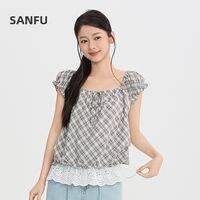
As a core traditional category, apparel offerings encompass women’s wear, men’s wear, underwear, casual daily wear, trendy fashion items, and clothing accessories.
Beauty and Personal Care
This category includes color cosmetics, skincare, beauty tools, hair accessories, and personal care items. These products foster strong engagement with young female consumers.
Accessories
Offerings include necklaces, earrings, rings, hair ornaments, bags, eyewear, and various trendy small accessories. These items are characterized by low entry price points, rapid refresh rates, and high visual appeal.
Home and Living
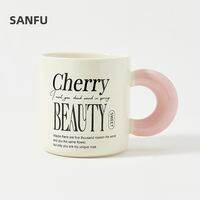
Reflecting the lifestyle pivot, home goods have become increasingly prominent. Assortments cover storage solutions, tableware, home décor, daily necessities, cultural creative products, and small household items.
Toys and Trendy Collectibles
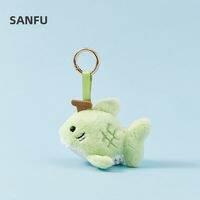
This segment features toys, designer collectibles, cultural creative merchandise, and novelty items catering to youth interests.
Digital and Miscellaneous
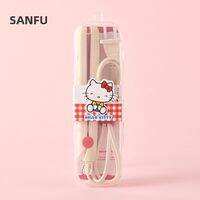
Additional categories include small digital electronics, electronic accessories, lifestyle tools, pet supplies, and other daily essentials for young consumers.
Brand materials released for the 2026 National College Advertising Art Competition describe SANFU as operating around youth daily life scenarios, covering men’s and women’s clothing, underwear, shoes, bags, cosmetics, jewelry, toys, pet supplies, and lifestyle electronics.6
Target Market and Philosophy
SANFU explicitly defines its core demographic as diverse young people aged 18 to 25.7 Unlike traditional retailers organized strictly by category, SANFU structures its merchandise around youth lifestyle scenarios. A typical shopping trip may involve purchasing clothing, accessories, cosmetics, phone cases, snacks, and home goods simultaneously, treating these items as interconnected components of a lifestyle rather than isolated products.
The brand’s stated vision is “to help young people explore trendy lifestyles,” with a mission to become their preferred lifestyle brand.7 Central to this philosophy is the concept of exploration; rather than dictating trends, SANFU encourages self-expression through varied products and combinations. The brand aims to facilitate discovery, allowing consumers to define their own preferences.
Retail Concept and Experience
Trendy Lifestyle Market
SANFU utilizes the concept of a “Trendy Lifestyle Market” to differentiate itself from conventional department stores. While traditional retail follows a hierarchy of Brand → Category → Product, SANFU organizes around Youth → Life Scenario → Product Combination → Experience. The objective is to create an undefined, fluid lifestyle experience through the integration of merchandise, space, and sensory engagement, positioning the entity as a Lifestyle Retailer rather than a standard Department Store.
In-Store Experience
Physical stores serve as critical touchpoints for brand immersion. Consumer behavior typically follows a pattern of entry, browsing, discovery, trial, coordination, and purchase. Unlike specialty stores visited for specific branded items, SANFU customers often enter without a fixed purchase goal; the motivation is frequently the exploration of new arrivals. Consequently, “browsing SANFU” has become a distinct cultural activity and a primary consumption driver.
Alignment with Consumer Shifts
The brand’s multi-category model aligns with evolving Chinese youth consumption patterns. Preferences have shifted from purely functional and price-driven decisions to considerations including aesthetics, personality expression, emotional value, and social shareability. Products that are visually appealing, photogenic, or capable of enhancing personal atmosphere drive interest even at accessible price points, underpinning the “trendy lifestyle” positioning.
Market Presence and Scale
Domestic Network
Official data from 2023 indicated that SANFU operated over 1,000 stores across large, medium, and small cities in China.14 However, subsequent public reports have cited varying figures; for instance, a 2026 partnership announcement referenced approximately 900 domestic stores.8 Available data suggests the network scale fluctuates or is reported using different statistical methodologies, but confirms a substantial nationwide footprint.
International Expansion
SANFU initiated its globalization strategy in 2025.15 In December 2025, the brand opened its first overseas location at Mall Artha Gading in Jakarta, Indonesia.16 This store replicates the multi-category model, offering fashion, beauty, home goods, and accessories tailored to local youth preferences.18
By 2026, SANFU had expanded its Indonesian presence to five locations, including Mall Artha Gading, Gandaria City, AEON Tanjung Barat, Living World Alam Sutra, and The Park Sawangan.19 This progression indicates a shift from single-store market entry to active network replication in Southeast Asia.
Business Model and Competitive Position
Commercial Strategy
SANFU’s business model relies on several key pillars:
- High SKU Count: Extensive variety increases discovery opportunities.
- Rapid Refresh Cycles: Frequent inventory updates encourage repeat visits.
- Cross-Category Sales: Store layout promotes incidental purchases across fashion, beauty, and home categories.
- Experiential Spaces: Physical locations function as brand communication and experience hubs.
- Value Positioning: Pricing targets mass-market youth consumers rather than luxury segments.
Differentiation
SANFU occupies a hybrid position in the retail landscape, combining attributes of traditional department stores, fast fashion, beauty collection stores, and lifestyle retailers. It is best defined as a comprehensive Chinese retail brand that uses multi-category merchandise and physical spaces to deliver a trendy lifestyle experience specifically for young consumers.
Strengths and Challenges
Key competitive advantages include an established offline network, strong brand recognition among youth, multi-category convenience, and a scalable store model adaptable to international markets.
However, the brand faces challenges common to youth retail:
- Homogenization: Intense competition from similar lifestyle, beauty, and fast-fashion retailers requires constant innovation.
- Volatile Trends: Rapid shifts in youth preferences necessitate agile merchandising.
- E-commerce Pressure: Physical retail must justify visits through experiential value and immediate discovery.
- International Complexity: Overseas expansion requires adaptation to local tastes, regulatory environments, supply chains, and competitive landscapes.
Development Timeline
- 1992: Predecessor Fuzhou Rongxin Department Store founded in Fujian, focusing on apparel and accessories.9
- 1998: Store opens on Changjiang Road, Hefei, Anhui, initiating national expansion beyond Fujian.10
- 2007: Network reaches over 110 stores in 80+ cities with 5,000+ employees.11
- 2011: Adoption of the “nine-grid” logo to reinforce youthful visual identity.12
- 2015: Expansion into Hebei and Northeast China; increased presence in shopping malls.13
- 2021: Brand upgrade and opening of the first lifestyle collection store.14
- 2023: Official data reports over 1,000 stores nationwide.14
- 2025: Launch of globalization strategy.15
- 2025 (December): First overseas store opens at Mall Artha Gading, Jakarta, Indonesia.16
- 2026: Continued expansion in Indonesia with multiple operational locations confirmed.19
Summary
Throughout its history, SANFU has undergone three distinct identity transformations: from a Fuzhou apparel department store to a national youth retail chain, and finally to a trendy lifestyle brand. The 1990s addressed basic fashion needs; the 2000s built a national network; the 2010s solidified youth trend positioning; and the 2020s have redefined the entity as a global lifestyle brand. SANFU is a Chinese lifestyle retail brand founded in 1992 and headquartered in Fuzhou, Fujian. Targeting consumers aged 18–25, it integrates apparel, beauty, accessories, home goods, toys, and electronics into a multi-category system delivered through offline lifestyle collection stores. After establishing a significant domestic network, SANFU commenced international expansion in 2025, opening its first overseas store in Jakarta, Indonesia, in December of that year.17
References
- About Sanfu – SANFU
- 关于三福 – SANFU
- 联系我们 – SANFU
- 全国大学生广告艺术大赛-命题:SANFU三福
- SANFU! | LinkedIn
- 三福时尚sanfu品牌介绍-三福时尚家居生活馆_饰品连锁-买购APP
- SANFU三福的动态 – 哔哩哔哩
- SANFU三福的动态 – 哔哩哔哩
- 三福百货品牌介绍.pptx-原创力文档
- 2025第17届大广赛命题策略单:SANFU三福_征集网-第一征集网官方-标识征集-吉祥物征集-文创设计-国内征集,设计承办发布网站
- The difference between Sanfu fashion and Sanfu – WebNovel
- Huizhou Sanfu Fashion – WebNovel
- vietnamtrademark.net
- vietnamtrademark.net
- vietnamtrademark.net
- vietnamtrademark.net
- 这个曾改变消费者护肤习惯的品牌,华丽归来!_原液_产品_三福
- Tentang Sanfu – SANFU
- Ahmad Ardiansyah – Store Display & Service Supervisor di SANFU! | LinkedIn