Shop on Lazada
Zhang Xiaoquan products
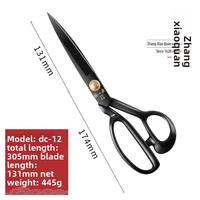
Zhang Xiaoquan | Manganese Steel Tailors Scissors for Sewing and Cutting
₱829.28₱1,493.31
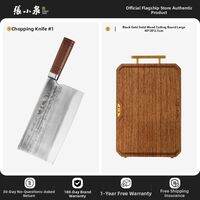
Zhang Xiaoquan | Multipurpose Chefs Knife Forged by Hand
₱3,797.57₱5,560.29
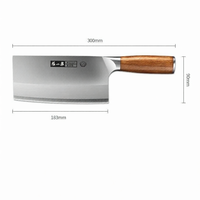
Zhang Xiaoquan | Chef Specialized Meat Cutting Knife
₱2,806.67₱5,336.60
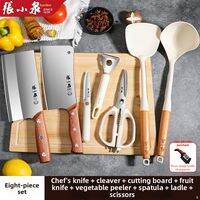
Zhang Xiaoquan | Home Use Slicing & Chopping Knife Stainless Steel
₱3,560.18₱6,831.75
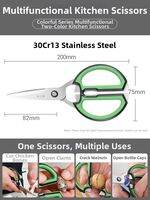
Zhang Xiaoquan | Strong Kitchen Scissors for Cutting Meat Bones
₱522.33₱2,115.91
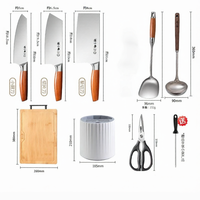
Zhang Xiaoquan | Household Kitchen Stainless Steel Slicing Knife
₱3,885.99₱7,595.14
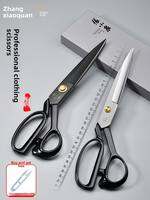
Zhang Xiaoquan | Sewing Scissors for Cutting Fabric and Clothing
₱964.70₱1,724.79
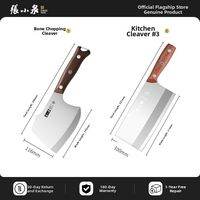
Zhang Xiaoquan | Chefs Specialized Sharp Kitchen Knife
₱2,847.34₱3,897.02
About Zhang Xiaoquan
Zhang Xiaoquan is a historic Chinese manufacturer and brand best known for its scissors, knives, kitchen tools, and household hardware. Based in Hangzhou, Zhejiang, the brand traces its origins to a traditional scissors-making business in the Ming dynasty and has developed into a modern consumer-hardware company. Its traditional scissor-forging technique was designated a National Intangible Cultural Heritage of China in 2006.1
Today, Zhang Xiaoquan is operated by Zhang Xiaoquan Co., Ltd., a publicly listed Chinese company whose Shenzhen Stock Exchange ticker is 301055.9
Basic information
| Item | Information |
|---|---|
| Chinese name | 张小泉 |
| English name | Zhang Xiaoquan |
| Industry | Household hardware, knives & scissors, kitchenware |
| Best known for | Traditional Chinese scissors |
| Origin | Hangzhou, Zhejiang, China |
| Traditional founding date | 1628, according to the company’s historical account |
| Brand lineage milestone | 1663, when “近记” (Jinji) was added to the name |
| Modern company | Zhang Xiaoquan Co., Ltd. |
| Stock code | SZSE: 301055 |
| Major heritage | Zhang Xiaoquan scissor-forging technique |
| Heritage designation | National Intangible Cultural Heritage, 2006 |
| Core traditional motto | “良钢精作” — roughly, “fine steel, finely crafted” |
| Headquarters / historical home | Hangzhou, Zhejiang |
| Major manufacturing locations | Hangzhou/Fuyang, Zhejiang; Yangjiang, Guangdong |
The company describes itself as an integrated enterprise covering design, R&D, manufacturing, sales, and services, rather than simply a scissors manufacturer. Its current portfolio includes more than 1,000 products across scissors and knives, kitchen hardware, household hardware, personal-care products, gardening products, and related categories.12
Origin of the name
The name Zhang Xiaoquan literally consists of the Chinese surname Zhang (张) and the personal name Xiaoquan (小泉). Unlike many modern Chinese brands that were invented as commercial names, Zhang Xiaoquan is based on the name of an actual historical craftsman and business lineage.
The company’s official history states that the story began during the Wanli period of the Ming dynasty, when Zhang Sijia established a scissors shop in Yi County, Huizhou, under the name Zhang Dalong. Around 1610, the business moved to Dajing Lane in Hangzhou. In 1628, when Zhang Xiaoquan took over the business from his father, he changed the name from Zhang Dalong to Zhang Xiaoquan, partly as a way of distinguishing the genuine business from counterfeit products.2
This produces a notable distinction in the brand’s history:
- ~1600: Zhang Dalong scissors business begins.
- 1628: Zhang Xiaoquan name is adopted.
- 1663: “Zhang Xiaoquan Jinji” becomes an important authenticated lineage and name.
- 1781: Zhang Xiaoquan scissors are recorded as being supplied for imperial use.
- 1904: The brand registers a trademark during the early Chinese trademark-registration era.
Consequently, Zhang Xiaoquan is sometimes described as “founded in 1663”, while the company’s own modern corporate history uses 1628 as the founding of the Zhang Xiaoquan brand. The difference arises from whether the starting point is defined as the earlier Zhang Xiaoquan name or the later “Jinji” lineage.3
The “Zhang Xiaoquan Jinji” designation
One of the most significant historical developments occurred in 1663. The company states that Zhang Jinggao added the characters “近记” beneath “张小泉,” producing the name “张小泉近记”. The term “近记” essentially functioned as a mark of authentic lineage. This was critical because counterfeiting and imitation were already problems for successful traditional businesses. The “Jinji” designation became associated with the genuine Zhang Xiaoquan lineage, which explains why historical Zhang Xiaoquan scissors can be found under somewhat different names and markings.4
Connection with the Qing imperial court
Zhang Xiaoquan developed a particularly strong reputation during the Qing dynasty. According to the company’s historical account, in 1781, during the reign of the Qianlong Emperor, Zhang Xiaoquan scissors were procured as tribute goods for the imperial court. The company states that the emperor also wrote the three characters “张小泉” for the business. This association with imperial-quality goods elevated the brand beyond an ordinary local scissors shop, linking it permanently with the prestige of Hangzhou craftsmanship.
Traditional craftsmanship and characteristics
The reputation of Zhang Xiaoquan traditionally stemmed from a combination of carefully selected steel, forging, steel insertion and lamination, heat treatment, grinding, sharpening, riveting, hand finishing, and decorative engraving. The traditional process was extremely labour-intensive.
China’s official National Intangible Cultural Heritage database describes traditional Zhang Xiaoquan scissors as having 72 production processes. Among the distinctive techniques were the forging of steel blades into iron bodies and traditional hand engraving.5 The traditional product characteristics included even steel construction, clearly differentiated steel and iron, fine grinding, sharp edges, strong rivets, smooth opening and closing, refined shapes, decorative engraving, durability, and relatively good value for money. Heritage documentation specifically identifies traditional varieties such as 信花, 山郎, 五虎, 圆头, and 长头.
Brand philosophy
A phrase strongly associated with Zhang Xiaoquan is “良钢精作”, which translates approximately as “Fine steel, finely crafted.” The concept holds that good scissors begin with good steel, but material alone is insufficient; craftsmanship determines the final product. The company’s contemporary brand philosophy expands this into “良钢精作,匠心铸美”, meaning “Fine steel, refined craftsmanship; craftsmanship creates beauty.” The company explicitly presents this as a continuation of its traditional craft philosophy while positioning itself as a modern brand.
Early international recognition
Zhang Xiaoquan began appearing in international exhibitions during the early 20th century. One of the most famous milestones was the 1915 Panama-Pacific International Exposition in San Francisco. The company states that Zhang Xiaoquan received an award at the exposition, while historical summaries commonly describe the scissors as receiving a Silver Medal. Regardless of the specific terminology used for the award, 1915 remains an important milestone in Zhang Xiaoquan’s international brand history, demonstrating that a traditional Chinese scissors maker could compete for recognition in a global industrial environment.
Trademark history and anti-counterfeiting
Zhang Xiaoquan is notable for its early trademark history. In 1904, when China was entering the early modern trademark-registration era, Zhang Xiaoquan registered a trademark. The company’s historical account describes it as one of China’s earliest trademarks. In 1909, the business changed from its earlier six-sided mark to the “Sea Clouds and Rising Sun” design. This evolution illustrates a trajectory from craftsmanship to branding, trademarks, anti-counterfeiting measures, and modern intellectual property.
Another significant episode occurred in 1890. According to Zhang Xiaoquan’s official history, Sun Shi, the mother of Zhang Yongnian, personally appealed to the local magistrate because the family was suffering from imitation and counterfeit products. The magistrate subsequently ordered that the Zhang Xiaoquan name should not be improperly used and erected a stone inscription bearing “永禁冒用”, meaning “Forever prohibit unauthorized use.”6 For brand historians, this demonstrates that brand protection was already a critical issue for Zhang Xiaoquan more than a century ago.
Industrialisation and corporate restructuring
After the establishment of the People’s Republic of China, the traditional handicraft industry was reorganised and industrialised. By the post-1949 period, Zhang Xiaoquan had developed into a leading enterprise in China’s knives-and-scissors industry.7 The 1950s were particularly important; in 1956, Zhang Xiaoquan’s traditional scissors were highlighted in the context of preserving valuable traditional handicrafts during China’s socialist transformation. The company subsequently underwent modernisation and reconstruction, transforming from an old traditional craft brand into a modern industrial manufacturer.
The modern organisation went through several ownership and structural changes:
- 2000: In December 2000, the company underwent major restructuring, moving from a state-owned enterprise toward a limited-liability structure with diversified investment.8
- 2007: Forchn Holding Group entered into an equity capital-increase agreement with Zhang Xiaoquan, marking another major restructuring stage.
- 2014: The company resolved historical disputes involving Hangzhou Zhang Xiaoquan and Shanghai Zhang Xiaoquan, bringing the two businesses into the same corporate family.
- 2018: Zhang Xiaoquan completed a shareholding-system reform, preparing the company for capital-market development.
In 2021, Zhang Xiaoquan Co., Ltd. completed its A-share IPO and became listed on the Shenzhen Stock Exchange’s ChiNext market under stock code 301055. The company describes this as becoming the “first share” of the knives-and-scissors sector in China’s A-share market.9
Heritage designations
Zhang Xiaoquan holds two major cultural distinctions. In 2006, the Zhang Xiaoquan Scissor Forging Technique was included in the first batch of China’s National Intangible Cultural Heritage. The official heritage database identifies it as project number Ⅷ-38 under the Traditional Skills category, with Hangzhou Zhang Xiaoquan Group Co., Ltd. as the protective organisation.10 It is specifically the traditional scissor-forging technique that has been recognised within China’s national intangible-cultural-heritage system.
Additionally, Zhang Xiaoquan is recognised as a “China Time-Honored Brand” (中华老字号), a designation used for historically established Chinese brands with long commercial and cultural histories. The company describes Zhang Xiaoquan as belonging to the earliest group of national brands recognised as Chinese time-honored brands by China’s Ministry of Commerce.11
Modern product portfolio
The modern company offers a product range far broader than scissors alone. Categories include:
- Scissors: Household, kitchen, tailoring, hairdressing, industrial, gardening/pruning, and specialised scissors.
- Knives: Kitchen knives, chef’s knives, Chinese-style knives, household knives, and knife sets.
- Kitchen hardware: Cutting boards, kitchen utensils, accessories, and food-preparation tools.
- Household hardware: Various household and utility tools.
- Gardening: Pruning scissors, gardening tools, and agricultural/garden products.
- Cultural and gift products: Gift items and cultural-creative products.
The official company profile states that the brand has developed more than 1,000 products across these categories.12
Manufacturing facilities
A major modernisation project is the Yangjiang Knife & Scissors Intelligent Manufacturing Center in Guangdong province. Established in Jiangcheng District, Yangjiang, the facility covers approximately 86,000 m² with investment exceeding RMB 350 million. It features intelligent production equipment, R&D and testing facilities, warehouses, and automated production systems. The company states the facility was completed in 2021 with an annual production capacity target exceeding 30 million pieces. This reflects the strategy of maintaining traditional brand identity and craftsmanship while manufacturing at modern industrial scale.
Market position and international presence
Zhang Xiaoquan occupies a distinct position in the consumer market. It functions simultaneously as a scissors brand, a knife brand, a household-hardware company, a traditional craft brand, a “Chinese Time-Honored Brand”, and a listed consumer company. For many consumers, the name carries associations with old-fashioned craftsmanship, Hangzhou heritage, durability, and Chinese manufacturing tradition. The brand’s modern marketing attempts to translate this historical heritage into a broader concept of Chinese craftsmanship, with a 2023 brand refresh explicitly emphasising communicating the spirit of Chinese craftsmanship globally.
Unlike generic manufacturers that compete primarily on price, materials, and efficiency, Zhang Xiaoquan competes through those factors plus historical brand equity. Its value proposition combines traditional Chinese craftsmanship, recognised heritage, modern manufacturing, and everyday usability.
Zhang Xiaoquan has historically exported its products and currently serves both Chinese and overseas consumers. Products have been sold in markets including Australia, the United Kingdom, the United States, Japan, South Korea, Malaysia, Indonesia, and Thailand.13 This international footprint is particularly relevant in Southeast Asia, where Chinese household brands and traditional consumer products have longstanding cultural and commercial connections.
Timeline
| Year | Event |
|---|---|
| ~1600 | Zhang Sijia establishes the Zhang Dalong scissors business in Huizhou |
| ~1610 | Business moves to Hangzhou |
| 1628 | Zhang Xiaoquan takes over and adopts the Zhang Xiaoquan name |
| 1663 | “Jinji” (近记) is added to identify the authentic lineage |
| 1781 | Zhang Xiaoquan scissors associated with imperial court procurement |
| 1890 | Local authorities act against unauthorized use of the Zhang Xiaoquan name |
| 1904 | Early trademark registration |
| 1915 | International recognition at the Panama-Pacific International Exposition |
| 1917–1919 | Development of nickel-plating techniques and related recognition |
| 1950s | Post-1949 industrial development and revival |
| 2000 | Major corporate restructuring |
| 2006 | Scissor-forging technique enters China’s first national intangible-cultural-heritage list |
| 2007 | Further restructuring involving Forchn Holding |
| 2014 | Hangzhou and Shanghai Zhang Xiaoquan businesses brought together |
| 2018 | Shareholding reform |
| 2021 | A-share IPO; Shenzhen Stock Exchange 301055 |
| 2021 | Yangjiang intelligent manufacturing center completed |
| 2023 | Brand refresh emphasizing Chinese craftsmanship |
References
- 张小泉简介
- 张小泉简介
- 张小泉股份公司
- 张小泉股份公司
- 张小泉股份公司
- Zhang Xiaoquan Inc. Reports Earnings Results for the Full Year Ended December 31, 2025 | MarketScreener
- Zhang Xiaoquan Inc.: Governance, Directors and Executives & Committees – MarketScreener
- 张小泉(301055)_公司公告_张小泉:2025年半年度报告新浪财经_新浪网
- 张小泉股份公司
- Top 10 time-honored Chinese brands – China.org.cn
- The art of Zhang Xiaoquan scissors — china.org.cn
- 张小泉股份公司
- About Us | ZHANGXIAOQUAN AU Official Site