Shop on Lazada
Zildjian products


About Zildjian
Zildjian is an American musical instrument company best known for its cymbals and is widely regarded as one of the most historically significant cymbal manufacturers globally. The company traces its origins to 1623 in Constantinople (modern-day Istanbul), where Armenian metalworker Avedis I began producing cymbals under the patronage of the Ottoman Sultan. Today, Zildjian remains a family-owned business and has expanded its product line beyond cymbals to include drumsticks, percussion mallets, electronic percussion, headphones, and accessories.1
Company overview
| Category | Information |
|---|---|
| Full company name | The Avedis Zildjian Company |
| Brand | Zildjian |
| Founded | 1623 |
| Founder / originator | Avedis I Zildjian |
| Place of origin | Constantinople, Ottoman Empire |
| Modern headquarters | Norwell, Massachusetts, United States |
| Industry | Musical instruments |
| Primary products | Cymbals |
| Other products | Drumsticks, mallets, electronic drums, headphones, accessories |
| Ownership | Zildjian family |
| Current family generation | 15th generation |
| Major brands | Zildjian, Vic Firth, Balter |
| Official website | Zildjian.com |
Zildjian states that its products are manufactured in the United States, with cymbals produced at its Norwell, Massachusetts facility and drumsticks and mallets made at its Newport, Maine facility.2
Identity and significance
Zildjian is primarily a cymbal manufacturer. Within the global percussion community, the name is associated with a vast spectrum of sounds, ranging from bright rock crashes and powerful metal cymbals to dark jazz rides and traditional Turkish-style instruments.
The company’s significance extends beyond its longevity. Zildjian played a pivotal role in the development of the modern drum-set cymbal, particularly as American jazz, swing, big-band music, rock, pop, and heavy music created demand for increasingly specialized sonic characteristics. The Smithsonian Institution describes Zildjian as the original Turkish cymbal company that eventually relocated its operations to Massachusetts as cymbals became integral to American percussion.10
Today, Zildjian describes itself as the world’s leading maker of cymbals, drumsticks, and percussion mallets.3
Etymology
The name Zildjian has Armenian roots. According to the company’s historical account, the name was granted to Avedis by the Ottoman Sultan in the early 17th century and essentially means “cymbal maker” or “cymbal smith.”4
The commonly accepted etymological breakdown is:
- Zil — cymbal
- dj — maker
- ian — Armenian family-name suffix
Thus, Zildjian translates roughly to “son/family of the cymbal maker.” While the exact chronology of the earliest Zildjian family is complex and Ottoman records are incomplete, the company’s modern history combines documented genealogy with longstanding family traditions regarding the original secret alloy and manufacturing process.5
Origins in the Ottoman Empire
The Zildjian story begins in Constantinople, the capital of the Ottoman Empire. Traditional history identifies Avedis I, an Armenian metalworker and alchemist, as the originator of the Zildjian cymbal-making process.
According to Zildjian, Avedis was initially attempting to create gold through metallurgy. Although he did not achieve this goal, he discovered a unique metal alloy capable of producing cymbals with exceptional durability and sound characteristics.6 The company’s timeline places this discovery around 1618, followed by the granting of the Zildjian name and the establishment of a cymbal foundry in 1623.7
Historical importance
Cymbals had been used in Middle Eastern, Asian, military, religious, and ceremonial music for centuries prior to Zildjian. However, the Zildjian family distinguished itself by developing and preserving a specialized alloy and manufacturing technique specifically suited for musical performance. The family treated this process as a closely guarded secret, passing knowledge down through generations.8
The secret alloy
A central element of Zildjian’s history is its secret cymbal-making formula. Traditional Zildjian cymbals are associated with bronze alloys, specifically the B20 bronze family, which consists of approximately:
80% copper / 20% tin
However, the precise formulation involves far more than mixing these metals. Factors such as temperature, casting, rolling, hammering, lathing, thickness, shape, and finishing all critically affect the final sound. A Zildjian cymbal is not merely a disk of bronze; its sonic character results from a combination of:
- Alloy composition
- Casting
- Heating
- Shaping
- Rolling
- Hammering
- Lathing
- Profile
- Diameter
- Thickness
- Bell size
- Finishing
This complexity explains why two visually similar cymbals can possess dramatically different tonal qualities.
Expansion to the United States
For centuries, the Zildjian family remained associated with cymbal production within the Ottoman Empire. A major transformation occurred in the 20th century when the family business became increasingly connected to the expanding American music industry.
Jazz was particularly instrumental in this transition. As American musicians in the early 1900s experimented with new percussion forms and the emerging drum set, a massive market for specialized cymbals developed. The Smithsonian notes that as cymbals gained importance in American music, the original Turkish company eventually moved to Massachusetts.9
Avedis III and the American company
Avedis Zildjian III was a crucial figure in this transition. In the 1920s, family members brought traditional cymbal-making knowledge to the United States. The American operation developed in the Boston area, becoming closely linked with the emerging jazz and swing scenes.
This marked a turning point: rather than producing cymbals primarily for military or ceremonial use, Zildjian began designing instruments specifically for musicians. Avedis III collaborated with prominent American drummers to adapt cymbals to their playing styles, helping establish the modern concept of cymbals as specialized musical instruments rather than standardized accessories.10
Development of the modern drum set
Zildjian’s history is intertwined with the evolution of the modern drum kit. During the rise of jazz and swing, drummers needed to produce varied sounds from a single setup. Cymbals became increasingly specialized:
- Hi-hats for timekeeping
- Ride cymbals for continuous rhythmic patterns
- Crash cymbals for accents
- China cymbals for distinctive effects
- Splash cymbals for short accents
- Crash/ride cymbals for multiple functions
Zildjian helped develop and popularize these categories. Historical materials credit Avedis III with establishing terminology and designs that became standard components of the modern drum set.11
Relationship with jazz
Jazz is arguably the genre most fundamental to Zildjian’s transformation into a modern musical brand. During the 1920s–1940s, drummers such as Gene Krupa, Chick Webb, Jo Jones, Sid Catlett, George Wettling, and Ray Bauduc became associated with the developing American cymbal sound.
Zildjian’s relationship with working drummers became integral to product development. Instead of manufacturing a single standardized cymbal, the company experimented with different weights, profiles, diameters, and finishes. This collaborative approach eventually became fundamental to modern cymbal manufacturing.
Evolution from jazz to rock
Following World War II, popular music underwent dramatic changes. The rise of bebop, rhythm & blues, early rock & roll, soul, funk, psychedelic rock, and hard rock created new requirements for cymbals. Instruments suitable for a small jazz trio were often inappropriate for loud rock bands.
In response, Zildjian developed increasingly diverse designs, eventually creating distinct families aimed at different musical environments and playing styles.
Product families
Modern Zildjian cymbals are organized into numerous families, each with distinct sonic characteristics.
A Zildjian
The A Zildjian family is one of the company’s classic lines. Associated with the traditional Zildjian sound, “A” cymbals have been used across countless musical styles, including rock, pop, jazz, funk, and studio recording. The modern A family includes models such as New Beat HiHats, crashes, and rides.12
K Zildjian
The K family possesses a darker, more complex sonic identity and draws heavily from Zildjian’s Turkish/Ottoman heritage. K cymbals are particularly popular among jazz drummers, studio musicians, fusion players, and sophisticated rock/pop artists. Modern K products include K Constantinople, Kerope, K Custom, and K Zildjian.13
A Custom
A Custom cymbals were developed for a more modern, polished, and relatively bright sound. They became particularly popular in rock, pop, fusion, and contemporary studio work.
K Custom
K Custom combines the darker K aesthetic with modern cymbal designs and sounds.
Z Custom
Z Custom is designed around high-volume applications, especially aggressive rock and metal. Zildjian currently markets this collection specifically toward metal musicians.
S Family
The S Family offers cast-bronze cymbals with a distinct tonal character and specific price positioning.
I Family
The I Family is designed primarily for players seeking accessible, versatile cymbal sounds.
Planet Z
Planet Z represents Zildjian’s entry-level range, aimed at beginners and those entering the world of cymbals.
FX
The FX category covers effect cymbals and unusual designs. Modern catalogs include China cymbals, splashes, gongs, and other effects alongside traditional crashes, rides, and hi-hats.
Manufacturing and pricing
Premium Zildjian cymbals cost significantly more than beginner models because many are cast-bronze instruments requiring extensive manufacturing and finishing. The process typically involves:
- Melting the alloy
- Casting individual cymbal blanks
- Heating
- Rolling
- Shaping
- Hammering
- Lathing
- Finishing
- Testing
- Sorting and quality control
A key characteristic of traditional high-end cymbals is considerable variation between individual units. This is often desirable; two cymbals of the same model may have slightly different tonal characteristics, and experienced drummers frequently select specific instruments based on these nuances.
Relationship with Sabian
A significant chapter in Zildjian’s history is the creation of Sabian. In the late 1970s and early 1980s, a family dispute led to the separation of different branches of the Zildjian business. Robert Zildjian, brother of Armand Zildjian, ultimately established Sabian in Canada.14
Consequently, two of the world’s major cymbal manufacturers share direct roots in the same family. The historic rivalry between Zildjian and Sabian is, in essence, a rivalry between branches of the same lineage.
Competitors
Zildjian operates in a competitive global market. Key competitors and alternative brands include:
- Sabian — Canada
- Paiste — Switzerland
- Meinl — Germany
- Istanbul Agop — Turkey
- Istanbul Mehmet — Turkey
- UFIP — Italy
Each manufacturer employs distinct approaches to alloy, manufacturing, and sound. Among professional drummers, choice is typically determined by which sound best fits the musician rather than objective superiority.
Beyond cymbals
Although synonymous with cymbals, Zildjian is no longer exclusively a cymbal company. Its current portfolio includes:
Cymbals
The core product remains an extensive range of acoustic cymbals.
Drumsticks
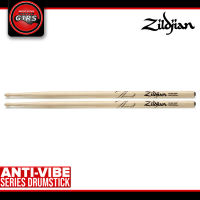
Zildjian produces multiple drumstick ranges, including the Hickory Series, Artist Series, DIP Series, Chroma, Anti-Vibe, and Z Custom.15
Percussion mallets
The company manufactures mallets and related percussion implements.
Electronic drums
Zildjian has expanded into electronic percussion with its ALCHEM-E electronic drum systems.16
Headphones
A notable recent expansion is the Zildjian ALCHEM-E Perfect Tune headphones, extending the brand from acoustic percussion into personal audio.17
Apparel and accessories
Zildjian also sells apparel, bags, cymbal accessories, practice equipment, and other drummer-oriented products.18
The Vic Firth connection
An important development in the modern company is its relationship with Vic Firth, one of the world’s best-known drumstick and mallet manufacturers. Zildjian’s corporate organization includes both Zildjian and Vic Firth, along with Balter, allowing coverage of a larger segment of the percussion market.19
This structure is strategically significant, enabling drummers to potentially use products from the same corporate family for cymbals, sticks, mallets, electronic percussion, and accessories.
Artists and endorsement
Artist relationships are vital to Zildjian. The company maintains a large roster of professional artists across genres including rock, metal, jazz, pop, hip-hop, funk, alternative, and orchestral music. Zildjian describes this artist community as an essential part of its relationship with the broader music world.20
Historically, prominent drummers associated with Zildjian have helped define cymbal sounds. This creates a feedback loop: drummer → new sound → cymbal design → new generation of drummers → new sounds. This relationship has been a key factor in the brand’s centuries-long relevance.
Sonic characteristics
There is no single “Zildjian sound.” The company manufactures cymbals across a broad spectrum:
- Bright to dark
- Thin to heavy
- Short to sustaining
- Dry to washy
- Clean to complex
- Soft to extremely loud
For example, an A Custom crash produces a bright, modern sound; a K ride offers a darker, complex tone; a Z Custom delivers high volume; and a K Constantinople emphasizes traditional jazz nuances. The brand functions as a vocabulary of sounds rather than a singular sonic signature.
Current manufacturing
Despite its age, Zildjian continues to manufacture instruments in the United States. Headquarters and the cymbal factory are located in Norwell, Massachusetts, while drumstick and mallet manufacturing takes place in Newport, Maine.21
The company also maintains international offices in Tokyo, London, Los Angeles, and Singapore.22 This structure supports a global distribution and artist network while retaining an American manufacturing base.
400th Anniversary
Zildjian celebrated its 400th anniversary in 2023. This milestone marks a continuous history stretching from 1623 to the present, making it one of the oldest continuously operating family businesses in the United States. The company describes itself as the oldest family business in the United States.23
To commemorate the occasion, Zildjian released special anniversary cymbals and other commemorative instruments.24
Family ownership
Zildjian is distinguished by its multi-generational family ownership. The company states it is currently connected to the 15th generation of the Zildjian family.25
The family has preserved not only the corporate name but also manufacturing knowledge across centuries. Unlike many companies founded in the 1600s that disappeared or changed ownership, Zildjian still produces the same fundamental instrument as its founder: cymbals.
Significance in music history
Zildjian’s importance extends beyond its age; it has participated in several major musical transitions:
- Ottoman military and ceremonial music: Original cymbals were tied to Ottoman traditions.
- European orchestral music: Cymbals became common in orchestral and theatrical settings.
- American jazz: Zildjian adapted cymbals to American drummers’ needs.
- Swing and big band: Large ensembles required powerful yet musical sounds.
- Rock & roll: Amplified music demanded louder cymbals.
- Heavy rock and metal: Extremely powerful cymbals became essential.
- Modern studio music: Drummers accessed vast varieties of controlled sounds.
- Electronic percussion: Recent entry into electronic drums and related technology.
Zildjian’s history effectively mirrors the development of modern percussion itself.
Brand identity
Zildjian’s brand identity combines heritage, craftsmanship, innovation, and professional musicianship. Marketing frequently emphasizes its centuries-long history, while current products demonstrate efforts to remain relevant to contemporary musicians. The company describes its philosophy as a blend of tradition and continuous innovation.26
This balance prevents Zildjian from becoming a museum brand. Instead, it continues to develop new cymbal models, artist collaborations, electronic instruments, headphones, drumsticks, accessories, and educational materials.
Distinctive characteristics
Zildjian’s uniqueness stems from five key factors:
- Extraordinary longevity: The cymbal-making tradition dates to 1623.27
- Family continuity: Association with the Zildjian family spans roughly 15 generations.28
- Influence on modern drumming: Development of cymbals specifically for jazz, swing, rock, and modern music.
- Manufacturing expertise: Complex casting, shaping, hammering, and finishing processes rather than simple mass production.
- Sonic range: Products spanning from beginner cymbals to highly specialized professional instruments.
Timeline
- 1618 — Traditional history places Avedis I’s discovery of the secret metalworking process.29
- 1622 — Traditional account associates the granting of the Zildjian name with Sultan Osman II.30
- 1623 — Avedis establishes a cymbal foundry in Constantinople.
- 18th–19th centuries — Family continues cymbal production through successive generations.
- Early 20th century — Business becomes increasingly connected to the American market.
- 1920s — Avedis Zildjian III develops the American business and adapts cymbals to jazz and popular music.
- 1930s–1940s — Strong association with jazz, swing, and the modern drum set develops.
- 1950s–1970s — Rock, pop, R&B, and amplified music drive further development.
- Late 1970s–1980s — Family tensions lead to the establishment of Sabian by Robert Zildjian.
- 1990s–2000s — Expansion of professional and specialty cymbal ranges.
- 2010s — Continued expansion of artist, educational, and product ecosystems.
- 2023 — Celebration of 400 years of cymbal-making tradition.
- Today — Major global percussion company producing cymbals, drumsticks, mallets, electronic drums, headphones, and accessories.
Summary
Zildjian is not merely a cymbal brand but an institution that helped define the sound of the modern drum set. Its narrative begins with an Armenian metalworker in the Ottoman Empire, continues through generations of secretive craftsmanship, moves into the American jazz revolution, and extends to rock, pop, metal, contemporary music, and electronic percussion.
Remarkably, the fundamental product has remained essentially the same for four centuries: a piece of metal designed to make music. This combination of 400-year heritage, family continuity, manufacturing expertise, and constant adaptation distinguishes Zildjian as one of the most significant brands in musical instrument history.
References
- About Us – Zildjian
- Infinite sounds, unlimited possibilities. – Zildjian
- About Zildjian | Zildjian ALCHEM-E
- Zildjian History – Cymbal
- DRUM SET METHODBY MARK WESSELS WITH VIDEO LE
- Zildjian | Official Site | Cymbals, Drumsticks & Apparel
- Products – Zildjian
- Player Favorites – Zildjian
- Robert Zildjian
- How Zildjian Cymbals Made it from the Ottoman Empire to Now | Smithsonian Institution
- Crash! Clang! Ting! | Chemistry Article for Students | Scholastic Science World Magazine
- Zildjian Drum Set Method – Zildjian Artists & Education
- ZILDJIAN, THE WORLD’S LEADING CYMBAL MAKER, CELEBRATES ITS 400TH ANNIVERSARY
- How Zildjian Cymbals Made it from the Ottoman Empire to Now | Smithsonian Institution
- Gear | Zildjian – Zildjian
- Newsroom – Zildjian
- Career – Zildjian
- Drumsticks | Zildjian – Zildjian
- home – Zildjian Artists & Education
- Performing Artist Application | Zildjian – Zildjian
- Frequently Asked Questions | Zildjian – Zildjian
- Zildjian Cymbal, used by Buddy Rich | National Museum of American History
- Zildjian Cymbal, used by Buddy Rich | National Museum of American History
- Zildjian Cymbal, used by Buddy Rich | Smithsonian Institution
- Resources :: How Zildjian Cymbals Made it from the Ottoman Empire to Now | Smithsonian Learning Lab
- Zildjian – official website – cymbals, headsets, e-drums, sticks
- Artists | Zildjian
- PFBI Connect | October 2021 Newsletter
- L’histoire de la marque Zildjian
- Zildjian社 400周年を迎えて | Zildjian