Shop on Lazada
729 products
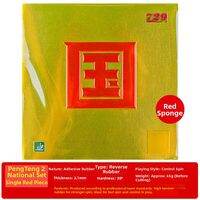
729 | National Team Exclusive Blue Sponge Reverse Rubber Ping Pong Racket
₱1,655.10
Buy on Lazada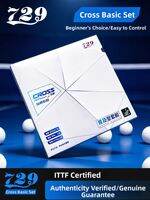
729 | Reverse Rubber Table Tennis Paddle Set
₱713.92₱759.77
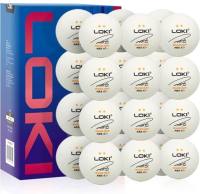
100PCS / Loki WangHao 3 Star / 729 1Star / Aegon 1Star / Original table tennis Pingpong Ball Balls ping pong tabletennis Ball
₱1,540.00
Buy on Lazada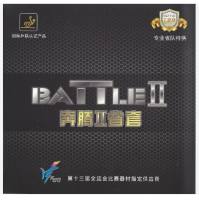
729 Battle2 Prov Silver Rubber Original tabletennis rubber pingpong rubber BrandNew ORIG RITC Friendship Battle 2 II Provincial Silver Rubber
₱1,155.00
Buy on Lazada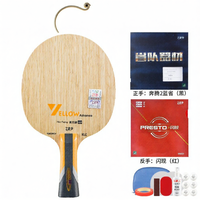
729 | Yellow and Blue Arylate Carbon Professional Ping Pong Racket
₱4,450.91
Buy on Lazada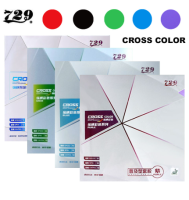
729 Cross Colored table tennis Pingpong Rubber RITC Friendship Ping pong Rubber Authentic Brandnew Color pingPong Rubbers
₱420.00
Buy on Lazada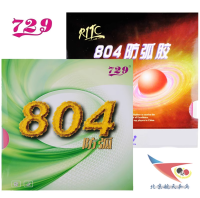
AntiSpin 729 804-20 2.0mm Rubber ORIG 729 804 Anti Spin Table Tennis Rubber Ping POng Rubber Authentic Brandnew
₱875.00
Buy on Lazada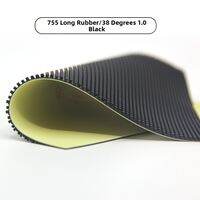
729 | Long Pimple Table Tennis Rubber
₱614.45₱785.07
About 729
729, widely known internationally as Friendship 729, is a Chinese table tennis equipment manufacturer best recognised for its rubbers, particularly traditional Chinese-style tacky varieties. Established in Tianjin, China, in 1972, the brand emerged from research conducted by the Tianjin Rubber Industry Research Institute. Over more than five decades, 729 has evolved from a specialised rubber development project linked to the Chinese national team into a comprehensive equipment supplier serving players and organisations worldwide.1
The brand’s historical significance stems from its early development of high-friction, tacky table tennis rubber, its association with generations of Chinese champions, and its extensive catalogue of inverted, short-pimple, long-pimple, and anti-spin products.2
Quick facts
| Category | Information |
|---|---|
| Brand | 729 / Friendship 729 / 友谊·729 |
| Origin | Tianjin, China |
| Founded | 1972 |
| Industry | Table tennis equipment |
| Best known for | Table tennis rubbers |
| Famous products | 729, 729-2, 729 FX, 729-40, 755, 802, 804, Focus III, Battle series |
| Parent/organisational history | Originated from Tianjin Rubber Industry Research Institute; modern 729 sporting goods companies operate the brand |
| Major product categories | Rubbers, blades, ready-made rackets, balls, tables, and accessories |
| Playing identity | Particularly associated with tacky Chinese-style rubbers |
| Country of origin | China |
History
Origins: 1971–1972
The history of 729 is intrinsically linked to the development of domestic table tennis equipment in China. In 1971, the Chinese national table tennis team returned to international competition after a four-year absence. According to historical accounts published by the company, equipment deficiencies were identified as a key challenge facing the squad. Following the tournament, the Tianjin Rubber Industry Research Institute was commissioned to develop improved rubber materials.1
In September 1972, researchers in Tianjin successfully created a new rubber that combined elasticity with a high-friction surface. It was named Friendship 729 (友谊·729), establishing the foundation of the brand.2 The designation “729” thus permanently commemorates the year of the brand’s inception.
Early world champion connection
A pivotal moment in the brand’s early history occurred in 1973 when Chinese players Xi Enting and Hu Yulan won the men’s and women’s singles titles at the World Table Tennis Championships. Historical records identify them as among the first world champions to achieve victory using 729 equipment.3
This success cemented a vital relationship between 729 and elite Chinese table tennis. In subsequent years, the manufacturer expanded beyond its original inverted rubber to include long-pimple and anti-spin variants. The 755 long-pimple rubber, developed in the mid-1970s, stands out as one of the brand’s most historically significant products.31
Trademark and expansion
The Tianjin Rubber Industry Research Institute formally registered the Friendship 729 trademark in 1979.2 By the early 1980s, 729 equipment had become synonymous with Chinese international competition. Accounts indicate that numerous members of the Chinese national team utilised 729 gear during the 1981 World Table Tennis Championships, significantly boosting the brand’s reputation outside China.3
In 1987, Tianjin Jinyou Rubber Development Co., Ltd. was established with 729 as its flagship brand.2
Product development
729’s primary contribution to the sport has traditionally been its rubber technology. The brand has developed an extensive family of rubbers tailored to diverse playing styles and techniques. Notable historical product lines include:
- 729: The original traditional tacky rubber.
- 729-2: A classic fast inverted rubber.
- 729-3: An early-generation inverted rubber.
- 729-40: Developed specifically for the 40 mm ball era.
- 755: Long-pimple rubber.
- 799: Inverted rubber.
- 802: Short-pimple rubber.
- 804: Anti-spin rubber.
- Focus III: A later-generation spin-oriented rubber.
- 729-08: A high-performance rubber designed for the post-speed-glue/inorganic-glue era.
- Battle series: A modern generation of performance-oriented rubbers.31
This variety is significant because 729 has historically manufactured rubbers for offensive loopers, close-to-the-table hitters, defensive players, long-pimple specialists, and anti-spin users, rather than focusing exclusively on a single style.
Key characteristics
Chinese tacky rubber
The feature most commonly associated with 729 is the tacky topsheet. Traditional Chinese rubbers typically emphasise a combination of strong surface grip, high spin potential, a relatively firm sponge, controlled speed, and the capacity to generate heavy topspin through active technique. This contrasts with many Japanese and European-style rubbers, which have historically prioritised a more elastic, catapult-driven response.
729 became one of the definitive names associated with this Chinese rubber philosophy. The 729 FX model, in particular, gained widespread recognition among recreational and developing players.41
Extensive rubber catalogue
Another defining characteristic is the immense variety of rubber constructions. 729 has produced inverted rubbers, tacky and non-tacky surfaces, short pips, long pips, anti-spin rubbers, various sponge hardnesses and thicknesses, and modern tensor-influenced products. Consequently, “729 rubber” does not refer to a single type but rather to an entire family of technologies.
Value for money
Internationally, 729 has built a reputation for offering relatively affordable table tennis equipment. This is particularly relevant in the rubber market, where players can experiment with Chinese-style tacky rubbers without the premium price tag often associated with high-end Japanese or European alternatives.
As a result, 729 has remained especially popular among beginners, intermediate players, club players, budget-conscious competitors, and those exploring Chinese-style techniques.
The 729 FX
Among the brand’s offerings, the 729 FX warrants special mention. Widely recognised as an accessible example of traditional Chinese tacky rubber, it combines a grippy topsheet with a relatively firm sponge. Generations of players learning Chinese-style looping have used it as an inexpensive entry point into tacky rubbers.41
Its characteristics are broadly defined by high grip, strong spin, a relatively linear response, and moderate speed. This distinguishes it markedly from highly catapulted modern European rubbers. However, it is important not to conflate 729 FX with the brand’s entire range, as the company has since developed considerably faster and more technologically advanced models.
Transition to modern table tennis
The sport underwent substantial changes during the 2000s. The introduction of the 40 mm ball and the subsequent ban on speed glue altered the technical requirements for table tennis rubbers. 729 responded with new product generations.
A notable example was 729-08, developed during the transition to the post-speed-glue era. Historical accounts describe it as one of the company’s key responses to the new technical environment, noting its adoption by elite Chinese players.5
Subsequently, 729 introduced products such as Focus III, representing a shift toward the non-tacky, spin-oriented rubbers increasingly favoured in modern play.2 Later releases, including the Battle family, have sought to combine traditional Chinese tacky surfaces with modern sponge technology and enhanced out-of-the-box performance.1
Beyond rubbers
While rubbers established the brand’s fame, modern 729 is not solely a rubber manufacturer. The current product range encompasses:
- Table tennis rubbers
- Blades
- Complete/ready-made rackets
- Table tennis balls
- Table tennis tables
- Other table tennis accessories
Current corporate materials describe 729 as a professional table tennis equipment manufacturer with over 50 years of experience.1 The modern Tianjin-based operation reports a manufacturing site covering approximately 53,000 square metres and positions itself as a multinational supplier of table tennis equipment.6
Relationship with Chinese table tennis
729’s historical identity is inseparable from Chinese table tennis. Over the decades, numerous prominent Chinese players have been associated with the brand. Historical sources cite players including Xi Enting, Hu Yulan, Liang Geliang, Cai Zhenhua, Qiao Hong, Deng Yaping, Wang Nan, and Liu Guoliang.51
Corporate materials state that 729 equipment has been used in connection with more than 60 world champions, although this figure varies across sources and should be treated as a company-reported statistic rather than an independently audited count.1
This legacy affords 729 a unique position: it is not merely a commercial brand that happens to be Chinese but emerged directly from the nation’s effort to develop indigenous high-level equipment technology.
Major timeline
- 1971: Tianjin Rubber Industry Research Institute begins work on improved rubber following China’s return to international competition.6
- 1972: The first product bearing the Friendship 729 name is developed.
- 1973: Chinese world champions Xi Enting and Hu Yulan are associated with 729 equipment.
- 1975: The 755 long-pimple rubber is developed.
- 1979: The Friendship 729 trademark is formally registered.
- 1981: 729 gains substantial international recognition through its association with the Chinese team’s success.
- 1987: Tianjin Jinyou Rubber Development Co. is established around the 729 brand.
- 1999: Several important models, including 729-2, 729-3, and 729-40, enter the market.
- 2001: A modern 729 manufacturing facility is established in Tianjin.
- 2005–2006: Development and relocation to the 729 Industrial Park.
- 2007: Focus III becomes an important new generation of non-tacky/spin-oriented rubber.
- 2008: 729-08 is introduced for the post-speed-glue era.
- 2009: A dedicated 729 sporting goods sales company is established.
- 2010s: The company expands its range with newer offensive and recreational rubbers.
- 2020s: 729 continues developing rubbers, blades, balls, tables, and complete equipment for domestic and international markets.2
- 2026: 729 describes itself as having more than 50 years of professional table tennis manufacturing experience.1
Position among table tennis brands
729 belongs to the group of historic Chinese brands that helped establish the domestic equipment industry. Comparisons vary by category:
- DHS (Double Happiness): Dominant in professional Chinese table tennis and famous for equipment used in major international competitions.
- 729 / Friendship: Historically distinguished by rubber technology and a broad range of affordable Chinese-style rubbers.
- Tibhar: German brand with a strong European offensive-rubber tradition.
- Butterfly: Japanese premium manufacturer renowned for high-end rubbers and blades.
- Yasaka: Japanese/Swedish-associated brand with a long history in rubbers and blades.
- Donic: German brand strongly associated with European-style offensive equipment.
729 is particularly distinct because its identity is built around Chinese rubber technology, whereas brands like Butterfly and Tibhar are associated with different developmental traditions.
Playing characteristics
There is no single “729 feel” given the enormous catalogue, yet traditional products share recognisable traits.
Traditional 729 tacky rubber:
Tacky → controlled → spin-focused → relatively linear → technique-dependent
Compared to modern high-end tensor rubbers, traditional 729 rubbers often feel:
- Less bouncy on passive reception
- More controllable in the short game
- More dependent on the player’s own stroke
- Particularly effective for creating spin through active brushing
- Relatively comfortable for players preferring a firm sponge
These characteristics explain why 729 rubbers have historically been popular with players focused on Chinese forehand looping.
Modern vs traditional 729
The brand can be broadly divided into two generations.
Traditional 729
Examples include 729, 729 FX, and older 729-2 variants. The typical philosophy involves a tacky topsheet, firm sponge, high spin, and relatively low passive catapult. These remain inexpensive and technically demanding compared to many modern European rubbers.
Modern 729
Newer products such as Battle and Focus III attempt to offer greater speed, elasticity, and easier power while retaining characteristics associated with Chinese rubber.1 The result is a brand covering a much wider spectrum than its original 1970s offerings.
Brand identity
The name Friendship 729 carries cultural as well as commercial significance. The Chinese term “友谊” (Yǒuyì) translates to “Friendship,” making the full historical name 友谊·729 essentially “Friendship 729.”
The brand’s identity is consequently linked to:
- Chinese table tennis heritage
- Domestic technological development
- National team history
- Affordability
- Tacky Chinese rubber
- Long-term durability and product continuity
The longevity of classic models is notable; players can still encounter products whose underlying concepts date back decades alongside completely modern equipment.
Manufacturing and company structure
The history of the brand differs from that of the modern corporate entities operating it. 729 originated within the Tianjin Rubber Industry Research Institute in 1972. Dedicated companies were later established to commercialise and manufacture the equipment. One current entity, Tianjin 729 Sports Equipment Co., Ltd., describes itself as affiliated with the institute.6
Separate corporate descriptions identify Tianjin Qierjiu Sports Goods Co., Ltd. (天津七二九体育用品有限公司) as the company behind the brand, describing it as a Tianjin-based manufacturer.2
Thus, references to “729” typically denote the brand and its product ecosystem rather than a single legal entity throughout its entire history.
Continued relevance
The importance of 729 extends beyond its affordable pricing. Its historical significance lies in representing one of the earliest successful attempts by China’s table tennis industry to develop domestic high-performance rubber technology for elite competition.
From a single rubber developed in Tianjin in 1972, the brand evolved into a major manufacturer with a catalogue covering almost every major playing style.1 In this sense, 729 serves as both a contemporary equipment brand and a piece of Chinese table tennis history.