Shop on Lazada
AriZona products
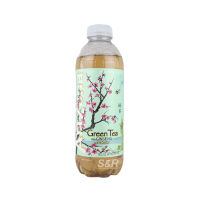
AriZona Ginseng And Honey Green Tea 473mL
₱54.00
Buy on Lazada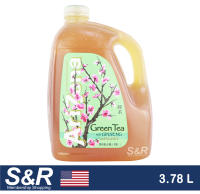
AriZona Green Tea with Ginseng and Honey 3.78L
₱424.00
Buy on Lazada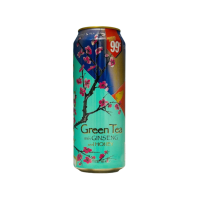
Arizona Tea GreenTea with Ginseng and Honey 22oz
₱109.00
Buy on Lazada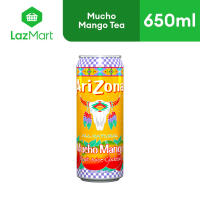
Arizona Tea Mucho Mango 22oz
₱109.00
Buy on Lazada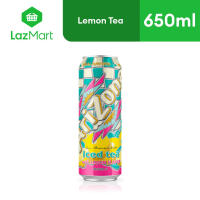
Arizona Tea LemonTea 22oz
₱109.00
Buy on Lazada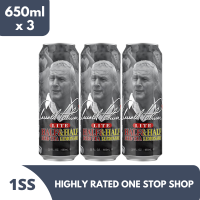
AriZona Arnold Palmer Lite Half & Half Iced Tea Lemonade 650ml x 3
₱569.00
Buy on Lazada
New Arizona Drinks | Assorted Flavor | All Natural | Please See Varation For Flavors
₱115.00
Buy on Lazada
BUY2 GET1 FREE AriZona Arizona Green Tea with Ginseng & Honey 473mL GZESTORE
₱259.00₱350.00
About AriZona
Overview
AriZona Beverages, commonly stylized as AriZona, is an American beverage company best known for its brightly packaged iced teas, juice drinks, lemonades, and other ready-to-drink beverages. Founded in Brooklyn, New York, in 1992, the company grew from a small family-run operation into an internationally recognized consumer brand 1. Its most recognizable product is the large 22-ounce “Big Can,” which has been historically associated with a 99¢ price point in the United States 1.
Unlike many major multinational beverage corporations, AriZona has built its identity around affordability, distinctive packaging, minimalistic advertising, and a strong visual personality. The company describes its core principles as “Quality. Value. Fun.” 1
Company overview
| Details | |
|---|---|
| Company name | AriZona Beverages / Arizona Beverage Company |
| Brand name | AriZona |
| Industry | Food and beverages |
| Founded | 1992 |
| Place founded | Brooklyn, New York, U.S. |
| Founders | Don Vultaggio and John Ferolito |
| Current chairman | Don Vultaggio |
| Headquarters | Woodbury, New York |
| Ownership | Privately held, family-operated |
| Best known for | Iced tea and juice drinks |
| Signature format | 22 oz “Big Can” |
| Official website | drinkarizona.com |
The company’s current leadership includes founder and chairman Don Vultaggio, vice chairman David Menashi, CEO Abid Rizvi, chief creative officer Wesley Vultaggio, and chief marketing officer Spencer Vultaggio 1.
History
Origins in Brooklyn
The history of AriZona predates the launch of the brand itself. In the 1970s, Don Vultaggio and John Ferolito established a beverage distribution business in Brooklyn called Ferolito, Vultaggio & Sons, which initially distributed beer and soda 4. The operation began on a small scale, with the partners reportedly using a used Volkswagen bus to make deliveries around Brooklyn 4. This experience provided Vultaggio and Ferolito with extensive knowledge of convenience stores, supermarkets, distributors, pricing structures, and consumer habits.
Eventually, the company moved beyond distribution and began producing its own beverages.
Entering the iced-tea market
By the late 1980s and early 1990s, ready-to-drink iced tea was becoming an increasingly attractive category in the United States. Brands such as Snapple demonstrated that bottled and canned tea could become a major commercial product. Vultaggio saw an opportunity to compete; according to an interview, seeing Snapple products being delivered during winter helped convince him that iced tea could be sold as a year-round beverage rather than simply a summer drink 2.
In 1992, the company launched AriZona. The first products appeared in May 1992, and the brand quickly distinguished itself from competitors through its unusual package design, large cans, colorful pastel graphics, and relatively low price 3.
Brand name and visual identity
Although the brand is named AriZona, the company was founded in Brooklyn, New York, and remains based in New York. The name was chosen because the founders wanted a moniker that evoked the American Southwest, warmth, sunshine, and a healthy, outdoors-oriented lifestyle 3.
The brand’s visual identity reinforced this concept. AriZona’s packaging incorporated Southwestern-inspired imagery, cacti, desert motifs, turquoise, pink, orange, and other pastel colors, decorative patterns, and large, highly recognizable typography. These illustrations were designed to stand out in convenience-store refrigerators and were deliberately different from the more conventional packaging used by mainstream soft-drink companies at the time.
The iconic “Big Can”
The element most closely associated with AriZona is its large can format. The company’s signature 22-ounce Big Can is considerably larger than the traditional 12-ounce soft-drink can. AriZona paired this generous serving size with an unusually low price; for decades, many of its Big Cans were famously sold for 99 cents in the United States. The company continues to emphasize the philosophy behind that pricing: providing substantial amounts of beverage at an accessible price 1.
This combination effectively communicated three key attributes at the point of purchase: a large drink, distinctive design, and a low price. This value proposition became central to the brand’s identity and one of its most important competitive advantages.
Rapid growth and expansion
AriZona experienced significant growth during the 1990s. By 1993, its products were being distributed in more than 30 states. By the end of 1994, AriZona products were reportedly available across all 50 states, with annual sales estimated at around $300 million 4. During this period, the company moved its headquarters from Brooklyn to Woodbury, New York 4.
The company expanded its portfolio beyond its original teas, introducing products such as peach tea, mango drinks, green tea, lemonade, juice drinks, Arnold Palmer-style tea and lemonade blends, and other flavored beverages. One of the most significant additions was AriZona Green Tea with Ginseng and Honey, which became one of the company’s signature products and remains among its best-known beverages 3.
The Arnold Palmer
AriZona played a major role in popularizing the Arnold Palmer beverage, a combination of iced tea and lemonade named after the professional golfer who was known for drinking the mixture. AriZona commercialized this combination on a large scale, helping turn it into a mainstream packaged beverage category. The company subsequently developed several variations of tea-and-lemonade products, making the Arnold Palmer line one of its most recognizable product families alongside its Green Tea 4.
Marketing and brand identity
AriZona’s marketing strategy is unusual for a company of its size. Rather than relying primarily on celebrity campaigns or expensive traditional advertising, the brand has historically emphasized the product itself, packaging, distribution, price, and cultural recognition. Corporate materials describe the brand around three principles:
- Quality: The company emphasizes ingredients and taste as foundational to its beverages.
- Value: AriZona has historically positioned itself as an affordable alternative, with the famous 99¢ Big Can becoming an integral part of its identity.
- Fun: The company uses bright colors, unusual graphics, merchandise, collaborations, and playful branding to make its products visually distinctive 1.
This strategy helped turn AriZona’s packaging into something recognizable even before consumers could clearly see the product name.
Packaging and design
During the early 1990s, as the beverage aisle became increasingly competitive, the company sought packaging that could immediately capture a shopper’s attention. The resulting aesthetic—bright, retro, Southwestern, playful, and oversized—became one of AriZona’s defining characteristics. Don Vultaggio has described the objective as being visually distinct from competing products because consumers have only a brief moment to notice items in a refrigerated display 3. This established a recognizable visual language that has remained consistent for decades.
Product portfolio
Although iced tea remains the company’s core identity, AriZona now operates across a considerably broader beverage portfolio. Its products include categories such as:
- Iced teas
- Green teas
- Black teas
- Fruit drinks
- Juice cocktails
- Lemonades
- Tea-and-lemonade combinations
- Energy drinks
- Sparkling beverages
- Coffee and cold-brew products
- Drink mixes
- Alcoholic beverages
- Snacks and fruit products
The company has also expanded into branded merchandise and lifestyle products 1.
AriZona Green Tea
AriZona Green Tea with Ginseng and Honey is widely considered the company’s flagship product. It combines green tea with ginseng and honey and is recognized by its distinctive green-and-pink Southwestern-inspired can. Forbes reported that green tea with ginseng and honey had become the company’s most popular product by the late 1990s 3.
Fashion and lifestyle collaborations
Over time, AriZona evolved from a beverage company into a lifestyle brand. The company began producing merchandise and promotional products, eventually developing apparel and collaborations with fashion and streetwear companies. Collaborations have included names such as Adidas and Anti Social Social Club, demonstrating how the recognizable AriZona aesthetic has moved beyond beverage packaging into fashion and popular culture 5.
This transition is significant because AriZona’s branding possesses a nostalgic quality that aligns with contemporary interest in 1990s aesthetics, retro design, convenience-store culture, streetwear, nostalgia marketing, and internet culture.
Ownership and corporate disputes
AriZona is notable for remaining a privately held, family-operated company rather than becoming a publicly traded multinational corporation. Founder Don Vultaggio continues to serve as chairman, while his sons Spencer and Wesley Vultaggio hold senior creative and marketing roles 1. This independence has allowed the company to maintain significant continuity in its leadership and brand philosophy.
The Vultaggio–Ferolito dispute
The company’s history includes a major dispute between its two original founders. Don Vultaggio and John Ferolito became involved in a lengthy legal and ownership battle over the company. The dispute ultimately resulted in Vultaggio buying out Ferolito’s interest, with the settlement taking place in the mid-2010s. Forbes reported that the buyout was approximately $1 billion 3. Following the settlement, AriZona continued under Vultaggio’s control.
Expansion beyond beverages
AriZona has increasingly developed into a broader consumer brand. In addition to beverages, the company has introduced products such as fruit snacks, drink mixes, ice pops, apparel, accessories, and other branded merchandise. This expansion reflects the growing recognition of AriZona as a cultural brand rather than simply a tea producer 4.
AriZonaLand
In 2024, AriZona opened AriZonaLand at its New Jersey facility. The attraction gives visitors a behind-the-scenes look at the company and combines factory-related experiences with brand history, exhibits, and merchandise. It represents a step in turning the AriZona brand itself into an experiential destination rather than solely a packaged beverage 4.
International presence
Although AriZona originated in Brooklyn and its strongest historical market is the United States, the brand has expanded internationally. AriZona products are sold in numerous markets around the world, with particularly significant distribution in North America, including the United States, Canada, and Mexico 6. The European arm of the company similarly describes AriZona as a globally recognized brand that grew from its Brooklyn origins into an international beverage business 7.
Factors in success
AriZona’s success can be attributed to several complementary factors:
- Exceptional value: The large can combined with a low price gave consumers an immediately understandable reason to choose the product.
- Distinctive packaging: AriZona looked radically different from many competing beverages.
- Strong distribution: The founders possessed decades of experience placing beverages in convenience stores and retail locations.
- Product variety: The company continuously introduced new flavors and categories without abandoning its core tea identity.
- Brand consistency: AriZona maintained its colorful, retro-Southwestern aesthetic for decades.
- Cultural relevance: The brand became associated with nostalgia, streetwear, convenience-store culture, and youth culture.
- Independence: Remaining privately owned allowed AriZona to maintain control over its pricing, packaging, and overall brand strategy.
Cultural significance
AriZona occupies a unique position in the American beverage industry. While companies such as Coca-Cola, PepsiCo, Keurig Dr Pepper, and Nestlé have enormous multinational portfolios, AriZona became famous largely through a focused group of recognizable beverages and a distinctive retail strategy. Its Big Can became almost a cultural object in its own right.
For many consumers, particularly those who grew up in the 1990s and 2000s, an AriZona can is associated with convenience stores, gas stations, school and college life, skateboarding and street culture, affordable drinks, and bright retro graphics. This cultural recognition has enabled AriZona to maintain a strong identity despite competition from much larger beverage companies.
Corporate philosophy
The company’s official philosophy can be summarized as making good drinks that are visually interesting and affordable, without taking the brand too seriously. AriZona summarizes its longstanding approach as “Quality. Value. Fun.” The company states that this philosophy has remained central for more than three decades 1.
Current status
As of 2026, AriZona remains a privately held beverage company headquartered in Woodbury, New York, with Don Vultaggio continuing as founder and chairman. Its portfolio extends well beyond the original iced teas into juices, lemonades, energy beverages, coffees, snacks, alcoholic products, drink mixes, and merchandise 1. The company continues to position itself around its original combination of quality, value, and fun, while using its highly recognizable visual identity to enter new categories and collaborations.
Timeline
- 1970s — Don Vultaggio and John Ferolito establish their Brooklyn beverage-distribution business 4.
- 1980s — The business expands from distribution into beverage production.
- 1992 — AriZona is launched in Brooklyn, initially focusing on ready-to-drink iced tea 1.
- 1993 — AriZona expands to more than 30 states and introduces additional package formats 4.
- 1994 — AriZona reaches all 50 U.S. states and moves its headquarters to Woodbury, New York 4.
- Mid-1990s — Peach, mango, green tea, lemonade, and other products expand the portfolio.
- Late 1990s — Green Tea with Ginseng and Honey becomes one of the company’s signature products 3.
- 2000s — AriZona develops an increasingly recognizable lifestyle and merchandise presence.
- 2010s — The company expands internationally and continues developing its tea, juice, and lemonade portfolio.
- 2015 — Don Vultaggio completes the buyout of longtime partner John Ferolito following their ownership dispute 3.
- 2020 — AriZona expands further into snacks, including fruit snacks 4.
- 2024 — AriZonaLand opens in New Jersey 4.
- 2026 — AriZona remains a privately held, family-operated beverage company with a broad portfolio and strong international recognition 1.
References
- AriZona Tea About Us – DrinkAriZona
- Episode 139: Taste Radio Ep. 139: The ‘Accident’ That Made AriZona Co-Founder Don Vultaggio a Billionaire – Taste Radio
- Inside Arizona Iced Tea: How Don Vultaggio Beat Snapple, Became A Billionaire And Nearly Lost It All
- Arizona Beverage Company
- How AriZona Iced Tea Nurtures Its Cult Following
- Arizona Beverage Company
- ABOUT US – AriZona Europe