Shop on Lazada
Batiste products
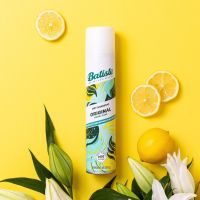
Batiste Dry Shampoo Original Classic Fresh 200 ml / 120 g
₱334.84₱375.00
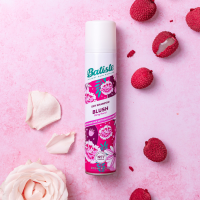
Batiste Dry Shampoo Blush Flirty Floral 200 ml / 120 g
₱334.84₱375.00
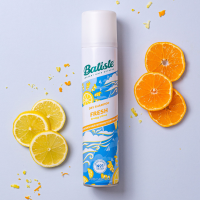
Batiste Dry Shampoo Fresh Breezy Citrus 200 ml / 120 g
₱334.84₱375.00
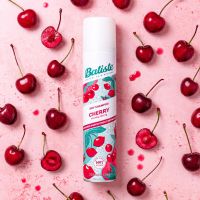
Batiste Dry Shampoo Cherry Cheeky Cherry 200 ml / 120 g
₱334.84₱375.00
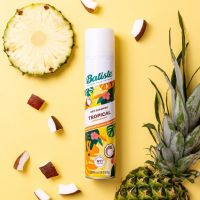
Batiste Dry Shampoo Tropical Vanilla Coconut 200 ml / 120 g
₱342.19₱375.00
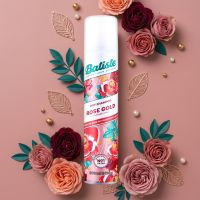
Batiste Dry Shampoo Rose Gold Radiant Rose 200 ml / 120 g
₱342.19₱375.00
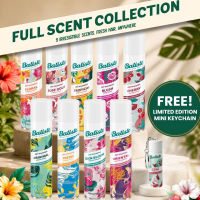
Batiste Dry Shampoo 9-Scent Collection with Limited Edition Mini Keychain
₱2,754.22₱3,140.00
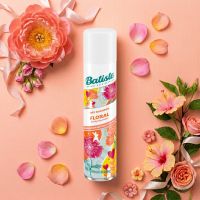
Batiste Dry Shampoo Floral Lively Blossoms 200 ml / 120 g
₱342.19₱375.00
About Batiste
Batiste is a British-origin hair care brand best known for popularising dry shampoo as an everyday beauty and styling product. Rather than requiring water and a traditional wash, Batiste’s core products are designed to absorb excess oil at the roots, refresh the appearance and scent of hair, and add volume or texture between conventional washes. The brand describes itself as an “in-between wash” hair care specialist and currently operates as part of the American consumer goods company Church & Dwight.1
Overview
| Category | Information |
|---|---|
| Brand | Batiste |
| Industry | Beauty / hair care |
| Best known for | Dry shampoo |
| Origin | United Kingdom |
| Founded / launched | 1970 |
| Original creator | Schwarzkopf |
| Current owner | Church & Dwight Co., Inc. |
| Core proposition | Refresh hair between conventional washes |
| Main product format | Aerosol dry shampoo; also powder/non-aerosol formats |
| Geographic reach | Sold in 90+ countries according to Batiste |
| Major acquisition | Acquired by Church & Dwight in 2010 |
History
Origins in the 1970s
Batiste traces its origins to 1970 in the United Kingdom. According to the brand’s historical account, it was initially created by Schwarzkopf as a wet-and-dry shampoo range intended for greasy hair. Its dry shampoo concept provided an alternative to using talcum powder to refresh hair and extend the time between washes.2
The brand subsequently gained attention beyond the conventional hair care market. Batiste states it was discovered by the wider fashion industry during the 1980s, and by the 1990s had become associated with the idea of carrying dry shampoo as a convenient beauty product.3
Development into a dedicated dry shampoo brand
A major milestone came in 2001, when Batiste transitioned to being marketed solely as a dry shampoo brand. This helped establish the product category around the idea of refreshing hair without a conventional wet wash.3
During the 2000s, Batiste broadened its proposition beyond a single functional product:
- 2005: Tropical was introduced.
- 2008: The brand underwent a major rebrand, including a new logo and the launch of Blush.
- 2009: Batiste added On the Go and Coloured Dry Shampoo and expanded its fragrance range.
- 2010: Fresh, Nude and Shimmer were introduced.4
Church & Dwight acquisition
In 2010, Church & Dwight acquired Batiste Dry Shampoo. Church & Dwight describes Batiste as a youthful British brand that was already popular in Britain but relatively unfamiliar to American consumers at the time. The acquisition became an important part of the company’s expansion into specialty hair care.5
This acquisition also facilitated Batiste’s international expansion, particularly in the United States. Church & Dwight currently lists Batiste among its major consumer brands alongside names such as ARM & HAMMER, Nair, OxiClean, Orajel, Trojan and Waterpik.6
Function and mechanism
The fundamental concept behind Batiste is to refresh the hair without washing it with water. Traditional shampoo removes oil and dirt through washing and rinsing, whereas dry shampoo uses absorbent powders to reduce the appearance and feel of excess oil, particularly around the roots and scalp-adjacent hair.
Batiste aerosol products commonly use ingredients such as rice starch, along with propellants and other formulation components. For example, the current Batiste Fresh formula lists rice starch among its principal functional ingredients.7
The intended results include making hair:
- Look less greasy
- Feel fresher
- Appear more voluminous
- Smell cleaner or more pleasant
- Become easier to style
- Remain presentable between conventional washes
Dry shampoo is not a replacement for washing hair with water and shampoo. It primarily manages oil and appearance rather than replacing normal cleansing indefinitely.
Product portfolio
Although Batiste is strongly associated with its classic aerosol dry shampoo, the brand has developed a considerably broader portfolio. Its current range includes several distinct categories.
Classic and scented dry shampoos
These products are most closely associated with the brand. Examples include:
- Original
- Bare
- Tropical
- Fresh
- Blush
- Limited-edition fragrances
Scents are a key point of differentiation; Batiste treats dry shampoo not only as a functional hair product but also as a fragrance and beauty accessory.8
Coloured dry shampoos
Batiste developed Hint of Color products intended to work with particular hair colours. Current categories include:
- Blonde
- Brunette
- Dark
These formulations aim to make the powder less visually obvious on darker hair while providing the same oil-absorbing function.9
Styling-oriented products
The brand has expanded into products where dry shampoo also performs a styling role. Examples include:
- Texturizing Dry Shampoo
- Volumizing
- Other hair-enhancing products
The Texturizing formula, for instance, is marketed as both an oil absorber and a method to give hair additional grip and texture. Its formula includes rice starch, tapioca starch and silica.6
Treatment and benefit-oriented products
Batiste’s range also includes products positioned around specific hair care needs, such as:
- Overnight Deep Cleanse
- Hydration-oriented products
- Damage Control
- De-Frizz
- Volume
- Naturally derived ingredient ranges
The exact portfolio varies by country, so the Batiste product range in the UK, US, Philippines and other markets is not necessarily identical.10
Non-aerosol products
Batiste has expanded into powder and non-aerosol dry shampoo formats. Its online store lists Powder Dry Shampoo variants including Bare, Original and Unscented.11
Usage
The standard Batiste application process follows four steps: Shake → Spray → Massage → Style. The manufacturer recommends shaking the can, sectioning the hair, spraying towards the roots from approximately 12 inches (30 cm) away, massaging the product into the roots, allowing it to work briefly, and then brushing or styling the hair.12
Maintaining the recommended distance is significant because spraying too close to the scalp can concentrate too much product in one area and increase the likelihood of visible residue.
Brand positioning
Batiste is credited with helping transform dry shampoo from a niche or old-fashioned product into a mainstream beauty category. Its positioning combines three core concepts.
Convenience
The product is designed for situations where individuals lack the time or opportunity to wash and dry their hair. Typical use cases include busy mornings, commuting, travel, post-exercise refreshment, extending time between washes, pre-event preparation, and refreshing hair after sleeping.
Beauty over hygiene
Batiste does not position dry shampoo solely as a functional cleanser. Fragrances, colourful packaging, limited editions and styling benefits frame it as a beauty and fashion product rather than merely a hygiene aid.
Instant transformation
Brand communication emphasises rapid visible change: oily or flat hair becomes fresher-looking, more voluminous and easier to style. Batiste describes its philosophy as being the “in between wash hair care experts.”13
Brand identity
Batiste’s visual and verbal identity has historically leaned towards being youthful, playful, fashion-oriented, feminine, colourful, fragrance-conscious and accessible rather than clinical. This distinguishes it from traditional hair care marketing focused on cleanliness and treatment, positioning dry shampoo instead as part of a broader lifestyle and beauty routine.
The brand states its roots are connected with London fashion and describes its personality as quirky and willing to stand out.14 Packaging plays a significant role in recognition; different fragrances and functional variants often receive visually distinctive designs, allowing consumers to select a dry shampoo similarly to how they might select a fragrance.15
Ingredients and formulation
There is no single universal Batiste formula; different products and markets utilise varying formulations. A typical aerosol Batiste formula may contain:
- Rice starch: An absorbent powder used to reduce the appearance of oil
- Tapioca starch: Used in certain products
- Silica: Present in some formulations
- Alcohol
- Fragrance
- Propellants such as butane, isobutane, propane or alternative systems
- Conditioning or hair-benefit ingredients depending on the variant
For example, Batiste’s Texturizing product lists rice starch, tapioca starch and silica, while Fresh includes rice starch and hydrolyzed keratin.16 The brand also offers fragrance-free formulations, such as Fragrance Free Light Dry Shampoo, marketed as a lightweight option that absorbs excess oil without added scent.17
Because formulations can change, the ingredient list on the specific product package should be treated as the authoritative source for any particular unit.
Role in the dry shampoo category
Batiste holds historical significance because dry shampoo itself is not a new invention; powder-based methods for absorbing hair oil existed long before modern aerosol products. Batiste’s contribution was to commercialise, brand and mainstream the concept.
The brand’s development can be understood in three stages:
- Traditional powder hair refreshing
- Branded dry shampoo
- Modern beauty and styling category
Rather than simply communicating that consumers do not need to wash their hair, the brand effectively promotes the idea that users can extend their hairstyle and refresh their appearance between washes. This represents a significantly broader consumer proposition.
International presence
Batiste has established itself as an international brand. Its European website states that the brand is sold in more than 90 countries and describes it as the world’s No. 1 dry shampoo.18
It should be noted that the “No. 1” designation is a brand claim and is best understood as marketing language rather than an independently established universal ranking unless a specific market share source is cited. Product ranges differ substantially between markets. For example, materials for Southeast Asian markets list classic fragrances such as Original, Cherry, Blush, Tropical, Fresh, Wildflower, Oriental, Rose Gold and Bare, alongside treatment-oriented products.10
Ownership
Batiste is currently part of Church & Dwight Co., Inc., a large US consumer products company headquartered in New Jersey. Church & Dwight has a history dating back to 1846 and operates brands across household, personal care and specialty product categories. Batiste sits within its consumer and personal care portfolio.19
The ownership structure is summarised as:
- Batiste
- → Church & Dwight Co., Inc.
- → US-based consumer packaged goods company
Church & Dwight acquired Batiste in 2010.20
Major milestones
| Year | Milestone |
|---|---|
| 1970 | Batiste created by Schwarzkopf as a wet-and-dry shampoo range |
| 1980s | Discovered by the wider fashion industry |
| 1990s | Became increasingly associated with portable beauty use |
| 2001 | Transitioned to a dry-shampoo-only brand |
| 2005 | Tropical launched |
| 2008 | Major rebrand; Blush introduced |
| 2009 | On the Go, Coloured Dry Shampoo and new fragrances added |
| 2010 | Fresh, Nude and Shimmer introduced; Church & Dwight acquired Batiste |
| 2011 | Major post-acquisition rebranding |
| 2015 | Stylist range introduced |
| Today | Global dry shampoo and hair refresh/styling brand |
Factors in commercial success
Several factors explain the brand’s longevity and market position:
- Solving a simple problem: Consumers frequently desire clean-looking hair without the time commitment of washing, drying and styling.
- Convenience: The aerosol format made powder-based hair refreshing significantly faster and easier to use compared to traditional methods.
- Fragrance integration: Instead of merely eliminating oiliness, Batiste makes hair smell deliberately fresh or perfumed.
- Fashion alignment: The brand moved dry shampoo away from being perceived purely as an emergency hygiene product.
- Variety: Different fragrances, hair colour matches, styling effects and specialised formulas make the category more engaging.
- Expanded utility: Modern Batiste products refresh, volumise, texturise, colour-match and support specific hair care needs beyond basic oil absorption.22
Place in modern hair care
Batiste is best understood not simply as a shampoo brand, but as a between-wash hair care and styling brand. Its core consumer proposition sits at the intersection of hair care, convenience, fragrance, styling and lifestyle.
This distinction is significant. Traditional shampoo focuses primarily on cleansing the scalp and hair with water, whereas Batiste dry shampoo focuses on temporarily managing oil, appearance, texture and freshness between washes. This positioning has enabled Batiste to expand from a single dry shampoo concept into a broader portfolio of hair refresh and styling products.
References
- Timeline – Batiste Hair
- WHO IS BATISTE – Batiste Hair
- Who Is Batiste – Batiste Hair
- Fresh Scented Dry Shampoo | Batiste™ Dry Shampoo
- Dry Shampoo and Hair Care Products | Batiste™ Dry Shampoo
- Texturizing Dry Shampoo | Added-Benefit | Batiste™ Dry Shampoo
- ĐẶC ĐIỂM NỔI BẬT CỦA DẦU GỘI KHÔ BATISTE
- Products – Batiste Hair
- Fragrance Free Light Dry Shampoo | Batiste™ Dry Shampoo
- Batiste – Thương hiệu dầu gội khô số 1 thế giới tạo nên “cơn sốt” toàn cầu – Độc quyền thương hiệu Batiste số 1 Thế Giới
- WHO IS BATISTE – Batiste Hair
- BATISTEST – Batiste Hair
- Về Batiste – Độc quyền thương hiệu Batiste số 1 Thế Giới
- DAMAGE CONTROL – Độc quyền thương hiệu Batiste số 1 Thế Giới
- Sản phẩm – Độc quyền thương hiệu Batiste số 1 Thế Giới
- Bare Scented Dry Shampoo | Batiste™ Dry Shampoo
- All Products | Batiste™ Dry Shampoo & Hair Care
- BATISTE VIỆT NAM
- All Products – Batiste Hair
- Our Products – Batiste Hair
- バティスト ドライシャンプーの愛され続けるストーリー | Batiste 公式サイト
- Batiste 芭緹絲的歷史 – Batiste 芭緹絲乾洗髮