Shop on Lazada
batman products

About batman
Introduction
Batman, frequently referred to as the Dark Knight, the Caped Crusader, and the World’s Greatest Detective, is a fictional superhero and one of the flagship characters of DC Comics. Unlike many prominent superheroes in the genre, Batman possesses no innate superhuman abilities. Instead, his capabilities are derived from exceptional physical and mental conditioning, master-level detective skills, strategic intellect, advanced technology, and access to the vast Wayne family fortune.1
The character has evolved significantly beyond his original comic book origins to become a major entertainment and media franchise. This encompasses comics, films, television series, animation, video games, toys, merchandise, books, and various other forms of popular culture. DC describes Batman as one of the most iconic fictional characters globally.2
Basic Information
| Category | Information |
|---|---|
| Name | Batman |
| Real Identity | Bruce Wayne |
| Publisher | DC Comics |
| First Appearance | Detective Comics #27 |
| Debut Date | March 30, 1939 |
| Creators | Bob Kane and Bill Finger |
| Base of Operations | Gotham City |
| Occupation | Billionaire, businessman, vigilante, detective |
| Main Headquarters | Batcave, beneath Wayne Manor |
| Primary Allies | Alfred Pennyworth, James Gordon, Robin, Batgirl, and the wider Bat-Family |
| Major Team Affiliations | Justice League, Batman Family, Outsiders, and others |
| Notable Enemies | Joker, Catwoman, Penguin, Riddler, Two-Face, Scarecrow, Bane, Ra’s al Ghul, and Harley Quinn |
Origin Story
Batman serves as the secret identity of Bruce Wayne, a wealthy heir based in Gotham City. During his childhood, Bruce witnessed the murder of his parents, Thomas and Martha Wayne, during a robbery. This event became the defining trauma of his life. Rather than succumbing to the tragedy, he dedicated himself to preventing others from enduring similar suffering.
He underwent extensive self-training in disciplines such as martial arts, detective work, science, criminology, and strategy. Upon returning to Gotham, he adopted a masked persona inspired by one of his childhood fears: the bat. The resulting identity of Batman was designed as a mysterious figure who utilizes fear against criminals while safeguarding the citizens of Gotham.4
Historically, it is notable that Batman’s famous origin story was not included in his first appearance. It was introduced several months later in Detective Comics #33 in November 1939.5
Creation and First Appearance
Batman was created in 1939 during the early superhero boom that followed the massive success of Superman. DC’s predecessor, National Comics, sought another superhero title. Artist Bob Kane developed the initial concept, while writer Bill Finger played a pivotal role in shaping the character as modern audiences recognize him, contributing essential elements to his costume, personality, and mythology.6
Batman made his debut in:
Detective Comics #27 — “The Case of the Chemical Syndicate”
This issue reached newsstands on March 30, 1939, bearing a cover date of May 1939. The original story spanned only six pages.7
The earliest iteration of Batman was substantially darker than many subsequent versions. He operated as a mysterious and violent crime-fighter within a pulp-noir setting, distinct from the highly developed superhero universe that would later emerge.8
Dual Identity
Bruce Wayne maintains two distinct identities that function in tandem.
Bruce Wayne
Publicly, Bruce presents himself as a wealthy socialite and businessman in Gotham. In numerous narratives, he deliberately cultivates the image of a carefree, affluent playboy to deflect suspicion regarding his nocturnal activities. He is also the head of Wayne Enterprises, the massive corporation inherited from his family.
Batman
By night, Bruce assumes the mantle of Batman. The costume, symbol, and theatrical behavior are engineered to instill fear and uncertainty in criminals. Consequently, Batman is not merely a disguise but a carefully constructed psychological identity.
His fundamental philosophy generally encompasses:
- Fighting crime
- Protecting innocent people
- Using fear against criminals
- Seeking justice
- Maintaining discipline
- Refusing to become the type of criminal he opposes
His renowned no-killing principle has become a defining aspect of the modern characterization, although the earliest Batman stories were considerably more willing to depict him using lethal force.8
Absence of Superpowers
A distinguishing characteristic of Batman is that he is not a metahuman. He lacks natural abilities such as flight, laser projection, reality manipulation, or accelerated healing found in other DC superheroes.
Instead, Batman relies on a combination of:
- Exceptional physical conditioning
- Martial arts mastery
- Detective ability
- Scientific knowledge
- Forensic investigation
- Psychological understanding
- Tactical planning
- Engineering
- Stealth
- Financial resources
- Advanced technology
DC officially characterizes him as an exceptional martial artist, strategist, and detective who compensates for the lack of superhuman abilities through rigorous training and technology.1
This distinction is central to the character’s concept: Batman is a human who has pushed human capabilities to an extraordinary fictional extreme.
Equipment and Technology
Batman is renowned for his extensive collection of specialized equipment.
Batsuit
The Batsuit protects Bruce while enhancing his mobility, combat effectiveness, and investigative capabilities. Its specific features vary significantly depending on the comic book era or adaptation.
Utility Belt
The Utility Belt carries Batman’s specialized gear. It appeared very early in the character’s history, debuting in Detective Comics #29 in 1939.9
Batarang
The Batarang is Batman’s signature bat-shaped throwing weapon and tool. Various iterations have been depicted ranging from conventional throwing weapons to sophisticated electronic devices.
Batmobile
Batman frequently utilizes the Batmobile, his iconic high-performance vehicle designed for crime-fighting.
Batplane
The Batplane provides aerial transportation. Bat-themed vehicles appeared almost immediately following Batman’s debut; the Batplane itself succeeded the earlier Bat-Gyro.10
Batcomputer
The Batcomputer serves as Batman’s technological and investigative infrastructure, enabling him to analyze data, monitor threats, and support investigations directly from the Batcave.
The Batcave
The Batcave functions as Batman’s principal headquarters. Situated beneath Wayne Manor, it serves multiple critical roles:
- Command center
- Crime laboratory
- Computer center
- Equipment storage facility
- Vehicle garage
- Training area
- Evidence archive
- Strategic planning center
The Batcave stands as one of the most recognizable locations within the Batman mythos. Furthermore, Wayne Manor and the Batcave reinforce a central contrast of the character: Bruce Wayne’s immense wealth exists alongside Batman’s underground, secretive life.
Gotham City
Gotham City serves as the primary setting for Batman’s exploits. It is typically portrayed as a fictional American metropolis plagued by:
- Organized crime
- Political corruption
- Poverty
- Dangerous neighborhoods
- Psychological instability
- Powerful criminal organizations
- Supervillains
- Institutional corruption
Consequently, Batman does not fight a single enemy but rather contends with an entire ecosystem of crime and corruption. Notably, Gotham City did not receive its famous name immediately; historical records indicate it was established as Batman’s hometown in Batman #4 in 1941.11
The Bat-Family
Batman is rarely completely isolated. Over decades, a large network of heroes and allies has developed around him, collectively known as the Bat-Family.
Robin
Robin is Batman’s most famous partner. The first and most renowned Robin was Dick Grayson, who debuted in Detective Comics #38 in 1940. Grayson was an orphaned circus performer who became Bruce’s ward and crime-fighting partner.
Other characters have subsequently assumed the Robin identity, including Jason Todd, Tim Drake, Stephanie Brown, and Damian Wayne.
Nightwing
Dick Grayson eventually outgrew the Robin identity and became Nightwing, establishing himself as an independent superhero.
Batgirl
Several characters have utilized the Batgirl identity. The most widely recognized is Barbara Gordon, daughter of Commissioner James Gordon.
Alfred Pennyworth
Alfred serves as Bruce Wayne’s butler, guardian, confidant, and one of his most vital emotional anchors.
Commissioner James Gordon
James Gordon is among Batman’s most significant allies within the Gotham City Police Department. The Bat-Signal, used to summon Batman, became an integral component of their partnership.
Major Villains
Batman possesses one of the most celebrated rogues’ galleries in fiction.
The Joker
The Joker is Batman’s most iconic adversary, representing chaos, nihilism, and the antithesis of Batman’s desire for order and justice.
Catwoman
Selina Kyle / Catwoman occupies a unique position. Depending on the narrative, she may function as a criminal, antihero, ally, rival, or romantic partner.
Two-Face
Former Gotham prosecutor Harvey Dent becomes Two-Face following severe physical and psychological trauma. His obsession with duality is symbolized by his reliance on a two-sided coin.
The Riddler
Edward Nygma, known as the Riddler, is obsessed with puzzles, riddles, and intellectual challenges.
Penguin
Oswald Cobblepot, the Penguin, is generally depicted as a sophisticated criminal businessman operating within Gotham’s underworld.
Scarecrow
Jonathan Crane, the Scarecrow, specializes in psychological warfare and fear-inducing toxins.
Bane
Bane combines enormous physical strength with exceptional intelligence and strategic acumen. He is particularly noted for breaking Batman both physically and psychologically.
Ra’s al Ghul
Ra’s al Ghul is an international criminal mastermind who believes humanity must be radically controlled or reduced to preserve the planet.
Harley Quinn
Originally created for Batman: The Animated Series, Harley Quinn evolved from the Joker’s partner into one of DC’s most popular independent characters.
DC’s historical overview identifies characters such as Joker, Catwoman, Hugo Strange, Penguin, Riddler, Two-Face, and Scarecrow as foundational elements of Batman’s developing rogues’ gallery.
Historical Eras
Batman has undergone substantial evolution throughout his publication history.
Golden Age (1939–1950s)
The original Batman was a darker, pulp-inspired detective and crime-fighter. His mythology gradually expanded to include Robin, Alfred, Catwoman, Joker, Gotham City, and other foundational elements.
Silver Age (1950s–1960s)
Batman became increasingly colorful and fantastical. Stories incorporated science fiction, bizarre inventions, alien adventures, and humorous situations. This era ultimately influenced the famous 1966 Batman television series starring Adam West.
Bronze Age (Approximately 1970s–1980s)
Batman gradually returned to a darker, more grounded tone. Writers placed renewed emphasis on detective stories, crime, psychological themes, Gotham’s corruption, and Batman’s darker personality. DC identifies the late 1960s onward as a major transition toward the serious characterization familiar to modern audiences.
Modern Era
The 1980s produced several highly influential Batman stories, notably:
- The Dark Knight Returns (1986)
- Batman: Year One (1987)
- The Killing Joke
- A Death in the Family
These works helped establish the darker, psychologically complex Batman that became dominant in popular culture.
Adaptations in Film and Television
Batman has been adapted repeatedly across multiple generations. Significant live-action interpretations include:
- Adam West — Batman television series (1966–1968)
- Michael Keaton — Batman (1989), Batman Returns (1992)
- Val Kilmer — Batman Forever (1995)
- George Clooney — Batman & Robin (1997)
- Christian Bale — Christopher Nolan’s The Dark Knight Trilogy
- Ben Affleck — DC’s interconnected film universe
- Robert Pattinson — The Batman (2022)
Batman has also been extensively represented in animation, including Batman: The Animated Series, which is widely regarded as one of the most influential adaptations of the character. DC emphasizes that Batman has appeared repeatedly in movies, television, animation, and video games throughout his history.
Video Games
Batman has become one of the most prominent superhero characters in the video game medium. Among the best-known series is Batman: Arkham, developed primarily by Rocksteady Studios. Major titles include:
- Batman: Arkham Asylum
- Batman: Arkham City
- Batman: Arkham Origins
- Batman: Arkham Knight
These games emphasize Batman’s combination of detective work, stealth, combat, exploration, and technology.
Brand and Commercial Presence
When viewed as a brand rather than merely a fictional character, Batman extends far beyond comic books. The franchise encompasses comics, movies, television, animation, video games, toys, clothing, collectibles, books, merchandise, theme-park attractions, licensing, advertising, and collaborations.
DC has specifically described Batman as having expanded into virtually every major entertainment and merchandising category, including films, television, animation, games, toys, clothing, collectibles, and popular culture.2
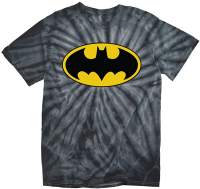
The stylized bat emblem is commercially significant because it can identify the franchise even without the word “Batman.”
Cultural Significance
Batman has endured for more than eight decades largely because the concept is unusually flexible. He can function as a superhero, detective, crime-noir protagonist, psychological case study, action hero, science-fiction character, tragic hero, father figure, billionaire vigilante, or symbol of justice. Different generations can therefore create distinct versions of Batman while retaining the same fundamental identity.
DC notes that Batman has transcended comics to become part of broader shared culture, with appearances across entertainment, merchandise, art, documentaries, comedy, cosplay, and other forms of popular culture.
Distinguishing Characteristics
The fundamental Batman formula can be summarized as:
A powerless human + extraordinary preparation + detective intelligence + technology + fear + an uncompromising mission.
While Superman represents near-godlike physical power and Spider-Man possesses superhuman abilities, Batman’s appeal lies in the fact that he is fundamentally human. His greatest “superpower” is his capacity to prepare, learn, investigate, and adapt. This concept remains a recurring theme in stories where Batman operates alongside vastly more powerful heroes such as Superman and Wonder Woman.
Legacy
Since his debut in 1939, Batman has developed from a six-page pulp-inspired comic book character into one of the world’s most recognizable fictional brands.5 His mythology has accumulated an enormous number of recurring elements:
Bruce Wayne
↓
Thomas & Martha Wayne’s murder
↓
The oath to fight crime
↓
Batman
↓
Gotham City
↓
Batcave & Wayne Manor
↓
Alfred & Commissioner Gordon
↓
Robin & the Bat-Family
↓
Joker & the Rogues Gallery
↓
Justice League
↓
Comics, films, animation, games & merchandise
Together, these elements form one of the most extensive fictional universes in modern popular culture. For the current canonical character overview, DC’s official Batman profile serves as the primary reference.1
References
- Batman | Official DC Character
- Batman, a History of Heroics: The Beginning | DC
- Lighting Up the Night: Twelve Moments That Defined Batman | DC
- Batman
- Batman debuts in comics | March 30, 1939 | HISTORY
- Batman, a History of Heroics: 1940s-1950s | DC
- Batman (Bruce Wayne) (Golden Age) Chronology – DCU Guide
- Batman debuts in comics | March 30, 1939 | HISTORY
- The Rise of Batman | Books & Manuscripts | Sotheby’s
- Batman at 75: Highlights in the Life of the Caped Crusader | DC
- Batman – DC CONTINUITY PROJECT