Shop on Lazada
BETTY CROCKER products
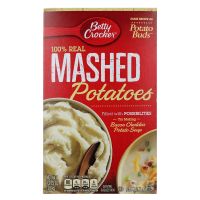
Betty Crocker Mashed Potatoes 389g
₱239.00
Buy on Lazada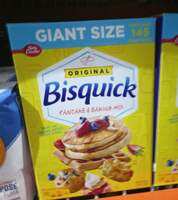
Betty Crocker Bisquick Pancake 2.7kg
₱649.00
Buy on Lazada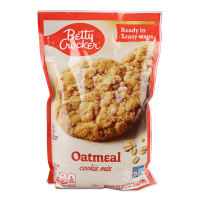
Betty Crocker Oatmeal Cookie Mix 496g
₱229.00
Buy on Lazada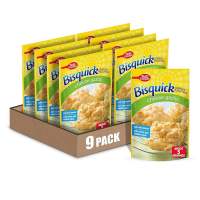
Betty Crocker Bisquick Complete Cheese Garlic Biscuit Mix Just Add Water
₱6,128.00₱6,809.00
BETTY CROCKER COOKIE MIX OATMEAL 496G
₱329.00
Buy on Lazada
Betty Cracker Hersheys Triple Chocolate Brownie mixes 567g
₱989.00
Buy on Lazada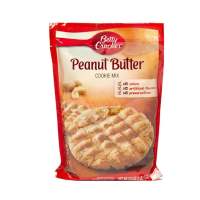
Betty Crocker Peanut Butter Cookie Mix 496g
₱1,299.00
Buy on Lazada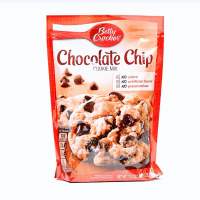
Betty Crocker Chocolate Chip Cookie Mix 17.5oz
₱949.00
Buy on LazadaAbout BETTY CROCKER
Betty Crocker is an American food and baking brand owned by General Mills. Established as a fictional consumer persona in 1921, Betty Crocker evolved from a name used to answer home cooks’ questions into one of the most recognised names in American food culture. Today, the brand is particularly associated with cake mixes, frosting, brownie and cookie mixes, baking products, recipes, cookbooks, and home-cooking expertise.1
Overview
| Category | Information |
|---|---|
| Brand | Betty Crocker |
| Founded | 1921 |
| Origin | Minneapolis, Minnesota, United States |
| Created by | Washburn-Crosby Company |
| Current owner | General Mills |
| Industry | Food and consumer packaged goods |
| Main association | Baking and home cooking |
| Famous for | Cake mixes, frosting, baking mixes, recipes and cookbooks |
| Famous symbol | The Betty Crocker signature and Red Spoon |
| First food product | Dried soup mix, 1942 |
| First cake mix | Ginger Cake, 1947 |
| Famous cookbook | Betty Crocker’s Picture Cook Book (1950) |
| Official website | BettyCrocker.com |
History
Origins in 1921
The history of Betty Crocker began in 1921, when the Washburn-Crosby Company, the predecessor of General Mills, promoted Gold Medal Flour through an advertisement in The Saturday Evening Post. Consumers were invited to complete a jigsaw puzzle and mail it to the company in exchange for a pincushion shaped like a flour sack.
The promotion generated an unexpected response: approximately 30,000 completed puzzles, accompanied by hundreds or thousands of questions about baking and cooking. The company realised that consumers wanted personalised, trustworthy advice about its products.2
Rather than answering those questions solely as a corporation, Washburn-Crosby created a fictional female personality who could sign the correspondence. This personality was named Betty Crocker. The first name, Betty, was selected because it sounded friendly and familiar. The surname Crocker honoured William G. Crocker, a recently retired company director. Female employees were also invited to submit possible Betty Crocker signatures, and one employee’s distinctive signature became the basis of the famous signature still associated with the brand.3
Crucially, Betty Crocker was never a real individual. She was a fictional character created by a company but was deliberately presented as a knowledgeable and trustworthy home-cooking authority.4
From a Name to a National Personality
Betty Crocker quickly became much more than a signature on letters. Washburn-Crosby began using the Betty Crocker persona to provide recipes, cooking advice, baking information and product guidance. The company employed home economists who tested recipes and helped consumers with cooking questions. This helped establish one of Betty Crocker’s defining characteristics: practical expertise for ordinary home cooks.
The brand’s early strategy was unusual for its time. Instead of simply advertising flour, the company attempted to teach consumers how to use its products successfully. That approach became central to Betty Crocker’s identity.5
Radio Presence
In 1924, Betty Crocker acquired a “voice” through the Betty Crocker Cooking School of the Air, broadcast from WCCO radio in Minneapolis. It is recognised as one of the earliest—and according to General Mills, the first—daytime radio cooking programmes. The programme became increasingly popular and eventually expanded to regional stations and the NBC network. It continued for roughly 24 years, with more than one million listeners enrolled.6
An interesting aspect of the programme was that there was not one permanent actress who was simply “Betty Crocker”. Different women could portray Betty’s voice while following scripts developed by the company’s Home Service staff. Radio therefore transformed Betty Crocker from a fictional name on correspondence into a recognisable media personality.
Visual Identity and Portraits
For the first part of her existence, Betty Crocker did not have one definitive appearance. That changed in 1936, when commercial artist Neysa McMein was commissioned to create the first official Betty Crocker portrait. The portrait depicted Betty in a red jacket with a white collar and established the visual identity that subsequent versions would develop.7
There have been eight major official Betty Crocker portraits, created between 1936 and 1996. The portraits changed as American fashion, beauty standards and ideas about women evolved. Rather than treating Betty as a permanently fixed character, General Mills periodically updated her appearance to represent contemporary American women.8
The 1996 portrait, created for Betty Crocker’s 75th anniversary, was particularly unusual: it used a computerised composite incorporating characteristics from numerous women from different backgrounds and ages.
The “First Lady of Food”
By the 1930s and 1940s, Betty Crocker had become an extremely recognisable name. During the 1940s, surveys indicated that Betty Crocker was known by the overwhelming majority of American homemakers. In 1945, Fortune magazine reportedly ranked Betty Crocker as the second best-known woman in America, behind First Lady Eleanor Roosevelt.9
This led to Betty Crocker being popularly described as the “First Lady of Food”. The title illustrates how extraordinary the brand’s transformation had been; a fictional character invented to answer customer letters had become a national cultural figure.
World War II Era
Betty Crocker also played a role in wartime American food culture. During World War II, rationing meant that families had to make limited quantities of ingredients stretch further. Betty Crocker used its established authority to provide information about cooking with rationed foods.
In 1945, Betty Crocker broadcast Our Nation’s Rations, while an accompanying booklet, Your Share, reportedly distributed almost seven million copies.10 This reinforced the brand’s image as more than a seller of food products: Betty Crocker was positioned as a helpful kitchen adviser.
Test Kitchens
The Betty Crocker Test Kitchens were officially established in 1946 at General Mills’ Minneapolis offices. Their purpose was to test recipes and food products under conditions intended to resemble those experienced by ordinary home cooks.
This testing philosophy became an important part of the brand’s credibility. Recipes were not simply invented for advertising; they were systematically tested before being recommended to consumers.5 The kitchens became sufficiently famous that they attracted visitors. During a five-year period in the 1940s and early 1950s, more than 26,000 people reportedly signed their guest book. The facilities later moved to General Mills’ headquarters in Golden Valley, Minnesota.
The “Big Red” Cookbook
One of Betty Crocker’s most important contributions to American cooking culture was her cookbook. In 1950, General Mills published Betty Crocker’s Picture Cook Book. The book became popularly known as “Big Red” because of its distinctive red cover.
It sold more than 2.5 million copies during its first year, making it an enormous commercial success. The recipes were tested in the Betty Crocker kitchens and were designed to be approachable for cooks with different levels of experience.11 The cookbook became much more than an advertising vehicle; it became a reference book for American households and helped establish Betty Crocker as a trusted authority on everyday cooking. New editions have continued to appear over the decades.
Products
Although Betty Crocker began primarily as a personality and information service, the brand eventually became associated with physical food products.
First Branded Food Product
The first food product to carry the Betty Crocker name was dried soup mix, introduced in 1942.10
Cake Mixes and Baking Products
In 1947, Betty Crocker introduced its first cake mixes. The first was Ginger Cake, the predecessor of today’s Betty Crocker Gingerbread Cake. It was followed by products such as Devil’s Food Cake Mix and Party Cake Mix.12
Cake mixes became one of the most important categories associated with the Betty Crocker name. Over time, the brand expanded into areas including:
- Cake mixes
- Frosting
- Brownie mixes
- Cookie mixes
- Baking mixes
- Potatoes and side dishes
- Bisquick-related baking products
- Recipe products and cooking resources
General Mills currently describes Betty Crocker as offering products ranging from baked goods to other food categories, alongside recipes and cooking expertise.11
Brand Symbols and Media
The Red Spoon
One of Betty Crocker’s most recognisable visual symbols is the Red Spoon. The Red Spoon began appearing on packaging in 1954. It developed from an earlier Betty Crocker logo, with the signature incorporated into a spoon-shaped design.12
The spoon was an appropriate symbol because it connected the brand’s identity to the everyday act of cooking. Over time, the Red Spoon became a visual shorthand for Betty Crocker products and appeared on hundreds of products. Today, the symbol remains strongly associated with the brand.
Television
Betty Crocker’s media presence eventually moved beyond radio. Beginning in the late 1940s, Betty appeared on television. From 1949 to 1964, actress Adelaide Hawley portrayed Betty Crocker in television appearances and cooking demonstrations.12
This was another unusual feature of the brand: Betty Crocker was a fictional character who could be performed by a real person. Television helped maintain the brand’s position as a trusted source of cooking instruction during a period when television was becoming an increasingly important part of American family life.
Corporate Ownership
In 1928, Washburn-Crosby merged with several other milling companies to create General Mills. Betty Crocker consequently became part of General Mills and has remained a General Mills brand ever since.13
This makes the relationship between Betty Crocker and General Mills particularly important:
Washburn-Crosby → Betty Crocker created in 1921 → General Mills formed in 1928 → Betty Crocker becomes a long-term General Mills brand
General Mills has subsequently developed Betty Crocker into a major consumer food brand distributed in multiple markets around the world.
Brand Identity
Betty Crocker’s brand identity has traditionally been built around several core concepts:
Trust
Consumers are encouraged to view Betty Crocker as a dependable source of recipes and cooking information.
Simplicity
Many Betty Crocker products are designed to make cooking and baking easier, particularly for people who want convenient preparation.
Expertise
The brand’s association with recipe testing, home economists and test kitchens has historically reinforced its culinary credibility.
Familiarity
The fictional Betty was deliberately created to sound like a friendly, approachable person rather than an impersonal corporation.
Home Cooking
Perhaps the most important association is the idea of everyday family cooking and baking. General Mills currently describes Betty Crocker as a brand centred on simple, reliable products alongside recipes and kitchen expertise.11
Fictional Persona
One of the most notable aspects of the brand is that Betty Crocker does not actually exist as a single person. Instead, “Betty Crocker” is a corporate-created identity. Over its history, different people have contributed to the character:
- Home economists wrote and tested recipes.
- Employees answered consumer letters.
- Radio performers provided Betty’s voice.
- Actresses portrayed her on television.
- Artists created her portraits.
- General Mills marketers and food professionals continuously adapted her identity.
Consequently, Betty Crocker can be understood as a collective fictional persona representing the expertise of General Mills’ food professionals, rather than as one woman.
Evolution of the Betty Crocker Image
The appearance of Betty Crocker has changed considerably over the years.
| Year | Development |
|---|---|
| 1921 | Betty Crocker name created |
| 1924 | Betty gets a radio presence |
| 1936 | First official portrait |
| 1942 | First Betty Crocker food product: dried soup mix |
| 1946 | Betty Crocker Test Kitchens officially established |
| 1947 | First Betty Crocker cake mixes |
| 1949–1964 | Adelaide Hawley portrays Betty on television |
| 1950 | Betty Crocker’s Picture Cook Book published |
| 1954 | Red Spoon introduced |
| 1960s–1980s | Betty’s portrait repeatedly updated |
| 1996 | Eighth official portrait created |
| 2000s onward | Expansion of digital recipes and online cooking resources |
The evolution shows how the brand repeatedly updated its image while preserving its fundamental association with cooking and baking.12
Digital Era
Betty Crocker’s role has changed substantially with the rise of the internet. Instead of consumers sending letters or listening to radio programmes for cooking advice, the brand now provides recipes, cooking information and product information online.
The official Betty Crocker website includes recipes and resources intended to help home cooks prepare meals, desserts and baked goods.11 In this sense, the brand has preserved its original purpose across different eras:
- 1921: Answer people’s cooking questions by letter
- 1924: Answer them by radio
- 1950: Answer them through cookbooks
- Television era: Demonstrate recipes visually
- Internet era: Provide recipes and cooking information digitally
The medium changed, but the fundamental idea remained remarkably consistent.
Betty Crocker in the Philippines
Betty Crocker is marketed in the Philippines as part of the General Mills brand portfolio. General Mills Philippines describes Betty Crocker as a brand offering baked goods and other food products, recipes and cooking expertise, and identifies the brand’s origins in 1921.11
Cultural Significance
Betty Crocker is significant not simply because it sells baking products, but because it represents an important development in American advertising, food culture and consumer education. The brand pioneered a form of marketing in which a company created a fictional person who appeared to have expertise, personality, authority, familiarity, a recognisable appearance, a recognisable signature, and a continuing relationship with consumers.
Rather than saying merely “buy our flour,” Betty Crocker effectively told consumers: “Let me show you how to cook with it.” That distinction helped make the brand exceptionally influential.
Factors in Brand Success
Several factors explain the brand’s longevity:
- Solving a genuine consumer problem: The brand originated because people actually wanted answers to cooking questions.
- Building trust through education: Recipes, cooking schools, radio programmes and test kitchens gave consumers reasons to rely on Betty Crocker beyond advertising.
- Creating a human personality: Consumers interacted with “Betty” rather than an anonymous corporation.
- Adapting to new media: Betty moved from letters to radio, television, cookbooks, websites and digital media.
- Combining content and products: Recipes and cooking expertise supported sales of baking products, while the products reinforced the brand.
- Maintaining recognisable visual branding: The Betty Crocker signature, portraits and Red Spoon created strong visual continuity.
Legacy
More than a century after her creation, Betty Crocker remains one of the most recognisable fictional personalities in food marketing. Her story is unusual because she began not as a product, celebrity or real person, but as a solution to a customer-service problem.
A flour company’s advertising promotion generated thousands of questions. The company invented a friendly name to answer those questions. That name became a radio personality, cookbook author, television figure, food adviser and eventually a global food brand.13
Today, Betty Crocker continues to be closely associated with home baking, convenience, recipes and accessible cooking. Betty Crocker is a fictional American food personality created in 1921 by Washburn-Crosby, the predecessor of General Mills. What began as a name used to answer consumers’ baking questions evolved into a century-old food brand famous for cake mixes, frosting, recipes, cookbooks, cooking expertise and the iconic Red Spoon.13
References
- How Betty Crocker got its start | General Mills
- Betty Crocker – Brands – Food we make | General Mills
- Who Was Betty Crocker? | Stories | PBS Food
- About Us | Betty Crocker
- The Betty Crocker Kitchens | Betty Crocker
- The women who built Betty Crocker | General Mills
- About Us | Betty Crocker
- The Many Portraits of Betty Crocker | General Mills
- Our Story | About Us | Betty Crocker
- About Us – The Betty Crocker Story – Betty Crocker
- Betty Crocker™ – Brands – Food we make – General Mills
- The Story of Betty Crocker | Betty Crocker
- Our Story | About Us | Betty Crocker