Shop on Lazada
Pringles products
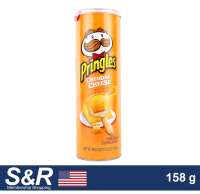
Pringles Cheddar Cheese Potato Crisps 158g
₱137.00
Buy on Lazada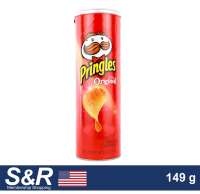
Pringles Original Potato Crisps 149g
₱137.00
Buy on Lazada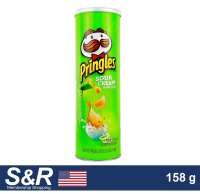
Pringles Sour Cream & Onion Potato Crisps 158g
₱147.00
Buy on Lazada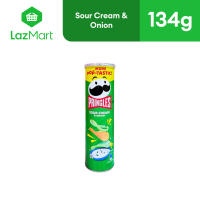
Pringles Sour Cream & Onion 134g
₱118.75₱125.00
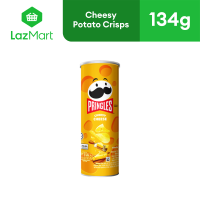
Pringles Cheesy Cheese 134g
₱125.40₱132.00
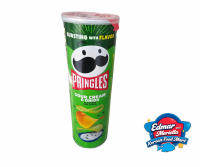
PRINGLES ALL FLAVORS 158G
₱150.00
Buy on Lazada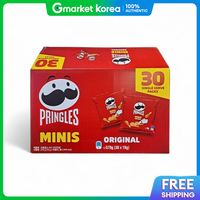
Pringles | Mini Original 19g 30-Count (570g)
₱1,141.81₱1,614.57
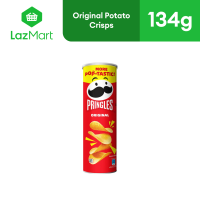
Pringles Original 134g
₱118.75₱125.00
About Pringles
Overview
| Attribute | Details |
|---|---|
| Brand | Pringles |
| Product Type | Potato-based snack crisps |
| Introduced | 1968 (United States) |
| Country of Origin | United States |
| Original Owner | Procter & Gamble (P&G) |
| Current Owner | Mars, Inc. (since 2024) |
| Previous Owners | Procter & Gamble (1968–2012), Kellogg Company/Kellanova (2012–2024) |
| Markets | Worldwide (140+ countries) |
| Famous Slogan | “Once you pop, the fun don’t stop” |
Pringles is an American brand of stackable, potato-based snack crisps, famous for its uniform saddle-shaped chips, cylindrical can, and the mustached mascot Julius Pringles. Introduced in 1968, Pringles was created to solve common problems with traditional potato chips, such as breakage, greasiness, and staleness. Today, it is sold in more than 140 countries and is one of the world’s most recognizable snack brands. [1]
History
The origins of Pringles date back to 1956, when Procter & Gamble asked chemist Fredric J. Baur to develop a better potato snack. Consumers often complained that ordinary potato chips were:
-
Easily broken during shipping
-
Greasy
-
Stale after opening
-
Packaged with too much empty air
Baur designed the snack’s iconic hyperbolic paraboloid (saddle) shape and invented the famous cylindrical can, which protects the crisps from breaking. However, he struggled to perfect the recipe. [1]
In the mid-1960s, researcher Alexander Liepa improved the formula and taste, making the product ready for commercial release. Mechanical engineer and later science fiction author Gene Wolfe helped develop the manufacturing machinery used to produce the crisps. [1]
Launch
Pringles were first test-marketed in Indiana, USA, in 1968 under the name:
“Pringle’s Newfangled Potato Chips.”
The product gradually expanded across the United States before becoming nationally available in the mid-1970s. International expansion began in the 1990s. [1]
Why Pringles Are Different
Unlike traditional potato chips, Pringles are not sliced directly from whole potatoes. Instead, they are made from a dough containing:
-
Dehydrated potatoes
-
Wheat starch
-
Corn flour
-
Rice flour
-
Vegetable oils
-
Seasonings
The dough is rolled into thin sheets, cut into identical shapes, molded into their signature curve, cooked, seasoned, and stacked into cans by automated machines. This process gives every crisp nearly identical size, thickness, and shape. [2]
Packaging
One of Pringles’ most recognizable features is its cardboard-and-metal composite cylindrical can.
The design:
-
Protects the crisps from breaking
-
Keeps them fresh longer
-
Allows the crisps to be stacked neatly
-
Makes transportation more efficient
The can became almost as iconic as the snack itself and remains one of the most distinctive food packages in the world. [1]
Ownership
Pringles has changed ownership several times:
-
1968–2012: Procter & Gamble
-
2012–2024: Kellogg Company (later Kellanova)
-
2024–Present: Mars, Inc., following its acquisition of Kellanova. [1]
Mascot
Pringles’ mascot is Julius Pringles, recognizable by:
-
Large brown mustache
-
Red bow tie
-
Thick eyebrows
-
Distinctive hairstyle
-
No visible mouth
Over the years, the mascot has been redesigned several times, most recently with a simplified, modern appearance.
Flavors
Pringles offers dozens of flavors worldwide. Some of the best-known include:
-
Original
-
Sour Cream & Onion
-
BBQ
-
Cheddar Cheese
-
Pizza
-
Salt & Vinegar
-
Paprika
-
Ranch
-
Hot & Spicy
-
Jalapeño
-
Honey Mustard
Many countries also release exclusive regional flavors inspired by local cuisines.
Marketing
Pringles is known for memorable advertising campaigns and the slogan:
“Once you pop, the fun don’t stop.”
Its marketing often emphasizes:
-
Stackable crisps
-
Creative flavor combinations
-
Sharing with friends
-
The distinctive can
-
Julius Pringles as the brand mascot
Legal Classification
Pringles has been involved in legal debates over whether it qualifies as a “potato chip.” Because it is made from a processed dough rather than slices of whole potatoes, regulations in some countries required different labeling, leading the brand to use the term “potato crisps” in many markets. [2]
Cultural Impact
Pringles has become one of the world’s most recognizable snack brands due to:
-
Its unique shape
-
The iconic can
-
The instantly recognizable mascot
-
Wide variety of flavors
-
Presence in more than 140 countries
The brand frequently collaborates with movies, video games, sports events, and limited-edition promotions, helping maintain its global popularity.
Fun Facts
-
The Pringles crisp is shaped like a hyperbolic paraboloid, a mathematical surface.
-
Inventor Fredric Baur was so proud of his work that part of his ashes were reportedly buried in a Pringles can after his death. [3]
-
Every Pringles crisp is manufactured to nearly identical dimensions.
-
The original can featured a metal pull-tab before switching to the familiar foil seal.
-
Pringles is among the best-selling snack brands worldwide. [1]