Shop on Lazada
Binggrae products
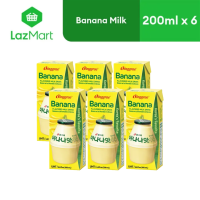
Binggrae Banana Milk Tetra Pack 200ml x 6
₱426.00
Buy on Lazada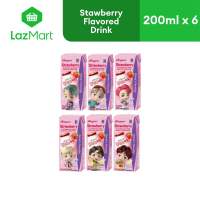
Binggrae Strawberry Milk Tetra Pack 200ml x 6
₱426.00
Buy on Lazada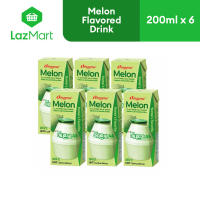
Binggrae Melon Flavored Milk Tetra Pack 200ml x 6
₱426.00
Buy on Lazada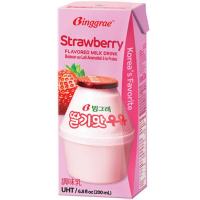
Binggrae Banana Milk BTS Korean 200ml / Strawberry / Melon
₱47.00₱59.00
Binggrae Strawberry Flavored Milk Drink 6.8 Fl (200ml) / 6 Pack x 4 (24 Pack)
₱1,292.00
Buy on Lazada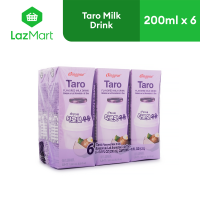
Binggrae Taro Milk (Tetra Pack) 200ml - Pack of 6
₱426.00
Buy on Lazada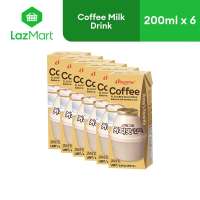
Binggrae Coffee Milk Tetra Pack 200ml x 6
₱426.00
Buy on Lazada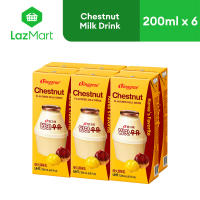
Binggrae Chestnut Flavored Milk (Tetra Pack) 200ml x 6
₱426.00
Buy on LazadaAbout Binggrae
Binggrae Co., Ltd. (Korean: 빙그레, Binggeurae) is a South Korean food and beverage manufacturer best known internationally for its Banana-Flavored Milk, Melona ice cream, Together ice cream, and Samanco fish-shaped ice cream. Established in 1967, the company began as a dairy processor and has since evolved into a major Korean food producer with a portfolio spanning dairy, ice cream, beverages, fermented milk, snacks, desserts, and health-oriented foods.1
Overview
| Information | |
|---|---|
| Official name | Binggrae Co., Ltd. |
| Korean name | 주식회사 빙그레 |
| Korean | 빙그레 |
| Industry | Food and beverage |
| Founded | September 13, 1967 |
| Original company | Daeil Corporation |
| Name changed to Binggrae | February 25, 1982 |
| Headquarters | Namyangju, Gyeonggi Province, South Korea |
| CEO | Kim Kwang-Soo |
| Major products | Banana-Flavored Milk, Melona, Together, Samanco, Yoplait and others |
| Major markets | South Korea and international markets |
| Stock listing | Korea Exchange, listed since 1978 |
According to the company’s 2025 financial report, Binggrae was established on September 13, 1967, and maintains its headquarters in Namyangju, Gyeonggi Province. Its shares have been listed on the Korea Exchange since August 1978.2
Name and meaning
The Korean word “빙그레” (Binggeurae) refers to a gentle, natural smile or grin.
The name carries specific cultural significance for the corporation. Binggrae’s corporate philosophy links the name to the aspiration of creating a society where people can “smile Binggrae” with happiness, free from anxiety, sorrow, or corruption. The company states that this philosophy was inspired by the ideals of Korean independence activist Ahn Chang-ho (Dosan).3
Consequently, Binggrae’s branding typically emphasizes:
- Happiness
- Smiles
- Childhood memories
- Friendliness
- Everyday enjoyment
- Korean food culture
- Playful visual design
Its stated mission is to serve as a messenger of bright smiles sharing health and happiness, while its vision is to become a global company that creates customer value and enriches the world.4
History
1967–1973: The beginning
Binggrae traces its origins to September 13, 1967, when Daeil Mall Co., Ltd. was established. The company’s early operations focused on the dairy and milk-processing industry.5
During its formative years, the company sought technological expertise from overseas partners. In 1972, it formed a technical partnership with the American company Foremost McKesson.6
A factory in Donong-dong, Namyangju, was completed in 1973, establishing a key manufacturing base for the company.
1974: The year that changed Binggrae
1974 was arguably the most important year in Binggrae’s history. Two products that would become icons of Korean food culture were introduced during this period.
Together
Together (투게더) was launched as a carton-style ice cream and became one of Korea’s best-known ice cream brands. Binggrae describes Together as part of its enduring legacy in the Korean ice cream industry.7
Banana-Flavored Milk
Later in 1974, Binggrae launched Banana-Flavored Milk (바나나맛우유). This product eventually became the company’s most recognizable offering worldwide.
Its distinctive rounded container, inspired by the traditional Korean moon jar, became an integral part of its identity.8 The product’s unique combination of sweet banana flavor, milk, a distinctive bottle shape, bright yellow packaging, and nostalgic Korean imagery helped establish it as a defining product of modern Korean food culture.
1982: The Binggrae name
In February 1982, the company officially changed its name from Daeil Dairy to Binggrae Co., Ltd.1 This change established the corporate identity that continues today. The name was selected because the company wished to associate its products with happiness and smiles.
Expansion during the 1980s and 1990s
Binggrae continued to expand its manufacturing and research capabilities throughout the late 20th century. Key milestones included:
- 1978 — Listed on the Korean stock exchange.
- 1982 — Completed its Gimhae plant.
- 1986 — Completed another major plant in Gwangju.
- 1987 — Opened the Binggrae Food Research Center.
- 1988 — Selected as an official ice cream supplier for the Seoul Olympics.
- 1997 — Obtained ISO 9001 certification.
- 1998 — Obtained HACCP certification for milk beverages.
- 1999 — Banana-Flavored Milk was selected as one of Korea’s notable products of the 20th century.9
This era transformed Binggrae from a traditional dairy company into a diversified food manufacturer.
Major brands and products
Binggrae currently maintains a broad product portfolio rather than relying on a single item.
Banana-Flavored Milk
This is Binggrae’s signature product and arguably the most famous Korean flavored milk internationally. Launched in 1974, it has retained its distinctive container design for decades; Binggrae states the design was inspired by the traditional Korean moon jar.10 The company describes it as Korea’s leading flavored-milk brand.
Variants include:
- Banana-Flavored Milk
- Banana-Flavored Milk Light
- Banana-Flavored Milk with no added sugar
- Strawberry-Flavored Milk
- Melona-Flavored Milk
- Other limited or regional flavors
According to Binggrae, the original product contains more than 85% domestically produced raw milk.11
Cultural significance
Banana-Flavored Milk is more than a beverage; it has become strongly associated with Korean childhood, convenience stores, tourism, K-pop, popular culture, nostalgia, and the global popularity of Korean food. Consequently, Binggrae has utilized the product extensively in international marketing campaigns.
Melona
Melona is perhaps Binggrae’s second most internationally recognizable product. It is a rectangular, smooth-textured ice cream bar originally associated with melon flavor, although numerous flavors now exist. Melona has achieved significant popularity outside Korea and is sold in markets across Asia, North America, and elsewhere. Its success illustrates Binggrae’s ability to adapt a distinctly Korean product into an internationally recognized snack.
Samanco
Samanco is a fish-shaped ice cream sandwich launched in 1991. It combines a fish-shaped wafer exterior with ice cream and filling. Binggrae describes it as a representative Korean snack enjoyed year-round.12
While the original flavor features red bean filling, Binggrae has produced numerous variations, including:
- Strawberry
- Chocolate
- Green tea
- Corn
- French vanilla
- Mixed berry
From a branding perspective, Samanco is notable because its fish shape visually connects it to bungeoppang, a traditional Korean fish-shaped pastry.
Together
Together (투게더) is one of Binggrae’s oldest surviving ice cream brands. Introduced in 1974, it became an iconic family ice cream in Korea. The product’s longevity has fostered strong nostalgic associations among Korean consumers. Binggrae has subsequently developed premium versions such as Together Signature.13
Yoplait
Binggrae also operates in the fermented-milk and yogurt market. Its Yoplait business is significant in South Korea, where spoonable yogurt became an important category. The company’s portfolio includes fermented milk alongside dairy products and beverages.
Other product categories
Binggrae’s current portfolio extends well beyond banana milk and ice cream. Official business categories include:
- Dairy: Flavored milk, ordinary milk, cheese, soy milk
- Fermented milk: Yogurt, Yoplait products
- Ice cream: Melona, Together, Cledor, Super Cone, Samanco, and other products
- Beverages: Coffee, juice, various beverages
- Snacks and desserts
- Health-oriented foods: Brands including TFT and protein-oriented products11
The company’s English product catalog currently lists 90 products across these various categories.
International expansion
Although Binggrae originated as a Korean dairy company, it increasingly positions itself as a global food company. Products are exported to regions including North America, Southeast Asia, China, Taiwan, Hong Kong, Europe, and Oceania.
Binggrae operates overseas entities including BC F&B USA, BC F&B Shanghai, BC F&B Vietnam, and BC F&B Australia.14 The company’s Australian operation states that Binggrae products have reached 57 markets worldwide, covering Asia, the Americas, Europe, and other regions.13
Binggrae and Korean popular culture
Binggrae’s international visibility is closely linked to the global spread of Korean culture. Products such as Banana-Flavored Milk and Melona frequently appear in Korean convenience stores, dramas, K-pop content, tourism media, social platforms, and Asian supermarkets abroad.
The company has also leveraged digital marketing extensively. For example, its Banana-Flavored Milk “My Straw Campaign” received international advertising recognition, while its Hello Danji YouTube project won a YouTube Works award. These efforts allow Binggrae to market not just food products, but an image of Korean everyday life and nostalgia.
Acquisition and merger with Haitai Ice Cream
A major development occurred in 2020, when Binggrae acquired Haitai Ice Cream. Haitai possessed its own significant Korean ice cream brands, giving Binggrae a substantially stronger position in the domestic market.14 The acquisition brought products and brands associated with Haitai’s history into the wider Binggrae corporate group.
In 2026, Binggrae absorbed the subsidiary through a formal merger. The merger agreement was signed on January 14, 2026, and took effect on April 1, 2026. Haitai Ice Cream ceased to exist as a separate corporation, with Binggrae remaining as the surviving entity.15
The merger was designed to:
- Eliminate overlapping corporate functions
- Integrate business processes
- Improve operational efficiency
- Strengthen profitability
- Expand exports
- Strengthen e-commerce distribution
- Improve competitiveness in international food markets
This consolidation marks 2026 as a significant milestone in Binggrae’s evolution from a dairy company into a larger integrated food business.
Corporate philosophy
Binggrae’s corporate philosophy centers on health, happiness, and customer value. Its stated principles include:
- Customers — Provide the best customer value.
- Quality — Ensure high product quality.
- Safety — Put safety first.
- Profit — Pursue sustainable profit-based growth.
- Human resources — Develop capable employees.
- Social contribution — Contribute to society and mutual growth.16
This philosophy is reflected in the company’s branding; Binggrae generally presents itself as a friendly, cheerful, and approachable food company rather than a purely industrial manufacturer.
Manufacturing and operations
Binggrae operates major manufacturing facilities in South Korea. Its 2025 sustainability report identifies four primary factories located in Namyangju, Gimhae, Gwangju, and Nonsan. The company also operates logistics facilities and a food research institute.17
As of the end of 2024, Binggrae reported 1,829 employees at the parent company level.18
Sustainability
Binggrae has increasingly incorporated environmental, social, and governance (ESG) considerations into its corporate strategy. The company received ISO 14001 environmental-management certification in 2021 and has continued environmental initiatives involving packaging, production, and resource management.2
Its 2025 sustainability reporting also outlines ESG initiatives and corporate goals related to environmental responsibility, social contribution, and governance.2
Cultural importance
Binggrae’s significance in South Korea extends beyond market share; it represents a specific period of Korean consumer history. Products such as Banana-Flavored Milk, Together, Melona, and Samanco have survived for decades, meaning multiple generations of Koreans have grown up consuming them.
This longevity provides Binggrae with intergenerational brand nostalgia. A Korean consumer may have encountered Banana-Flavored Milk or Melona as a child and continued purchasing the same product decades later. This combination of nostalgia, distinctive packaging, relatively simple products, and strong brand consistency is a central reason Binggrae has remained culturally relevant.
Brand identity
Binggrae’s identity can be summarized as Korean heritage, happiness, nostalgia, playful food, and global accessibility. Its most successful products typically share several characteristics:
- Immediately recognizable shapes
- Memorable colors
- Simple flavors
- Playful concepts
- Affordable positioning
- Strong childhood associations
- Distinctive packaging
Banana-Flavored Milk serves as the clearest example: the yellow drink and rounded “moon jar” container are recognizable even without prominent display of the Binggrae name.
Place in Korean food culture
While Korean food culture is often represented internationally by dishes such as kimchi, ramen, tteokbokki, and Korean barbecue, Binggrae represents another facet: everyday Korean convenience-store and dessert culture.
Its products are generally not traditional foods in the strict historical sense but are instead products of Korea’s modern industrial and consumer culture. This distinction makes Binggrae particularly notable for transforming modern Korean nostalgia into an exportable cultural product.
International image
Outside Korea, Binggrae is particularly associated with:
- Banana-Flavored Milk: The quintessential Korean flavored milk.
- Melona: A globally recognized Korean ice cream bar.
- Samanco: The distinctive fish-shaped ice cream sandwich.
- Together: A classic Korean family ice cream brand.
These products have become common fixtures in Asian grocery stores and Korean food retailers abroad. Binggrae now describes its goal as becoming a global leading company, supported by overseas subsidiaries and export operations.19
Timeline at a glance
| Year | Event |
|---|---|
| 1967 | Daeil Mall established |
| 1972 | Technical partnership with Foremost McKesson |
| 1973 | Donong plant completed |
| 1974 | Together and Banana-Flavored Milk launched |
| 1978 | Listed on Korean stock exchange |
| 1982 | Company renamed Binggrae |
| 1987 | Binggrae Food Research Center opened |
| 1988 | Official ice cream supplier for Seoul Olympics |
| 1991 | Samanco launched |
| 1997 | ISO 9001 certification |
| 1998 | HACCP certification for milk beverages |
| 1999 | Banana-Flavored Milk recognized among Korea’s notable 20th-century products |
| 2019 | BC F&B Vietnam established |
| 2020 | Haitai Ice Cream acquired |
| 2021 | ISO 14001 environmental certification |
| 2025 | BC F&B Australia established |
| 2026 | Haitai Ice Cream merged into Binggrae |
References
- Binggrae
- 2025 BINGGRAE SUSTAINABILITY REPORT
- BINGGRAE CO., LTD. AND ITS SUBSIDIARIES
- 2025 BINGGRAE SUSTAINABILITY REPORT
- Binggrae
- Binggrae
- Binggrae
- Binggrae
- Binggrae
- Binggrae
- Binggrae
- Binggrae
- ABOUT US | Binggrae Australia
- BINGGRAE/Quarterly Report/2026.05.15
- Binggrae
- Binggrae
- Binggrae
- Binggrae
- Binggrae
- Binggrae