Shop on Lazada
Blizzard Entertainment products

Blizzard Entertainment | Collection Statue
₱21,491.14
Buy on Lazada
Blizzard Entertainment | Gaming Figure Ragnaros Statue 1/10 Scale
₱21,053.64
Buy on Lazada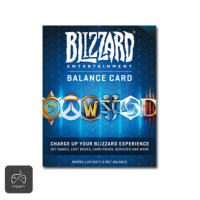
Battle.net (Battlenet) Gift Card Balance - Blizzard Entertainment - $20 USD $50 USD (Digital Code) - Jotun Digital Gaming PH
₱3,850.00
Buy on Lazada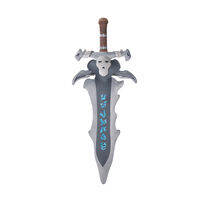
Blizzard Entertainment | World of Warcraft Frostwyrm Memento Plush Weapon
₱2,617.65
Buy on Lazada![NSW Diablo 3 Eternal Collection [US]](https://ph-live.slatic.net/p/89cc42a7fece720e54507a2f99bb66c8.jpg_200x200q80.jpg)
NSW Diablo 3 Eternal Collection [US]
₱2,395.00
Buy on Lazada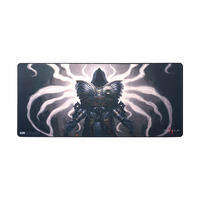
Blizzard Entertainment | Inarius Series Desktop Mouse Pad
₱1,412.54
Buy on Lazada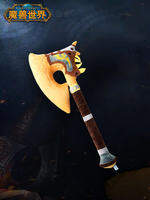
Blizzard Entertainment | World of Warcraft Lightforged Bloodthirsty Memento Plush Weapon
₱2,502.63
Buy on Lazada
Blizzard Balance PIN USA Blizzard Digital Gift Cards Battle.net United States⚡5 USD—100 USD⚡LEADING.PH Fast EMail Delivery Digital Codes
₱6,980.00₱7,608.20
About Blizzard Entertainment
Overview
Blizzard Entertainment is an American video game developer and publisher renowned for creating influential PC gaming franchises such as Warcraft, StarCraft, Diablo, Overwatch, and Hearthstone. Established in 1991, the company built its reputation on polished gameplay, distinctive fantasy and science-fiction settings, cinematic storytelling, robust online communities, and long-term post-launch support. Today, Blizzard Entertainment operates under Microsoft Gaming/Xbox following Microsoft’s acquisition of Activision Blizzard in October 2023.
Basic Information
| Category | Information |
|---|---|
| Full name | Blizzard Entertainment, Inc. |
| Industry | Video games |
| Founded | February 8, 1991 |
| Original name | Silicon & Synapse |
| Founders | Allen Adham, Michael Morhaime, Frank Pearce |
| Headquarters | Irvine, California, United States |
| Parent company | Microsoft |
| Business | Game development and publishing |
| Best known for | Warcraft, StarCraft, Diablo, Overwatch |
| Online platform | Battle.net |
| Current president | Johanna Faries |
| Official site | Blizzard.com |
The company was originally founded as Silicon & Synapse by three UCLA graduates: Allen Adham, Michael Morhaime, and Frank Pearce. It later operated briefly as Chaos Studios before adopting the name Blizzard Entertainment.
History
1991–1993: Silicon & Synapse
Blizzard Entertainment’s origins trace back to 1991, when Allen Adham, Frank Pearce, and Michael Morhaime established Silicon & Synapse. During this early period, the studio focused primarily on ports and adaptations of existing titles for other publishers rather than developing original intellectual properties. This foundational work provided the young developers with essential experience in programming, game design, production, and cross-platform development.
1993–1994: Chaos Studios and Blizzard Entertainment
In 1993, the company briefly renamed itself Chaos Studios. However, due to a naming conflict with another entity, the founders ultimately settled on Blizzard Entertainment in 1994. That same year marked a significant turning point with the release of:
Warcraft: Orcs & Humans
This title transformed Blizzard Entertainment from a small development studio into a prominent PC game developer.
The Warcraft Era
Warcraft: Orcs & Humans
Released in 1994, Warcraft: Orcs & Humans was a real-time strategy game centred on the conflict between humans and orcs. It established the foundations of what would become the expansive Warcraft universe, introducing key elements such as:
- Humans and Orcs
- Azeroth
- Fantasy warfare and magic
- Heroes and factions
- A developing mythology
The franchise eventually expanded beyond strategy games to include one of the world’s largest MMORPGs.
Warcraft II
Warcraft II: Tides of Darkness launched in 1995, significantly expanding upon the original game’s formula. Its expansion pack, Beyond the Dark Portal, added further lore and campaigns. Crucially, Warcraft II demonstrated Blizzard Entertainment’s commitment to excellent multiplayer support, which became a defining characteristic of the studio.
Diablo
In 1996, Blizzard Entertainment released Diablo, an action role-playing game developed by Blizzard North. Players descended into dungeons beneath the town of Tristram to battle increasingly powerful demons. The title introduced several enduring trademarks of the studio:
Simple controls + deep progression + randomised loot + replayability.
Diablo also marked the launch of Blizzard Entertainment’s online service, Battle.net, which became integral to the company’s ecosystem.
Diablo Franchise
The series has since grown to include numerous titles:
- Diablo — 1996
- Diablo II — 2000
- Diablo II: Lord of Destruction — 2001
- Diablo III — 2012
- Diablo III: Reaper of Souls — 2014
- Diablo Immortal — 2022
- Diablo IV — 2023
- Diablo IV: Vessel of Hatred — 2024
- Diablo IV: Lord of Hatred — 2026
Blizzard Entertainment’s current game catalogue lists Diablo IV and its associated content alongside earlier entries in the series 1.
StarCraft
In 1998, Blizzard Entertainment shifted from medieval fantasy to science fiction with the release of StarCraft. The game featured three radically different factions:
- Terran — technologically advanced humans
- Zerg — an insectoid biological swarm
- Protoss — technologically sophisticated alien warriors
A major achievement of StarCraft was its asymmetrical faction design; each race played distinctly while remaining competitively balanced. The game became highly influential in competitive gaming, particularly in South Korea, and sold 3 million copies within its first three months.
StarCraft II
Blizzard Entertainment later returned to the franchise with:
- StarCraft II: Wings of Liberty — 2010
- Heart of the Swarm — 2013
- Legacy of the Void — 2015
The original title was subsequently updated as StarCraft: Remastered.
World of Warcraft
Perhaps the most significant transformation in Blizzard Entertainment’s history occurred in 2004 with the release of World of Warcraft (WoW). This title converted the Warcraft universe into a massively multiplayer online role-playing game where players could create characters, explore Azeroth, complete quests, join guilds, engage in PvP combat, and undertake dungeons and raids alongside millions of others.
WoW became one of the most commercially successful MMORPGs ever created, elevating Blizzard Entertainment from a PC game studio to a global entertainment brand. The franchise continues through numerous expansions, including the current World of Warcraft: Midnight. The official catalogue lists both the modern game and Classic versions 1.
Hearthstone
In 2014, Blizzard Entertainment released Hearthstone, a digital collectible card game set in the Warcraft universe. Rather than commanding armies directly, players construct decks using cards representing characters, spells, weapons, and abilities. Hearthstone demonstrated the studio’s ability to successfully adapt established intellectual property into entirely new genres.
Heroes of the Storm
Heroes of the Storm served as Blizzard Entertainment’s entry into the multiplayer online battle arena genre. Instead of creating a new setting, it united characters from existing franchises, including Warcraft, StarCraft, Diablo, and Overwatch. Iconic figures such as Thrall, Kerrigan, and Diablo appeared together in a single title. While it did not achieve the dominance of League of Legends or Dota 2, it remained a significant part of the studio’s crossover culture.
Overwatch
In 2016, Blizzard Entertainment released Overwatch, a team-based multiplayer shooter. Diverging from military realism, the game emphasised colourful characters with distinct personalities and abilities, including Tracer, Genji, Mercy, Reinhardt, D.Va, Hanzo, Winston, and Widowmaker. The studio treated these characters similarly to a traditional entertainment franchise.
The official Overwatch site currently describes the title as a free-to-play, team-based action game built around 5v5 matches.
Overwatch 2
Overwatch 2 launched in 2022, eventually replacing the original game’s live service. This sequel marked a shift in Blizzard Entertainment’s business model towards free-to-play live service gaming.
Battle.net
One of Blizzard Entertainment’s most significant technological contributions is Battle.net. Introduced alongside Diablo in 1996, it allowed players to connect via the internet. Over time, it evolved into a comprehensive ecosystem providing:
- Online multiplayer
- Friends lists and chat
- Digital game distribution
- Account management
- Game updates
- Social features
It stands as an early example of a publisher building an integrated online platform around its titles.
Design Philosophy
Blizzard Entertainment is often associated with the informal philosophy: “Gameplay first.” The company earned a reputation for prioritising quality over predetermined release schedules. Current stated values include For the Love of Play, Passion for Greatness, Better Together, Strength in Diversity, and Boundless Curiosity.
The studio’s development approach is broadly characterised by:
- Polished gameplay and accessible controls
- Strong character design and distinctive art direction
- Deep systems with high replayability
- Cinematic presentation
- Long-term player community support
- Robust multiplayer infrastructure
The “Blizzard Polish”
Blizzard Entertainment is widely recognised for its obsession with polish. The studio frequently refines, simplifies, and popularises established concepts rather than inventing entirely new genres. Examples include:
- RTS → Warcraft and StarCraft
- Action RPG → Diablo
- MMORPG → World of Warcraft
- Digital card game → Hearthstone
- MOBA → Heroes of the Storm
- Hero shooter → Overwatch
The studio’s contribution typically lies in execution, presentation, accessibility, and ecosystem design.
Corporate Ownership
Davidson & Associates and Vivendi Games
During the 1990s, Blizzard Entertainment became part of Davidson & Associates, which was subsequently absorbed into Vivendi’s games division. The studio then operated under Vivendi Games.
Activision Blizzard
In 2008, Activision and Vivendi Games merged to form Activision Blizzard. This brought Blizzard Entertainment into a larger corporation alongside franchises such as Call of Duty, Guitar Hero, Crash Bandicoot, and Spyro.
Microsoft Acquisition
On October 13, 2023, Microsoft completed its acquisition of Activision Blizzard. Blizzard Entertainment subsequently became part of Microsoft’s gaming organisation alongside Xbox and Bethesda. Structurally, the hierarchy is now:
Microsoft → Microsoft Gaming/Xbox → Blizzard Entertainment
Despite this change, Blizzard Entertainment continues to operate as a distinct game development brand.
Major Franchises
Blizzard Entertainment’s primary intellectual properties are summarised below:
| Franchise | Genre | First Major Release |
|---|---|---|
| Warcraft | Fantasy strategy / MMORPG | 1994 |
| Diablo | Action RPG | 1996 |
| StarCraft | Science-fiction RTS | 1998 |
| World of Warcraft | MMORPG | 2004 |
| Hearthstone | Digital card game | 2014 |
| Heroes of the Storm | MOBA | 2015 |
| Overwatch | Hero shooter | 2016 |
| Warcraft Rumble | Mobile strategy | 2023 |
The official games catalogue currently includes active and classic offerings across these franchises 1.
Cultural Impact
PC Gaming
Blizzard Entertainment helped establish the PC as a premier platform for real-time strategy, online RPGs, action RPGs, competitive multiplayer, and digital distribution.
Esports
StarCraft defined the early esports era, particularly in South Korea. Blizzard Entertainment later developed professional ecosystems around StarCraft II, Hearthstone, Overwatch, and World of Warcraft.
Gaming Communities
Titles like WoW and Overwatch functioned as social platforms where players formed guilds, teams, friend groups, and content-creator ecosystems. Community building remains perhaps the studio’s most enduring legacy.
Storytelling and World-Building
Blizzard Entertainment’s franchises are noted for their extensive fictional universes:
- Warcraft: A high-fantasy world of humans, orcs, elves, undead, demons, and dragons.
- Diablo: A dark-gothic setting centred on the eternal conflict between the High Heavens and Burning Hells.
- StarCraft: A science-fiction universe revolving around Terrans, Zerg, and Protoss.
- Overwatch: A futuristic world featuring international heroes, organisations, and geopolitical conflicts.
This focus on lore has allowed these properties to extend into cinematics, novels, merchandise, and fan art.
BlizzCon
BlizzCon is Blizzard Entertainment’s premier fan convention. Historically, it has served as the venue for announcing new games, revealing expansions, showcasing cinematics, hosting esports tournaments, and celebrating the community. For many years, major announcements at BlizzCon were considered landmark events for the PC gaming industry.
Notable Characters
Some of Blizzard Entertainment’s most recognisable fictional characters include:
Warcraft
- Thrall
- Arthas Menethil
- Illidan Stormrage
- Jaina Proudmoore
- Sylvanas Windrunner
- Anduin Wrynn
Diablo
- Diablo
- Deckard Cain
- Tyrael
- Lilith
- Mephisto
StarCraft
- Jim Raynor
- Sarah Kerrigan
- Artanis
- Zeratul
Overwatch
- Tracer
- Genji
- D.Va
- Mercy
- Reinhardt
- Soldier: 76
- Winston
Blizzard Today
As of 2026, Blizzard Entertainment remains a key studio within Microsoft, maintaining a portfolio centred on its established franchises. The current catalogue includes World of Warcraft, Diablo IV, Overwatch, Hearthstone, StarCraft II, StarCraft: Remastered, Warcraft III: Reforged, Heroes of the Storm, Diablo Immortal, and Warcraft Rumble. Upcoming and currently listed titles also include Diablo IV: Lord of Hatred 1.
The company describes its mission as: “To craft genre-defining games and legendary worlds for all to share.”
Significance
Blizzard Entertainment is regarded as one of the most influential video game developers in history. Its significance stems not from the volume of its output, but from the profound impact of its core franchises:
- Warcraft defined fantasy strategy and MMORPGs.
- Diablo established the modern action-RPG formula.
- StarCraft became a landmark competitive esports title.
- World of Warcraft demonstrated the potential of subscription-based online worlds.
- Hearthstone proved that PC franchises could transition to accessible digital card games.
- Overwatch popularised the modern hero-shooter model.
Collectively, these properties have cemented Blizzard Entertainment as a defining name in PC gaming.