Shop on Lazada
Rolife products
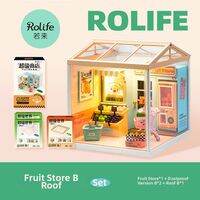
Rolife | Educational Construction Toy
₱2,724.60₱5,748.86
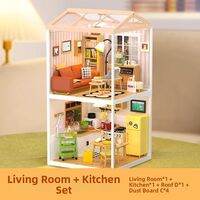
Rolife | Educational Assembly Building Block DIY Living Room Model
₱6,573.88
Buy on Lazada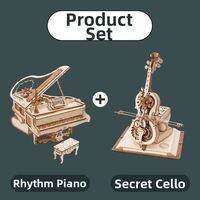
Rolife | Carousel DIY Music Box Assembly Model
₱4,557.00
Buy on Lazada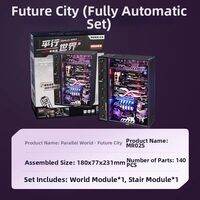
Rolife | Dust-Preventing Roof Plate for Mini House Accessories
₱4,651.87
Buy on Lazada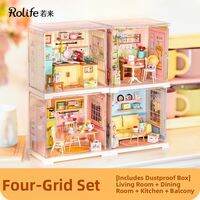
Rolife | Educational DIY Mini Dollhouse Building Blocks For Girls
₱4,956.00
Buy on Lazada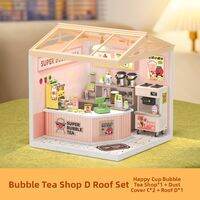
Rolife | Mini Market DIY House Toy Kit
₱3,654.20
Buy on Lazada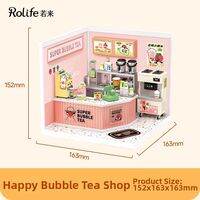
Rolife | Intelligent DIY Cottage Toy
₱2,934.13
Buy on Lazada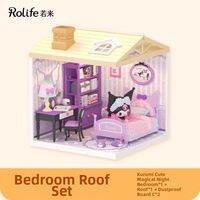
Rolife | Intelligent Assembly Toy Model DIY Mini House
₱3,784.91
Buy on LazadaAbout Rolife
Rolife is a Chinese creative-lifestyle and DIY craft brand established in 2017 as a sub-brand of Robotime. It is internationally recognised for its miniature house kits, book nook inserts, miniature room sets, wooden DIY projects, and collectible designer toy intellectual properties (IP). The brand integrates crafting, miniature design, storytelling, home decoration, and contemporary “slow living” culture into its product ecosystem.
Overview
| Rolife | |
|---|---|
| Chinese name | 若来 (Ruòlái) |
| Founded | 2017 |
| Parent company | Robotime / 若态 |
| Industry | DIY crafts, miniature models, designer toys, cultural & creative products |
| Best known for | Miniature houses, book nooks, miniature rooms, DIY craft kits |
| Notable IP | Nanci, Suri and other original characters |
| Brand philosophy | DIY as a lifestyle; creativity, imagination and “slow living” |
| Brand motto | “Building Things to Life” |
| Origin | China |
| Global presence | Products distributed internationally through online and offline channels |
Rolife positions itself as a lifestyle brand centred on DIY miniature kits and trendy toys, aiming to transform ordinary moments into miniature worlds that enthusiasts can assemble, display, and enjoy.1
Brand concept and identity
Rolife operates at the intersection of several distinct categories rather than functioning solely as a conventional toy manufacturer. Its product range spans:
- DIY and craft kits
- Miniature modelling
- Home décor
- Hobby products
- Collectibles
- Designer toys
- Gifting
- Lifestyle accessories
The brand’s most recognisable offerings are miniature environments depicting cafés, bookstores, flower shops, bedrooms, streets, and other small-scale interiors. Customers purchase kits containing components that are assembled into finished miniature scenes. Consequently, the assembly experience is considered as significant as the final object. Rolife’s stated philosophy frames DIY as an integral part of daily life that offers a method to slow down, create with one’s hands, and temporarily escape daily pressures.2 This positioning aligns the brand with broader “slow craft” and cosy hobby cultures.
Corporate identity
Rolife’s identity is closely tied to cute aesthetics, miniature worlds, and emotional relaxation. Its Chinese brand positioning is encapsulated by the phrase “萌生万物,潮起东方”, which emphasises cuteness, creativity, and contemporary Eastern design and trend culture. The brand has described this approach as connecting Chinese design with global trend culture.6 Internationally, this philosophy is summarised by the motto “Building Things to Life”, reflecting the concept that static pieces become a living environment through the assembler’s effort. A Rolife miniature is intended to function not merely as a model, but as a self-contained little world.
Parent company: Robotime
Rolife was not founded as an independent entity but belongs to Robotime, a Chinese creative-toy company established in 2007. Robotime originally specialised in wooden DIY products and mechanical models before diversifying into multiple specialised brands.3
Historical context
Robotime emerged from its founders’ interest in robotics and mechanical engineering, with an early concept focused on transforming mechanical ideas into buildable physical models. In 2008, the company developed a wooden DIY electric T-Rex, combining wooden construction with electronics and movement; this became a landmark product in its early history.3 By 2016, Robotime introduced its first DIY miniature house series, a pivotal step toward the category that would later define Rolife.4
In 2017, Robotime established Rolife as a dedicated sub-brand to separate creative categories. While other Robotime brands focused on mechanical models and children’s wooden toys, Rolife was assigned to creative lifestyle products, DIY miniatures, cultural-creative products, and trendy toys.5
Product categories
DIY miniature houses
This category is arguably the most strongly associated with Rolife. Typical kits recreate interiors such as cafés, bakeries, bookstores, bedrooms, studios, greenhouses, flower shops, music rooms, living rooms, and small shops. Assembly involves constructing numerous small components and decorating the scene. The appeal lies in the combination of model building, interior design, and storytelling, effectively creating a tiny fictional place rather than just a miniature building.7
Book nooks
Book nooks have become one of Rolife’s most recognisable modern categories. These are miniature scenes designed to sit between books on a bookshelf, functioning as decorative shelf inserts rather than standalone objects. Common themes include old streets, libraries, bookstores, cafés, train stations, European-style streets, fantasy environments, and Japanese-inspired scenes. This format appeals to enthusiasts by combining reading and bookshelf styling with miniature crafting. Rolife identifies book nooks as a major product pillar in its official documentation.8
Super Creator
The Super Creator line expands the miniature-room concept through modularity. Rather than building a single fixed scene, users construct individual miniature rooms that can be combined into larger configurations. This system functions closer to a miniature interior-design platform, allowing experimentation with layouts and combinations. Rolife specifically markets the Super Creator series as enabling miniature rooms to be pieced together in various ways.18
Wooden puzzles and DIY models
Rolife also retails various wooden DIY products that overlap with Robotime’s expertise in laser-cut wood, 3D assembly, decorative models, mechanical construction, and puzzles. However, a distinction exists within the group: ROKR is the brand associated with mechanical wooden models, gears, and engineering-oriented construction, whereas Rolife emphasises the softer aspects of DIY, including miniature environments, lifestyle, decoration, cute aesthetics, and imaginative storytelling.9
Music boxes and decorative miniatures
Certain Rolife products integrate miniature scenes with mechanical or musical elements, such as music-box mechanisms, rotating components, lighting, moving elements, and decorative details. These features transform the finished object from a static display model into a kinetic decorative piece.
Collectible IP and original characters
Beyond miniature kits, Rolife has expanded significantly into the designer-toy and collectible IP market.
Nanci
Nanci is Rolife’s first original IP character, introduced in 2019. She is distinguished by her closed eyes, two buns, tilted head, and bubble-blowing pose. Rolife states that Nanci’s creation marked the brand’s expansion into IP collectibles and creative culture.17 Historically, Nanci demonstrates that Rolife’s ambitions extend beyond craft kits to encompass an IP ecosystem built around characters, collectibles, and cultural products.
Expanded IP portfolio
Following Nanci, Rolife broadened its original-character portfolio to include Suri, Taoyuan / Tao Ruan Ruan-related characters and families, and other original collectible characters and collaborations. The Chinese Rolife site describes these as part of a broader strategy to develop original cultural and designer-toy IP.21 This creates a dual identity for the brand: Rolife as things you build and increasingly, Rolife as characters you collect.
Design philosophy
Rolife products are designed to be emotionally appealing rather than solely technically impressive. Unlike a mechanical model that invites analysis of its mechanism, a Rolife miniature is intended to evoke a desire to inhabit the space. Key design pillars include:
- Cuteness: Recurring use of soft colours, charming interiors, tiny objects, and friendly characters.
- Detail: Scenes often contain dozens or hundreds of visual details, including books, furniture, plants, lamps, dishes, signs, and decorations.
- Storytelling: Finished models imply narrative activity within the miniature world; a café suggests customers, workers, and daily life rather than just furniture.
- Display value: Completed objects are specifically designed for shelving, desk placement, or bookcase display.
- Emotional relaxation: The assembly process is framed as a way to slow down and reconnect with creativity.22
Market position and audience
Drivers of popularity
Rolife’s growth aligns with several international trends. The rise of adult hobbies has seen adults engaging in model building, LEGO-style construction, miniature making, puzzles, painting, crafts, and collecting; Rolife positions DIY as an adult lifestyle activity rather than a children’s pastime. Additionally, its miniature cafés, bedrooms, and bookstores fit naturally into online cozy, cottagecore, slow-living, and aesthetic hobby communities. The visual nature of miniature construction—progressing from unopened kit to finished scene—is well-suited to social media photography and short-form video. Finally, because finished products serve as decorative objects, they differ from disposable craft projects by being intended for permanent display.
Target demographic
Rolife’s audience extends beyond traditional model-building enthusiasts to include miniature enthusiasts, DIY hobbyists, craft lovers, adults seeking relaxing hobbies, collectors, book lovers, interior-decoration enthusiasts, fans of cute design, gift buyers, teenagers, young adults, and families doing creative projects together. Robotime states that its products are distributed to individuals, families, schools, and institutions internationally.10 Crucially, Rolife deliberately makes DIY feel fashionable and lifestyle-oriented.
Distinction within the Robotime ecosystem
Rolife is best understood as one component of the broader Robotime brand family:
| Brand | Main focus |
|---|---|
| Rolife | Miniatures, DIY lifestyle, book nooks, trendy toys |
| ROKR | Mechanical models, gears, engineering-oriented wooden kits |
| ROWOOD | Decorative wooden models and artistic wooden puzzles |
| robud | Wooden toys for children |
Robotime currently describes these as its major brand family.11 Therefore, ROKR, ROWOOD, and robud are not unrelated competitors but sister brands within the same corporate structure.
Manufacturing and global operations
Rolife leverages Robotime’s manufacturing and design infrastructure. Robotime reports having 500+ creative designers, 1,000+ patents, products available in 140+ countries and regions, 1,000+ stores globally, more than 100 million global fans, and a production base of approximately 200,000 m².12 It is important to note that these are Robotime group figures rather than Rolife-specific metrics.
Although originating in China, Rolife has developed an international customer base through official online stores, international e-commerce platforms, specialty hobby retailers, physical retail stores, distributors, and regional Robotime/Rolife operations.13 The brand represents a Chinese-origin creative brand whose visual language is intentionally designed to travel across cultures.
Chinese design and global aesthetics
The Chinese Rolife organisation explicitly describes its strategy as using Chinese design to engage with global trends, aiming to increase the international influence of Chinese original design.21 Despite this, many Rolife products avoid stereotypically “Chinese” aesthetics. The catalogue includes European-style cafés, Japanese-inspired streets, contemporary apartments, English-style bookshops, fantasy environments, botanical spaces, and traditional Chinese-inspired themes. This provides Rolife with a global visual vocabulary while retaining its origin in Chinese creative-product design.
Sustainability
Sustainability forms part of Robotime’s corporate positioning. The company states that a portion of proceeds from its products is donated to One Tree Planted for tree-planting and environmental-conservation projects, and highlights responsibly sourced wood in corporate materials.22 This should be understood as a Robotime corporate initiative rather than a programme unique to Rolife.
Timeline
- 2007: Robotime is founded.14
- 2008: Robotime develops its wooden DIY electric T-Rex, an early landmark product.15
- 2016: Robotime launches its DIY miniature-house series.4
- 2017: Rolife is established as a Robotime sub-brand.16
- 2019: Rolife launches its first original IP, Nanci.17
- 2020s: Rolife expands its miniature, collectible, and lifestyle product ecosystem.
- 2022: The Super Creator series is launched, according to Robotime’s published history.18
- 2026: Rolife continues to position itself as a lifestyle brand spanning miniature kits, book nooks, Super Creator products, wooden DIY products, and collectible IP.19
Industry significance
Rolife occupies a distinctive position between several industries. It differs from LEGO because its products are more craft- and model-oriented and do not rely primarily on reusable interlocking bricks. It differs from traditional scale-model companies because aesthetics, cosiness, and lifestyle take precedence over strict realism. It transcends simple craft companies because finished products are highly designed and collectible, yet it is not purely a designer-toy company because physical construction remains central.
A precise description would be: Rolife is a lifestyle-oriented miniature and DIY brand that turns craft projects into collectible decorative worlds.
The brand’s significance lies less in inventing miniature houses—a practice existing for centuries—and more in modernising the category for a mass consumer audience. It repackages activities historically associated with dollhouses, model making, and handicrafts as DIY, interior aesthetics, relaxation, social-media-friendly design, and collecting. This combination has made miniature building accessible to people who may never have identified as “model builders”.
Summary
Rolife is a Chinese lifestyle and creative-DIY brand founded in 2017 under Robotime. It is best known for miniature house kits, book nooks, miniature rooms, Super Creator products, wooden DIY projects and original collectible IP such as Nanci. Rather than treating DIY purely as a technical hobby, Rolife presents crafting as a form of slow living, self-expression and decoration. Its products transform ordinary spaces—cafés, bookstores, bedrooms, shops and streets—into highly detailed miniature worlds that users assemble themselves and then display. Backed by Robotime’s international manufacturing and distribution network, Rolife has grown from a miniature-focused sub-brand into a broader cultural-creative brand combining DIY, design, lifestyle and collectible culture.20
References
- Know Rolife better | Why rolife are trustworthy
- What Is Rolife?
- From Robotime to ROKR And Rolife: A Journey of Robotime Growth
- Know Rolife better | Why rolife are trustworthy
- 若来介绍 – Rolife
- Rolife DIY Miniatures: DIY Everything, Make Life More Colorful | Robotime
- About Rolife & Product Basics | Rolife Help Center
- hp – Rolife
- Is Rolife a Legitimate Brand? | Rolife Help
- About Us | Robotime
- Robotime – Creative DIY Kits & 3D Puzzles for Hands-on Fun
- Robotime – Creative DIY Kits & 3D Puzzles for Hands-on Fun
- Rolife DIY Miniatures: DIY Everything, Make Life More Colorful | Robotime
- Robotime Brand Guide: ROKR vs Rolife vs Robud vs Rowood
- Rolife DIY Miniatures: DIY Everything, Make Life More Colorful | Robotime
- Rolifeをもっと知る | Rolifeが信頼できる理由
- Official Rolife® Shop – DIY Cultural & Creative Craft Kits
- Blind box – Rolife
- Official Rolife® Shop – DIY Cultural & Creative Craft Kits
- Rolife Intellectual Property Rights | Report Violations & Legal Concerns
- ロライフについて | DIYミニチュア、ブックヌック、ナンシーブラインドボックス – Rolife
- Customer Reviews – Rolife