Shop on Lazada
Budweiser products
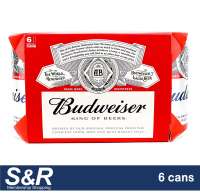
Budweiser King of Beers 6 Cans x 330 mL
₱464.00
Buy on Lazada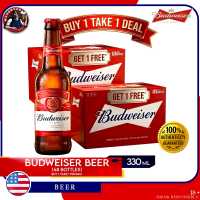
Buy 1 Take 1 Case Promo: Budweiser Beer 330ml Bottle x48 (Total 2 Cases)
₱3,249.00₱5,760.00
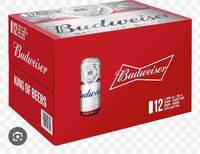
Budweiser Beer Can 12 x 500mL
₱1,599.00₱1,999.00
Budweiser 330ml - Pack of 2
₱146.20₱170.00
Budweiser Can 500ml
₱160.19₱193.00
Budweiser Beer 330ml Bottle
₱120.00
Buy on LazadaAbout Budweiser
Budweiser is an American-style pale lager beer brand that originated in St. Louis, Missouri, in 1876. It was created by Adolphus Busch, co-founder of the brewing company that became Anheuser-Busch, with the ambition of making a beer that could appeal to consumers across the United States rather than being associated with a particular region. Today, Budweiser is one of the flagship global brands of AB InBev (Anheuser-Busch InBev) and is marketed internationally as an iconic American beer.
As of 2026, Budweiser is celebrating its 150th anniversary, marking a century and a half since its introduction in 1876.2
Quick facts
| Category | Information |
|---|---|
| Brand | Budweiser |
| Type | American-style lager |
| Introduced | 1876 |
| Origin | St. Louis, Missouri, United States |
| Founder associated with brand | Adolphus Busch |
| Parent company | AB InBev |
| Original brewer | Anheuser-Busch |
| Major market | United States |
| Global presence | International |
| Famous nickname | “The King of Beers” |
| Signature imagery | Red-and-white branding, bow-tie logo, Budweiser Clydesdales |
| 150th anniversary | 2026 |
History
Origins in St. Louis
Budweiser’s story is closely connected to the history of Anheuser-Busch. The brewery traces its St. Louis origins to the 1850s, when the Bavarian Brewery was established. Eberhard Anheuser subsequently became involved with the brewery, and his son-in-law, Adolphus Busch, played a central role in transforming it into a major American brewing company.
Adolphus Busch was born in Germany and brought European brewing traditions to the United States. His ambition was not simply to produce another local beer; he wanted to create a beer capable of achieving national popularity.
1876: The birth of Budweiser
Budweiser was introduced in 1876. Anheuser-Busch describes the product as an attempt by Adolphus Busch to create the United States’ first truly national beer brand—one designed to transcend regional preferences.
This national strategy became an important part of Budweiser’s identity. Rather than presenting itself solely as a traditional European-style beer, Budweiser developed an identity around American ambition, accessibility, consistency and mass appeal.
The brand’s early development also benefited from brewing innovations introduced by Anheuser-Busch, including technologies such as pasteurization and artificial refrigeration, which helped the brewery distribute beer more broadly.
The Budweiser name
The name Budweiser has a Central European connection. “Budweiser” traditionally refers to something associated with Budweis, the German name for the city now known as České Budějovice in the Czech Republic.
This is significant because the American Budweiser emerged from a brewing environment strongly influenced by German immigrants and European lager traditions.
The American brand, however, developed its own distinct identity and became strongly associated with the United States.
Brewing style
Budweiser is classified as an American-style lager. The brand describes its flagship beer as medium-bodied, flavorful and crisp, with a balance between flavor and refreshment.
One of the distinctive elements of Budweiser’s brewing tradition is Beechwood aging. The company also highlights kraeusening, a traditional brewing technique used to contribute to natural carbonation.
Anheuser-Busch has stated that Budweiser’s brewing tradition continues to use the original yeast culture strain associated with the beer’s 1876 origins and maintains the Beechwood-aging process.
Ingredients and flavor
The classic Budweiser is designed around a relatively approachable lager profile:
- Pale golden appearance
- Moderate body
- Crisp finish
- Noticeable but restrained hop character
- Malt sweetness balanced by bitterness
- High carbonation
- Designed to be refreshing and broadly accessible
The exact formulation and alcohol content can vary by market, so product information on a particular bottle or can should be used for the local specification.
Brand identity
Budweiser is much more than a beer product. Over its history, the company has deliberately built a recognizable brand world around it.
Its visual identity traditionally emphasizes:
- Red, white and blue
- The Budweiser wordmark
- The iconic bow-tie design
- The “King of Beers” positioning
- American flags and patriotic imagery
- Horses and the Budweiser Clydesdales
- Sports and entertainment
- Celebrations and social occasions
The bow-tie became an especially recognizable part of Budweiser’s visual identity during the 20th century; Budweiser’s historical timeline identifies 1956 as the year of the iconic bow-tie symbol.1
“The King of Beers”
One of Budweiser’s most famous marketing expressions is “The King of Beers.”
The phrase reinforces a positioning based on scale, heritage and confidence. Rather than positioning Budweiser as a niche or artisanal beer, the brand has historically presented itself as a major, established beer with widespread recognition.
This helped establish Budweiser as one of the most recognizable beer brands in the world.
Budweiser Clydesdales
The Budweiser Clydesdales are among the most famous symbols associated with the brand.
The enormous draft horses became part of Budweiser’s public identity following the end of Prohibition in the United States in 1933. They were used to celebrate the return of beer and subsequently became a recurring element of Budweiser advertising and public appearances.
The Clydesdales effectively became a form of living brand identity: even people who do not drink Budweiser may recognize the horses as a symbol of the company.
Advertising and popular culture
Budweiser has historically invested heavily in mass-media advertising.
The brand became particularly associated with television commercials, major sporting events, humor, music and American cultural moments.
Super Bowl
Budweiser has had an especially strong relationship with the Super Bowl. Its first Super Bowl advertising appearance was in 1975, and the company has subsequently used the event to launch some of its most memorable campaigns.
One notable example was the 2017 campaign “Born the Hard Way,” which dramatized Adolphus Busch’s journey to America and connected the company’s history with the broader idea of the American dream.
This is an important feature of Budweiser’s marketing strategy: instead of advertising only the taste of beer, the brand frequently sells a story, emotion or cultural identity.
Sports marketing
Sports have been another major component of Budweiser’s international marketing strategy.
The brand has been associated with major sporting properties and events, including international football. AB InBev has used Budweiser’s global status to establish partnerships that allow the brand to reach audiences across multiple countries.
This strategy helped Budweiser move from being primarily perceived as an American beer into a globally recognizable beer brand.
International expansion
Although Budweiser originated in the United States, it became increasingly international during the 20th and 21st centuries.
AB InBev identifies Budweiser as one of its global brands, alongside brands such as Corona, Michelob Ultra and Stella Artois.
Budweiser has been brewed, distributed or licensed in numerous countries. The company’s international strategy has included both exporting the American identity of the brand and producing it locally under brewing and quality standards.
China has been particularly important to Budweiser’s international business. Historical AB InBev documents describe strong growth for Budweiser outside the United States, including significant contributions from China and Brazil.
Ownership and corporate history
Budweiser’s corporate history is essentially intertwined with that of Anheuser-Busch.
The company that developed Budweiser eventually became one of America’s largest brewing companies. In 2008, Anheuser-Busch was acquired by InBev, creating Anheuser-Busch InBev (AB InBev).
Today, AB InBev describes itself as the maker of more than 500 brands, with Budweiser among its major global brands.
AB InBev’s current portfolio includes other internationally recognized brands such as:
- Budweiser
- Corona
- Stella Artois
- Michelob Ultra
- Beck’s
- Hoegaarden
- Leffe
The company’s 2025 filing describes Budweiser as one of its global brands within a portfolio of more than 400 beer brands.3
Major Budweiser products
The name “Budweiser” is primarily associated with the flagship American lager, but the broader Budweiser family has expanded over time.
Budweiser
The classic flagship American-style lager and the product most closely associated with the brand.
Budweiser Zero
Budweiser Zero is the brand’s alcohol-free/non-alcoholic offering. It was launched in 2020 and was developed as a zero-alcohol alternative while retaining characteristics of the Budweiser experience. Anheuser-Busch describes it as zero percent ABV, zero sugar and 50 calories per serving.
It represents the brand’s effort to participate in the growing market for alcohol-free beverages.
Budweiser vs. Bud Light
One common source of confusion is the relationship between Budweiser and Bud Light.
They are separate products under the broader Budweiser/Anheuser-Busch portfolio:
Budweiser → traditional flagship American lager
Bud Light → lighter lager positioned around a lighter drinking profile
They share the “Bud” brand heritage but target somewhat different consumer preferences.
The Budweiser logo
Budweiser’s visual identity is one of the most recognizable in the beer industry.
Its modern identity is built around several long-standing elements:
The wordmark
The distinctive red Budweiser lettering.
The bow tie
A highly recognizable graphic device introduced into the brand’s visual system in the 1950s.1
The red-and-white color scheme
The combination provides strong shelf recognition and contributes to Budweiser’s American identity.
The crest/crown symbolism
Budweiser has historically used royal and heraldic imagery to reinforce the “King of Beers” positioning.
Brand positioning
Budweiser can broadly be understood as occupying the mainstream premium American lager space.
Its positioning combines several ideas:
American heritage + brewing tradition + mass accessibility + celebration + sports + popular culture
This differentiates Budweiser from craft breweries that tend to emphasize locality, experimentation and specialized beer styles.
Budweiser instead emphasizes consistency and recognizability. Its goal historically has been to make the same recognizable beer experience available to a very large audience.
Sustainability
Sustainability has increasingly become part of Budweiser’s corporate story.
Budweiser’s Spanish brand history, for example, states that by 2025 the brand was producing its beers using 100% renewable electricity.1
The parent company also emphasizes environmental sustainability and responsible consumption as part of its broader corporate strategy.
Responsible drinking
Anheuser-Busch has promoted responsible drinking for more than a century. Its historical materials note that Adolphus Busch promoted messaging around moderation as early as the early 1900s. The company says it has invested more than $1 billion over the last 35 years in responsible-drinking initiatives.
Budweiser’s alcohol products are intended for adults of legal drinking age, and alcohol should be consumed responsibly.
Budweiser in 2026
2026 is a particularly important year for the brand because it marks Budweiser’s 150th anniversary.
Anheuser-Busch has used the anniversary to emphasize Budweiser’s American heritage and its connection to celebrations, community and national culture. The company launched an “American Summer” campaign around the anniversary, describing Budweiser as an American Classic Lager and highlighting its history since 1876.2
The anniversary also illustrates how Budweiser’s marketing has evolved: its advertising increasingly combines its historical assets—such as the brewery, Clydesdales and original brewing traditions—with contemporary entertainment and cultural campaigns.
Cultural significance
Budweiser’s importance extends beyond the beer itself.
For much of its history, the brand has represented a particular version of American popular culture: baseball games, football, barbecues, holidays, road trips, concerts, sporting events and celebrations.
Its advertising has consequently made Budweiser one of the best-known examples of lifestyle branding in the beverage industry.
The brand’s success comes partly from turning a relatively ordinary consumer product—lager beer—into a recognizable cultural symbol.
Legacy
Budweiser’s legacy can be summarized through four major periods:
- 1876–early 20th century — Creation: Adolphus Busch develops Budweiser as a nationally oriented American lager.
- 20th century — American icon: Anheuser-Busch builds Budweiser into one of America’s dominant beer brands through mass distribution and advertising.
- Late 20th–early 21st century — Globalization: Budweiser expands internationally and becomes a global beer brand.
- 21st century–present — Global lifestyle brand: Budweiser increasingly combines its historical American identity with international sports, entertainment, sustainability initiatives and new products.
Summary
Budweiser is a historic American lager brand introduced in St. Louis in 1876 by Adolphus Busch and Anheuser-Busch. Originally conceived as a beer capable of transcending regional tastes, it grew into one of America’s best-known beer brands and eventually became a global brand under AB InBev. Its identity is built around American heritage, brewing tradition, the “King of Beers” positioning, its distinctive red-and-white branding, the Budweiser Clydesdales, major sports and entertainment sponsorships, and decades of high-profile advertising. In 2026, Budweiser marks 150 years of history, making it one of the world’s most enduring mass-market beer brands.2