Shop on Lazada
Castrol products
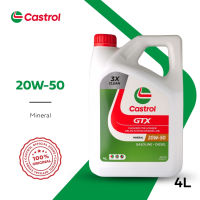
Castrol GTX Essential 20W-50 Engine Oil 4L Mineral | Advanced Protection for Gasoline & Diesel Engines
₱1,165.00
Buy on Lazada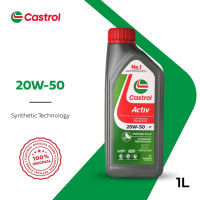
Castrol Activ 4T 20W-50 Motorcycle Engine Oil 1L | 4-Stroke Motor Oil
₱296.00
Buy on Lazada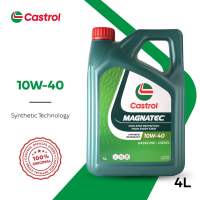
Castrol MAGNATEC 10W-40 API SN 4L Engine Oil | Intelligent Molecules for Superior Wear Protection
₱2,095.00
Buy on Lazada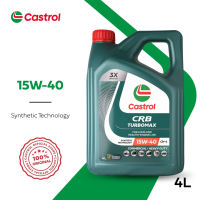
Castrol CRB Turbomax 15W-40 CH-4 4L Diesel Engine Oil | Advanced Protection for Heavy Duty Engines
₱1,266.29
Buy on Lazada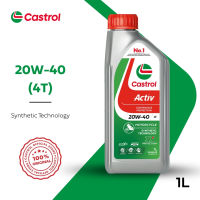
Castrol ACTIV 4T 20W-40 1L Motorcycle Engine Oil | Reliable Protection for 4-Stroke Motorcycles
₱318.00
Buy on Lazada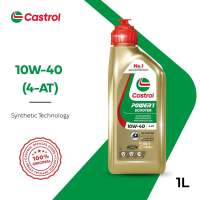
Castrol POWER1 Scooter 4T 10W-40 1L Synthetic Scooter Engine Oil | Smooth Acceleration & Engine Protection
₱405.00
Buy on Lazada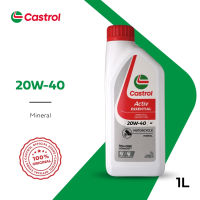
Castrol ACTIV ESSENTIAL 20W-40 1L Motorcycle Mineral Engine Oil | Genuine 4-Stroke Motor Oil
₱292.00
Buy on Lazada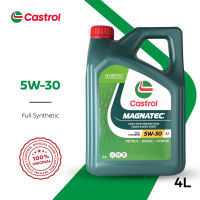
Castrol MAGNATEC 5W-30 4L Fully Synthetic Engine Oil | Instant Protection from Start & Advanced Wear Protection
₱3,488.00
Buy on LazadaAbout Castrol
Castrol is a British-origin global lubricants brand best known for automotive engine oils, though its operations extend to commercial vehicles, motorcycles, industrial machinery, marine applications, energy, aerospace, and emerging technologies such as electric vehicle fluids and data-centre immersion cooling. The brand traces its origins to 1899, when British entrepreneur Charles “Cheers” Wakefield founded C.C. Wakefield & Company in London.1
Castrol currently operates as a global lubricants business within bp. However, in December 2025, bp agreed to sell a 65% stake in Castrol to Stonepeak at an enterprise value of $10 billion, with completion expected by the end of 2026 subject to regulatory approvals. As of August 2026, this ownership transition is a significant component of Castrol’s corporate structure.2
Quick facts
| Category | Information |
|---|---|
| Brand | Castrol |
| Industry | Lubricants, fluids and lubrication technology |
| Origin | United Kingdom |
| Founded | 1899 |
| Founder | Charles “Cheers” Wakefield |
| Original company | C.C. Wakefield & Company |
| Name “Castrol” introduced | Early 20th century |
| Castrol Ltd. name adopted | 1960 |
| Acquired by Burmah Oil | 1966 |
| Acquired by bp | 2000 |
| Current CEO | Michelle Jou |
| Technology centre / UK base | Pangbourne, Berkshire, UK |
| Major markets | Automotive, motorcycles, commercial vehicles, industrial, marine, energy |
| Major product families | EDGE, MAGNATEC, GTX, POWER1 and industrial lubricants |
| Current ownership transition | bp agreed to sell 65% to Stonepeak |
| Global reach | Products marketed in more than 150 countries |
Castrol’s official contact information identifies the Castrol Technology Centre in Whitchurch Hill, Pangbourne, Berkshire, as its UK address, while bp describes Castrol products as being marketed in more than 150 countries.3
History
Foundation
The history of Castrol began in 1899 with Charles “Cheers” Wakefield. Having previously worked for Vacuum Oil, Wakefield established C.C. Wakefield & Company, which initially sold lubricants for railways and heavy machinery.4
At the turn of the 20th century, the rapid development of the automobile and aircraft industries created complex lubrication challenges. Engines required oil that remained sufficiently fluid during cold starts while maintaining effectiveness at extremely high operating temperatures.
Researchers at Wakefield discovered that adding castor oil, a vegetable oil derived from castor beans, produced beneficial properties for these applications. The resulting motor oil was named “Castrol,” a name derived directly from “castor oil.”5
Evolution from product to company name
Originally, Castrol was a product and brand name rather than the corporate entity. As C.C. Wakefield & Company became increasingly associated with its Castrol motor oils, the brand name eventually superseded the original corporate identity. By 1960, the company was officially renamed Castrol Ltd.6
This transition exemplifies a brand becoming more recognizable than its parent company. The subsequent ownership history followed this trajectory:
C.C. Wakefield & Company → Castrol Ltd. → Burmah Oil → Burmah-Castrol → bp → planned Stonepeak majority ownership
Burmah Oil acquired Castrol in 1966, and bp subsequently acquired Burmah-Castrol in 2000.7
Motorsport heritage
Motorsport is central to Castrol’s brand identity. From its early years, the company recognized that demonstrating lubricant performance under extreme conditions was an effective method for establishing technical credibility. C.C. Wakefield became an early pioneer of sports and motorsport sponsorship.
The Castrol name has appeared across various disciplines, including automobile races, aviation competitions, land-speed-record attempts, rallying, motorcycle racing, endurance racing, and formula racing. This history cemented the association between Castrol and concepts of lubrication, technology, speed, and performance.8
Early aviation achievement
A notable historical milestone occurred in 1919, when British aviators John Alcock and Arthur Whitten Brown completed the first nonstop transatlantic flight from Newfoundland to Ireland. Their aircraft’s engine was lubricated with Castrol, demonstrating the brand’s capability in exceptionally demanding conditions.9
Product portfolio
Castrol’s modern portfolio extends beyond engine oil into several distinct sectors.
Automotive
The automotive segment is the most consumer-facing aspect of the business. Products include engine oils, automatic and manual transmission fluids, brake fluids, coolants, greases, and engine cleaners. Specific market portfolios, such as in Indonesia, list automotive engine oils, transmission fluids, brake fluids, coolants, cleaners, and greases as core offerings.10
Motorcycle
Castrol produces specialized motorcycle lubricants, including products sold under the POWER1 family designed for two-wheeler applications.
Commercial vehicles
The brand supplies lubricants and fluids for trucks, buses, fleets, heavy-duty vehicles, construction equipment, agriculture, and mining operations.
Industrial
The industrial portfolio is extensive, covering hydraulic fluids, gear oils, compressor oils, turbine oils, chain oils, greases, metalworking fluids, cleaners, corrosion-prevention products, forming fluids, and heat-treatment fluids.11
Marine, energy, and aerospace
Castrol develops lubricants for ships, marine equipment, and energy-sector machinery. It also maintains a specialized presence in aerospace; the company states that its space-grade lubricants have been used for approximately seven decades.12
Major automotive brands
Castrol EDGE
EDGE is positioned as Castrol’s premium, high-performance engine oil family. Described as the brand’s most advanced range, it is designed for modern engines operating under high pressures. Formulations include fully synthetic products featuring Castrol’s Fluid TITANIUM technology.13 The general positioning focuses on maximum performance and premium protection.
Castrol MAGNATEC
MAGNATEC emphasizes engine protection, particularly during start-up and warm-up phases. Marketing utilizes the concept of “intelligent molecules” that adhere to critical engine components to provide continuous protection.14 Its positioning centers on everyday protection and start-up wear prevention.
Castrol GTX
Introduced in 1968, GTX is one of Castrol’s longest-running engine oil families. It is positioned around keeping engines cleaner and protecting against harmful sludge and deposits.15 The primary focus is on cleanliness and extending engine life.
Castrol POWER1
POWER1 serves as the primary motorcycle oil family, designed specifically for motorcycle applications and associated with performance-oriented riding.
Electric vehicles and new technologies
While traditional lubricant companies are often associated solely with internal combustion engines, Castrol has adapted to the shift toward electrification. Electric vehicles require specialized fluids and thermal management solutions despite having fewer moving parts.
Castrol has developed products for EV transmissions, e-axles, bearings, thermal management systems, battery systems, and electric motors. The company has specifically highlighted transmission fluids for modern electric vehicles as a key area of technological development.16 This diversification addresses the automotive industry’s transition toward hybrid and electric powertrains.
Expansion beyond automotive
Modern Castrol operations encompass industries beyond conventional vehicle lubrication, including aerospace, automotive manufacturing, machinery, robotics, wind energy, marine, mining, chemicals, food and beverage, pulp and paper, and data centres.17
Data-centre cooling
Castrol is developing immersion-cooling technology for data centres. Unlike conventional air cooling, immersion cooling submerges computing equipment in specially designed dielectric fluids. Castrol has invested in testing capabilities for this technology at its Pangbourne facility.18
This expansion marks a shift in corporate identity from a traditional motor oil company to a broader provider of mobility, industrial technology, EV solutions, thermal management, and data-centre infrastructure support.
Space technology
Castrol maintains a specialized role in space exploration. The company states that NASA’s Curiosity rover, which landed on Mars in 2012, utilized Castrol grease.19 More recently, Castrol has highlighted its Braycote space-grade lubricants and support for NASA’s Artemis programme.20 These applications require lubricants capable of functioning in vacuums, extreme temperatures, and without conventional servicing for extended periods.
Current motorsport partnerships
As of 2026, Castrol maintains active partnerships with:
- Audi Revolut F1 Team
- Honda HRC Castrol
- Castrol Honda LCR
- Aprilia Racing
- M-Sport Ford
- Ford Motorsport
- Jaguar TCS Racing
- Defender Rally
- Other rally and motorsport programmes21
The partnership with Audi’s Formula 1 programme for the 2026 season is particularly significant, marking Audi’s entry as a works team. Castrol serves as a technical partner supplying lubricant and fluid technology for this initiative.22
Brand identity and positioning
Visual identity
Castrol’s visual identity is historically defined by three distinctive colours: green, red, and white. This combination has been associated with the brand for decades. In 2023, Castrol introduced a refreshed brand identity that deliberately retained these recognisable colours to maintain continuity in motorsport and retail environments.
Strategic positioning
Historically, Castrol’s positioning has revolved around performance, innovation in lubricant chemistry, and progress. In 2024, the company articulated its strategic framework as Onward — Upward — Forward:
- Onward: Mobility solutions and efficiency
- Upward: Industrial performance and productivity
- Forward: Diversification into digital services, data-centre cooling, and battery thermal management
Relationship with bp and ownership transition
For many years, Castrol operated as a prominent brand within bp, following bp’s acquisition of Burmah-Castrol in 2000.23 However, the corporate structure is currently undergoing significant change.
In December 2025, bp announced an agreement to sell 65% of Castrol to Stonepeak, an investment firm, valuing the business at an enterprise value of $10 billion. bp plans to retain a 35% interest in the new ownership structure.24 Castrol expects the transaction to complete by the end of 2026, subject to necessary approvals.
The simplified corporate timeline is as follows:
- 1899: C.C. Wakefield founded
- 1960: Company becomes Castrol Ltd.
- 1966: Acquired by Burmah Oil
- 2000: Acquired by bp
- 2025: bp agrees to sell 65% to Stonepeak
- 2026: Ownership transition expected
Presence in Indonesia
Castrol maintains a substantial consumer presence in Indonesia, particularly in the automotive and motorcycle lubricant segments. The local portfolio includes Castrol EDGE, MAGNATEC, GTX, motorcycle lubricants, commercial vehicle lubricants, and automotive maintenance fluids.25
Castrol Indonesia also operates an ecosystem involving authorized workshops and distributors. For Indonesian consumers, the brand is primarily encountered as a motorcycle and automotive lubricant, although the global business encompasses a wider industrial and technological footprint.26
Key milestones
| Year | Milestone |
|---|---|
| 1899 | Charles Wakefield establishes C.C. Wakefield & Company |
| Early 1900s | Castrol motor oil developed using castor oil |
| 1919 | Castrol lubricant used in the first transatlantic flight |
| 1960 | C.C. Wakefield & Company becomes Castrol Ltd. |
| 1966 | Burmah Oil acquires Castrol |
| 1968 | GTX introduced |
| 2000 | bp acquires Burmah-Castrol |
| 2012 | NASA Curiosity mission uses Castrol grease |
| 2017 | Castrol launches a bio-synthetic engine oil containing renewable plant-based oil |
| 2022–23 | Castrol expands work in immersion cooling and refreshes its brand identity |
| 2024 | Castrol celebrates 125 years |
| 2025 | bp announces agreement to sell 65% of Castrol to Stonepeak |
| 2026 | Castrol enters the new F1 era with Audi and continues extensive motorsport partnerships |
Competitive landscape and reputation
Castrol operates in a competitive global lubricant market alongside brands such as Shell Lubricants, Mobil, Valvoline, TotalEnergies Lubricants, Chevron, Petronas, Motul, Liqui Moly, Idemitsu, and ENEOS. The competitive dynamics vary significantly between consumer automotive oils, motorcycle lubricants, heavy-duty products, and industrial lubricants.
Castrol differentiates itself through its long heritage, motorsport visibility, OEM relationships, and recognizable product families like EDGE, MAGNATEC, and GTX.27 Its reputation is built on over 125 years of operation, association with extreme engineering, investment in formulation technology, and a global presence in more than 150 countries.28
Future outlook
Castrol faces strategic challenges as the automotive industry evolves toward hybrid and electric powertrains. In response, the company is expanding into EV transmission fluids, battery thermal management, industrial efficiency, digital lubrication services, data-centre cooling, circular lubricant solutions, and advanced manufacturing.
The Onward, Upward, Forward strategy explicitly identifies diversification and new technologies as drivers for future growth.29 Additionally, the planned majority investment by Stonepeak aims to provide Castrol with a more independent ownership model to accelerate investment in these growth areas.
References
- Castrol heritage – 125 years forwards | Home
- bp agrees to sell a 65% shareholding in Castrol | Home
- SEC
- Contact us | Home
- CastrolCastrol, bp’s world-class lubricants brand
- Our Heritage of Innovation and Excellence | Castrol® USA
- Forwardon your industrial evolutionCastrol
- Otomotif | Castrol Indonesia
- Castrol industrial products and services | Home
- Oli mesin | Castrol Indonesia
- Merek oli mesin | Castrol Indonesia
- Business customers | Home
- Castrol Hypertec collaboration | Home
- Home
- Global sponsorships | Home
- Global sponsorships | Castrol Indonesia
- Castrol bergerak cepat untuk kemajuan masa depan melalui identitas baru | Castrol Indonesia
- The path forward | Home
- Castrol turns 125 and looks to the future | Home
- Produk | Castrol Indonesia
- CCP clears acquisition of BP’s global Castrol lubricants business – Business & Finance – Business Recorder
- Who Owns Castrol Oil? BP’s Sale to Stonepeak Explained – LegalClarity
- bp agrees to sell 65% in Castrol to Stonepeak | Company Announcement | Investegate
- Jalan untuk maju | Castrol Indonesia
- The path forward | Welcome | Castrol Canada – English
- The path forward | Castrol India
- Privacy statement | Castrol UK & Ireland
- Engine warranty privacy policy | Car fluids | Castrol UK & Ireland
- Warisan kami | Castrol Indonesia