Shop on Lazada
Cateye products
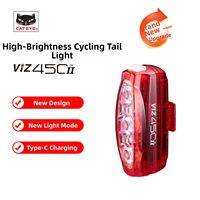
Waterproof Charging LED Tail Light
₱3,372.00
Buy on Lazada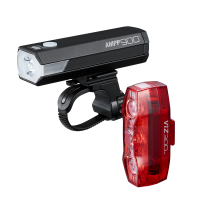
CatEye AMPP 900 & ViZ 300 Headlight & Taillight Combo Kit (HL-EL089RC/TL-LD810N) (USB-C COMPATIBLE)
₱3,750.00
Buy on Lazada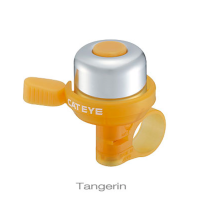
CatEye Wind Bell (PB-1000) (Brass / Aluminum)
₱230.00
Buy on Lazada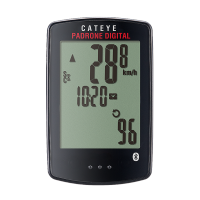
CatEye Padrone Digital Wireless w/ Speed Cadence Cyclocomputer (CC-PA400B)
₱4,650.00
Buy on Lazada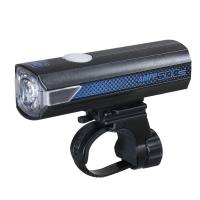
CatEye AMPP500S Headlight (HL-EL085SRC AMPP) With New Limited Edition Colors
₱1,500.00
Buy on Lazada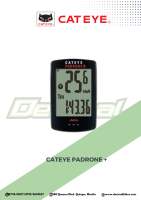
Cateye Padrone+ Backlight with night mode ORIGINAL
₱1,190.00₱2,299.00
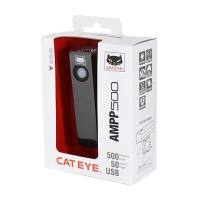
ORIGINAL CatEye AMPP 500RC Headlight (HL-EL085RC AMPP) BIKE HEADLIGHT
₱1,600.19₱2,400.28
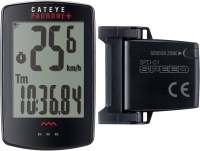
Cateye Cyclometer Wireless Padrone Plus New with Box Authentic
₱1,299.00₱1,999.00
About Cateye
Cateye (stylized as CATEYE) is a Japanese manufacturer best known for bicycle lights, safety lights, reflectors, and cycle computers. The company behind the brand is CATEYE CO., LTD., headquartered in Osaka, Japan. Founded in 1954, Cateye has developed from a reflector and bicycle-accessory manufacturer into an internationally recognized cycling-technology brand 1.
Overview
| Category | Details |
|---|---|
| Brand | Cateye / CATEYE |
| Company | CATEYE CO., LTD. |
| Founded | February 16, 1954 |
| Origin | Osaka, Japan |
| Headquarters | Higashisumiyoshi-ku, Osaka, Japan |
| Industry | Cycling equipment, bicycle electronics, optical/safety equipment |
| Major products | Headlights, rear/safety lights, cycle computers, reflectors, cycling accessories |
| Known for | Bicycle lighting, reflector technology, cycle computers |
| Brand philosophy | Creating new value in safety, health, and the environment |
| President | Masahiro Araki |
| Official brand | CATEYE |
The company’s current Japanese corporate information lists 196 employees as of January 2026 and identifies its principal businesses as bicycle components and accessories, automotive parts, road-safety equipment, and related manufacturing and import/export activities 2.
History
Cateye’s history dates to 1954 when the company was established in Osaka. Its development has been closely connected with optics, reflectors, bicycle safety, and electronics 3.
1954: Foundation
CATEYE CO., LTD. was established on February 16, 1954, in Osaka, Japan. From its early years, the company concentrated on products associated with visibility and road safety 4.
1964: Bicycle flashing lamp
One of Cateye’s important early milestones came in 1964, when it created what the company describes as the first flashing lamp for bicycles. This helped establish the brand’s long-term focus on bicycle visibility and safety 5.
1981: Cycle computers
Cateye entered the cycle-computer market in 1981, beginning a second major area of expertise alongside lighting and reflectors. Its computers were designed to measure riding information while emphasizing simple interfaces and readable displays 6. Over subsequent decades, Cateye expanded from basic bicycle computers into wireless, cadence, heart-rate, smartphone-connected, and GPS-based cycling computers 7.
2001: White LED bicycle headlight
In 2001, Cateye developed what it describes as the first bicycle headlamp using white LEDs. This was a significant development because LEDs offered advantages in durability and energy efficiency compared with conventional bulbs 8.
2000s–2010s: Expansion of cycling technology
Cateye subsequently developed increasingly sophisticated lighting and cycling-electronics products. Its technology portfolio came to encompass high-output LED headlights, compact safety lights, rechargeable lights, wireless cycle computers, cadence and heart-rate measurement, smartphone connectivity, GPS cycling computers, and cycling accessories. The company also received numerous design awards for products such as the VOLT, RAPID, STRADA, PADRONE, and QUICK families 9.
Origin of the name “Cateye”
The name is closely connected to reflectors. Cateye states that its “cat’s-eye” reflectors are one of the company’s core technologies. The concept relies on visibility through highly reflective optical surfaces: a reflector can appear relatively small but return a strong amount of light toward an approaching vehicle or other observer 10. This is particularly appropriate for bicycle safety products because reflectors do not need their own power source; they become visible when illuminated by another light source, such as a vehicle’s headlights. The company’s expertise in reflector optics subsequently became useful in its headlights, rear lights, safety lights, and other road-safety products 11.
Main product categories
Cateye’s consumer cycling business can broadly be divided into several major categories.
Bicycle headlights
Cateye produces bicycle headlights ranging from small commuter lights to powerful rechargeable units. The current international range includes products such as the AMPP series, with models including the AMPP 2200 and AMPP 1700. Cateye describes its headlights as being designed to put illumination where cyclists need it on the road 12. The product philosophy covers both being seen by other road users and seeing the road ahead. A small urban safety light may primarily increase a cyclist’s visibility, whereas a high-powered headlight can illuminate an unlit road or trail.
Safety and rear lights
Cateye offers an extensive range of rear and visibility-oriented lights. Current products include the ViZ, NANO, ORB, RAPID, OMNI, REFLEX, and SYNC families. There are rechargeable, battery-powered, wearable, kinetic, and StVZO-oriented products 13. Some models incorporate features such as multiple LEDs, side visibility, automatic activation, movement sensing, USB/USB-C charging, daytime visibility, rechargeable batteries, and synchronization between lights. Cateye’s CatEyeSYNC ecosystem can coordinate compatible lights, while kinetic models can increase visibility during braking or deceleration 14.
Cycle computers
Cycle computers are another defining part of Cateye’s identity. The company’s first cycle computer appeared in 1981, and Cateye subsequently became well known for compact cycling computers designed around relatively simple, readable displays 15. Its range today includes GPS computers, Bluetooth/smart computers, wireless computers, wired computers, speed computers, cadence sensors, and heart-rate sensors. Current examples include the AirGPS II, Padrone Smart+, Padrone Digital, Strada, Quick, and Velo families 16.
Design philosophy
One characteristic of Cateye computers is the emphasis on easy-to-read information rather than making every product resemble a sophisticated smartphone. The company explicitly describes its cycle-computer development around easy-to-use and easy-to-read interfaces, serving both serious athletes and recreational cyclists 17. This makes Cateye particularly recognizable among cyclists who want a dedicated cycling computer without necessarily needing the extensive navigation ecosystem found in some premium GPS brands.
Reflectors and optical technology
Reflectors are arguably the technological foundation of Cateye. The company describes optical technology as one of its core competencies and produces reflectors designed to meet standards in different countries 18. Cateye applies optical engineering to bicycle reflectors, headlights, rear lights, safety lights, automotive reflectors, and road-safety equipment. Its lighting technology includes proprietary optical approaches such as OptiCube™ and Reverse Offset Lens technology 19. This distinguishes Cateye from a conventional cycling-electronics company, as optics and physical light distribution are central to the company’s history rather than being merely an accessory to electronics.
Technology philosophy
Cateye’s corporate philosophy centers on creating new value in three areas: safety, health, and the environment. The company describes itself as a development-oriented manufacturer combining long-established manufacturing techniques with optical molding and electronics technologies 20. This philosophy is reflected in its product portfolio: safety through lights, reflectors, and visibility products; health through cycling computers and ride measurement; and environmental responsibility through rechargeable lighting and durable products. Cateye also emphasizes rechargeable lighting as a way of reducing dependence on disposable batteries 21.
Design recognition
Design is an important part of Cateye’s brand identity. The company has received numerous design awards over the years, including:
- HL-EL400 — Good Design Award
- TRIPLE SHOT — EuroBike Award
- SINGLE SHOT / SINGLE SHOT PLUS — Good Design Award
- NANO SHOT — Good Design Award
- VOLT300 — Good Design Award
- VOLT6000 — Good Design Award
- RAPID1 — Good Design Award
- RAPID X2 KINETIC — Good Design Award
- PADRONE — Good Design Award
- STRADA SMART — Good Design Award
- QUICK — Good Design Award and iF Design Award 22
This history reflects a recurring Cateye design approach characterized by compact hardware, straightforward operation, high visibility, and practical cycling ergonomics.
Manufacturing and global presence
Although Cateye is a Japanese company, it operates internationally. Its headquarters are in Osaka, and the company states that it operates manufacturing facilities in Japan and China. It has also established an international sales and support network serving cyclists in different markets 23. Cateye maintains dedicated international websites and regional operations for markets including Japan, the United States, the United Kingdom, Germany, and other international territories. The brand’s products are therefore not limited to Japan; Cateye has become a globally recognized cycling-accessories manufacturer 24.
Other businesses
Although cyclists are probably the people most familiar with Cateye, CATEYE CO., LTD. is broader than a bicycle-accessory company. Its corporate activities include bicycle components, bicycle accessories, automotive lighting and reflectors, emergency warning equipment, road studs, reflective lane markers, traffic-safety equipment, and metal and resin products 25. Cateye’s expertise in visibility, optical engineering, plastics, electronics, and safety extends beyond bicycles.
Major product families
Some of the better-known Cateye product families include:
Lights
- VOLT
- AMPP
- SYNC
- ViZ
- RAPID
- ORB
- NANO
- OMNI
- REFLEX
Cycle computers
- AirGPS
- Padrone
- Strada
- Quick
- Velo
- Micro Wireless
- Stealth
The exact lineup changes over time as products are introduced and discontinued. Cateye currently maintains separate product sections for headlights, safety lights, computers, accessories, and reflectors 26.
Position in the cycling market
Cateye occupies a distinct position in cycling because it is neither exclusively a performance/racing brand nor exclusively a commuter-accessory brand. Instead, its range spans several levels:
- Entry-level: Simple bicycle computers and economical lights
- Commuter: Compact rechargeable and safety lights
- Enthusiast: Wireless computers, sensors, and higher-output lights
- Performance: GPS computers and advanced measurement systems
- Night/off-road: High-output rechargeable headlights
This breadth is one of the brand’s major strengths. A cyclist might buy a relatively inexpensive Cateye rear light for commuting, while another cyclist might use a Cateye GPS computer and high-powered headlight for long-distance riding.
Key characteristics
Cateye is defined by several core characteristics:
- Japanese engineering: Cateye has been developing cycling and optical products in Japan since 1954 27.
- Lighting: Bicycle headlights and safety lights remain among its most visible product categories.
- Visibility and safety: Reflectors and safety lighting are fundamental to the company’s identity.
- Cycle computers: Cateye has more than four decades of experience in bicycle computers, dating to 1981 28.
- Optics: Reflector and lens technology is one of Cateye’s foundational technical competencies.
- Practical design: The company generally emphasizes reliability, readability, compactness, and straightforward operation.
Comparison with other cycling brands
Cateye’s identity becomes clearer when compared conceptually with other brands.
| Brand type | Typical focus |
|---|---|
| Cateye | Lights, visibility, cycle computers, practical cycling electronics |
| Garmin | Premium GPS/navigation and cycling electronics |
| Wahoo | Training electronics and cycling computers |
| Lezyne | Cycling accessories, tools, pumps, lights and electronics |
| Knog | Cycling lights and lifestyle-oriented accessories |
| Sigma | Cycling computers, lights and measurement equipment |
Cateye’s particularly strong differentiator is the combination of lighting, reflectors, and cycling computers under one long-established Japanese manufacturer.
Brand reputation
Cateye has built its reputation around reliability, longevity, and practical functionality rather than being primarily a fashion or lifestyle brand. Its products are often recognizable by their relatively restrained industrial design and emphasis on performing a specific cycling function well. The company itself describes its lights and cyclocomputers as internationally recognized for technology, quality, and reliability. Its long history is also significant: Cateye was already producing bicycle safety products decades before modern cycling computers, GPS devices, and high-output LED lights became mainstream.
Cateye today
As of 2026, Cateye remains an independent Japanese manufacturer with a broad cycling portfolio. Its current international product lineup includes GPS cycling computers, Bluetooth/smart computers, traditional wireless and wired computers, rechargeable headlights, safety lights, reflectors, and cycling accessories. The company continues to develop products around its traditional strengths—optics, electronics, visibility, and cycling safety—while incorporating newer technologies such as GPS, Bluetooth, rechargeable batteries, USB-C charging, and synchronized lighting.
References
- Our Company | CATEYE
- Our Brand | CATEYE
- 会社概要 | CATEYE(キャットアイ)
- COMPUTERS | PRODUCTS | CATEYE
- CATEYE
- SAFETY LIGHTS | PRODUCTS | CATEYE
- CATEYE (キャットアイ) ブランドヒストリー – ニュース
- COMPUTERS | PRODUCTS | CATEYE
- CATEYE
- PRODUCTS | CATEYE
- CATEYE
- キャットアイブランドについて | CATEYE(キャットアイ)
- Online Manual | CATEYE
- CATEYE
- 製品情報 | CATEYE(キャットアイ)
- 会社概要
- 製品情報 | CATEYE(キャットアイ)
- 企業情報 | CATEYE(キャットアイ)
- ABOUT CATEYE | CATEYE
- CATEYE(キャットアイ)
- CATEYE(キャットアイ)
- ISO Certification | CATEYE
- キャットアイ採用ホームページ – 歴史
- CATEYE history
- CATEYE history
- About Us – CATEYE America
- CAT EYE About
- 会社概要 | CATEYE(キャットアイ)