Shop on Lazada
Costa products
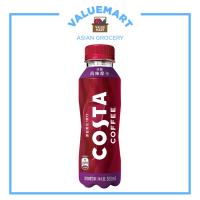
Costa Coffee Premium UK British Ready-to-Drink Latte (Americano Milky Latte Mocha Latte) - 300 ml
₱116.00₱170.00
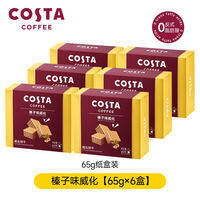
Costa | Chocolate Hazelnut Wafer Cookies 65g
₱1,396.00
Buy on Lazada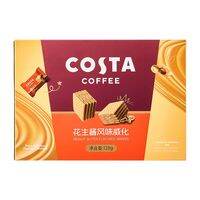
Costa | Hazelnut Flavored Individually Wrapped Wafer Biscuits 65g
₱664.00
Buy on Lazada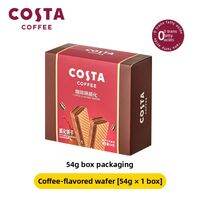
Costa | Chocolate Hazelnut Wafer Snacks
₱387.00
Buy on LazadaAbout Costa
Costa Coffee is a British coffeehouse chain and coffee brand established in London in 1971 by Italian brothers Bruno and Sergio Costa. Originally a small roasting operation, it has grown into one of the most recognised coffee chains in the United Kingdom and an international brand. Since January 2019, Costa has been owned by The Coca-Cola Company, which acquired the business from the British hospitality group Whitbread plc.2
Overview
| Attribute | Information |
|---|---|
| Brand name | Costa Coffee |
| Founded | 1971 |
| Founders | Bruno Costa and Sergio Costa |
| Origin | London, England, United Kingdom |
| Industry | Coffee / Food & Beverage |
| Parent company | The Coca-Cola Company |
| Former owner | Whitbread plc |
| Headquarters / base | United Kingdom |
| Known for | Coffee shops, espresso-based drinks, Costa Express, packaged and ready-to-drink coffee |
| Signature blend | Mocha Italia |
| Acquired by Coca-Cola | January 2019 |
| Acquisition value | Approximately US$4.9 billion |
| International presence | Dozens of countries |
Costa traces its origins to London in 1971, when Sergio and Bruno Costa arrived from Italy with the goal of integrating high-quality coffee into daily life.1
History
Founding: 1971
Brothers Sergio and Bruno Costa, originally from Italy, founded Costa in London in 1971. Their initial focus was on coffee roasting rather than operating a traditional restaurant chain.
A defining element of the brand’s identity became its proprietary blend, Mocha Italia, which The Coca-Cola Company identifies as Costa’s signature coffee.1
Over time, the company built a reputation in Britain for barista-prepared, espresso-based beverages.
Expansion under Whitbread
Costa later joined Whitbread plc, a major British hospitality company. According to The Coca-Cola Company, Whitbread acquired the brand when it operated only 39 shops, after which it underwent significant expansion.2
Under Whitbread’s ownership, Costa evolved from a modest British coffee business into a large-scale coffeehouse network.
By 2018, the brand had nearly 4,000 retail outlets, alongside vending, at-home coffee, and roasting operations.2
Acquisition by Coca-Cola
In August 2018, The Coca-Cola Company announced an agreement to acquire Costa from Whitbread for £3.9 billion, equivalent to approximately US$5.1 billion at the time.2
The transaction closed in January 2019 for approximately US$4.9 billion.2
This acquisition provided Coca-Cola with a substantial international coffee platform. At the time of purchase, Costa already operated coffee shops, Costa Express vending machines, an established supply chain, and a major roasting facility.2
Business formats
Costa operates beyond the traditional coffee shop model through several distinct channels.
Coffee shops
The most visible aspect of the brand is its café network, which offers espresso-based beverages, brewed coffee, teas, cold drinks, pastries, sandwiches, and other food items. These outlets are closely associated with British high-street coffee culture.
Costa Express
Costa Express is the brand’s self-service coffee division. Rather than requiring a full café, these machines are placed in high-traffic locations such as:
- Petrol stations
- Travel hubs
- Cinemas
- Convenience stores
- Other high-footfall sites
This format enables customers to access Costa-branded coffee without visiting a conventional café. The Coca-Cola Company specifically cited Costa Express as a key component of the brand’s scalable business model at the time of acquisition.2
At-home coffee
Costa also retails coffee products intended for home preparation, extending the brand’s reach beyond physical cafés and into the broader retail coffee market.
Ready-to-drink coffee
Following the Coca-Cola acquisition, Costa expanded into ready-to-drink (RTD) formats. This allows distribution through Coca-Cola’s extensive global beverage network rather than relying solely on branded cafés. The Coca-Cola Company explicitly identified RTD coffee as a strategic opportunity linked to the acquisition.2
Coffee and products
Costa’s identity is closely tied to espresso-based coffee. Key product categories include:
- Espresso
- Americano
- Cappuccino
- Latte
- Flat white
- Mocha
- Hot chocolate
- Tea
- Iced and cold beverages
- Pastries and bakery products
- Sandwiches and light food
- Packaged coffee
- Ready-to-drink coffee
The Mocha Italia blend remains central to the brand’s identity and is described by The Coca-Cola Company as Costa’s signature coffee.1
Brand identity
Costa positions itself around barista-style coffee and everyday coffee culture. Unlike Coca-Cola’s core soft drink brands, the Costa experience centres on the physical ritual of visiting a café, ordering a freshly prepared beverage, and spending time in the space.
Its identity combines British coffeehouse culture, Italian coffee heritage, and modern international branding. The Italian influence stems from its founders, while its corporate and cultural development is distinctly British due to its London origins and growth.1
Relationship with Italy
Despite its Italian founders and Italian-inspired heritage, Costa is fundamentally a British brand. Sergio and Bruno Costa were Italian immigrants who established the company in London. Consequently, Costa draws on Italian coffee traditions as part of its heritage while operating primarily as a British-origin international coffee company.1
It is therefore inaccurate to describe Costa as an Italian company that expanded into Britain; it is a London-founded British coffee brand created by Italian immigrants.
Ownership
Costa’s ownership history follows this progression:
Bruno & Sergio Costa → Costa Coffee → Whitbread → The Coca-Cola Company
Whitbread oversaw a major phase of the brand’s expansion. In 2019, The Coca-Cola Company completed its acquisition of Costa for approximately US$4.9 billion.2
Costa remains part of Coca-Cola’s global beverage portfolio and is currently listed among the company’s coffee and tea brands.1
Costa under Coca-Cola
Coca-Cola’s ownership has significantly altered Costa’s strategic scope. Prior to the acquisition, Costa’s strength lay primarily in its coffee shop and service network. Coca-Cola brought global beverage distribution capabilities, creating opportunities across:
- Coffee shops
- Vending
- Supermarkets
- Convenience stores
- Ready-to-drink beverages
- At-home coffee
- International markets
The Coca-Cola Company described the acquisition as providing a scalable coffee platform across multiple formats and channels.2
Since January 2025, Coca-Cola has reorganised Costa’s internal reporting structure. The non-RTD business is reported within Coca-Cola’s Europe, Middle East and Africa operating unit, while the RTD business falls under relevant geographic operating segments.2
International expansion
Although Costa began as a London-based business, it has developed into an international brand. At the time of Coca-Cola’s acquisition in 2019, Costa operated in more than 30 countries with nearly 4,000 retail outlets.2
Subsequent disclosures indicated presence in 45 countries, with more than 2,800 coffee shops in the UK and Ireland and over 1,100 internationally.1
Store and country counts fluctuate due to openings, closures, franchising, and restructuring; historical figures should not be interpreted as current totals.
Costa Foundation
Costa operates a social impact organisation called the Costa Foundation. Established in 2007, it focuses on improving educational opportunities for children in coffee-growing communities. According to The Coca-Cola Company, the foundation has funded more than 100 school projects and impacted over 120,000 children.1
This initiative links Costa’s social programmes directly to coffee-producing regions.
Business model
Costa functions as a multi-channel coffee ecosystem. Rather than depending exclusively on cafés, the brand generates revenue through:
Costa cafés
↓
Costa Express
↓
Packaged coffee
↓
At-home coffee
↓
Ready-to-drink coffee
↓
International distribution
This diversification contributed to Costa’s strategic appeal to Coca-Cola. The acquisition included not only coffee shops but also a coffee brand, roasting capability, vending infrastructure, retail presence, and intellectual property distributable across multiple channels. Coca-Cola’s filings specifically highlighted Costa’s trademark and cross-format expansion potential as key assets.2
Competitors
Costa operates in a highly competitive global coffee market. Major competitors vary by region but internationally, and particularly in the UK, include:
- Starbucks
- Caffè Nero
- Independent cafés
- Supermarket coffee brands
- Fast-food coffee businesses
- Convenience-store coffee
- Ready-to-drink coffee brands
Historically, Costa’s strongest competitive position has been in the UK coffee shop market, where it maintains a substantial physical footprint.
Comparison with Starbucks
| Costa | Starbucks | |
|---|---|---|
| Origin | London, UK | Seattle, USA |
| Founded | 1971 | 1971 |
| Founders | Bruno & Sergio Costa | Jerry Baldwin, Zev Siegl & Gordon Bowker |
| Core identity | British coffee brand with Italian heritage | American-origin global coffeehouse brand |
| Current parent | Coca-Cola | Starbucks Corporation |
| Major strength | UK market + multiple coffee formats | Huge global café network |
| Vending | Costa Express | Less central to brand |
| RTD potential | Expanded significantly under Coca-Cola | Also significant |
Notably, both Costa and Starbucks were founded in 1971, though independently and in entirely different markets.
Strategic importance to Coca-Cola
For The Coca-Cola Company, Costa provides access to the coffee category, where its traditional soft drink portfolio has limited dominance. Coffee is consumed in diverse contexts and sold through numerous channels.
Costa complements Coca-Cola’s existing beverage portfolio by offering:
- A major coffeehouse brand
- Coffee expertise
- Roasting capabilities
- Vending technology
- Coffee shop infrastructure
- At-home products
- Ready-to-drink coffee
- International coffee distribution
Coca-Cola’s acquisition announcement explicitly framed Costa as a means to establish a strong global coffee platform.2
Key timeline
- 1971 — Bruno and Sergio Costa establish Costa in London.1
- 1970s–1990s — Costa develops as a British coffee business and expands its café presence.
- 1995 — Whitbread acquires Costa; according to The Coca-Cola Company, the chain had only 39 shops at the time.2
- 2000s — Costa expands its UK coffee shop network and develops new formats.
- 2007 — Costa Foundation is established.1
- 2010s — Costa becomes a major UK coffee chain and expands internationally.
- 2018 — Coca-Cola announces an agreement to acquire Costa for £3.9 billion.2
- January 2019 — Coca-Cola completes the acquisition for approximately US$4.9 billion.2
- 2020s — Costa continues expanding across cafés, Costa Express, at-home coffee, and ready-to-drink formats.
- 2025 — Coca-Cola reorganises Costa’s internal reporting structure, placing its core business within the Europe operating unit.1