Shop on Lazada
Kinlong products
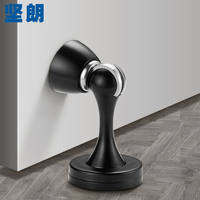
Kinlong | Wall & Floor Mounted Door Stop
₱404.04
Buy on Lazada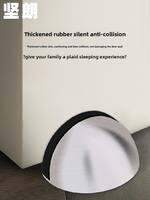
Kinlong | Anti-Collision Door Stop Stainless Steel Thickened Rubber Bathroom
₱307.83
Buy on Lazada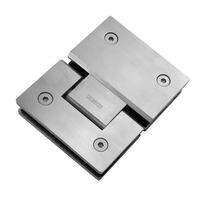
Kinlong | 304 Stainless Steel 180 Degree Bathroom Hinges
₱1,537.45
Buy on Lazada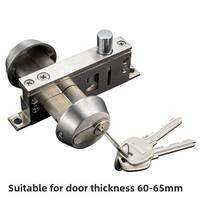
Kinlong | Sturdy Double-Sided Glass and Aluminum Door Lock
₱1,381.36
Buy on Lazada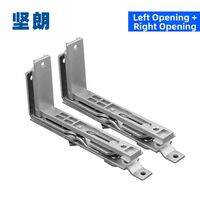
Kinlong | Hidden Easy-Install Hinge for Casement Windows
₱800.69
Buy on Lazada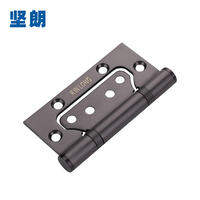
Kinlong | No Slot Silent Door Hinge 4 inch
₱305.09
Buy on Lazada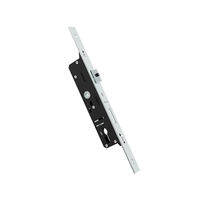
Kinlong | Sliding Door Lock Windows and Doors Accessories
₱823.36
Buy on LazadaAbout Kinlong
Overview
Guangdong Kinlong Hardware Products Co., Ltd., internationally known as Kinlong (坚朗 / 坚朗五金), is a Chinese manufacturer and integrated supplier specializing in architectural hardware, building components, and construction-related products. Established on June 26, 2003, in Dongguan, Guangdong, the company has evolved from a specialist hardware manufacturer into a comprehensive building materials and solutions group.1 Its stated vision is to become the world’s largest integrated supplier of construction materials, with brand positioning focused on enhancing building comfort, aesthetics, and energy efficiency.1
Company Profile
| Item | Information |
|---|---|
| Brand | Kinlong |
| Chinese name | 坚朗 / 坚朗五金 |
| Company | Guangdong Kinlong Hardware Products Co., Ltd. |
| Founded | June 26, 2003 |
| Headquarters | Dongguan, Guangdong, China |
| Industry | Architectural hardware, building materials, construction components |
| Main market | Residential, commercial, hospitality, infrastructure and public buildings |
| Stock listing | Shenzhen Stock Exchange, 2016 |
| Stock code | 002791 |
| International positioning | Construction-hardware and building-materials integrated supplier |
| Employees | 11,000+ 1 |
| Subsidiaries | 60+ 1 |
| Sales offices | 700+ 1 |
| Construction/production area | 800,000+ m² 1 |
| Patents | 1,000+ 1 |
| Industry standards | 200+ 1 |
Current corporate profiles report over 800,000 m² of construction area, more than 60 subsidiaries, upwards of 700 sales offices, and a workforce exceeding 11,000 employees.1 The international website further details operations across more than 20 construction-hardware integration areas, supported by over 60 production, R&D, and logistics centers, alongside a portfolio of more than 1,000 patents.1 Readers should note that these figures represent company-stated data and may vary depending on reporting periods and definitions rather than independently audited global totals.
History
2003–2007: Foundation
Kinlong was founded on June 26, 2003, as Dongguan Kinlong Hardware Products Co., Ltd., with early operations concentrated on architectural hardware and components.1 A significant early milestone occurred in 2004 when the company supplied duplex stainless steel 2205 products for Singapore Airport, utilizing precision-casting technology designed for high strength and corrosion resistance.1 In 2005, Kinlong implemented an ERP system to support information-based management. The following year, it established its first subsidiary, Kinex/坚宜佳, which focused on steel-structure technology and standardized hardware for doors, windows, and curtain walls. By 2007, the company had completed a headquarters complex and 21 workshops.1
2008–2012: Expansion of Architectural Applications
The company gained prominence through its involvement in China’s National Stadium (Bird’s Nest), supplying cables, tension rods, and cable anchors.1 In 2009, its laboratory center became the first in the industry to receive CNAS accreditation.1 The Kinlong/坚朗 trademark was recognized as a Well-Known Trademark in China by relevant authorities in 2010.1 Diversification beyond traditional hardware began in 2012 with the establishment of Kinlong HBS to develop smart locks and enter the smart-home sector.1
2013–2018: Internationalization and Listing
Enterprise IT infrastructure was upgraded in 2013 with the adoption of Oracle systems. In 2014, Kinlong established its first overseas subsidiary, Kinlong India, marking a systematic expansion into international markets.1 An R&D project received the Second Prize of China’s National Scientific and Technological Progress Award in 2015.1 On March 29, 2016, Kinlong was listed on the main board of the Shenzhen Stock Exchange under stock code 002791, describing itself as the first A-share listed company in the construction-hardware segment.1 Post-listing growth included portfolio expansion and the promotion of a one-stop service model. In 2018, the company was recognized as a National Intellectual Property Model Enterprise.1
2019–2024: Integrated Supplier Transition
In 2019, Kinlong acquired full ownership of the Portuguese CIFIAL Group and invested in intelligent control technologies, signaling a substantial international M&A strategy.1 Between 2020 and 2022, manufacturing capacity expanded with a new North China production base and investments in smart-home and security manufacturing. This period also saw the development of the Kinlong Cloud online procurement platform.1 In November 2024, the company opened a new exhibition hall exceeding 20,000 m² and was recognized as a Guangdong Manufacturing Single Champion Enterprise.2
Products and Services
While originally rooted in architectural hardware, Kinlong now positions itself as a one-stop building-materials supplier.1 Its international offerings are categorized as follows:
- Door & Window Integration: Aluminum and UPVC hardware, luxury aluminum hardware, DGU glass accessories, and related components.
- Post & Railing Products: Aluminum U-channels, glass base mounts, clamps, brackets, and handrail fittings.
- Curtain Wall Products: Curtain-wall hardware, MH and MG series, and integrated solutions.
- Glass Door & Shower Systems: Complete systems for glass doors and shower enclosures.
- Decoration Materials: Cabinets, household products, ceramic tiles, flooring, and wall-decoration materials.
- MEP Products: Pipe products, lighting, switches, sockets, supports, and hangers.
- Tools & Supplies: Anchor bolts, installation tools, handling equipment, and cleaning equipment.
- Modular Building Solutions: Prefabricated and modular construction components.
Core Product Areas
Door and Window Hardware remains a fundamental business area, encompassing systems for aluminum, UPVC, and glass applications including hinges, handles, locks, friction stays, and rollers. The company increasingly promotes complete hardware systems rather than individual components.
Curtain-Wall Hardware is another key expertise area, with components supplied for supporting, connecting, and securing glass and structural elements in large commercial buildings, airports, and hotels.
Glass and Railing Systems include components for railings, handrails, glass doors, and architectural glass installations where material quality, corrosion resistance, and precision finishing are critical.
Door-Control Hardware represents an expansion beyond traditional window and curtain-wall categories into comprehensive door management systems.
Smart-Home Products have been part of the portfolio since 2012, evolving from smart locks to include smart security and intelligent building products.1
Broader Building Materials reflect a strategic shift described in annual reporting as expansion into sanitary products, interior-decoration hardware, security systems, underground utility corridors, natural smoke exhaust, intelligent ventilation, fire/waterproof materials, and MEP equipment.2
This evolution illustrates a transition from individual hardware to hardware systems, then to construction components, and finally to integrated building-material solutions.2
Business Model
Kinlong’s operations rely on three primary capabilities:
Research and Development
The company emphasizes proprietary engineering and product development, claiming over 1,000 patents and association with more than 200 industry standards.1
Manufacturing
A large manufacturing network supports consistent dimensional accuracy, surface treatment, material performance, and quality control required for architectural hardware.
Sales and Service
Unlike consumer hardware brands, Kinlong serves architects, contractors, developers, fabricators, installers, distributors, and procurement organizations. The model integrates R&D, manufacturing, distribution, and customer support through a network of over 700 sales offices.1
Major Projects
Kinlong highlights involvement in numerous significant international and Chinese projects, including:
- Burj Khalifa — UAE
- ICONSIAM — Thailand
- Marina Bay Sands — Singapore
- Vinhomes Central Park — Vietnam
- Beijing Daxing International Airport — China
- National Centre for the Performing Arts — China
- National Stadium (Bird’s Nest) — China
- The University of Hong Kong Shenzhen Hospital — China
Inclusion in this portfolio indicates the company supplied products or participated in the project but does not imply supply of all hardware components within a given building.1
International Presence
International expansion began with the establishment of Kinlong India in 2014 and accelerated with the 2019 acquisition of Portugal’s CIFIAL Group.1 The company currently maintains sales offices and operations outside China, serving markets where Chinese construction firms are active and where architectural hardware is procured on a project basis.1
Technology and Quality
Architectural hardware performance depends on material grade, load-bearing capacity, corrosion resistance, dimensional accuracy, surface treatment, fatigue resistance, environmental exposure, safety requirements, installation tolerances, and system compatibility. Kinlong has invested significantly in testing and standardization, with its laboratory center receiving CNAS accreditation in 2009, described as an industry first at the time.1
Corporate Philosophy
The company’s mission is to improve living environments and establish Kinlong as synonymous with high quality. Stated values include respecting science, pursuing continuous innovation, seeking coexistence and mutual benefit, and acting with sincerity and trustworthiness. English-language materials summarize the vision as ensuring Kinlong products are present wherever buildings exist, contributing to comfort, attractiveness, and energy efficiency.1
Industry Positioning
Kinlong operates as a large architectural-component and building-materials platform rather than a simple hardware brand. Its strategic evolution has progressed from architectural hardware to door/window and curtain-wall systems, then to glass, railing, and door-control systems, followed by smart locks and smart-home products, interior and building materials, MEP and security components, and finally integrated building-material solutions.2 The company describes its current strategy as becoming an integrated supplier of construction supporting products while maintaining door, window, and curtain-wall hardware as a core foundation.2
Listed Company Status
Brand Identity
The international slogan “For Better Living” reflects a shift away from being perceived solely as a hardware manufacturer toward a company whose products enhance overall building comfort, appearance, safety, and efficiency.1 The Chinese name 坚朗 conveys associations of firmness and clarity but functions primarily as a brand identifier.
Comparison with Typical Hardware Manufacturers
| Typical Hardware Manufacturer | Kinlong |
|---|---|
| Focuses on individual products | Increasingly focuses on complete systems |
| Limited product categories | Broad construction-product portfolio |
| Distributor-oriented | Direct sales + regional offices + project service |
| Hardware only | Hardware + building components + smart products + materials |
| Product manufacturing | R&D + manufacturing + logistics + service |
| Mainly domestic | International expansion |
| Small/medium scale | Large listed corporation |
This distinction underpins Kinlong’s characterization as an integrated construction-materials supplier rather than a conventional hardware company.
Assessment
Kinlong is recognized as one of China’s prominent architectural-hardware companies that has successfully expanded into a broader construction-supply business. Key strengths include extensive experience in architectural hardware, a large manufacturing base, diverse product portfolio, robust R&D and testing capabilities, comprehensive domestic sales and service network, international presence, track record with major projects, public-company resources, and increasing integration of smart-building and building-material products.1
The primary strategic challenge involves managing the transition from a specialized hardware manufacturer to a broad building-materials platform. While this expansion provides access to a larger share of construction spending, it also introduces competition across additional product categories and markets.