Shop on Lazada
DUSTO products
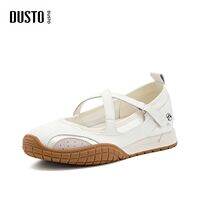
DUSTO | Ballet Style Low Heel Mary Jane Flat Shoes with Magic Tape Round Toe
₱1,878.55₱9,232.70
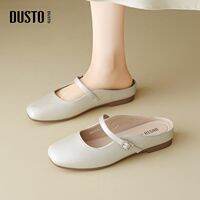
DUSTO | Retro Brown Slip-On Soft Sole Pregnant Womens Summer Flats Half Sandals
₱1,576.56₱2,706.23
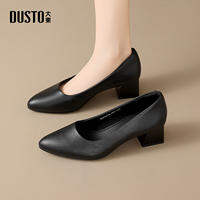
DUSTO | Comfortable Black Chunky Heels Shoes for Work
₱1,759.64₱2,889.31
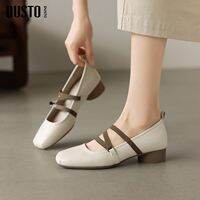
DUSTO | Vintage French Mary Jane Shoes T-strap Mid-heel
₱1,803.66₱9,214.30
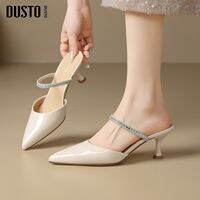
DUSTO | Silver Pointed Closed Toe Summer Stylish High Heels
₱1,722.13₱2,851.80
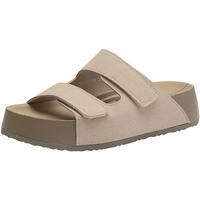
DUSTO | Womens Summer Thick Bottom Slippers
₱1,973.90₱3,103.56
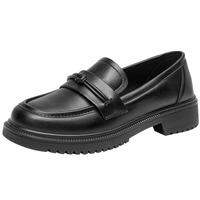
DUSTO | Casual Easy-On Womens Loafers Black
₱1,612.69₱2,742.36
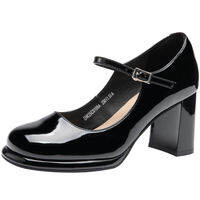
DUSTO | Rough Heel Bridal Shoes
₱1,844.84₱2,974.51
About DUSTO
DUSTO (Chinese: 大东) is a Chinese fashion brand specializing in footwear and apparel. Originally established as a women’s shoe manufacturer in Wenzhou, Zhejiang, the brand has since expanded its product portfolio to include men’s shoes, children’s footwear, leather goods, bags, clothing, and accessories. The company behind the brand is Zhejiang Dadong Shoes Co., Ltd. Public records generally cite its founding period as 1995–1996.2 Unlike many contemporary fashion labels that rely entirely on outsourcing, DUSTO maintains significant in-house manufacturing and supply chain capabilities rooted in the Wenzhou shoemaking industry.1 The name “DUSTO” is an arbitrary trademark with no inherent meaning in English or other foreign languages.2 It should be understood strictly as a brand identifier rather than a descriptive term.
Company Overview
| Attribute | Details |
|---|---|
| Brand Name | DUSTO / 大东 |
| Brand Type | Mass-market fashion / Fast fashion |
| Place of Origin | Wenzhou, Zhejiang, China |
| Founded | 1995–1996 (sources vary by one year) |
| Parent Company | Zhejiang Dadong Shoes Co., Ltd. |
| Original Core Category | Women’s footwear |
| Current Categories | Women’s shoes, men’s shoes, children’s shoes, apparel, leather goods, bags, accessories |
| Market Positioning | Fashionable, comfortable, high value-for-money, rapid inventory turnover |
| Primary Market | Chinese mass consumer market; international trademark registrations exist |
History and Origins
Founding and Early Development
The origins of DUSTO are intrinsically linked to Wenzhou, one of China’s most prominent footwear manufacturing hubs. The parent company, Zhejiang Dadong Shoes Co., Ltd., was formerly known as Zhejiang Kangfeng Shoes Co., Ltd. Historical accounts regarding the exact founding year differ slightly: recruitment materials archived by Sichuan University indicate the predecessor entity was established in Wenzhou in 1995, while general brand literature typically cites 1996 as the official founding year of DUSTO.2
In its nascent stage, DUSTO operated not as a comprehensive fashion group but as a participant in the shoemaking and women’s footwear wholesale market. According to corporate profiles preserved by Sichuan University, the company began with manual shoemaking around 1996 before rapidly transitioning to specialized production. Within a few years of establishment, it acquired machinery and established assembly lines, shifting from traditional artisanal workshops to a modernized production model with clear division of labor. Concurrently, the company began researching shoe lasts and comfort technologies.
This trajectory mirrors the classic development path of the Wenzhou footwear industry:
Manual workshop → Assembly line production → Wholesale market → Branding → Specialty retail stores → Fast fashion retail.
Evolution from Footwear to Lifestyle Brand
Women’s footwear constituted the primary focus of DUSTO during its formative years. Early brand strategy emphasized fashionable design, daily wearability, comfort, accessible pricing, and responsiveness to market trends for female consumers. Corporate literature describes DUSTO as an enterprise dedicated to the R&D, production, and sales of “trendy fashion women’s shoes,” noting an intent to blend Eastern culture with modern fashion.
As the enterprise scaled, its scope broadened beyond women’s shoes. By 2019, university recruitment materials indicated that “DUSTO 大东” had established a product matrix encompassing women’s shoes, men’s shoes, children’s shoes, leather goods, bags, and accessories, positioning itself as a fast-fashion brand pursuing innovation, comfort, and high cost-performance ratios.3 Subsequent brand documentation further incorporated apparel into this ecosystem.4
Consequently, the developmental phases of DUSTO can be characterized as:
Traditional women’s shoe enterprise → Mass-market women’s shoe brand → Multi-category footwear and apparel brand → Fast fashion lifestyle brand.
Business Model and Market Positioning
The “Dadong Model”
DUSTO operates within the mass fashion + rapid renewal + high value-for-money segment of the Chinese market, distinct from luxury or high-end designer sectors. Corporate filings explicitly classify it as a “fast fashion brand,” emphasizing category diversity, affordability, innovation, and comfort.
A notable concept in the company’s history is the so-called “Dadong Model.” Recruitment materials from 2019 reference a business model transformation aimed at achieving “7-day fast fashion.”10 This terminology signifies an operational logic focused on compressing the cycle between trend identification, product development, manufacturing, and retail distribution. Unlike traditional footwear companies that plan seasons far in advance, DUSTO seeks to emulate the agility of fast fashion apparel, enabling a high volume of diverse styles.
Competitive Differentiation
The brand’s core competitiveness relies less on artisanal craftsmanship per se and more on systemic efficiencies:
- Rapid style turnover
- Broad product coverage
- Accessible price points
- Fulfillment of daily wear needs
- Cost reduction through economies of scale
- Agile new product development aligned with market trends
This distinguishes DUSTO from both traditional high-end shoemakers and performance-oriented athletic brands. In terms of market tier, DUSTO occupies the mass / low-to-mid-range fashion segment. It is frequently categorized in industry analyses as a “budget-friendly brand” emphasizing high cost-performance ratios. It does not compete directly with luxury houses such as Prada or Gucci, nor with technology-driven sportswear giants like Nike or ASICS; rather, it functions within the mass fashion retail system.
Manufacturing and Supply Chain
Unlike many fashion brands that outsource all production, DUSTO retains substantial manufacturing and supply chain infrastructure. Public records indicate the establishment of R&D and production bases in Wenzhou (Zhejiang), Huizhou (Guangdong), and Chengdu (Sichuan), featuring standardized factories and multiple production lines. Specific figures regarding factory floor area and workforce size vary across different reporting periods and should not be treated as current real-time data. This integrated model of R&D + Manufacturing + Branding + Retail remains a cornerstone of its commercial strategy.
Products and Design
Product Categories
Women’s Footwear
Women’s shoes remain the most representative category for DUSTO. The range is extensive, covering high heels, flats, Mary Janes, loafers, sandals, slippers, mules, ballet shoes, white sneakers, casual shoes, athleisure footwear, and boots. Product listings as recent as 2026 continue to feature these categories, confirming women’s footwear as the foundational pillar of the brand.5
Men’s Footwear
The brand subsequently expanded into men’s footwear, including casual shoes, sneakers, skate shoes, sandals, and leather dress shoes.
Children’s Footwear
DUSTO has also developed a children’s product line. Trademark registrations in the United States explicitly list categories including children’s clothing, infant headwear, and footwear.
Bags and Leather Goods
DUSTO has evolved beyond being solely a footwear brand. Class 18 goods registered under the DUSTO trademark in the United States in 2024 include backpacks, purses, rucksacks, suitcases, sports bags, leather bags, school bags, travelling bags, trunks, and umbrellas.6 This confirms that bags, travel goods, and related leather products now form part of the brand’s expansion strategy.
Design Philosophy
DUSTO’s design approach can be summarized as “following trends while maintaining mass wearability.” It is not an avant-garde label; instead, products prioritize versatility, comfort, seasonal relevance, and everyday utility. Current offerings reflect a coexistence of French, British, preppy, athletic, casual, and minimalist aesthetics.7 This aligns with standard mass fast-fashion strategies: avoiding restriction to a single aesthetic system and instead offering voluminous SKUs to cater to diverse ages, occupations, and style preferences.
Cultural Positioning
Brand literature has long emphasized a distinctive positioning: integrating Eastern culture with modern fashion. This thematic choice correlates with the Chinese brand name “大东” (Dadong). Early introductions stated that the DUSTO women’s shoe series aimed to fuse Eastern cultural elements with modern design to create a unique style.8
However, in practice, DUSTO is not a traditional “Chinese style” brand in the heritage sense. More accurately, it is a domestic Chinese brand whose merchandise primarily employs internationalized, mass-market modern fashion vernacular. It represents the modernization of Chinese fashion branding rather than traditional Oriental apparel.
Marketing and Brand Identity
Slogans and Values
DUSTO has utilized various taglines throughout its history. Earlier materials featured the slogan “Beauty follows me” alongside marketing centered on female consumers. Corporate documents have also articulated missions and values such as “Let customers, employees, and partners share a wonderful life” and “True love is in Dadong.”9 These communications emphasize beauty, lifestyle, consumer experience, and mass fashion rather than luxury status signaling.
Celebrity Endorsements
Consistent with common practices in the Chinese mass footwear sector during the 2000s, DUSTO employed celebrity marketing to rejuvenate its image. Early brand records note a collaboration with Taiwanese artist Barbie Hsu (Da S), leveraging her influence to reposition the brand from a traditional shoe factory to a youthful, fashionable consumer label.11
Intellectual Property and International Presence
United States Trademarks
DUSTO has pursued international trademark protection. Zhejiang Dadong Shoes Co., Ltd. is listed as a registrant for the DUSTO trademark in the United States.12 Confirmed USPTO registrations include:
- Class 25: Clothing, footwear, headgear, hosiery, athletic shoes, slippers, etc.
- Class 18: Backpacks, handbags, rucksacks, luggage, traveling bags, leather bags, sports bags, umbrellas, etc.13
Relevant DUSTO trademarks were registered in the United States on June 18, 2024.14 This indicates that the brand’s intellectual property protection now covers both key domains of footwear/apparel and bags/leather goods.
Distinction from Other Entities Named “DUSTO”
It is important to note that DUSTO is not the sole global user of this name. Unrelated entities include:
- A US trademark for vacuum cleaner filter bags named DUSTO, registered in 1961 and cancelled in 2002 due to non-renewal.
- A Russian cleaning technology/window-cleaning robot project named Dusto, which has no affiliation with the Chinese footwear brand.15
Therefore, references to “DUSTO” in international contexts require verification to ensure they pertain specifically to the fashion brand operated by Zhejiang Dadong Shoes Co., Ltd.
Target Demographics
Based on its positioning and product architecture, DUSTO primarily targets:
Female Consumers
Specifically young women, urban office workers, students, budget-conscious fashion seekers, and commuters requiring daily footwear. The breadth of styles—from sweet and French to preppy and athletic—allows for wide demographic coverage across age groups and aesthetic preferences.
Family Consumers
With the expansion into men’s shoes, children’s footwear, and bags, DUSTO has transitioned from targeting individual female consumers to serving family-oriented, multi-category consumption needs.
Assessment of Strengths and Limitations
Consumer Advantages
- Accessible Pricing: Avoids the high premiums associated with luxury branding.
- Extensive Variety: Covers high heels, athleisure, sandals, loafers, Mary Janes, and more.16
- Rapid Renewal: The fast fashion model ensures continuous introduction of new styles.
- Broad Product Lines: Extends beyond women’s shoes to men’s, children’s, and luggage categories.
- Domestic Supply Chain: Leverages decades of shoemaking expertise as a competitive advantage.
Potential Limitations
- Limited Brand Prestige: Does not offer the heritage, scarcity, or status signaling of luxury brands.
- Trend Dependency: While rapid updates are advantageous, trend-driven items may lack enduring classic value.
- Variable Quality Experience: Given the massive SKU count, quality may fluctuate across different models, materials, batches, and series; individual product assessment is recommended.
Note on Historical Data Discrepancies
Readers should be aware that publicly available historical data regarding DUSTO contains inconsistencies. Founding dates appear as either 1995 or 1996 depending on the source. Similarly, early corporate figures for employee counts, factory sizes, and store numbers reflect specific historical snapshots and should not be extrapolated to represent the brand’s current scale in 2026.17 Rigorous documentation requires distinguishing between historical milestones and present-day operational metrics.
References
- 大东DUSTO女鞋怎么样/品牌介绍-大东DUSTO联系方式-品牌100网
- DUSTO Trademark of ZHEJIANG DADONG SHOES CO., LTD – Registration Number 5267211 – Serial Number 87040844 :: Justia Trademarks
- DUSTO是什么牌子_大东品牌是什么档次?-百强排行网
- (DUSTO)大东官网 _大东女鞋加盟_全球时尚品牌网
- DUSTO/大东
- DUSTO Trademark (USPTO Serial 98016537) | USPTO Record | TrademarkElite
- 大东(DUSTO)标志图片及品牌介绍_标志网
- TEAS Plus New Application for Dusto
- DUSTO Trademark – Registration Number 0711394 – Serial Number 72100481 :: Justia Trademarks
- Dusto — Dmitrii Misanets
- Dusto technologies :: Behance
- 大东鞋业DUSTO品牌介绍-大东女鞋_鞋店-买购APP
- Dusto – Apps on Google Play
- From Guesswork to AI: How DUSTO Reinvented Fast-Fashion Forecasting – Alibaba Cloud Community
- 大东(DUSTO)标志Logo设计含义,品牌策划vi设计介绍 – 德启广告
- DUSTO Trademark | Trademarkia
- DUSTO – Zhejiang Dadong Shoes Co., Ltd Trademark Registration