Shop on Lazada
Enkei products
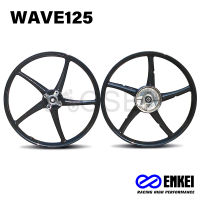
Enkei Mags 5 Spokes 522 Mags for XRM110 Wave125 1.4x1.4x17 (pair)
₱3,699.00₱7,500.00
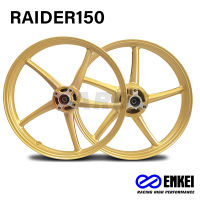
Enkei Mags 5 Spokes 522 Mags for Suzuki Raider150 Carb/FI 1.6x1.6x17 (pair)
₱4,199.00₱9,999.00
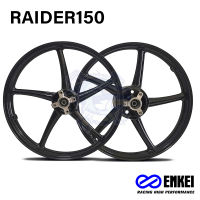
Enkei Mags 5 Spokes 522 Mags for Suzuki Raider150 Carb/FI 1.6x1.6x17 (pair)
₱4,199.00₱9,999.00
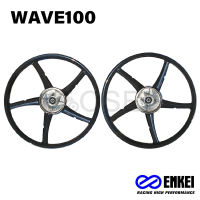
Enkei 5 Spokes 522 Mags for Wave100 Wave110 Alpha 1.4x1.4x17 (pair) 522 Front And Rear Drum Brake
₱3,699.00₱7,500.00
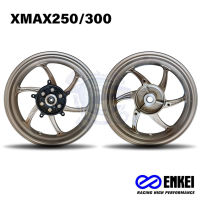
Enkei 6 Spokes Mags for XMAX250 XMAX300 V1 V2 Front 3.5x15 Rear 4.0x14
₱9,999.00₱15,000.00
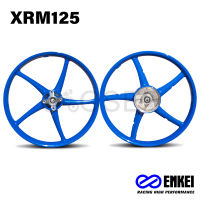
Enkei Mags 5 Spokes 522 Mags for Wave110 XRM125 1.4x1.4x17 (pair)
₱3,699.00₱7,500.00
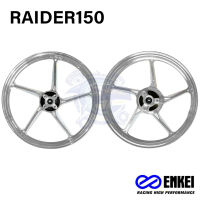
S TOP 5 Spokes 511 CNC Mags for Suzuki Raider150 Carb Raider150 FI 1.6x1.85/17 (pair)
₱5,799.00₱10,000.00
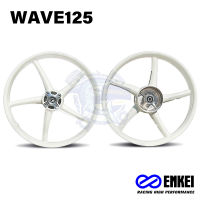
Enkei Mags 5 Spokes 522 Mags for XRM110 Wave125 1.4x1.4x17 (pair)
₱3,699.00₱7,500.00
About Enkei
Enkei (エンケイ株式会社, Enkei Corporation) is a Japanese manufacturer best known internationally for aluminum alloy wheels for automobiles and motorcycles. Founded in 1950 in Hamamatsu, Shizuoka, Japan, the company evolved from an aluminium-casting business into one of the world’s major wheel manufacturers, supplying wheels to automobile manufacturers as OEM equipment while also selling its own ENKEI-branded aftermarket and motorsport wheels.1
The brand is particularly associated with lightweight, high-strength wheels, Japanese motorsport engineering, and designs such as the RPF1, PF01, NT03, GTC, RS05 and TS series. Enkei’s motorsport credentials include Formula 1, and in 2026 it returned as an Official Supplier to McLaren’s Formula 1 team, supplying advanced forged-magnesium race wheels.2
Basic information
| Item | Information |
|---|---|
| Name | Enkei Corporation / ENKEI |
| Japanese | エンケイ株式会社 |
| Founded | 5 October 1950 |
| Headquarters | Hamamatsu, Shizuoka, Japan |
| Original company name | Enshu Keigokin Co., Ltd. (遠州軽合金株式会社) |
| Main industry | Automotive components and aluminium wheels |
| Best known for | Aluminium alloy wheels |
| Products | OEM wheels, aftermarket wheels, racing wheels, aluminium automotive components |
| Major markets | Japan, North America, Asia, Europe and other global markets |
| Motorsport | F1, touring/sports-car racing, drifting, rallying and other competition |
| Motto/identity | One Step Forward |
As of April 2026, Enkei Corporation reported 7,359 employees across its domestic and overseas operations and consolidated sales of approximately ¥206.4 billion for fiscal 2025. The company lists 12 domestic companies and 16 overseas companies within its group.5
Business scope
When car enthusiasts say “Enkei”, they are usually referring to the company’s aftermarket wheel brand. However, Enkei is considerably larger than an aftermarket wheel company.
Its business can broadly be divided into:
- OEM wheel manufacturing
- Aftermarket wheels
- Motorsport wheels
- Motorcycle wheels
- Aluminium casting and automotive components
- Engineering and manufacturing technologies
Enkei describes aluminium-wheel manufacturing as its core business, covering development, design, manufacturing and sales. Its customers include automobile and motorcycle manufacturers, tyre/wheel companies and individual aftermarket customers.7
This is an important distinction: Enkei isn’t simply a wheel-design company that outsources production. It is fundamentally a large-scale wheel manufacturer and engineering company.
Origins and history
1950 — The beginning
Enkei was established on October 5, 1950, in Hamamatsu, Shizuoka Prefecture, under the name Enshu Keigokin Co., Ltd.
Its early expertise came from aluminium casting. Enkei’s historical materials state that its technological roots included aluminium casting experience connected with aircraft components and that it subsequently entered motorcycle-engine-component production through its relationship with Soichiro Honda.8
This background is important because Enkei’s later wheel business was built upon metallurgy and casting technology, rather than simply styling wheels.
1967 — Japan’s first automotive aluminium wheels
A major turning point came in 1967.
Enkei developed technology for producing aluminium wheels for automobiles and began production in Japan. It also began exporting wheels to the United States. Enkei describes this as the first production of automotive aluminium wheels in Japan.10
This was significant because aluminium wheels were still relatively unusual in Japan at the time.
Enkei’s early products included designs such as:
- ENKEI Dish
- ENKEI Mesh
- ENKEI Baja
- ENKEI Spoke
The company therefore entered the wheel industry very early, before aluminium alloy wheels became mainstream in Japanese performance-car culture.
Expansion into the United States
During the 1960s and 1970s, Enkei increasingly developed an export business.
The United States became particularly important. By 1967, Enkei was already exporting automotive aluminium wheels to America. Later, the company established dedicated American operations:
- 1984 — Enkei International Inc. established in Michigan
- 1985 — Enkei America established in Indiana for aluminium-wheel production
This international expansion eventually became one of Enkei’s defining characteristics.
Today, Enkei’s manufacturing and business network extends across countries including the United States, Thailand, Malaysia, China, Indonesia, the Philippines, India and Vietnam, in addition to Japan.24
Entry into motorsport
Motorsport became a major part of Enkei’s identity.
In December 1986, Enkei became the first Japanese wheel manufacturer to supply wheels for an actual Formula 1 race, according to the company’s history.18
This established a connection between Enkei’s production technology and the extreme requirements of professional racing.
The company has subsequently been involved in multiple forms of motorsport, including:
- Formula 1
- Sports-car racing
- Touring-car racing
- Rallying
- Drifting
- Time attack
- Single-seater racing
Enkei says its motorsport experience spans roughly three decades at the highest levels of competition and has been used to continuously develop its wheel technology.19
McLaren and Formula 1
One of Enkei’s most famous motorsport relationships is with McLaren.
The original McLaren–Enkei partnership began in 1995. Enkei supplied lightweight magnesium racing wheels to McLaren’s Formula 1 cars for many years. The partnership continued for 26 years, through 2021.9
The relationship resumed for the 2026 Formula 1 season.
McLaren announced Enkei as an Official Supplier for 2026, with Enkei responsible for the design, development and manufacture of forged magnesium wheels for the team. McLaren’s 2026 MCL40 technical specification explicitly lists 18-inch Enkei magnesium wheels as its race wheels.11
This is particularly interesting because modern F1 wheels aren’t simply commercial aftermarket wheels with a racing finish. They are highly specialised components where mass, stiffness, durability, thermal behaviour and aerodynamic considerations are extremely important.
Engineering philosophy
The central engineering challenge in a performance wheel is the balance between:
low weight + high strength + adequate stiffness + durability
Making a wheel heavier can make achieving strength easier. Making it extremely light makes the engineering challenge much harder.
Enkei’s engineering philosophy has consequently focused heavily on material efficiency and manufacturing technology.
The company describes its approach as combining advanced casting with specialised rim-forming techniques rather than relying exclusively on conventional casting or forging.21
MAT Technology
One of Enkei’s most famous technologies is MAT — Most Advanced Technology.
MAT combines:
one-piece casting + specialised rim forming
After the wheel is cast, the rim section undergoes a rolling/forming process. According to Enkei, this produces a metal-flow structure in the rim that improves its mechanical properties while allowing the company to retain the design flexibility associated with cast wheels.18
In simplified terms:
Traditional cast wheel
Molten aluminium → Cast → Finish
Enkei MAT process
Molten aluminium → Cast → Rim forming/rolling → Finished wheel
The result is intended to provide some of the advantages normally associated with forged construction without requiring the entire wheel to be manufactured as a conventional forged wheel.
Enkei describes MAT wheels as effectively combining characteristics of casting and forging.19
Why lightweight wheels matter
A wheel is unsprung mass.
Reducing wheel weight can affect several aspects of vehicle behaviour, including:
- acceleration
- braking response
- suspension response
- steering feel
- ride quality
- tyre contact with the road
This is why lightweight racing wheels are so important.
For example, Enkei states that the MAT process can reduce wheel weight by approximately 10–15% on applicable designs.22
That doesn’t mean every Enkei wheel is automatically lighter than every competing wheel—the actual weight depends on the specific diameter, width, offset, construction and application.
Spec-E testing
Another important part of Enkei’s aftermarket identity is its Spec-E testing standard.
Enkei says its Spec-E testing goes beyond the requirements of the Japanese JWL standard.
According to Enkei, its testing includes:
- a higher drop point for impact testing
- 20% more cycles for rotary bending fatigue testing
- 20% more cycles for dynamic radial fatigue testing
than its stated JWL comparison requirements.20
The purpose is to ensure that the wheel is not merely attractive or lightweight but can withstand significant mechanical stress.
Famous Enkei wheels
Enkei has produced a very large number of wheel designs over its history. Some have become particularly famous among enthusiasts.
RPF1
The Enkei RPF1 is probably the wheel most strongly associated with the modern Enkei performance image.
It features:
- twin-spoke design
- lightweight construction
- MAT technology
- racing-oriented engineering
- extensive fitment options
Enkei says the twin spokes help distribute stress, while the centre-pocket design increases rigidity and helps manage heat during aggressive driving.25
The RPF1 was introduced in 2001 and was the first wheel produced using Enkei’s MAT technology to be described by the company as its world’s lightest passenger-car wheel at the time.13
It became especially popular among owners of cars such as:
- Honda Civic
- Honda Integra
- Mazda MX-5/Miata
- Subaru Impreza/WRX
- Mitsubishi Lancer Evolution
- Nissan Silvia
- Toyota 86/GR86
- various track and time-attack cars
The RPF1 is now something of a cult classic in the Japanese and global performance-car scene.
PF01
The PF01 is another lightweight racing-oriented model.
It uses a split five-spoke design and MAT technology, with emphasis on:
- low weight
- brake clearance
- motorsport aesthetics
- broad vehicle application
Enkei offers the PF01 in sizes from 15 to 18 inches, with some wide configurations intended for performance applications.14
NT03 / NT03+M / NT03RR
The NT03 family is one of Enkei’s most recognisable motorsport designs.
The distinctive feature is its brace-ring structure, which connects the spokes around the wheel and helps distribute loads.
The modern NT03RR uses Enkei’s MAT DURA II flow-forming rim technology and is available with different concave-face configurations.3
Its appearance is immediately recognisable and has become strongly associated with Japanese racing culture.
TS-5
The TS-5 takes a somewhat cleaner five-spoke approach.
It combines:
- five-spoke styling
- lightweight construction
- MAT technology
- street usability
- motorsport-inspired appearance
It is positioned between an outright racing wheel and a more general performance/tuning wheel.4
Other notable modern designs
Enkei’s current catalogue includes a large number of models across different categories, including:
Racing
- RPF1
- RPF1RS
- PF01
- PF01 EVO
- PF05
- PF07
- GTC02
- GTC01RR
- NT03RR
- RS05RR
Tuning
- TS-5
- TS-7
- TS-10
- TS-V
- TSR-X
- T6R
- T6S
- Raijin
- KOJIN
Performance / street
- EV5
- XM-6
- Quasar
- Vulcan
- GW8
- Lusso
Truck / SUV
- Trail-Cross
- Trail-Finder
- Trail-Tracker
- RPT1
- M6
- Cyclone
The exact catalogue changes over time, but Enkei’s current international catalogue contains dozens of wheels spanning racing, tuning, performance, classic and truck/SUV applications.23
OEM manufacturing
An often-overlooked part of Enkei is its OEM business.
Enkei does not only make wheels that enthusiasts purchase from wheel shops. It also manufactures wheels and aluminium components for vehicle manufacturers.
The company states that its OEM customers include major Japanese automobile manufacturers as well as General Motors in its international business.6
This gives Enkei two somewhat different faces:
OEM Enkei
Large-scale industrial manufacturer focused on quality, consistency, cost, durability and automotive-industry requirements.
ENKEI aftermarket
Performance-oriented wheels focused on weight, styling, fitment and motorsport technology.
They are connected by the same underlying manufacturing and engineering expertise.
Manufacturing philosophy
Enkei’s strength is not simply the ability to draw attractive wheel designs.
Its real competitive advantage is the combination of:
Design → engineering → casting → forming → machining → finishing → testing → global production
The company operates manufacturing facilities in Japan and multiple overseas markets. Its group structure includes dedicated companies for wheel manufacturing, painting, moulds, engineering, logistics and testing.16
This vertically integrated approach is one reason Enkei has been able to operate both as an OEM supplier and as a high-performance aftermarket brand.
Enkei and Japanese car culture
Enkei has a particularly strong relationship with Japanese performance-car culture.
Its wheels have become common on:
- Honda
- Toyota
- Nissan
- Mazda
- Mitsubishi
- Subaru
- Suzuki
and many European and American vehicles as well.
The brand’s reputation grew alongside Japan’s performance-car scene, particularly through:
- circuit racing
- time attack
- drifting
- autocross
- tuning
- grassroots motorsport
- JDM culture
The combination of simple designs, relatively low weight and motorsport credibility helped make Enkei popular outside Japan as well.
Why RPF1 became so iconic
The RPF1 deserves special mention because it represents much of what enthusiasts associate with Enkei.
Its design is not particularly luxurious or complicated.
Instead, it looks like a wheel designed around a question:
How much performance can be extracted from a relatively simple wheel design?
The twin spokes, compact centre area and relatively open design give it a distinctly functional appearance.
This has made it popular on everything from inexpensive track cars to highly modified racing builds.
Its longevity is also remarkable: the basic RPF1 concept has remained recognisable for decades while still fitting modern performance applications.12
Enkei vs. forged wheels
One common misconception is:
“Forged = good, cast = bad.”
The reality is more complicated.
Traditional forged wheels can offer excellent strength-to-weight ratios, but they are generally more expensive to manufacture.
Enkei’s MAT approach attempts to obtain improved rim material properties through post-casting forming, allowing a wheel to achieve high strength and relatively low weight without necessarily using a fully forged construction.21
This is one reason Enkei wheels have historically occupied an attractive middle ground:
performance + low weight + reasonable manufacturing cost.
For its highest-level motorsport applications, however, Enkei also manufactures forged magnesium wheels, as demonstrated by its 2026 McLaren F1 program.11
Motorsport reputation
Enkei’s motorsport involvement is more than marketing.
The company has supplied wheels for:
- Formula 1
- sports-car racing
- touring cars
- rally
- drifting
- time attack
- other professional racing categories
The technology developed for racing also influences its road-going wheels. Enkei itself describes its modern products as being developed using extensive data accumulated through years of racing and combined with modern design-analysis and manufacturing technology.19
This creates a familiar engineering cycle:
Racing → data → engineering development → production technology → aftermarket wheels
and then:
Aftermarket experience → further development → racing
Brand identity
Enkei’s identity can essentially be summarised through five ideas:
1. Lightweight
Enkei is strongly associated with reducing wheel mass.
2. Strength
The company places considerable emphasis on fatigue testing and structural integrity.
3. Motorsport
Racing is a major part of the brand’s technical identity.
4. Japanese engineering
The company originated in Hamamatsu and retains a major Japanese manufacturing and engineering base.
5. Manufacturing expertise
Unlike some aftermarket brands, Enkei’s core identity is that of a manufacturer, not merely a wheel marketer.
The company’s corporate philosophy is summarised by “One Step Forward”, reflecting its emphasis on continual technological development.8
Global presence
Although Enkei is Japanese in origin, it is now a global manufacturing group.
Its overseas operations include facilities and companies in:
- 🇺🇸 United States
- 🇹🇭 Thailand
- 🇲🇾 Malaysia
- 🇨🇳 China
- 🇮🇩 Indonesia
- 🇵🇭 Philippines
- 🇮🇳 India
- 🇻🇳 Vietnam
alongside its Japanese operations.24
This is particularly relevant when buying an Enkei wheel: “Enkei” does not necessarily mean “Made in Japan.”
Some specific models and sizes are made in Japan, while other products are manufactured elsewhere within Enkei’s global production network. The manufacturing origin should therefore be checked for the specific wheel.
Enkei today
As of 2026, Enkei remains primarily an aluminium-wheel and automotive-component manufacturer rather than simply an aftermarket tuning brand.
Its current business encompasses:
- OEM automotive wheels
- aftermarket wheels
- motorcycle wheels
- racing wheels
- aluminium automotive components
- precision casting
- engineering and manufacturing technology
The company continues to develop both mainstream consumer products and high-end motorsport technology.15
The 2026 return to McLaren F1 is especially notable because it demonstrates that Enkei continues to operate at the highest level of wheel engineering while maintaining a substantial consumer aftermarket business.12
Comparison with other manufacturers
If you compare Enkei with other famous wheel manufacturers such as BBS, OZ Racing, Rays/Volk Racing, HRE or Work, Enkei’s character is somewhat different.
| Characteristic | Enkei |
|---|---|
| Country of origin | 🇯🇵 Japan |
| Founded | 1950 |
| Core technology | Aluminium casting + forming |
| Famous process | MAT |
| Motorsport | Very strong |
| F1 involvement | Yes |
| OEM manufacturing | Yes |
| Aftermarket | Yes |
| Lightweight focus | Very strong |
| Famous model | RPF1 |
| Typical image | Functional / lightweight / motorsport |
| Fully forged wheels | Yes, especially specialised racing applications |
| Global production | Yes |
The biggest distinction is probably scale.
Enkei simultaneously operates as:
a Japanese engineering company + OEM supplier + wheel manufacturer + aftermarket performance brand + motorsport supplier.
Reputation among enthusiasts
Among performance-car enthusiasts, Enkei generally has a reputation for producing wheels that prioritise function over excessive ornamentation.
The classic Enkei aesthetic tends to emphasise:
- thin spokes
- open designs
- motorsport-inspired shapes
- relatively conservative styling
- low weight
- functional brake clearance
- strong fitment coverage
The RPF1 is the clearest example.
This has made Enkei particularly popular among people who want a wheel that says:
“performance first.”
rather than:
“luxury first.”
Important terminology
When shopping for Enkei wheels, several terms are commonly encountered.
MAT
Most Advanced Technology — Enkei’s casting + rim-forming process.18
MAT DURA
A development of Enkei’s forming technology aimed at improving rim performance.
Spec-E
Enkei’s internal/high-level testing standard for applicable wheels.20
Racing Series
Wheels oriented toward motorsport and performance use.26
Tuning Series
Performance street wheels with greater emphasis on styling/application versatility.
Performance Series
More general-purpose road-oriented wheels.
Racing Revolution
Higher-specification racing-inspired designs, including models such as NT03RR.
Overall assessment
Enkei is one of the most important Japanese wheel manufacturers in automotive history.
Its significance comes from more than having a large catalogue of aftermarket wheels. The company has been involved in aluminium wheel production since 1967, expanded internationally, developed its own casting and forming technologies, supplied OEM manufacturers, and participated in top-level motorsport including Formula 1.10
The brand’s philosophy can be summarised as:
Make the wheel lighter without sacrificing the strength and stiffness required for serious driving.
That philosophy explains why models such as the RPF1, PF01 and NT03 family became so popular with enthusiasts.
And the 2026 McLaren partnership demonstrates that Enkei’s motorsport story is not merely historical: the company is once again producing forged magnesium F1 wheels for a current Formula 1 team.12
References
- 沿革|会社概要|ENKEI WHEELS
- 会社概要|企業情報|ENKEI WHEELS
- NT03RR | Enkei Wheels
- TS-5 | Enkei Wheels
- 企業情報|ENKEI WHEELS
- グループ会社|会社概要|ENKEI WHEELS
- 製品|ENKEI WHEELS
- ごあいさつ|企業情報|ENKEI WHEELS
- Formula 1| モータースポーツ | ENKEI WHEELS
- ENKEI WHEELS
- F1オフィシャルサプライヤーの提携再開について |NEWS and BLOG|ENKEI WHEELS
- McLaren Racing reunites with Enkei for the 2026 Formula 1 Season | Enkei Wheels
- Archives | Enkei Wheels
- ENKEI PF01 NOW AVAILABLE IN MATTE BLACK (SPECIAL ORDER) | Enkei Wheels
- ENKEI WHEELS
- エンケイについて|人材に期待すること|リクルート|ENKEI WHEELS
- HTML5 Webook
- 製造方法|テクノロジー|ENKEI WHEELS
- テクノロジー|製品|ENKEI WHEELS
- HTML5 Webook
- 素材|テクノロジー|ENKEI WHEELS
- HTML5 Webook
- Wheels | Enkei Wheels
- Enkei Wheels | The leader in lightweight aftermarket wheels
- RPF1 | Enkei Wheels
- Racing Series | Enkei Wheels