Shop on Lazada
Epomaker products
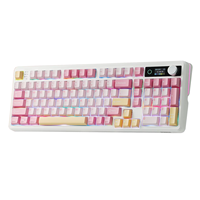
EPOMAKER TH99pro Mechanical Keyboard Customized Wireless Three Mode Knob Hot Plug Office Game Mechanical Keyboard
₱7,075.00₱8,904.00
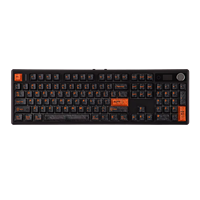
EPOMAKER TH108 V2 PRO Full Sized ANSI US Layout Tri-mode Wireless Gaming Keyboard Interactive Glass Screen & Multi-Tasking Knob
₱6,198.00₱7,748.00
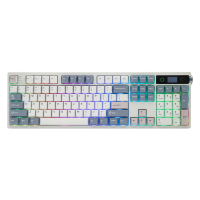
EPMaker TH108 PRO Full Size Mechanical Keyboard with Screen & Knob RGB Backlit Hot Swap Custom Driver 10000mAh Battery Gasket Mount
₱5,533.00₱6,916.00
EPOMAKER TH108 100% Full Size Hot-Swap Gasket-Mounted Wired/Bluetooth/2.4Ghz Wireless Mechanical Keyboard with 10000mAh Battery
₱5,441.00₱6,801.00
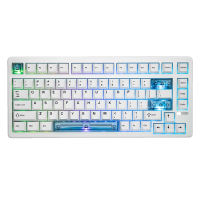
Epomaker HE80 Gasket Mount | Wired Hall Effect Magnetic Mechanical Keyboard - MagneX Switch
₱3,795.00₱4,935.00
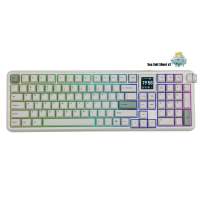
Epomaker RT100 PRO Retro Tri-Mode RGB Wireless Mechanical Keyboard with 1.54” TFT Screen & Knob
₱6,695.00₱8,705.00
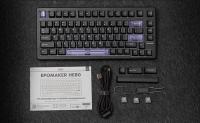
EPOMAKER HE80 Customized RT Hot Plug Gasket Gaming Magnetic Switch Keyboard
₱4,865.00₱5,602.00
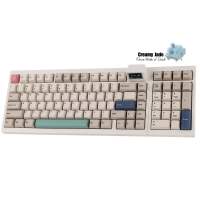
Epomaker RT98 98% Tri-Mode RGB Modular Wireless Mechanical Keyboard with 1.14” Mini TV Display
₱6,495.00₱8,450.00
About Epomaker
Overview
Epomaker is a Chinese computer-peripherals brand best known for mechanical keyboards, keyboard switches, keycaps, and enthusiast-oriented accessories. The name Epomaker is an abbreviation of “Epoch of Makers,” reflecting the company’s emphasis on customization, community participation, and mechanical-keyboard enthusiast culture. The brand is associated with Shenzhen Changyun Technology Co., Ltd. and is based in Shenzhen, China.2
The official website describes Epomaker as a gaming and desktop-peripherals brand offering keyboards, mice, headsets, keycaps, switches, and accessories, with a particular emphasis on acoustic tuning and typing sound.1
| Category | Information |
|---|---|
| Brand | Epomaker |
| Meaning | “Epoch of Makers” |
| Industry | Computer peripherals / consumer electronics |
| Best known for | Mechanical keyboards |
| Other products | Keycaps, switches, mice, headsets, accessories |
| Origin | China |
| Associated company | Shenzhen Changyun Technology Co., Ltd. |
| Headquarters / base | Shenzhen, China |
| Founded / launched | 2019 |
| Initial major product | GK68XS |
| Primary audience | Mechanical-keyboard enthusiasts, gamers, programmers, creators, PC users |
| Brand philosophy | Community-driven design, customization, affordability, sound/typing experience |
| Current slogan | “Crafted to sound right.” |
Epomaker states that the brand began in 2019 with the GK68XS, which was launched through crowdfunding. According to the company, the keyboard’s specifications were developed from community feedback rather than being designed entirely by a conventional product team.
History
Origins
Epomaker emerged during the rapid growth of the mechanical-keyboard enthusiast community in the late 2010s. The company’s original concept was to take features traditionally associated with enthusiast-built or group-buy mechanical keyboards and make them more accessible to a wider audience.
Epomaker states it was founded around a community of gamers, software engineers, product designers, and mechanical-keyboard enthusiasts. Its early philosophy emphasized three objectives: customization, affordability, and high standards. The company describes its name as an abbreviation of “Epoch of Makers.”
GK68XS
The GK68XS holds particular significance in Epomaker’s history. In 2019, Epomaker launched the keyboard through crowdfunding, stating that its specifications were heavily derived from feedback within the keyboard community. This established the foundation for the company’s frequently repeated philosophy: “From the community, for the community.” Rather than positioning itself solely as a traditional hardware manufacturer, Epomaker attempted to operate as an intermediary between keyboard enthusiasts, designers, engineers, and manufacturers.
Brand Name and Identity
The name Epomaker stands for “Epoch of Makers.” The term “Maker” is significant because the brand’s original target market was not simply ordinary keyboard buyers, but individuals who wanted to modify, customize, and build their own keyboards. This includes activities such as changing keycaps, replacing mechanical switches, modifying stabilizers, changing layouts, installing foam and other dampening materials, programming keys, using VIA/QMK, building custom keyboard configurations, and experimenting with typing sound and feel.
This “maker” identity remains central to the company’s branding. Its newer Maker Series, for example, is explicitly positioned around customization and personal identity.
Market Position
Epomaker operates in a market segment situated between mainstream computer peripherals and the custom mechanical-keyboard enthusiast community. Traditional gaming brands tend to emphasize RGB lighting, gaming performance, software ecosystems, low latency, and aggressive styling. Conversely, enthusiast keyboard companies often prioritize switches, keycaps, acoustics, mounting systems, materials, firmware, layouts, and modifiability.
Epomaker has historically attempted to combine both worlds. Its products commonly incorporate enthusiast features such as hot-swappable switches, gasket mounting, wireless connectivity, programmable firmware, and multiple keyboard layouts, while remaining relatively accessible compared to some high-end custom keyboards.
Product Categories
Epomaker’s product range has expanded considerably beyond its original keyboard focus. The company’s current catalog includes keyboards, mice, headsets, keycaps, switches, and accessories.1
Mechanical Keyboards
Mechanical keyboards remain the core of Epomaker’s business. The company sells keyboards in a wide variety of layouts, including full-size (100%), 96% (1800), TKL (80%), 75%, 70%, 65%, 60%, and macropads. This variety allows Epomaker to target users ranging from office workers and programmers to competitive gamers and keyboard enthusiasts.
Depending on the model, Epomaker keyboards may include mechanical switches, hot-swap sockets, gasket mounting, RGB backlighting, Bluetooth wireless, 2.4 GHz wireless, USB-C connectivity, programmable keys, VIA support, QMK support, multiple operating-system support, large batteries, and sound-dampening materials. Specifications vary substantially between models.
Major Product Lines
Epomaker organizes its keyboards into several distinct series.
TH Series
The TH Series is positioned as an entry point into enthusiast mechanical keyboards. Epomaker describes it as a gateway line emphasizing features such as gasket mounting, factory tuning, and a deeper typing sound. The concept focuses on providing affordable enthusiast features with good sound out of the box.
Galaxy Series
The Galaxy Series focuses heavily on aluminum construction. Its positioning is more premium than entry-level products, with metal construction intended to contribute to both the physical feel and acoustic character of the keyboard. Epomaker describes the series as emphasizing “Aluminum Resonance.”
HE Series
The HE Series represents Epomaker’s push into competitive gaming keyboards using Hall Effect magnetic switches. Unlike conventional mechanical switches that rely on electrical contacts, Hall Effect keyboards detect changes in magnetic fields. Features found on Epomaker’s HE products include adjustable actuation, Rapid Trigger, magnetic switches, very short actuation settings, gaming-oriented latency, and analog-style input on compatible models. The company lists products such as the HE65 V2 TMR, which uses TMR sensing technology.
RT Series
The RT Series combines retro-inspired visual design with modern mechanical-keyboard technology. It is intended for users seeking a keyboard with a less conventional aesthetic than typical gaming hardware. Epomaker categorizes the series under its retro aesthetic.
Luma Series
The Luma Series focuses on low-profile and portable keyboards. This places Epomaker in competition with keyboards designed for users who prefer a thinner, more travel-friendly typing experience over the tall profile associated with conventional mechanical keyboards.
Maker Series
The Maker Series is a direct expression of Epomaker’s original enthusiast philosophy. Described as “Your keyboard, your identity,” the series emphasizes customization, layouts, gasket mounting, hot-swappable components, sound dampening, and programmable firmware. Some models support VIA and QMK.
Lab Series
The Lab Series is positioned as an experimental line. Instead of functioning as a standard product family, it is intended to showcase new technologies, materials, forms, and keyboard concepts. Epomaker describes it as the venue where new sound and technology are introduced first.
Keycaps
Keycaps are a significant part of the Epomaker ecosystem. The company sells numerous standalone keycap sets, ranging from conventional designs to themed and collaborative products. Current keycap categories include Icon (everyday designs), Play (novelty/character designs), Jelly (translucent designs), and × Collab (artist/IP collaborations). Keycap customization is considered one of the defining characteristics of the enthusiast mechanical-keyboard market.
Mechanical Switches
Epomaker sells individual mechanical switches featuring various combinations of linear, tactile, and silent profiles, along with different spring weights, housing materials, and sound profiles. Switches are particularly important to enthusiasts as they substantially influence how a keyboard feels and sounds. The current catalog includes products such as the Lilac Silent Tactile Switch, marketed for quieter typing and tactile feedback.
Gaming Mice and Headsets
Epomaker has expanded beyond keyboards into other PC peripherals. The current product lineup includes gaming mice, wireless mice, gaming headsets, headphones, and other desktop accessories. For example, the catalog includes the NEX Pro gaming mouse. This expansion indicates that Epomaker is no longer exclusively a mechanical-keyboard company.
Acoustic Engineering
A notable development in Epomaker’s current identity is its emphasis on keyboard acoustics. Its current slogan is “Crafted to sound right.” The company states it has established a Sound Lab where products are tuned, tested, and recorded before release. Testing procedures involve acoustic testing, material tuning, sound recording, foam density analysis, plate materials, gasket materials, and dampening layers.1
This reflects a trend within the mechanical-keyboard community where enthusiasts evaluate keyboards by sound profile as well as specifications. Terms such as thocky, creamy, marbly, poppy, clicky, silent, and tactile are now commonly used to describe acoustic and tactile character. Epomaker has incorporated these sound categories directly into its product presentation.1
Customization Philosophy
Customization is a defining characteristic of Epomaker. A typical enthusiast-oriented Epomaker keyboard allows users to customize hardware (switches, keycaps, stabilizers, mounting components, internal dampening), layout (function keys, macros, layers, navigation keys), and software (key assignments, macros, RGB, firmware, VIA/QMK configurations). This approach appeals to users who do not want a keyboard permanently locked into a manufacturer-chosen configuration.
Firmware and Connectivity
VIA and QMK
Some Epomaker keyboards support VIA and/or QMK. VIA provides a graphical interface for remapping keys, while QMK is an open-source firmware platform allowing deeper customization. Epomaker states that most Maker Series models support VIA out of the box, with QMK available on applicable models; users are advised to check specific keyboard specifications rather than assuming universal compatibility.
Wireless Connectivity
Modern Epomaker keyboards frequently offer tri-mode connectivity, comprising USB-C wired, Bluetooth, and 2.4 GHz wireless connections. This allows users to switch between PC gaming, wireless desktop use, laptop/tablet use, and wired configurations without needing separate keyboards.
Gaming Focus
Although Epomaker originated in the enthusiast keyboard space, gaming has become increasingly important. Its Hall Effect/TMR keyboards are relevant to competitive gaming because technologies such as adjustable actuation, Rapid Trigger, magnetic sensing, and high polling rates can provide more precise control than traditional mechanical switches in certain games. This gives Epomaker a presence in both the mechanical-keyboard enthusiast and competitive PC gamer markets.
Community-Driven Development
Community involvement is a central theme in Epomaker’s corporate identity. The company states its original GK68XS was created using specifications based on community feedback. This philosophy aligns with the mechanical-keyboard community’s involvement in group buys, modifications, switch testing, keycap design, firmware development, acoustic experimentation, reviews, and build guides. Epomaker’s model attempts to translate this enthusiast culture into commercially available products.
International Presence
Epomaker operates internationally rather than serving only the Chinese domestic market. Its website states that it ships to most countries worldwide, although duties and taxes may apply depending on the destination. It also lists regional Amazon stores and international distribution.1 The company’s About page cites over 10 regional stores worldwide, while its homepage refers to 12 regional Amazon stores.1
Corporate Identity
U.S. trademark records identify Shenzhen Changyun Technology Co., Ltd. as the owner/applicant of Epomaker trademarks. A Canadian trademark registration likewise identifies Shenzhen Changyun Technology Co., Ltd. as the registered owner.2 The trademark filings cover products including computer keyboards, mechanical keyboards, computer peripherals, computer mice, headphones/headsets, keypads, and other related electronics.2 From a corporate and legal perspective, Epomaker functions as a brand owned by this entity rather than an independent technology.
Target Customers
Epomaker serves several distinct user groups:
- Mechanical-keyboard enthusiasts: Users interested in switches, keycaps, modding, sound, mounting systems, firmware, and layouts.
- Gamers: Users focused on low latency, Hall Effect/TMR keyboards, Rapid Trigger, high polling rates, RGB, and wireless connectivity.
- Programmers and office users: Individuals who spend many hours typing and value compact, programmable layouts.
- Creators and designers: Users who want customizable layouts and distinctive designs as part of their desk setup.
- First-time mechanical-keyboard buyers: Buyers seeking enthusiast-style features without building a keyboard from individual components.
Value Proposition
Epomaker’s value proposition centers on providing enthusiast mechanical-keyboard features without requiring customers to build a keyboard from scratch. Historically, its emphasis was on customization, affordability, and community. Its current identity increasingly emphasizes sound, customization, maker culture, and gaming technology, with sound placed at the center of this evolution.1
Strengths and Considerations
Epomaker’s notable strengths include a large keyboard selection, strong presence in the enthusiast market, many compact layouts, hot-swappable models, wireless options, VIA/QMK support on applicable models, wide selection of switches and keycaps, competitive pricing, increasing focus on acoustic tuning, growing gaming/peripheral portfolio, and community-oriented product development.
However, quality is not necessarily uniform across the entire catalog. As the product range is broad, specifications differ significantly between models. When evaluating an Epomaker keyboard, it is useful to assess the individual model rather than assuming all products have identical build quality, firmware, software, stabilizers, switches, keycaps, wireless performance, battery capacity, acoustic performance, or QMK/VIA compatibility.
Warranty and Support
Epomaker currently states that it provides a one-year limited warranty covering manufacturing defects. It also advertises a 30-day return period for unused products in their original packaging.1 Customer support is available via support@epomaker.com.
Evolution of the Brand
- 2019: Epomaker launches the GK68XS through crowdfunding and establishes its community-driven philosophy.
- Early period: The company develops a reputation for affordable, customizable mechanical keyboards and enthusiast-oriented accessories.
- Expansion: Epomaker expands into switches, keycaps, and numerous keyboard layouts.
- Gaming expansion: The company moves further into gaming technology, including Hall Effect keyboards and other PC peripherals.
- Current era: Epomaker places acoustic engineering and its Sound Lab at the center of its brand identity.
- 2026: The company presents itself as a maker of keyboards, switches, keycaps, mice, headsets, and accessories rather than solely a mechanical-keyboard brand.1
Summary
Epomaker is a Shenzhen-based computer-peripherals brand that grew out of the mechanical-keyboard enthusiast community. Originally focusing on affordable and customizable mechanical keyboards, it has expanded into sound-focused keyboards, Hall Effect/TMR gaming technology, keycaps, switches, mice, headsets, and other desktop peripherals. It is best understood as one of the brands that helped bridge the gap between the enthusiast/custom mechanical-keyboard world and the mainstream consumer market. Its early identity revolved around accessibility, while its current identity evolves toward a broader “maker + gaming + acoustic engineering” brand. The company’s 2019 community-driven origin, large keyboard ecosystem, and current emphasis on its Sound Lab explain its distinctive position among mechanical-keyboard brands.1