Shop on Lazada
Febreze products
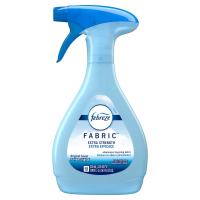
Febreze Extra Strength Fabric Freshener 438ml
₱699.00
Buy on Lazada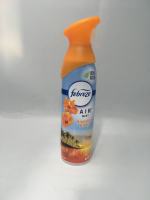
Febreze Air Mist Refresher Spray 8.8oz (250g) / Air Mist 185ml
₱445.00
Buy on Lazada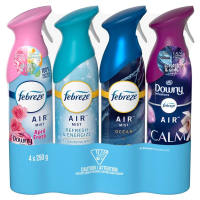
SUNPLAN.PH Febreze Air Refresher Variety Pack 8.8 oz 4-count Assorted Scents
₱1,215.00₱2,999.00
Febreze W Deodorizer Toilet Deodorizer Clean Lavender Blue Soap Citrus Splash Apple Garden Classic Bouquet Bergamot Wood Passion Amber 6.3ml - Direct From Japan
₱429.89₱601.85
Febreze Air Mist Spray 185ml - Lavender Spring Awakening or Honeysuckle
₱269.00₱538.00
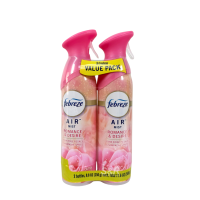
Febreze Romance & Desire Air Mist Value Pack
₱505.00
Buy on Lazada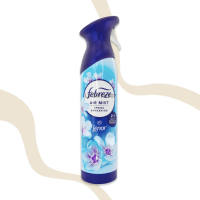
Febreze Air Mist Spray 185ml - Lavender Spring Awakening or Honeysuckle
₱268.00₱538.00
![[JAPAN] Febreze Lenoir Happiness Antique Rose & Floral Fabric Refreshner 370ml](https://ph-live.slatic.net/p/3d40a1d804057d0592c26496bcfc785c.png_200x200q80.jpg)
[JAPAN] Febreze Lenoir Happiness Antique Rose & Floral Fabric Refreshner 370ml
₱340.00₱370.00
About Febreze
Febreze is an American household-care brand best known for products designed to reduce, neutralise, trap, or otherwise eliminate unpleasant odours from fabrics, air, vehicles, and other parts of the home. Owned by The Procter & Gamble Company (P&G), it is one of the company’s most recognised home-freshness brands globally.
Unlike conventional perfumes or air fresheners that merely mask smells with stronger fragrances, Febreze employs odour-fighting chemistry intended to act directly on odour molecules.2 The brand is sold in numerous international markets, including the Philippines, though related P&G air-freshening products are marketed under the Ambi Pur name in some territories.
Brand overview
| Attribute | Information |
|---|---|
| Brand | Febreze |
| Parent company | Procter & Gamble (P&G) |
| Industry | Consumer packaged goods / Household care |
| Main category | Odour elimination and home fragrance |
| Origin | United States |
| Core technology | Odour-trapping, neutralising, converting, and attracting technologies |
| Major product areas | Fabric, air, plug-in, car, bathroom, pet, and candles |
| Primary proposition | Fight unwanted odours while leaving a fresh scent |
| Global presence | Sold across numerous international markets |
| Notable international branding | Related P&G products marketed as Ambi Pur in some markets |
The brand has expanded significantly beyond its original fabric-refreshing concept. The current portfolio includes Plug, Air, Fabric, Car, Candles, Pet, and Bathroom products.2
Etymology
The name Febreze is generally understood as a portmanteau of “fabric” and “breeze”. This reflects the brand’s original value proposition: making fabrics that cannot be conveniently washed smell fresh again. Over time, the concept evolved from a niche fabric refresher into a comprehensive odour-management brand.
History
Origins at Procter & Gamble
Febreze originated from P&G research into a common household challenge: freshening items that cannot easily be laundered. P&G identified this as an unmet consumer need that ultimately led to the invention of the product.
A significant breakthrough occurred in the 1990s. According to the brand’s history, a P&G R&D scientist discovered in 1994 that cyclodextrin, a starch-derived molecule used in dryer sheets, could help remove odours from fabrics without washing. The researcher subsequently spent approximately four years developing this discovery into a practical, water-based spray.2
Key milestones
- 1994: P&G research identifies an application for cyclodextrin in odour removal.2
- 1996: Febreze is tested in U.S. test markets.2
- 1998: Febreze Fabric Refresher is introduced broadly in the United States.
- Late 1990s onwards: The brand expands from fabrics into broader household and air-freshening applications.2
- Present: Febreze encompasses a broad portfolio spanning fabric, air, plug-in, automotive, pet, bathroom, and other odour-control products.2
Historical sources vary regarding the brand’s official introduction date, as test marketing, U.S. commercial launch, and international rollouts occurred at different times.
Mechanism of action
Traditional air fresheners primarily rely on fragrance to mask scents such as cigarette smoke, cooking odours, pet smells, sweat, damp clothing, garbage, or bathroom odours. While a conventional fragrance may alter the perceived smell of a room, the original odour molecules often remain present.
Febreze is positioned around a distinct proposition: eliminating the odour itself rather than simply covering it. P&G explicitly describes the product as being designed to remove bad odours through chemical interaction rather than mere masking.
Odour-fighting technologies
The chemistry distinguishes Febreze from simple perfume sprays. The brand utilises four broad mechanisms:
Odour trappers
One of the primary technologies is cyclodextrin, a starch-derived molecule with a ring-like structure resembling a microscopic doughnut. The interior of this molecule can interact with specific odour molecules and effectively trap them, reducing their ability to remain airborne and reach the nose.1
Odour neutralisers
Formulations may include ingredients such as sodium citrate and other pH-modifying compounds. These alter the chemical environment around odour compounds, rendering them less noticeable.1
Odour magnets
Certain fabric products use polymers designed to attract and bind lingering odour molecules, particularly difficult odours embedded in textiles. Febreze refers to these agents as “odour magnets”.
Odour converters
Some products utilise fragrance and other chemistry that interact with odour compounds to change their olfactory characteristics.
Consequently, the system operates through a combination of trapping, neutralising, attracting, and converting, depending on the specific product formulation.1
Cyclodextrin technology
Cyclodextrin is central to the brand’s identity. Chemically, cyclodextrins are cyclic molecules produced from starch. In Febreze products, this ingredient can be derived from materials including corn, cassava, and potatoes.2
The functional process involves an odour molecule entering the cyclodextrin cavity, becoming trapped, and thereby preventing the odour from reaching the nose. However, not every product relies exclusively on cyclodextrin; modern formulations often combine several odour-fighting technologies, and exact compositions vary by product line.2
Product categories
Febreze has developed into an extensive product ecosystem catering to various environments.
Fabric Refreshers
This category is most strongly associated with the brand. Sprays are designed for sofas, curtains, bedding, clothing, upholstery, and other washable or difficult-to-wash fabrics. The objective is to refresh fabric between washes rather than replace laundering.
Air Fresheners
Air products are designed for rooms and indoor environments to address odours from cooking, pets, bathrooms, garbage, smoke, and stale air. The range includes sprays and other formats.2
Plug-in Products
Febreze Plug products provide continuous fragrance and odour control via an electrical device that releases fragrance over time. This shifts the usage occasion from reactive spraying to proactive maintenance of freshness.
Car Products
Automotive products target odours that accumulate inside vehicles, including food, smoke, pet smells, and general stale air.2
Pet Products
Dedicated pet-oriented products address odours embedded in carpets, upholstery, bedding, furniture, and other soft surfaces.2
Bathroom Products
Specialised products for bathroom environments extend the brand from general home fragrance to targeted odour control.2
Candles
Candle products combine traditional fragrance with odour-control technology.2
Brand positioning and consumers
Febreze occupies a space between cleaning products and fragrance products. Unlike detergents that wash items or perfumes that solely add scent, Febreze offers a way to refresh objects or environments without immediate laundering. This is particularly relevant for items that are difficult to wash, expensive to clean frequently, too large for washing machines, or prone to retaining odours.
Target audience
The brand targets a broad market segment:
- Families: Maintaining freshness despite cooking, children, and daily activity.
- Pet owners: Managing persistent animal odours in fabrics and rooms.
- Car owners: Controlling odours in enclosed vehicle interiors.
- Small-space residents: Addressing rapid odour accumulation in apartments.
- Busy consumers: Refreshing fabrics between conventional cleaning cycles.
- Commercial users: P&G sells Febreze Professional products for commercial environments, including fabric refreshing and odour control applications.3
Marketing evolution
Initially, Febreze did not achieve immediate mass success. The original concept focused on using the product only when something smelled bad. However, consumers often become “nose blind” to familiar smells in their own homes and may not recognise unpleasant odours. This created a marketing challenge: selling a solution for a problem consumers did not perceive.
The brand eventually shifted its strategy to position freshness as part of an everyday lifestyle rather than solely as a remedy for offensive odours.2 This pivot helped broaden the product from an emergency odour remover to an everyday freshness staple.
Global presence
Febreze is an international brand, although product names, fragrances, packaging, and even brand names can vary by country. In several markets outside North America, P&G has historically used the Ambi Pur name for related air-freshening products.
Localisation allows P&G to adapt fragrances, formats, packaging, claims, and usage occasions to specific markets. For example, P&G’s Korean Febreze site describes the brand’s evolution from fabric deodorising into products for fabrics, homes, and cars.4
Ingredients and safety
There is no single universal ingredient list for Febreze, as formulations vary substantially by product type. Depending on the specific item, ingredients may include:
- Cyclodextrin: Odour trapping
- Sodium citrate: Odour neutralisation
- Polyamine polymers: Odour binding
- Fragrance: Scent provision and odour control participation
- Water: Carrier/base
- Alcohol: Drying agent
- Propellants and other ingredients: Vary by format1
Febreze states that products are developed under P&G safety standards and that detailed ingredient information is available through product labelling and SmartLabel.1 It is important to note that “Febreze” is a brand umbrella, not a single chemical formula; ingredients in a fabric spray differ from those in a plug-in, candle, or car product.
Comparison with traditional air fresheners
| Feature | Traditional Fragrance Product | Febreze |
|---|---|---|
| Primary purpose | Add fragrance | Fight odours + provide freshness |
| Odour masking | Often primary mechanism | Not the sole mechanism |
| Odour trapping | Usually not central | Core technology |
| Fabric use | Occasional | Major original use case |
| Continuous formats | Common | Yes |
| Specialised odour products | Less central | Major part of portfolio |
| Scientific positioning | Fragrance-focused | Molecular odour-control positioning |
Corporate ownership
Febreze is a brand of The Procter & Gamble Company, one of the world’s largest consumer-goods companies with major brands across household care, beauty, grooming, and health care. Febreze belongs to P&G’s broader household-care ecosystem.
Significance in consumer product history
Febreze helped popularise the concept of “fabric refreshing” as a distinct consumer activity. Prior to such products, the standard response to odours was immediate washing or cleaning. Febreze introduced the option to refresh an item immediately and wash it later, creating a new usage occasion. The underlying technology also provided P&G with a platform adaptable to multiple delivery systems.
Timeline
- 1990s: P&G researchers investigate cyclodextrin for odour control.2
- 1994: Key cyclodextrin application identified.2
- 1996: Febreze enters U.S. test markets.2
- 1998: Febreze Fabric Refresher launches in the United States.
- Late 1990s–2000s: Expansion into air freshening, plug-ins, automotive products, and other formats.2
- 2010s: Development into a major global odour-control and freshness brand.
- 2020s: Portfolio encompasses fabric, air, plug-in, car, pet, bathroom, and candle products, with continued emphasis on molecular odour-control technology.2
Challenges and considerations
Like other household fragrance brands, Febreze operates in a sector where consumers may have concerns regarding fragrance sensitivity, ingredient transparency, indoor air quality, environmental impact, packaging waste, and aerosol technology. Additionally, questions sometimes arise regarding whether “odour elimination” represents true removal or perception modification.
Febreze provides detailed information about its ingredients and chemistry, stating that products are designed with safety considerations for families and pets.1 However, for any specific item, the product-specific ingredient label and usage directions are the authoritative sources.