Shop on Lazada
Gardenia products
About Gardenia
Gardenia is a major bakery and food brand in the Philippines, best known for its packaged sliced bread, pandesal, flavored loaves, buns, and other bakery products. Operated by Gardenia Bakeries (Philippines), Inc., the company has been active in the Philippine market since 1998 and has grown from a relatively unfamiliar branded-bread company in the 1990s into one of the country’s most recognizable bread brands.1
Gardenia is particularly associated with its Classic White Bread, which has become a common household staple in the Philippines. The company differentiates itself through its emphasis on freshness, large-scale automated manufacturing, food safety, product variety, and an extensive distribution network designed to deliver freshly baked products to retailers every day.1
Overview
| Category | Information |
|---|---|
| Brand | Gardenia |
| Philippine company | Gardenia Bakeries (Philippines), Inc. |
| Industry | Food and beverage / Bakery |
| Main category | Packaged bread and bakery products |
| Philippine operations began | 1998 |
| First Philippine plant | Biñan, Laguna |
| Parent company | QAF Limited, Singapore |
| Major Philippine products | White bread, whole wheat bread, flavored bread, pandesal, buns, snack products |
| Key brand proposition | Fresh, nutritious, high-quality bread |
| Major Philippine facilities | Laguna, Pampanga, Cebu, and Mindanao |
| Notable freshness feature | G-lock resealable freshness clip |
| Philippine anniversary | 25 years in 2023 |
Gardenia describes its vision as becoming a premier company in the baking, food, and beverage industry by providing high-quality products and services that consumers enjoy and value. Its stated mission emphasizes quality, nutrition, food safety, innovation, and accessibility.1
History
Origins of the Gardenia brand
The history of Gardenia extends beyond the Philippines. The brand has roots in Southeast Asia and is associated with the development of modern packaged bread production in the region. Gardenia’s Philippine operation is part of a broader Gardenia business associated with QAF Limited, a Singapore-based food group that also operates Gardenia businesses in other Asian markets.1
In the Philippines, Gardenia established its operation in 1998, opening a large, modern bakery facility at the Laguna International Industrial Park in Biñan, Laguna. The company introduced large-scale automated bread manufacturing to a market where branded packaged bread was considerably less established than it is today.1
The company’s arrival helped popularize the concept of consistently produced, packaged, sliced bread distributed nationwide through a dedicated commercial distribution system.
Expansion during the 2000s
Gardenia rapidly expanded its product range after entering the Philippine market.
Among its early milestones were:
- 1999: Introduction of High Fiber Whole Wheat Bread.
- 2000: Introduction of California Raisin Loaf and Chocolate Chip Loaf.
- 2001: Launch of Gardenia Pandesal and Double Delights flavored bread.
- 2002: Opening of a 4,000-loaves-per-hour production plant and introduction of plant tours.
- 2003: Gardenia obtained ISO and HACCP certifications and introduced products including NeuBake and Soft Delight Pandesal.
- 2005: Expansion into snack cakes and establishment of a major distribution center.
- 2006–2007: Expansion into muffins, flavored loaves, and cream rolls.
- 2008: Gardenia celebrated its 10th year in the Philippine bread industry.
- 2009: Introduction of a 6,000-loaves-per-hour production plant.1
This period was important because Gardenia was no longer simply selling one type of packaged loaf. It was developing an entire bakery-product portfolio aimed at different tastes, lifestyles, and occasions.
Expansion across the Philippines
Gardenia subsequently expanded its manufacturing footprint beyond Luzon.
A major milestone came in 2011, when Gardenia inaugurated a bakery plant in Lapu-Lapu City, Cebu, giving the company a strategically located production facility for the Visayas region. In 2019, the company expanded further into Mindanao with a bakery plant in Cagayan de Oro. Gardenia also established a plant in Pampanga as part of its expansion in Luzon.1
Today, Gardenia’s official Philippine information identifies manufacturing operations in:
- Laguna — Biñan
- Pampanga — Mabalacat
- Cebu — Lapu-Lapu City
- Mindanao — Tagoloan, Misamis Oriental
These strategically located facilities help Gardenia shorten delivery distances and maintain its fresh-bread distribution model.1
Products
Gardenia’s product portfolio has expanded substantially since its introduction to the Philippines.
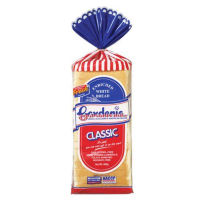
Classic White Bread
The Gardenia Classic White Bread is arguably the brand’s signature product. Gardenia describes it as an all-time favorite made using its special American recipe associated with baker Horatio “Uncle” Slocumm.1
The bread is positioned as an everyday product that can be eaten for breakfast, snacks, sandwiches, or alongside other Filipino meals.
Gardenia’s long-term popularity is strongly connected to the familiarity of its soft white loaf and its positioning as bread that can be enjoyed even without additional fillings. The company has used the Filipino phrase “Masarap kahit walang palaman!” in its marketing.1
Whole-wheat and high-fiber products
Gardenia also maintains a significant health-oriented product category.
Examples include:
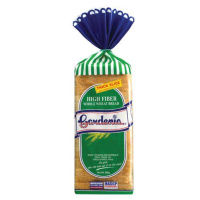
- High Fiber Whole Wheat Bread
- High Fiber Wheat Raisin
- High Fiber Wheat Cranberry
- Other wheat and multigrain products
The company’s High Fiber Whole Wheat Bread is made using wholemeal flour and honey and is positioned toward consumers looking for additional dietary fiber.1
Flavored breads
Another important part of Gardenia’s portfolio is flavored bread.
Examples include:
- California Raisin Loaf
- Chocolate Chip Loaf
- Strawberry and Blueberry Loaf
- Amazing Black Forest Loaf
- Amazing Butterscotch Loaf
- Double Delights varieties
These products allow Gardenia to compete not only as a staple-bread brand but also as a snack and indulgence brand.1
Pandesal and buns
Gardenia also adapted its product range to specifically address Filipino bread preferences.
Its product portfolio includes:
- Pandesal
- Soft Delight Pandesal
- Clustered Pandesal
- Soft buns
- Flavored and filled buns
- Other bakery products
The introduction of Gardenia Pandesal in 2001 was particularly significant because pandesal is one of the Philippines’ most familiar and widely consumed bread products.1
Manufacturing
One of Gardenia’s major distinguishing characteristics is its investment in large-scale automated bread manufacturing.
Its Philippine facilities use modern baking equipment and technology, including equipment sourced from the United States and Europe. Gardenia describes its plants as fully automated and designed to produce large quantities of bread while maintaining consistent quality.1
The production system allows Gardenia to manufacture thousands of loaves per hour.
This scale is important because Gardenia’s business model depends on supplying large numbers of retailers across the country while maintaining consistent product quality and freshness.
Freshness and distribution
Freshness is arguably the central element of Gardenia’s brand identity.
Gardenia operates a distribution system in which bread leaves its manufacturing plants early in the morning and is transported to supermarkets, convenience stores, groceries, and other retailers. The company states that delivery trucks can leave production facilities as early as 4:00 a.m. to distribute freshly produced bread.1
Gardenia also follows a stock-replacement system. Unsold bread is replaced with newly produced bread, supporting the company’s goal of keeping fresh products on store shelves.1
This distribution model is a major competitive advantage because bread is a relatively perishable product. Rather than relying solely on long shelf life, Gardenia has built its business around frequent production and distribution.
The G-lock system
One of Gardenia’s most recognizable packaging innovations in the Philippines is the G-lock.
The G-lock is the plastic clip used to close Gardenia bread bags. According to Gardenia, it was the first such freshness-clip system used by a bread brand in the Philippines. Besides resealing the bag, the clip provides information such as the suggested retail price, expiration date, and batch traceability.1
The color of the G-lock also functions as a seven-day freshness guide, corresponding to the day the bread was produced.
As a result, a small packaging component became part of Gardenia’s brand identity and freshness communication.
Quality and food safety
Gardenia places considerable emphasis on quality control and food safety.
The company has obtained or maintained certifications and accreditations associated with:
- ISO quality-management standards
- HACCP food-safety systems
- Halal certification/accreditation
Gardenia says its quality policy is based on continuous improvement, innovation, food safety, regulatory compliance, and customer satisfaction.1
Its facilities in different parts of the country have also received relevant ISO, HACCP, and Halal certifications at various points in the company’s expansion.1
Brand positioning
Gardenia’s positioning can be summarized around several major ideas:
Freshness
Gardenia strongly associates its brand with bread that is baked fresh and delivered daily.
Quality
The company emphasizes modern manufacturing facilities, quality ingredients, standardized production, and food-safety procedures.
Nutrition
Gardenia offers products ranging from traditional white bread to whole-wheat, high-fiber, multigrain, and other products designed to appeal to health-conscious consumers.
Accessibility
Its extensive distribution network allows Gardenia products to reach consumers throughout much of the Philippines. Gardenia describes its mission as making its products “within sight, within reach and within the hearts” of consumers.1
Familiarity
Gardenia has positioned itself as an everyday household brand rather than a premium specialty bakery. Its products are intended for ordinary occasions such as breakfast, school snacks, sandwiches, merienda, and family meals.
Corporate identity
Gardenia’s official core values include:
- Customer Driven — putting customers first.
- Innovation — encouraging creativity and change.
- Teamwork and Professionalism — operating as one team.
- Integrity — emphasizing honesty and objectivity.
- Excellence — pursuing continuous improvement.
- Stewardship (Malasakit) — treating company resources responsibly.1
Its stated vision is to become a premier company in the baking, food, and beverage industry while delivering products that consumers value and enjoy.1
Corporate social responsibility
Gardenia has also developed programs that extend beyond bread production.
The company began its corporate social-responsibility activities in the early 2000s. Later initiatives included nutrition education, community programs, and activities aimed at helping public-school students and communities.
For example, Gardenia launched its Nutrition Assistance Program in 2013, with the stated goal of helping address malnutrition among public-school students. It has also worked with organizations such as the Philippine Red Cross on nutrition and hygiene education.1
More recently, Gardenia has continued community-oriented initiatives, including projects involving schools and recycled materials. Its official website reported a 2026 donation of recycled-plastic school chairs to an elementary school in Iloilo.1
Gardenia and Filipino culture
Gardenia’s significance in the Philippines goes beyond simply selling bread.
Since its entry into the country in 1998, the brand has become closely associated with everyday Filipino life. Its products appear in common meals and snacks, particularly breakfast and merienda, and the Classic White Bread has become a familiar household product.
Gardenia itself describes its bread as having become part of generations of Filipino families’ routines, memories, and occasions.1
Its popularity can therefore be understood through a combination of:
affordability + availability + consistency + freshness + strong branding + product variety.
Rather than presenting itself exclusively as an artisanal bakery, Gardenia built its identity around making commercially produced bread feel fresh, reliable, convenient, and familiar.
Major timeline
| Year | Major development |
|---|---|
| 1998 | Gardenia Philippines begins operations in Biñan, Laguna |
| 1999 | High Fiber Whole Wheat Bread introduced |
| 2000 | California Raisin and Chocolate Chip loaves introduced |
| 2001 | Gardenia Pandesal launched |
| 2002 | 4K production plant inaugurated |
| 2003 | ISO and HACCP certifications; new bread products launched |
| 2004 | Superbrands recognition and Outstanding Bread Manufacturer award |
| 2005 | Expansion into snack cakes and major distribution facilities |
| 2008 | 10th anniversary in the Philippine bread industry |
| 2009 | First 6K production plant inaugurated |
| 2011 | Cebu/Lapu-Lapu bakery plant inaugurated |
| 2013 | Nutrition Assistance Program launched |
| 2015 | Big Smile Bread Station and Bakers Maison ventures |
| 2016 | Additional Laguna manufacturing expansion |
| 2017 | Delicia Chocolate Spread launched |
| 2018 | Laguna plant receives Halal accreditation; ISO 9001:2015 |
| 2019 | Expansion to Pampanga and Cagayan de Oro |
| 2020 | Clustered Pandesal and Multigrain Soft Bun launched |
| 2021 | E-commerce stores launched; Bakers Maison frozen products expanded |
| 2022 | Gardenia (Philippines) Trading and Distribution Corp. launched |
| 2023 | Gardenia celebrates 25 years in the Philippine bread industry |
| 2026 | Continues expansion of products, community programs, and operations |
The timeline above is compiled from Gardenia Philippines’ official history.1
Business model
Gardenia’s Philippine business model can be thought of as a vertically coordinated, high-volume fresh-bakery system.
The basic process is:
Ingredients → Automated baking → Packaging → Early-morning distribution → Retail stores → Consumers
Its competitive advantage comes from connecting these stages efficiently.
Instead of producing bread in a small number of centralized facilities and distributing it over long distances, Gardenia has expanded its manufacturing footprint geographically. This allows the company to bring production closer to consumers and support frequent deliveries.1
Competitive advantages
Gardenia’s principal strengths include:
-
Strong brand recognition
Gardenia has become one of the most recognizable packaged-bread brands in the Philippines. -
Large manufacturing capacity
Automated plants allow the company to manufacture bread at high volume while maintaining consistency. -
Distribution network
Its extensive delivery operation allows products to reach retailers throughout the country. -
Freshness positioning
Daily production and distribution reinforce Gardenia’s core brand promise. -
Product variety
The brand covers basic white bread, healthy/high-fiber products, flavored bread, pandesal, buns, and snack products. -
Packaging innovation
The G-lock provides both a practical resealing function and a freshness-identification system. -
Food-safety credentials
ISO, HACCP, and Halal-related certifications reinforce consumer confidence.1
Gardenia today
As of 2026, Gardenia Bakeries Philippines continues to describe itself as a leading and fast-growing bread brand in the Philippines. Its official website lists a broad range of breads, buns, snack treats, muffins, and other bakery products, while continuing to emphasize fresh production, quality, nutrition, and accessibility.1
The company has also expanded beyond its original bread business through products and ventures such as Delicia, Bakers Maison, and other bakery and food offerings.1
Gardenia’s evolution therefore represents more than the growth of a single bread product. It is an example of how a modern packaged-food company can combine industrial-scale production, branding, logistics, product innovation, and consumer familiarity to build a powerful position in a national food market.
Gardenia Bakeries (Philippines), Inc. is a Philippine bakery company and part of the wider Gardenia brand associated with Singapore-based QAF Limited. Beginning Philippine operations in 1998 with a modern automated bakery in Biñan, Laguna, Gardenia helped popularize consistently produced, packaged sliced bread in the country. Over the following decades, it expanded its manufacturing facilities, distribution network, and product portfolio to include white bread, whole-wheat and high-fiber breads, flavored loaves, pandesal, buns, and snack products. Its brand identity is strongly built around freshness, quality, nutrition, accessibility, and food safety, with innovations such as the G-lock freshness clip and a nationwide daily distribution system. By its 25th anniversary in 2023, Gardenia had become deeply integrated into everyday Filipino food culture and household consumption.