Shop on Lazada
Nacho King products
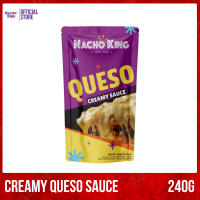
Nacho King Queso Creamy Sauce 240g
₱161.00
Buy on Lazada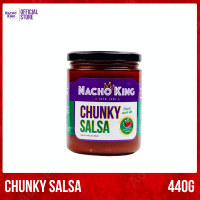
Nacho King Chunky Salsa 440g
₱212.00
Buy on Lazada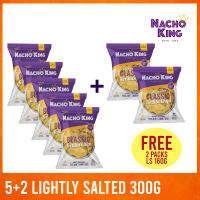
Nacho King 5 Lightly Salted 300g + 2s Lightly Salted 160g
₱860.00
Buy on Lazada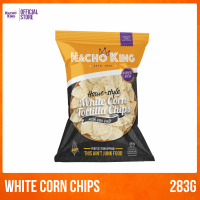
Nacho King Home-Style White Corn Tortilla Chips with Sea Salt 283g
₱145.00
Buy on Lazada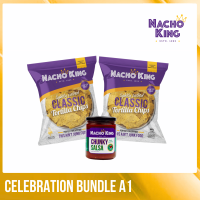
Nacho King Online Exclusive Celebration Bundle A1
₱363.00₱382.00
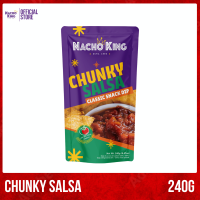
Nacho King Chunky Salsa 240g
₱127.00
Buy on Lazada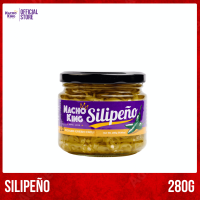
Nacho King Silipeño 280g - Pickled Filipino Green Chili
₱170.00
Buy on Lazada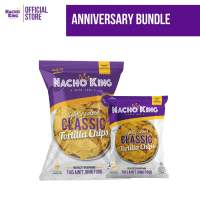
Nacho King Anniversary Bundle Buy 1 Lightly Salted Chips 300g Get 1 Lightly Salted Chips 70g
₱138.00
Buy on LazadaAbout Nacho King
Nacho King, commonly styled as Nacho King!, is a Filipino food and snack brand specializing in nachos, tortilla chips, dips, and other Tex-Mex-inspired products. Founded in 1995, the company grew from a single food cart in a Philippine shopping mall into a nationwide snack brand with a presence in retail, franchising, wholesale, and packaged food.1
Overview
| Field | Information |
|---|---|
| Brand | Nacho King! |
| Company | Nacho King Corporation / historically associated with Emyth, Inc. |
| Industry | Food & beverage / snack foods |
| Founded | 1995 |
| Founders | Mike Singh and Teddy Manotoc |
| Country of origin | Philippines |
| Headquarters | Metro Manila, Philippines |
| Core products | Nachos, tortilla chips, cheese sauces, salsa, dips, flavored chips |
| Business models | Retail, kiosks, franchising, wholesale, packaged snacks |
| Positioning | Filipino-made, accessible Tex-Mex-inspired snacking |
| Official website | nachoking.com |
The brand’s current corporate contact information lists its headquarters in Parañaque City and a Pasig head office.1
History
Origins: 1994–1995
The story of Nacho King began when Mike Singh returned to the Philippines from college in the United States in 1994. While in the U.S., Singh had become familiar with Mexican food and particularly nachos. He and his longtime friend Teddy Manotoc saw an opportunity: Mexican-style food was still relatively uncommon in the Philippines, while shopping malls and the emerging food-cart business were becoming increasingly popular.1
The two entrepreneurs reportedly borrowed several thousand dollars from their parents to start the business. They chose the food-cart format because it required less capital than a conventional restaurant and suited the growing Philippine mall culture.1
In April 1995, the first Nacho King outlet opened at SM North EDSA. According to the company’s account, the opening attracted substantial customer interest, helping establish nachos as a mainstream mall snack in the Philippines.1
Expansion through franchising
After the success of the original outlet, Nacho King began expanding through franchising, with its first franchise reported in 1996. The franchise model allowed the brand to move beyond company-operated locations and establish kiosks and carts in shopping malls and other high-traffic locations.1
This was an important part of Nacho King’s development. Rather than operating solely as a restaurant chain, it became a specialized snack kiosk and food-cart business, making its products available in relatively small spaces and allowing rapid geographic expansion.
Older company and press material describes the brand as eventually reaching dozens and later hundreds of outlets nationwide, although the exact current outlet count is not clearly published on the company’s present website.1
Founders
Mike Singh
Mike Singh is one of Nacho King’s co-founders. His experience living and studying in the United States exposed him to Mexican food and provided the original inspiration for bringing nachos to the Philippine market.1
Teddy Manotoc
Teddy Manotoc co-founded Nacho King with Singh. The two had known each other since their school years and collaborated on developing the food-cart concept, business model, and eventual franchise operation.2
Their partnership is central to the brand’s origin story: two young Filipino entrepreneurs identified an emerging food category and adapted it to the country’s mall-oriented consumer culture.
Business model
Nacho King developed around several complementary business activities.
Food kiosks and carts
The traditional Nacho King format is a mall kiosk or food cart where customers can purchase prepared nachos and related snacks. This format helped distinguish the company from full-service Mexican restaurants.
The brand’s kiosks have historically appeared in malls, department stores, supermarkets, schools, and other high-traffic locations.2
Franchising
Franchising became one of the company’s principal expansion strategies. Nacho King began offering franchises in the mid-1990s and used the model to allow individual entrepreneurs to operate branded outlets.1
This positioned Nacho King within the broader Philippine food-cart franchise industry, alongside other compact-format snack businesses.
Wholesale
Nacho King also developed a wholesale operation. Instead of selling only finished snacks directly to consumers, the company has supplied tortilla chips, nacho products, sauces, and related ingredients for other businesses.2
Packaged retail snacks
More recently, the brand has placed greater emphasis on packaged snacks for home consumption. Its current online shop offers tortilla chips, flavored chips, salsa, dips, and other products that consumers can purchase for home snacking.1
Products
Nacho King’s product portfolio has expanded considerably beyond the basic plate of nachos sold from its original food carts.
Tortilla chips
Current products include:
- Lightly Salted Tortilla Chips
- Home Style White Corn Tortilla Chips with Sea Salt
- Beef Barbacoa Tortilla Chips
- Cheesy Pimiento Tortilla Chips
- Yummy Barbecue flavored chips
The company currently markets both plain tortilla chips and flavored varieties.1
Dips and sauces
The packaged range also includes products such as:
- Chunky Salsa
- Beefy Salsa
- Silipeño
- Cheese-oriented sauces and toppings
These allow consumers to recreate the Nacho King experience outside the traditional kiosk environment.1
Prepared nachos
The original business remains associated with ready-to-eat nachos, generally combining tortilla chips with cheese, meat, salsa, and other toppings.
The company’s earlier product range included corn chips, tacos, tortillas, tostadas, cheese, meat, and salsa.3
Filipino adaptation of Tex-Mex food
One of the most important aspects of Nacho King’s identity is that it isn’t simply a Mexican restaurant transplanted into the Philippines.
The founders took inspiration from Mexican and Tex-Mex food encountered in the United States and adapted the concept to Filipino consumers. The company itself describes its approach as adopting traditional Mexican recipes in ways that suit the Filipino palate.1
This helped create a distinctive position:
Mexican-inspired food presented as an accessible Filipino mall snack.
That distinction is important to understanding the brand’s success. Nacho King didn’t require consumers to visit a specialized Mexican restaurant. Instead, it brought nachos into places where Filipinos were already shopping, watching movies, going to school, or spending time with friends.
Brand identity
Nacho King has traditionally positioned itself around fun, accessibility, indulgence, and social snacking.
The name itself is deliberately playful: “Nacho” immediately communicates the product category, while “King” gives the brand a bold, memorable personality.
Its long presence in Philippine malls has also created a strong nostalgia component. The company explicitly refers to the nostalgic association many Filipinos have with buying Nacho King snacks at malls and cinemas.1
The brand therefore operates on two levels:
- Functional: a convenient source of nachos and tortilla-based snacks.
- Emotional: a familiar Filipino mall-snacking experience.
Shift toward packaged and “better” snacking
A significant part of Nacho King’s more recent evolution has been its attempt to move from being primarily a mall food-cart brand toward becoming a consumer packaged-food brand.
Its current corporate messaging emphasizes:
- Real ingredients
- Locally sourced products
- Supporting Filipino farmers
- Sustainability
- Better-for-you snacking
- Filipino manufacturing
- Home consumption
The company describes its ambition as creating premium, locally sourced snacks while reducing its environmental footprint and supporting local agricultural communities.1
Nacho King’s current positioning therefore differs somewhat from its original image. The classic identity was essentially “the nacho cart at the mall”; the newer strategy is closer to “a Filipino snack brand that you can keep in your pantry.”
Local sourcing and sustainability
Nacho King says that it has increasingly focused on local agricultural sourcing.
According to its corporate materials, the company works with local growers and has initiatives involving guaranteed purchases, premium pricing, financing for seeds and fertilizers, and support for agricultural mechanization.1
It has also discussed reducing dependence on imported or less sustainable inputs and exploring alternatives such as sunflower oil and locally sourced salt.1
This gives the modern brand a second identity beyond Tex-Mex snacking: a Filipino food manufacturer attempting to build a locally integrated supply chain.
Corporate structure
Nacho King has been associated historically with Emyth, Inc., while the current brand presents itself as Nacho King Corporation. Older sources identify Emyth as the corporate entity behind the Nacho King operation, particularly during its earlier franchise and wholesale expansion.4
Current official contact information identifies the business as Nacho King Corporation.1
The brand is privately held rather than a publicly traded corporation.
Intellectual property
Nacho King’s brand identity has also been formally registered in the Philippines.
A publication from the Intellectual Property Office of the Philippines (IPOPHL) records an application for the mark “NACHO KING ESTD. 1995”, filed by Nacho King Corp. in 2020. The listed goods include nachos, tortilla chips, cheese sauce, salsa, and flavored chips.5
The “ESTD. 1995” element reinforces the company’s longstanding Philippine heritage and is now part of the brand’s identity.
Geographic presence
Nacho King originated in the Philippines and built its principal network domestically.
Historically, the company described itself as having nationwide distribution and hundreds of outlets, while its present business also focuses on packaged products distributed through retail channels.2
The company has also pursued international expansion. Historical company information mentions expansion into Asian markets, including Indonesia, and ambitions to enter other neighboring and Middle Eastern markets.2
Because the company’s current public website does not provide a comprehensive international outlet list, the extent of its present overseas retail footprint should be treated separately from these historical expansion announcements.
Nacho King today
Today, Nacho King is best understood not simply as a nacho kiosk but as a multi-channel Filipino snack company.
Its business can be broadly divided into:
- Traditional food service: Ready-to-eat nachos and snacks through kiosks and outlets.
- Franchise business: Entrepreneurs operating Nacho King-branded locations.
- Wholesale: Supply of tortilla chips and related products.
- Consumer packaged goods: Retail bags of tortilla chips, flavored chips, salsa, and dips.
- E-commerce: Direct-to-consumer sales through its online store.1
This diversification allows the company to retain its nostalgic mall identity while reaching consumers in supermarkets and at home.
Cultural significance in the Philippines
Nacho King’s significance goes beyond the food itself.
When it opened in 1995, nachos were not yet a mainstream everyday snack in the Philippines. By putting them into food carts in shopping malls, the company helped make Mexican/Tex-Mex-inspired snacks accessible to a much broader Filipino audience.1
The brand consequently became associated with a particular era of Philippine mall culture: inexpensive snacks, food courts, cinemas, school trips, and casual gatherings with friends.
In that sense, Nacho King can be viewed as one of the early Filipino food-cart pioneers, helping demonstrate how a focused, single-product concept could become a scalable national food business.
Timeline
| Year | Milestone |
|---|---|
| 1994 | Mike Singh returns to the Philippines after studying in the U.S. |
| 1994 | Singh and Teddy Manotoc begin developing their food-cart concept. |
| 1995 | First Nacho King outlet opens at SM North EDSA. |
| 1996 | Nacho King begins franchising. |
| Late 1990s | The business expands its kiosk and franchise network. |
| Late 1990s–2000s | Company develops manufacturing and wholesale capabilities. |
| 2000s | Brand expands beyond nachos into related Tex-Mex products and packaged ingredients. |
| 2010s | Nacho King continues its nationwide franchise/retail presence. |
| 2020 | Nacho King Corporation files the “NACHO KING ESTD. 1995” trademark application.5 |
| 2020s | Brand increasingly emphasizes packaged snacks, e-commerce, local sourcing, sustainability, and home consumption.1 |
| Today | Nacho King operates as a Filipino snack brand spanning prepared food, franchising, wholesale, and packaged retail products. |