Shop on Lazada
HaiDiLao products
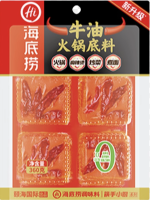
HaiDiLao Hotpot Soup Base - printed date is production date shelf life is 12 months
₱294.00
Buy on Lazada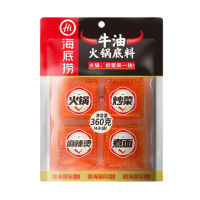
HaiDiLao Hotpot Base Soup Shabu Shabu 220g
₱249.00
Buy on Lazada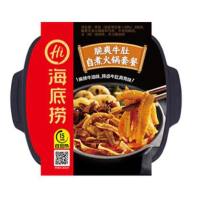
haidilao instant hot pot noodles food Instant self heating Hot Pot Sweet Potato Vermicelli self hea
₱477.00₱500.00
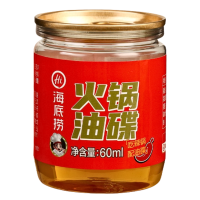
HaiDiLao Hotpot Peanut Sesame Dip 120g
₱85.00₱89.00
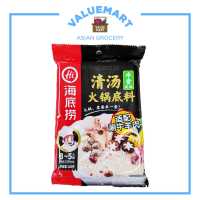
HaiDiLao Premium Hotpot Shabu Shabu Soup Bases - 110 to 220 grams (good for 2-3 persons)
₱174.00₱255.00
![[China No.1] HaiDiLao Instant Hotpot Spicy Broth with Vegetables Hot Spicy Broth with Beef Tomato Broth with Beef 海底捞自煮火锅](https://sg-live-01.slatic.net/p/b906aa99eeafad4f8dcdd19005c07e8d.jpg_200x200q80.jpg)
[China No.1] HaiDiLao Instant Hotpot Spicy Broth with Vegetables Hot Spicy Broth with Beef Tomato Broth with Beef 海底捞自煮火锅
₱649.00₱739.00
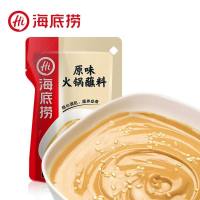
Haidilao Condiments Hot Pot Shabu Shabu Sauce Plain and Spicy Sauce 120g
₱49.00
Buy on Lazada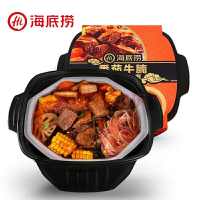
HaiDiLao Self-heating Hotpot Hot Spicy Broth with Beef / Spicy Vegetables / Tomato beef 海底捞自热火锅
₱595.00₱699.00
About HaiDiLao
HaiDiLao (Chinese: 海底捞; pinyin: Hǎidǐlāo) is a Chinese hot-pot restaurant brand best known for its Sichuan-style hot pot, highly attentive customer service, theatrical dining experience, and international expansion. Founded in 1994 in Jianyang, Sichuan, China, HaiDiLao has grown from a small local restaurant into one of the world’s best-known Chinese restaurant brands.1
Note on the company: “HaiDiLao” is primarily the restaurant brand. Its corporate structure has changed over time, particularly after the international business was separated into Super Hi International, while Haidilao International Holding continues to operate the principal HaiDiLao business in Greater China. Thus, restaurant counts and financial figures can differ depending on whether they refer to the brand globally or a particular corporate group.
Basic information
| Item | Information |
|---|---|
| Brand name | HaiDiLao |
| Chinese name | 海底捞 |
| Pinyin | Hǎidǐlāo |
| Industry | Restaurant / food & beverage |
| Specialty | Chinese hot pot |
| Founded | 1994 |
| Place founded | Jianyang, Sichuan, China |
| Founders | Zhang Yong, Shu Ping, Shi Yonghong and Li Haiyan |
| Origin | Sichuan cuisine / Sichuan hot pot |
| Parent/corporate group | Haidilao International Holding and related entities |
| International business | Super Hi International |
| First overseas restaurant | Singapore, 2012 |
| Hong Kong listing | 2018 |
| Core proposition | Hot pot + hospitality + entertainment + social dining |
HaiDiLao’s own history identifies 1994 as the year the HaiDiLao hot-pot restaurant was established in Jianyang, Sichuan. Historical corporate filings trace the business to its first restaurant there and identify the founding team as Zhang Yong, Shu Ping, Shi Yonghong and Li Haiyan.2
Meaning of the name
The Chinese name 海底捞 literally means something like “scoop from the bottom of the sea” or “retrieve from the seabed.”
The expression is associated with the Chinese idiom 海底捞针 (hǎidǐ lāo zhēn), literally “looking for a needle at the bottom of the sea,” which describes something extremely difficult or seemingly impossible.
Interestingly, 海底捞 also has a meaning in mahjong: winning by drawing the final available tile can be referred to as haidilao, making the expression associated with a rare and fortunate outcome.29
The name therefore has a somewhat playful cultural character rather than being a literal description of hot pot.
History
1994 — The beginning
HaiDiLao began in Jianyang, Sichuan Province, in 1994. The company started with a relatively small restaurant and subsequently expanded throughout China.
Sichuan was already famous for hot pot, so HaiDiLao entered a highly competitive restaurant market. Its eventual competitive advantage was not simply the food itself, but the overall customer experience surrounding the food.
The company’s official history records 1994 as the founding year.3
1999 — Expansion beyond Sichuan
In 1999, HaiDiLao expanded outside Sichuan for the first time, opening in Xi’an, Shaanxi.
This marked the beginning of its transformation from a regional Sichuan restaurant into a national Chinese restaurant chain.4
2002 — Zhengzhou
HaiDiLao expanded into Zhengzhou, Henan, continuing its geographic expansion across China.5
2004 — Beijing
The company entered Beijing in 2004, giving it a presence in one of China’s most important restaurant markets.
2006 — Shanghai
HaiDiLao entered Shanghai in 2006.
The expansion into major Chinese cities helped establish the brand as a national chain rather than simply a Sichuan hot-pot restaurant.6
2010–2011 — Building the organization
HaiDiLao increasingly invested in infrastructure beyond restaurants.
In 2010, it launched hot-pot delivery and established Haidilao College, an internal learning and development institution.
In 2011, Shuhai Supply Chain was established, while HaiDiLao also founded a school in Jianyang.
These developments were important because the company’s model increasingly depended on standardization, employee training and supply-chain control, rather than simply opening more restaurants.
International expansion
Singapore — 2012
HaiDiLao’s first overseas restaurant opened at Clarke Quay, Singapore, in 2012.
This was the beginning of its international expansion.7
Singapore was a logical starting point because of its large Chinese-speaking population, strong dining culture and familiarity with Chinese cuisine.
South Korea — 2014
HaiDiLao opened its first restaurant in Seoul, South Korea, in 2014.
Japan — 2015
The company entered Japan in 2015.
United States — 2013
HaiDiLao entered the United States with a restaurant in Los Angeles/Arcadia, marking one of its earliest major Western-market expansions.
Malaysia and other markets
HaiDiLao subsequently expanded throughout Southeast Asia, including Malaysia, Thailand, Vietnam and Indonesia, as well as North America, Europe, Australia and the Middle East.
The international business has become particularly significant in Southeast Asia. As of the end of 2025, the international HaiDiLao business operated 126 restaurants across 14 countries.8
Public listing
A major milestone came in 2018, when Haidilao International Holding was listed on the Hong Kong Stock Exchange.
The company went public as the HaiDiLao restaurant network was undergoing rapid expansion. Its own historical record lists the Hong Kong listing in 2018, alongside the launch of its HaiDiLao app and the opening of its first smart restaurant in Beijing.9
The listing transformed HaiDiLao from a well-known restaurant chain into one of Asia’s most closely watched consumer companies.
Differentiation strategy
HaiDiLao’s biggest distinction is that it sells more than hot pot.
Its business model can be summarized as:
Food + Service + Entertainment + Hospitality + Social experience
Traditional restaurants often compete primarily on food, price or location. HaiDiLao has historically differentiated itself by making customer service part of the product itself.
The company’s stated philosophy emphasizes creating a happy hot-pot experience through carefully selected products and innovative service.10
Service model
HaiDiLao became particularly famous for its unusually attentive service.
Depending on the restaurant and market, customers may encounter services such as:
- Aprons or protective clothing
- Phone bags to protect smartphones
- Hair ties for customers with long hair
- Children’s entertainment
- Complimentary snacks
- Condiment stations
- Birthday celebrations
- Restaurant staff performing dances
- Noodle-pulling demonstrations
- Face-changing performances
- Assistance with taking photographs
- Personalized customer service
Not every service is necessarily offered in every location, and HaiDiLao has adapted its service model to different countries.
The important point is that service itself became part of HaiDiLao’s brand identity.
The company describes its dining experience as combining attentive service, atmosphere and food, while its international business emphasizes balancing standardized operations with local adaptation.
Noodle dance performance
One of HaiDiLao’s most recognizable forms of entertainment is the hand-pulled noodle performance.
A staff member stretches and swings a long piece of dough dramatically before putting the finished noodles into the customer’s hot pot.
It turns food preparation into a small performance.
This is particularly important for HaiDiLao’s international positioning because it gives customers a visible element of Chinese culinary culture, rather than simply serving Chinese food.
The company has also highlighted cultural experiences such as noodle dancing and Chinese opera face-changing as part of its international dining experience.25
Hot pot format
HaiDiLao’s core product is Chinese hot pot.
Instead of receiving a finished dish, diners cook ingredients themselves in a pot of simmering soup placed at the center of the table.
Typical ingredients include:
- Beef and other meats
- Seafood
- Fish
- Dumplings
- Tofu
- Mushrooms
- Vegetables
- Noodles
- Meatballs
- Various sauces and condiments
One of HaiDiLao’s most recognizable features is the ability to select different soup bases, allowing customers at the same table to enjoy different flavors.
The format naturally encourages people to eat, talk and socialize, which fits HaiDiLao’s own positioning of hot pot as a form of social dining.11
Condiment bar
Another important part of the HaiDiLao experience is its self-service sauce and condiment area.
Customers can customize their dipping sauces using different ingredients.
This gives customers a sense of participation and personalization rather than simply receiving a standardized dish.
The condiment experience has consequently become part of the recognizable HaiDiLao dining ritual.
Hospitality philosophy
Perhaps the most important way to understand HaiDiLao is to think of it as a hospitality company disguised as a hot-pot restaurant.
The company has historically emphasized:
Customer satisfaction
as a central operating principle.
Its 2025 corporate materials describe a culture focused on “service and customer centric,” with innovation and attentive service treated as fundamental principles.27
This philosophy affects many parts of the business:
Recruitment → Training → Restaurant management → Service → Customer satisfaction → Brand loyalty
Employee culture
HaiDiLao has also become known for its emphasis on employees.
Its management philosophy has been described in the international business as “aligned interests and disciplined management.”
The underlying idea is that motivated employees are essential to satisfied customers.
The international business says that employee interests are deliberately aligned with the company’s interests and that this approach is intended to encourage bottom-up growth.12
This is significant because a restaurant chain with hundreds or thousands of locations faces a fundamental problem:
How do you make a huge organization behave like a small restaurant where the owner personally cares about every customer?
HaiDiLao’s answer has been extensive employee training, management systems, incentives and standardization.
Standardization versus localization
International restaurant expansion creates a major challenge.
If HaiDiLao changes too much between countries, the brand stops feeling like HaiDiLao.
If it changes too little, local customers may find the restaurant unfamiliar or unsuitable.
The company therefore emphasizes a balance between:
Standardization
Keeping consistent:
- Service principles
- Restaurant operations
- Employee training
- Food-safety procedures
- Supply-chain management
- Brand identity
Localization
Adjusting:
- Menu items
- Ingredients
- Flavors
- Restaurant design
- Marketing
- Customer preferences
- Cultural practices
The international business explicitly describes standardization and localization as central to its international operating strategy.13
Presence in Southeast Asia
Malaysia is an important market for HaiDiLao because hot pot is already deeply familiar to Malaysian consumers and the country has a large Chinese-Malaysian population.
HaiDiLao’s Malaysian restaurants have become part of the country’s modern Chinese dining scene, while also serving customers from many ethnic and cultural backgrounds.
The international HaiDiLao business counts Malaysia among its Southeast Asian markets. In 2025, Southeast Asia accounted for approximately half of the international group’s HaiDiLao restaurant revenue, with Malaysia among the countries in the region.14
For Filipino diners, the brand’s strong foothold in neighbouring Southeast Asian nations underscores its relevance to regional tastes and its growing accessibility within the ASEAN dining landscape.
International scale
The international operation has expanded considerably.
According to Super Hi International’s 2025 annual report, as of 31 December 2025:
- 126 HaiDiLao restaurants
- 14 countries
- 4 continents
- 71 restaurants in Southeast Asia
- 21 in East Asia
- 22 in North America
- 12 in other regions
The international operation served approximately 32 million guest visits during 2025.15
Countries covered included:
Singapore, Thailand, Vietnam, Malaysia, Indonesia, Japan, South Korea, United States, Canada, United Kingdom, Australia, United Arab Emirates, Philippines and Cambodia.16
Global financial performance
For the international HaiDiLao business operated through Super Hi International, 2025 revenue was US$840.8 million, up 8.0% from US$778.3 million in 2024.
Of this:
- US$790.0 million came from HaiDiLao restaurant operations
- US$19.0 million came from delivery
- US$31.8 million came from other businesses
The international restaurants recorded an overall table-turnover rate of 3.9 times per day in 2025.17
These numbers concern the international business, not the entire HaiDiLao operation in Greater China.
Greater China business
The global HaiDiLao brand is considerably larger when its Greater China operations are included.
According to HaiDiLao’s 2025 corporate materials, at the end of 2025 the brand had:
1,383 restaurants globally, consisting of:
- 1,304 self-operated restaurants
- 79 franchised restaurants
The company also operates other restaurant brands under its broader diversification strategy.18
Its 2025 annual results reported total group revenue of approximately RMB43.23 billion.19
This explains why one source might say “HaiDiLao has around 1,300+ restaurants” while another says “HaiDiLao has 126 restaurants”: the latter is referring specifically to the international Super Hi operation outside Greater China.
Expansion challenges (2020–2021)
HaiDiLao experienced extremely rapid expansion before and around the COVID-19 period.
By 2020, its global restaurant count had exceeded 1,000, according to the company’s historical timeline.20
Rapid expansion, however, created operational challenges.
Opening restaurants quickly can lead to:
- Lower-performing locations
- Higher costs
- Difficulty maintaining service standards
- Management complexity
- Overexpansion in certain markets
HaiDiLao subsequently began emphasizing operational efficiency and restaurant optimization, rather than simply maximizing the number of new stores.
This is one reason the company’s later strategy became more focused on the performance of existing restaurants.
Corporate structure
An important corporate development was the separation of HaiDiLao’s international business.
Super Hi International Holding Ltd. became the vehicle for the group’s international HaiDiLao restaurant operations outside Greater China.
The international business traces its overseas operations to the opening of the first Singapore restaurant in 2012.21
This means that:
HaiDiLao = brand
while
Haidilao International / related Greater China operations + Super Hi = different corporate structures operating parts of that brand/business.
This distinction is important when reading financial reports.
Technology
HaiDiLao has also experimented with restaurant technology.
In 2018, the company opened its first smart restaurant in Beijing and launched the HaiDiLao app.9
Technology has been applied to areas such as:
- Ordering
- Customer membership
- Restaurant management
- Supply-chain management
- Operational efficiency
- Digital marketing
However, technology has generally been positioned as a way to support the service experience rather than replace the human element that defines the brand.
Loyalty and membership
Customer loyalty is another major component of HaiDiLao’s business.
The international business reported approximately 8.5 million loyalty-program members at the end of 2025, compared with approximately 3 million at the beginning of 2023.
This illustrates an important evolution of the brand:
From restaurant → to customer community → to broader consumer brand.
Products beyond restaurants
Although HaiDiLao is overwhelmingly associated with restaurants, the brand has increasingly expanded into other food-related businesses.
These include:
- Hot-pot sauces
- Condiments
- Food products
- Ready-to-eat or packaged products
- Delivery
- Other restaurant concepts
The international business reported that revenue from its “other” activities rose strongly in 2025, partly because of HaiDiLao-branded food products and new restaurant concepts.22
Diversification strategy
HaiDiLao has also been diversifying beyond its flagship hot-pot format.
The broader group calls this strategy the “Pomegranate Plan” (红石榴计划).
It involves developing additional restaurant brands and concepts rather than relying entirely on HaiDiLao hot pot.
By the end of 2025, the broader group said its Pomegranate Plan had produced 20 restaurant brands with 207 restaurants.23
The international group separately reported 13 secondary-branded restaurants at the end of 2025.24
Brand image
HaiDiLao’s brand image can be summarized by several characteristics:
🥘 Chinese hot pot
Its fundamental product and cultural identity.
❤️ Service
Perhaps its most famous competitive advantage.
🎭 Entertainment
Noodle dancing, performances and other interactive experiences.
👨👩👧👦 Social dining
Hot pot naturally encourages groups to eat and talk together.
🌏 International Chinese brand
HaiDiLao attempts to introduce Chinese food culture to international consumers.
🧑🍳 Employee empowerment
Employees are considered a critical part of the customer experience.
🔬 Innovation
Technology, new services and restaurant formats are continuously tested.
Cultural ambassador role
One of the more interesting aspects of HaiDiLao’s international development is that it doesn’t simply market itself as a restaurant.
It also presents Chinese cuisine and Chinese dining culture to international customers.
The company’s international business explicitly describes HaiDiLao as an ambassador for Chinese culinary heritage. Its restaurants use experiences such as hand-pulled noodle performances and face-changing to introduce elements of Chinese culture alongside the food.25
In this sense, HaiDiLao is comparable to the way some Japanese restaurant brands have helped popularize sushi or ramen internationally.
Brand valuation and recognition
HaiDiLao has achieved significant international brand recognition.
Its international corporate filings state that Brand Finance has ranked HaiDiLao among the Top 25 Most Valuable Restaurant Brands every year since 2019 and describe it as the first and only Chinese-cuisine restaurant brand to appear on that list.26
This is notable because HaiDiLao is competing for recognition not only against Chinese restaurants but against enormous multinational restaurant brands such as McDonald’s and Starbucks.
Competitive advantage
At first glance, it might seem that HaiDiLao’s advantage is simply its hot pot.
But hot pot itself is relatively easy to imitate.
A competitor can copy:
- Soup bases
- Beef slices
- Noodles
- Condiment bars
- Restaurant layouts
What is much harder to copy is the entire organizational system behind HaiDiLao.
Its competitive advantage is therefore better understood as:
Brand + service culture + employee management + operational standardization + supply chain + customer experience + scale
This is why HaiDiLao is often studied as a management and service-business case, rather than merely as a restaurant chain.
Criticism and challenges
Like any major restaurant company, HaiDiLao has also faced challenges.
The most important include:
High operating costs
Excellent service requires more employees and training than a basic restaurant model.
Maintaining consistency
The bigger the organization becomes, the harder it is to maintain exactly the same experience everywhere.
Overexpansion
Rapid store growth can result in underperforming locations.
International localization
Chinese food preferences cannot simply be transplanted unchanged into every country.
Food safety
A restaurant serving millions of customers must maintain extremely consistent food-safety standards.
Customer expectations
HaiDiLao’s reputation for extraordinary service can itself become a problem: once customers expect exceptional treatment, ordinary service may feel disappointing.
The company has therefore increasingly emphasized operational discipline and restaurant-level performance alongside expansion. Its 2025 international results show continued growth but also a decline in restaurant-level operating margin from 10.1% in 2024 to 8.7% in 2025, partly reflecting investment in employee incentives and enhanced customer experience.27
Timeline
| Year | Milestone |
|---|---|
| 1994 | HaiDiLao founded in Jianyang, Sichuan |
| 1999 | Expanded outside Sichuan to Xi’an |
| 2002 | Entered Zhengzhou |
| 2004 | Entered Beijing |
| 2006 | Entered Shanghai |
| 2008 | Received “Chinese Famous Hot Pot” recognition |
| 2010 | Launched hot-pot delivery; established Haidilao College |
| 2011 | Established Shuhai Supply Chain |
| 2012 | First overseas restaurant opened in Singapore |
| 2013 | Entered United States |
| 2014 | Entered South Korea |
| 2015 | Entered Japan |
| 2017 | Entered Hong Kong |
| 2018 | Listed in Hong Kong; launched app; opened first smart restaurant |
| 2019 | Continued expansion across Asia, Europe, North America and Australia |
| 2020 | Global restaurant count exceeded 1,000 |
| 2022 | International business restructuring/spin-off became increasingly important |
| 2024 | Broader group announced opening of HaiDiLao franchising |
| 2025 | Greater China/global brand reached 1,383 HaiDiLao restaurants; international operation reached 126 restaurants in 14 countries |
Historical milestones are based primarily on HaiDiLao’s official corporate history and its 2025 filings.28
References
- 品牌故事
- SUPER HI INTERNATIONAL HOLDING LTD._December 31, 2025
- Haidilao
- Brand story
- About Haidilao
- SEC
- SEC
- SUPER HI INTERNATIONAL HOLDING LTD. – Annual Report 2025 | FinancialFilings
- Super Hi International Holding Ltd. (via Public) / ANNOUNCEMENT OF ANNUAL RESULTS FOR THE YEAR ENDED DECEMBER 31, 2025 (Form 6-K)
- SEC Filing
- Haidilao International Holding Ltd. – Earnings Release 2025 | FinancialReports.eu
- Haidilao International Holding Ltd 2025 Annual Report – Free PDF
- Zhang Yong & Shu Ping
- sec.gov
- sec.gov
- sec.gov
- sec.gov
- sec.gov
- Shu Ping (Singapore Billionaire) – Wiki.sg
- Meals And Manicures: Inside A Billionaire’s Booming—And Unconventional—Restaurant Empire
- Hot Pot Hospitality: Haidilao Chain Creates The World’s Richest Restaurant Magnate
- 业绩报告
- 关于海底捞
- 海鸿达(北京)餐饮管理有限公司
- 海鸿达(北京)餐饮管理有限公司
- 关于海底捞
- 关于海底捞
- 海鸿达(北京)餐饮管理有限公司
- 海底捞 _ 百科