Shop on Lazada
Jell-O products
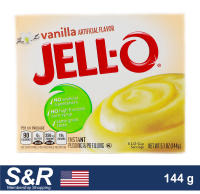
Jell-O Vanilla Instant Pudding & Pie Filling Mix 144g
₱146.00
Buy on Lazada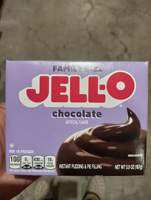
Jell-O Vanilla Instant Pudding and Pie Filling Mix 144g
₱235.00
Buy on Lazada
Jell-O Gelatin Dessert & Pudding 85g / 144g / 167g – Sweet & Fun Dessert Treats
₱209.00₱249.00
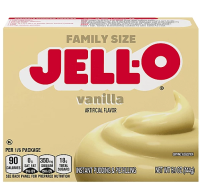
Jell-O Vanilla Flavor Instant Pudding & Pie Filling From USA (144g)
₱329.00₱389.00
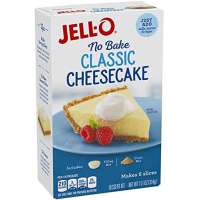
Jell-O No Bake Classic Cheese Cake Mix (314g)
₱471.00
Buy on Lazada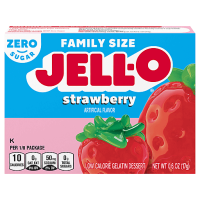
Jell-O Family Size Strawberry Sugar Free Gelatin Dessert Mix 0.6oz 17g {USA}
₱329.00₱389.00
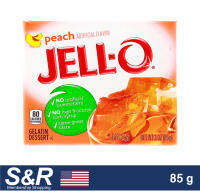
Jell-O Peach Gelatin Dessert 85g
₱95.00
Buy on Lazada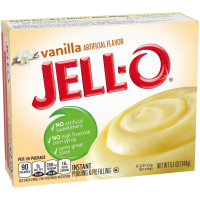
Jell-O Vanilla Flavor Instant Pudding and Pie Filling made in USA 144g
₱209.00₱299.00
About Jell-O
Jell-O is an American food brand best known for its flavoured gelatin desserts, puddings, and related dessert mixes. Introduced in 1897, it became one of the most recognisable packaged-dessert brands in the United States and helped transform gelatin from an elaborate, time-consuming dish into an inexpensive convenience food. Today, Jell-O is owned by The Kraft Heinz Company.1 National Museum of American History
Brand overview
| Attribute | Details |
|---|---|
| Brand name | Jell-O |
| Founded / introduced | 1897 |
| Country of origin | United States |
| Place of origin | Le Roy, New York |
| Original creator | Pearle B. Wait and May Wait |
| Original product | Flavoured powdered gelatin dessert |
| Current owner | The Kraft Heinz Company |
| Major categories | Gelatin desserts, pudding, dessert mixes |
| Best-known characteristic | Colourful, flavoured gelatin with a distinctive “jiggle” |
| Historical significance | One of America’s best-known packaged dessert brands |
Kraft Heinz itself includes Jell-O among its significant North American trademarks.2
History
Before Jell-O
Gelatin desserts existed centuries before Jell-O, but preparing gelatin traditionally required considerable work. Cooks often had to extract gelatin from animal connective tissues and bones, clarify it, flavour it, mould it, and chill it.
A major technological step came in 1845, when inventor Peter Cooper patented powdered gelatin. Powdered gelatin made the ingredient considerably more convenient, although Cooper’s product did not become a major commercial success.1
Creation of Jell-O
In 1897, Pearle B. Wait, a businessman in Le Roy, New York, acquired the powdered-gelatin concept and developed a flavoured version. Together with his wife, May Wait, he added fruit flavours and created what became known as Jell-O. The Smithsonian identifies 1897 as the year Wait flavoured the gelatin and gave it the Jell-O name.1
The original flavours included strawberry, raspberry, orange, and lemon.3
Wait initially struggled to turn the product into a successful business. In 1899, he sold the Jell-O business to Francis Woodward, head of the Genesee Pure Food Company, for $450. Woodward invested heavily in advertising and promotion and was instrumental in turning Jell-O into a national brand.1
The rise of a national brand
Woodward’s strategy went beyond simply selling boxes of gelatin. The company taught consumers how to use Jell-O, distributing recipe booklets and promoting it through advertising.
This was particularly important because consumers had to understand that Jell-O was not merely something to eat as a simple dessert. It could be used in moulded dishes, salads, elaborate desserts, and numerous recipes.
By the early 20th century, Jell-O had become strongly associated with American household cooking. The Virginia Tech Special Collections archive notes that recipe booklets began appearing in 1902, while advertising characters such as the “Jell-O Girl” appeared by 1904.4
Advertising eventually became one of the brand’s defining strengths. Jell-O’s popularity accelerated dramatically during the 20th century, and radio personalities—including comedian Jack Benny—helped promote the product during its expansion.5
What made Jell-O different?
Jell-O’s fundamental innovation was not the invention of gelatin itself. Rather, it combined several elements:
- Powdered gelatin, eliminating much of the traditional preparation.
- Pre-measured flavouring and sweetening, making preparation simple.
- Bright colours, making the finished dessert visually distinctive.
- Recipe marketing, showing consumers how versatile the product could be.
- Mass advertising, turning an ordinary food ingredient into a recognisable brand.
The result was a dessert that could be prepared relatively easily at home while still looking elaborate.
How Jell-O works
The characteristic texture of Jell-O comes from gelatin, a protein derived from collagen.
When gelatin powder is dissolved in hot water, its protein chains separate. As the mixture cools, the chains form a network that traps water. This produces the soft, elastic structure responsible for Jell-O’s famous jiggle. The process is also thermoreversible: sufficiently warming the gelatin can cause the structure to break down and become liquid again.5
This physical property also made Jell-O particularly useful for moulded desserts.
Product categories
Although gelatin remains the product most strongly associated with the name, Jell-O has expanded considerably beyond its original format.
Gelatin desserts
The classic Jell-O product is a flavoured gelatin mix that is dissolved in hot water and chilled until it sets.
The brand has historically offered numerous fruit-inspired flavours and variations, allowing consumers to eat it plain or incorporate it into more elaborate recipes.
Ready-to-eat gelatin
Jell-O also sells prepared gelatin in individual containers, eliminating the need for consumers to mix and refrigerate the product themselves.
Pudding
Jell-O developed a significant pudding business as well. Its pudding products include both instant pudding mixes and ready-to-eat formats.
The company states that Jell-O’s first pudding flavour dates to the 1930s, and chocolate remains an important flavour for the brand.6
Dessert and pie mixes
The broader Jell-O portfolio has included various dessert mixes and products intended for home preparation.
Ownership and corporate history
Jell-O passed through several corporate structures during its history.
After Pearle Wait sold the brand to Francis Woodward in 1899, the Genesee Pure Food Company became an important force behind its commercialisation. Jell-O subsequently became part of increasingly large food companies as the American packaged-food industry consolidated.
Eventually, Jell-O became part of Kraft Foods. Kraft’s corporate restructuring placed Jell-O alongside other major packaged-food brands, including Cool Whip and Jet-Puffed.6
Following the creation of The Kraft Heinz Company in 2015, Jell-O became part of the Kraft Heinz portfolio. Kraft Heinz continues to identify Jell-O as one of its major North American trademarks.2
Jell-O and American culture
Jell-O became much more than a grocery product. During the 20th century, it became an element of American popular culture.
Its distinctive combination of bright colours, transparency, moulded shapes, and wobbly texture made it especially recognisable. Jell-O moulds became a particularly notable part of mid-century American cooking.
The Smithsonian’s National Museum of American History, for example, holds historical Jell-O packaging as well as gelatin moulds associated with the product.7
Jell-O has consequently been discussed not just as a food but as a subject of advertising history, domestic culture, design, and American culinary history. The Smithsonian even hosted a conference devoted to Jell-O history in 1991.5
The “Jell-O” name
An interesting aspect of the brand is the relationship between Jell-O as a trademark and jello/jelly as generic descriptions of gelatin desserts.
The capitalisation and hyphenation—Jell-O—refer specifically to the brand. The product category itself is commonly called gelatin dessert or, informally in American English, jello.
This is an example of a highly recognisable brand name becoming closely associated with the entire product category in everyday speech.
Modern Jell-O
Jell-O remains part of Kraft Heinz’s U.S. dessert portfolio, but the brand has been adapting to changing consumer preferences.
In 2025, Kraft Heinz introduced JELL-O Oat Milk Chocolate Pudding, its first plant-based Jell-O pudding. The product is described by Kraft Heinz as vegan, lactose-free, and gluten-free.6
Then in May 2026, Kraft Heinz announced JELL-O Simply, a new line designed around simpler ingredients. The ready-to-eat gelatin uses real fruit juice and 25% less sugar than the original sugar-based gelatin snacks, while the new line avoids FD&C colours and artificial sweeteners. Kraft Heinz announced additional JELL-O Simply gelatin and pudding mixes for nationwide availability in August 2026.6
This represents an evolution wherein the brand attempts to preserve the recognisable colourful, fun, jiggly identity of Jell-O while responding to contemporary interest in ingredient lists, sugar reduction, and alternative foods.
Brand identity
Jell-O’s identity can essentially be summarised around four ideas:
Fun. Its unusual texture and bright appearance make it inherently playful.
Convenience. Powdered mixes transformed gelatin from a complicated culinary project into something ordinary households could prepare easily.
Family and nostalgia. Generations of Americans have encountered Jell-O at family meals, parties, school events, and holiday gatherings.
Versatility. The product can be eaten on its own but can also become an ingredient in desserts, salads, moulded dishes, and creative recipes.
The brand’s own modern communications continue to emphasise its “signature jiggle”, colourful appearance, and family-oriented appeal.6
Historical timeline
- 1845 — Peter Cooper patents powdered gelatin.1
- 1897 — Pearle B. Wait develops and names Jell-O in Le Roy, New York.1
- 1899 — Wait sells Jell-O to Francis Woodward for $450.1
- 1902 — Jell-O recipe booklets help introduce consumers to the product’s possibilities.4
- 1904 — The “Jell-O Girl” becomes part of the brand’s advertising.4
- 1920s — Jell-O experiences major growth, aided by extensive advertising and radio promotion.5
- 1930s — Jell-O expands into pudding; chocolate becomes one of its pudding offerings.6
- Late 20th century — The brand becomes part of the Kraft Foods portfolio.
- 2015 — Jell-O becomes part of the Kraft Heinz portfolio following the Kraft/Heinz merger.
- 2018 — Kraft Heinz introduces JELL-O Play, a line of gelatin-based toys.6
- 2025 — JELL-O launches oat-milk chocolate pudding, entering plant-based desserts.6
- 2026 — JELL-O Simply launches with no FD&C colours or artificial sweeteners and reduced sugar in its ready-to-eat gelatin.6
Significance
Jell-O’s importance lies in how effectively it industrialised and popularised a traditional dessert. Gelatin had existed for centuries, and powdered gelatin existed before Jell-O. What Jell-O accomplished was turning flavoured gelatin into a mass-market consumer brand.
It combined food technology with aggressive advertising, recipe education, recognisable packaging, and an unusually distinctive physical appearance. More than a century later, the brand remains recognisable enough that its name has become closely associated with gelatin desserts themselves.
In that sense, Jell-O is not simply a dessert brand. It is an example of how branding, convenience food technology, advertising, and American household culture can combine to create a lasting consumer icon.1
References
- Jell-O Shipping Crate | National Museum of American History
- khc-20241228
- Jell-O
- Jell-O Company · More Than Just a Dessert: America’s Gelatinous History · VT Special Collections and University Archives Online
- The Joys of Jell-O
- The Kraft Heinz Company – JELL-O Unveils First-ever Plant-based Chocolate Pudding
- Jell-O Shipping Crate | Smithsonian Institution