Shop on Lazada
Julie’s products
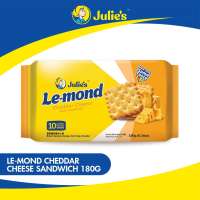
Julies Le-mond Cheddar Cheese 180g
₱134.00₱149.00
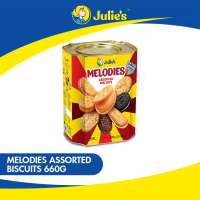
Julies Melodies Assorted Biscuits 660g Sweet
₱437.00₱485.00
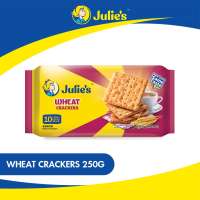
Julies Wheat Crackers 250G
₱134.00₱149.00
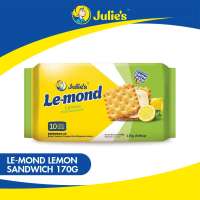
Julies Le-mond Lemon 170g
₱134.00₱149.00
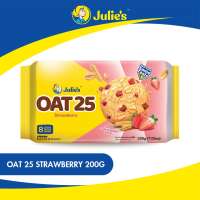
Julies Oat 25 Strawberry 200g
₱134.00₱149.00
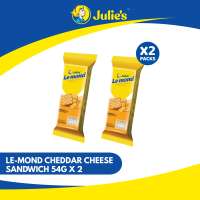
Julies Lemond Cheddar Cheese Puff Sandwich 54g X 2 Packs
₱31.00₱62.00
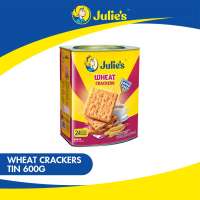
Julies Wheat Crackers Tins 600g
₱437.00₱485.00
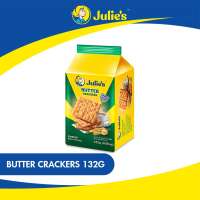
Julies Butter Crackers 132G
₱44.00₱49.00
About Julie’s
Overview
Julie’s Manufacturing Sdn. Bhd., widely recognized by its consumer brand Julie’s, is a Malaysian food manufacturer headquartered in Alor Gajah, Melaka. The company is best known for its distinctive packaging featuring a mascot named Julie, as well as a diverse product lineup that includes peanut butter sandwich biscuits, cream crackers, wafer rolls, and oat cookies. Julie’s reports that its products are sold in more than 80 countries, establishing a significant international footprint for a Malaysian food brand.1
| Field | Information |
|---|---|
| Brand name | Julie’s |
| Company | Julie’s Manufacturing Sdn. Bhd. |
| Industry | Food manufacturing / biscuits and snacks |
| Country of origin | Malaysia 🇲🇾 |
| Headquarters | Alor Gajah, Melaka, Malaysia |
| Founder | Su Chin Hock |
| Brand introduced | 1985 |
| Main products | Biscuits, cookies, crackers, wafers, waffles |
| Market | Malaysia and international markets |
| International presence | 80+ countries |
| Ownership | Privately held |
Regarding the company’s founding date, sources occasionally cite 1981 as the origin of the manufacturing business, while Julie’s officially recognizes 1985 as the launch year of the Julie’s brand. This distinction separates the establishment of the production facility from the formal marketing of the consumer brand.2
History
Origins
The history of Julie’s is intrinsically linked to its founder, Su Chin Hock, an entrepreneur from Melaka. Manufacturing operations commenced in the early 1980s with a modest production setup. According to the Malaysia External Trade Development Corporation (MATRADE), the business started with a single plant and approximately 200 employees before expanding into a major biscuit manufacturer.
Su identified a gap in the Malaysian market, which was then heavily reliant on imported biscuits. His objective was to create a locally manufactured product capable of competing on quality and suitable for international export.3 The Julie’s brand was officially introduced in 1985, coinciding with the company’s entry into export markets. While initially focused on crackers, the portfolio gradually expanded to include sandwich biscuits, wafers, cookies, and other snack varieties.4
Early growth
In its formative years, Julie’s employed a direct sampling strategy rather than relying solely on traditional advertising. By distributing samples directly to consumers, the company allowed the product quality to drive brand adoption. MATRADE has described this approach as gradual but effective in establishing the brand within the domestic market.5
Following this initial success, the company scaled both its manufacturing capacity and export network. Production grew from a few lines to multiple large-scale facilities. Julie’s notes that its manufacturing site expanded from its original footprint to occupy approximately 2 hectares, though other corporate materials have described the operational scale as significantly larger over time.6
Brand identity
The name and mascot
The name Julie’s was chosen for its memorability and international appeal. The brand’s visual identity centers on a young girl named Julie, who is not based on any specific real person but serves as the brand’s mascot. The blonde-haired character became a defining element of the packaging, helping distinguish Julie’s products on retail shelves.7
For decades, the original depiction of Julie was traditional, friendly, and modest, reinforcing brand values associated with family and sharing. In 2020, the company executed a comprehensive brand refresh. The character was redesigned with a shorter bob haircut and a red-and-blue headband, while her posture and expression were updated to convey confidence, energy, and modernity.8 This redesign aimed to retain brand familiarity while increasing relevance among younger demographics.
“Bridge the world”
Contemporary brand identity focuses on connecting people through food. The official vision states: “We’re building a more open world, where people from all backgrounds share a bite and share a moment.” Biscuits are positioned as catalysts for connection among family, friends, and communities, encapsulated by the tagline “Julie’s. Bridge the world.” This marks a strategic shift from marketing biscuits merely as food items to framing them as part of social and emotional experiences.
Products
Julie’s maintains a broad portfolio rather than relying on a single flagship item. Current official product categories include:9
- Sandwich biscuits: Among the brand’s most recognized products, particularly the Peanut Butter Sandwich variety.
- Crackers: A range of savory options including classic cream and flavored varieties.
- Oat cookies: Oat-based biscuits positioned as everyday snacks.
- Wafer rolls: Includes the well-known Love Letters rolled wafer product line.
- Wafer cubes: Bite-sized wafer products in cube form.
- Assorted biscuits: Mixed packs designed for sharing and entertainment.
- Waffles: Waffle-style products within the broader snack range.
- Stick biscuits and other formats: Various biscuit shapes and flavors beyond the original cracker focus.
Corporate materials have previously cited the portfolio as exceeding 100 varieties, though the exact count fluctuates with new launches, reformulations, and discontinuations.10
Major product ranges
Products have been organized into several key ranges over time, including:
- Sandwich Range
- OAT 25
- Le-mond
- Crackers
- Love Letters
- Assorted Biscuits
- Decadent
- Charm
The Charm range was launched in 2023 as a dessert-inspired line featuring Double Chocolate and Tiramisu flavors, representing a move toward more indulgent and contemporary biscuit concepts.
Manufacturing and quality
Food safety and manufacturing standards are central to the corporate identity. Julie’s manufacturing operations have secured various internationally recognized certifications, including:
- ISO 9002
- ISO 9001:2000
- HACCP
- GMP
- OHSAS 18001
- ISO 22000
- FSSC 22000
Additionally, products are Halal certified, including certifications recognized by Malaysian and Indonesian authorities.11 These credentials support the brand’s ability to meet diverse regulatory requirements and consumer expectations across international markets.
International expansion
While fundamentally a Malaysian brand, exports have been integral to Julie’s development since the brand’s inception in 1985. Products are currently distributed across Southeast Asia, East and wider Asia, the Middle East, Africa, North America, and other regions, reaching over 80 countries.12
Unlike brands that position themselves primarily as local products available abroad, Julie’s branding, packaging, and product development have been deliberately designed for cross-market appeal.
Corporate philosophy
Julie’s operates under four core values:
- Passion: Employees are encouraged to approach production with enthusiasm, fostering a familial workplace culture.
- Integrity: Emphasis on consistency, quality, and continuous improvement in baking processes.
- Conscience: Prioritizing food safety, cleanliness, and consumer welfare.
- Accountability: Taking responsibility for ingredients, manufacturing, and finished goods.13
The company’s stated mission is: “We conduct our business with conscience to benefit all.”14
The 2020 rebranding
A pivotal moment in the brand’s modern history occurred in 2020 with a comprehensive transformation. After three decades of traditional branding, the company updated its logo, mascot appearance, packaging, visual language, and messaging. The new design featured colorful rays surrounding the Julie character to communicate energy and optimism.15 This initiative sought to modernize a familiar household name without abandoning its heritage.
Marketing and recognition
Packaging plays a critical role in brand recognition. The combination of the Julie mascot, distinctive typography, vibrant colors, and recognizable biscuit shapes allows products to be identified instantly. Following the 2020 rebranding, the company released creative content such as the short film “Operation Maybe” to reinforce the updated personality.16 Consequently, Julie’s occupies a space between a traditional food manufacturer and a consumer lifestyle brand, particularly in Malaysia and neighboring Asian markets.
Food safety crisis
In 2008, Julie’s was impacted by the global melamine contamination scandal involving tainted ingredients. The company initiated product recalls and destruction, resulting in significant financial and reputational challenges.17 In response, Julie’s strengthened its quality control systems. Subsequent certifications, including HACCP and FSSC 22000, reflect the company’s commitment to enhanced food safety management following this incident.18
Cultural significance
In Malaysia, Julie’s has transcended its role as a mere biscuit manufacturer to become a cultural staple. Products are commonly found in homes, schools, offices, and during festive occasions. The brand carries significant nostalgia value for consumers who grew up with the original packaging. However, the company actively counters being perceived solely as a nostalgia brand through continuous innovation and visual updates.
Company development timeline
- Early 1980s: Manufacturing business established under Su Chin Hock.19
- 1985: Julie’s brand launched; export operations begin.20
- 1990s–2000s: Expansion of production capacity, management systems, and product range.
- 2000: Substantial upgrading of manufacturing operations.
- 2002–2005: HACCP certifications obtained.21
- 2007: Additional food safety and occupational health certifications achieved.22
- 2008: Impact from melamine contamination crisis and subsequent recalls.23
- 2015: Transition toward FSSC 22000 food safety certification.24
- 2020: Major corporate rebranding and mascot redesign.25
- 2021: Continued modernization; public emphasis on international ambitions.26
- 2023: Launch of the dessert-inspired Charm biscuit range.27
- 2026: Operations continue as an international brand with presence in over 80 countries.28
References
- About Us – Julie’s
- MEDIA RELEASE
- Julie’s Biscuits is Out to Conquer The World – Julie’s Manufacturing Sdn Bhd – MCMTC
- Julie’s “What’s Your Love Letter?” Chinese New Year Campaign 2019 – Julie’s
- Achievements – Julie’s
- Julie’s
- Julie’s
- MEDIA RELEASE
- Case Study : Julie’s Manufacturing Sdn. Bhd. (Su Chin Hock) / Muhamad Syamir Saifulizan – UiTM Institutional Repository
- A brand refreshed | The Star
- Brand Story – Julie’s Brandmart
- Showcase – Julie’s Brandmart
- Biscuits – Julie’s Brandmart
- Office – Julie’s Brandmart
- Website – Julie’s Brandmart
- Guidelines – Julie’s Brandmart
- Your Julie’s – Julie’s
- 关于我们 – Julie’s
- JULIE’S –
- Julie’s Biscuits | LinkedIn
- Julie’s Biscuits | LinkedIn
- JULIE’S –
- Case Study on Food Microbiology: Julie’s Manufacturing (MIC 254) – Studocu
- Business Model Canvas Analysis of Julie’s Manufacturing Sdn Bhd (N5IM1105C) – Studocu
- JULIE’S MANUFACTURING SDN. BHD. | Global Halal Market- The Japan Times
- JULIE’S MANUFACTURING SDN BHD Products in Malaysia – trade42.com.my
- Julie’s Biscuit – Term Paper
- 网上展厅