Shop on Lazada
Three Squirrels products
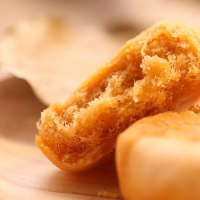
Three Squirrels Souffle Pancake/Pork Floss Puff 1pc 三只松鼠 雪芙蕾/肉松饼
₱29.90₱35.00
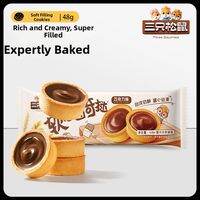
Three Squirrels | Soft Chocolate Banana Milk Pudding Filling Cookies
₱392.00₱592.00
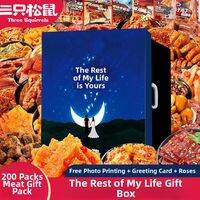
Three Squirrels | Gift Giant Box Snack Package
₱2,928.00₱4,074.00

Three Squirrels | Healthy Dried Fruit and Vegetable Chips 250g
₱665.00₱885.00
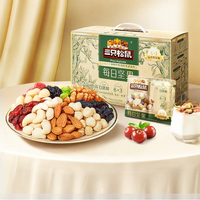
Pregnant-friendly Mixed Nuts 750g
₱1,195.00
Buy on Lazada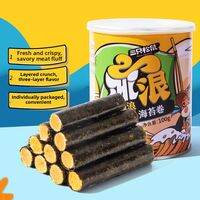
Three Squirrels | Seaweed Roll with Meat Floss Center Healthy Snack 100g
₱972.00₱1,145.00
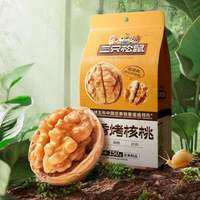
Roasted Milk Flavored Walnut 150g
₱530.00₱847.00
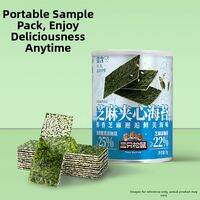
Three Squirrels | Sesame Flavored Seaweed Sandwich Crisps 75g
₱363.00₱575.00
About Three Squirrels
Overview
Three Squirrels (Chinese: 三只松鼠; pinyin: Sān Zhī Sōngshǔ) is a prominent Chinese consumer food company and snack brand best known for its nuts, dried fruits, and packaged leisure foods. Founded in 2012 in Wuhu, Anhui Province, by Zhang Liaoyuan (章燎原), the company initially gained national recognition as an internet-native brand by leveraging e-commerce, distinctive packaging, cartoon mascots, and a highly personalized customer service style.1
Today, Three Squirrels is operated by Three Squirrels Inc. (三只松鼠股份有限公司), a publicly listed company traded on the Shenzhen Stock Exchange’s ChiNext board under stock code 300783. The business has evolved from an online nut retailer into a multi-category, omnichannel snack food enterprise with integrated manufacturing, branding, retail, distribution, and supply chain operations.
The company describes its current strategic positioning as “全品类+全渠道” (“all-category + all-channel”), supported by a unified manufacturing, brand, and retail strategy.2
Basic Information
| Item | Information |
|---|---|
| Chinese name | 三只松鼠 |
| English name | Three Squirrels |
| Pinyin | Sān Zhī Sōngshǔ |
| Company | 三只松鼠股份有限公司 / Three Squirrels Inc. |
| Founded | 2012 |
| Founder | Zhang Liaoyuan (章燎原) |
| Headquarters | Wuhu, Anhui, China |
| Industry | Packaged food / snacks / consumer goods |
| Core category | Nuts and nut-based snacks |
| Stock code | 300783.SZ |
| Listed | Shenzhen Stock Exchange, ChiNext |
| IPO | July 12, 2019 |
| Major brand | Three Squirrels |
| Other major brand | Deer Blue / 小鹿蓝蓝 |
| Business model | Brand + product + manufacturing + retail + omnichannel |
| Current strategic positioning | “All-category + all-channel” food business |
Origins and Early Growth
Three Squirrels was established in February 2012 in Wuhu, Anhui, by Zhang Liaoyuan and a five-person founding team. The company’s initial proposition was to sell nuts and snack foods directly to consumers through China’s rapidly expanding e-commerce market. At the time, the packaged snack sector was dominated by traditional manufacturers and offline retail; Three Squirrels differentiated itself by building a consumer brand around the entire shopping experience rather than treating nuts as a generic commodity.
In April 2012, the company received an angel investment of US$1.5 million from IDG Capital. It began operating on Taobao/Tmall in June of that year, reaching 1,000 orders within its first seven days and becoming the top seller in Tmall’s nut category just 65 days after launch. Its first Double 11 promotion in November 2012 generated approximately RMB 7.66 million in sales, placing it at the top of the food category.
This early success established the brand’s foundational formula: Nuts + e-commerce + distinctive packaging + character/IP + customer experience.
Brand Identity and Customer Culture
Name and Mascots
The name “Three Squirrels” is intrinsically linked to the company’s core product category, as squirrels naturally evoke associations with nuts and food storage. Instead of a conventional corporate logo, the brand built its identity around three cartoon characters identified as 小贱 (Xiao Jian), 小美 (Xiao Mei), and 小酷 (Xiao Ku). These characters are presented as pets from an imaginary “Squirrel Planet,” transforming packaged nuts into a recognizable, character-driven consumer brand.4
“Master Culture”
A defining innovation of Three Squirrels is the concept of “主人文化” (Master Culture), introduced in 2012. In this fictional relationship framework, customers are addressed as “主人” (zhǔrén), meaning “master” or “owner,” while the brand acts as cute pets serving them. This approach was designed to make interactions more personal and entertaining compared to standard transactional language. By making customers feel personally served by a character, Three Squirrels positioned itself as an experience-oriented internet brand rather than merely a food manufacturer.5
Packaging and Visual Identity
Three Squirrels is widely recognized for its playful packaging, which typically features large cartoon squirrels, bright colors, humorous copy, speech bubbles, and personalized messages. Unlike traditional snack brands where packaging simply contains the product, Three Squirrels uses packaging to communicate brand personality and facilitate storytelling. This visual identity was central to the company’s early growth, creating a direct emotional connection between the character IP and the consumer.
Business Model Evolution
Internet-Native Phase (2012–mid-2010s)
Born on the internet, Three Squirrels capitalized on the growth of Taobao, Tmall, JD.com, mobile commerce, and livestreaming to reach nationwide audiences without a physical store network. Sales grew from RMB 7.66 million during Double 11 in 2012 to RMB 356.2 million in 2013. In 2013, the company secured a US$6.17 million Series B investment from Capital Today and IDG Capital to fund logistics and infrastructure expansion.
Transition to Branded Food Company
Over time, the company moved beyond simple online resale to control key parts of the value chain, including product development, quality control, packaging, logistics, and supply chain management. This marked a critical transition from an internet snack seller to a comprehensive branded food company.
Omnichannel Strategy (2020s–present)
While e-commerce remains vital, reliance on online platforms created challenges as the retail landscape evolved. Three Squirrels has since expanded its offline distribution system to include supermarkets, convenience stores, specialty retailers, distributors, and company-operated formats such as “国民零食店”, “生活馆”, and mini stores. The current “all-category + all-channel” model integrates online and offline retail with proprietary manufacturing capabilities.3
Product Portfolio
Although nuts remain the strategic core, Three Squirrels has diversified into a broad snack ecosystem.
Nuts
Nuts continue to be the primary category, with numerous products generating annual sales exceeding RMB 100 million. Key offerings include daily mixed nuts, macadamia nuts, pistachios, cashews, almonds, pecans, peanuts, walnuts, chestnuts, and other tree nuts.
Daily Nuts
The 每日坚果 (Daily Nuts) concept packages convenient portions of mixed nuts for everyday consumption, shifting nuts from an occasional gift item to a daily health snack. This product line has achieved billion-yuan level sales and underscores the brand’s positioning as a provider of accessible, healthier food options.2
Other Categories
- Dried fruits: Dried mango, fruit mixes, raisins, and processed fruit snacks.
- Traditional snacks: Sachima, egg yolk pastries, bread, cookies, cakes, chicken snacks, jerky, shredded meat, braised foods, chicken feet, and quail eggs.
- Beverages: Nut-based beverages, AD calcium drinks, eight-treasure porridge, and other food products.
Manufacturing and Supply Chain
Three Squirrels has increasingly integrated manufacturing into its business model, moving away from pure outsourcing. The company pursues a “one product, one supply chain” strategy and has developed multiple regional manufacturing bases. In addition to core nut processing, facilities now produce sachima, noodles, biscuits, cookies, and baked snacks. This vertical integration allows for greater control over raw material sourcing, quality consistency, production costs, and new product development speed.7
Sub-brands
Beyond its flagship label, Three Squirrels has launched 小鹿蓝蓝 (Deer Blue), a children’s healthy snack brand established in 2020. Deer Blue leverages the parent company’s branding and distribution capabilities to target a distinct demographic. According to 2025 reporting, Three Squirrels-branded products accounted for approximately RMB 9.117 billion (89.48% of total revenue), while Deer Blue generated approximately RMB 833 million (8.17%).4
Financial Performance and Market Position
Three Squirrels went public on the Shenzhen Stock Exchange’s ChiNext board on July 12, 2019, issuing 41 million shares at RMB 14.68 per share and raising approximately RMB 6.02 billion. Prior to listing, its 2018 revenue was approximately RMB 7.001 billion with a net profit of RMB 303.86 million. The IPO was notable as the first A-share listing for a leisure-food e-commerce company in China.1
For the full year 2025, the company reported:
| 2025 Indicator | Result |
|---|---|
| Revenue | RMB 10.189 billion |
| Net profit attributable to parent | RMB 155 million |
| Three Squirrels brand revenue | RMB 9.117 billion |
| Three Squirrels share of revenue | 89.48% |
| Deer Blue revenue | RMB 833 million |
| Third-party e-commerce revenue | RMB 7.176 billion |
| Third-party e-commerce share | 70.42% |
Despite offline expansion, e-commerce remains a dominant revenue driver. Major platform revenues in 2025 included approximately RMB 2.272 billion from Douyin, RMB 1.719 billion from Taobao/Tmall, and RMB 1.513 billion from JD.5
Intellectual Property and Content
Three Squirrels treats its mascots as intellectual property rather than static logos. The company has developed animated content, short videos, songs, merchandise, and entertainment assets centered on its characters. Reports describe the brand as an IP-centered ecosystem, following a model where food products lead to character engagement, content creation, community building, and merchandise sales.3
Competitive Advantages and Challenges
Strengths
- Brand Recognition: Instantly identifiable squirrel characters and visual identity.
- First-Mover Advantage: Early adoption of e-commerce for food retail.
- Category Association: Strong consumer linkage with nuts and gifting.
- Product Innovation: Continuous expansion from nuts into broader snack categories.
- Omnichannel Reach: Integrated online, social, and physical retail networks.
- IP Ecosystem: Characters serve as platforms for marketing and engagement.
- Supply Chain Integration: Growing manufacturing and quality control capabilities.
Challenges
- Platform Dependence: Revenue remains heavily tied to third-party e-commerce algorithms, traffic costs, and commission structures.6
- Market Competition: Intense rivalry from both traditional manufacturers and emerging social-commerce brands.
- Raw Material Volatility: As agricultural commodities, nut prices fluctuate significantly; 2025 reports cited rising raw material costs as a profit headwind.
- Brand Dilution Risk: Expanding beyond nuts raises questions about maintaining a distinct identity.
- Offline Costs: Physical retail introduces rent, labor, and inventory management expenses not present in pure e-commerce models.
Cultural Significance
Three Squirrels represents a landmark case in Chinese business history as part of the first generation of internet-native consumer brands. Unlike the traditional “Factory → Distributor → Supermarket → Consumer” model, Three Squirrels utilized a “Supply Chain → Internet Platform → Brand → Consumer” pathway, enabling rapid feedback loops and iteration. The brand demonstrated how a low-differentiation commodity like nuts could be transformed into a lifestyle brand through character IP, humor, packaging, and digital culture. It is frequently cited as a representative example of the rise of modern Chinese domestic brands.8
Timeline
- 2012: Founded in Wuhu with a five-person team; receives US$1.5 million angel investment from IDG Capital; begins Tmall operations; generates RMB 7.66 million in first Double 11 campaign.
- 2013: Secures US$6.17 million Series B funding from Capital Today and IDG Capital; Double 11 sales reach RMB 356.2 million; begins major logistics expansion.
- 2010s: Rapid growth as a leading online snack brand; establishment of “Master Culture” and character IP as key differentiators.
- 2019: Lists on Shenzhen Stock Exchange ChiNext board (stock code: 300783); becomes a major publicly traded snack company.1
- 2020: Launches Deer Blue / 小鹿蓝蓝 for children’s healthy snacks.4
- 2020s: Expands product portfolio beyond nuts; develops offline retail and distribution; strengthens manufacturing; adopts all-category/all-channel strategy.
- 2025: Revenue reaches RMB 10.189 billion; continues integrated manufacturing and retail development.7
References
- Three Squirrels – Wikidata
- Three Squirrels (San Zhi Song Shu 三只松鼠) – Chinese Food Wiki
- China Focus: Snacking firm Three Squirrels, convenience store trends, export news and more feature in our round-up
- A tale of Three Squirrels: How China went nuts for nation’s largest online snacks retailer
- 三只松鼠 Three Squirrels – suning.hk
- Why China’s biggest online nut vendor Three Squirrels takes management lessons from Mao | South China Morning Post
- 三只松鼠海外 — 中国优质零食出口商
- 走进三只松鼠