Shop on Lazada
Kinder Bueno products
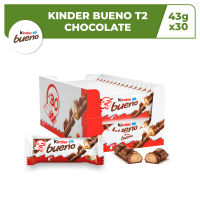
KINDER Bueno T2 43g Chocolate with box - Set of 30
₱2,400.00
Buy on Lazada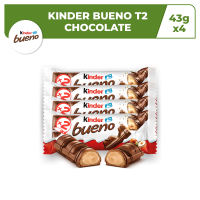
KINDER Bueno T2 43g Chocolate - Set of 4
₱320.00
Buy on Lazada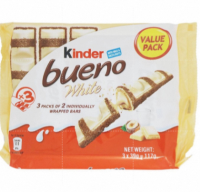
Kinder Bueno White Flow Pack 117g
₱193.00₱203.00
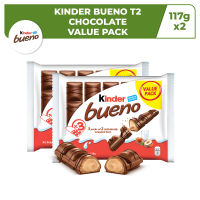
KINDER Bueno 129g Buy 3 Save 20 - Set of 2
₱434.00
Buy on Lazada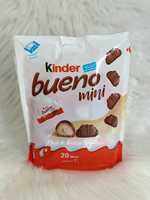
KINDER BUENO MINI CHOCOLATE 20pcs (109g)
₱379.00
Buy on Lazada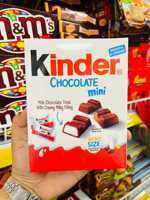
Imo-Shop Kinder Chocolate Mini 1 Box
₱189.00
Buy on Lazada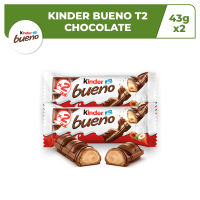
Kinder Bueno T2 Chocolate 43g - Set of 2
₱160.00
Buy on Lazada
Kinder Joy Boy T3 Boys 63g
₱259.00₱299.00
About Kinder Bueno
Kinder Bueno is a chocolate-and-wafer confectionery product manufactured by Ferrero, an Italian multinational confectionery company. It belongs to the broader Kinder brand, which Ferrero launched in 1968 in Alba, Italy. Kinder Bueno was introduced in 1990 and was designed as a more refined chocolate snack aimed particularly at teenagers and young adults.2
The product is recognised for its combination of a thin, crispy wafer, creamy hazelnut filling, and milk-chocolate coating, providing a mixture of crunchy and creamy textures.
Overview
| Information | Details |
|---|---|
| Brand | Kinder Bueno |
| Parent brand | Kinder |
| Owner | Ferrero Group |
| Country of origin | Italy |
| Introduced | 1990 |
| Creator | Michele Ferrero |
| Category | Chocolate confectionery / wafer bar |
| Main flavours | Milk chocolate and hazelnut |
| Main components | Wafer, hazelnut cream, milk chocolate |
| Notable variants | Kinder Bueno, Kinder Bueno White and other regional variants |
| Typical format | Individually wrapped bars, commonly sold in two-bar packs |
History
Origins of Kinder
The history of Kinder Bueno begins with the Kinder brand, created by Michele Ferrero in 1968 in Alba, Italy. Ferrero developed Kinder around the concept of creating small chocolate products that could bring enjoyment to children and families. The first product in this line was Kinder Chocolate.
During the following decades, Kinder expanded into a range of products, including Kinder Surprise, Kinder Chocolate, and eventually Kinder Bueno.
Creation of Kinder Bueno
Kinder Bueno was created in 1990.2 Ferrero describes it as a more sophisticated chocolate snack designed for a mature audience, particularly young adults. Its distinctive combination consisted of a crispy wafer filled with hazelnut cream and covered in chocolate.2
The product represented a slight departure from the image of Kinder as primarily a children’s chocolate brand. Instead of focusing mainly on milk chocolate, Kinder Bueno emphasised texture, lightness, and a hazelnut flavour.
Ferrero’s historical material describes the original product as a wafer filled with hazelnut cream and covered with milk chocolate, marketed towards adolescents.
Product characteristics
The standard Kinder Bueno consists of several layers:
- Crispy wafer – a thin baked wafer provides the characteristic crunch.
- Hazelnut filling – a smooth, creamy filling provides the main nutty flavour.
- Milk-chocolate coating – the exterior provides the chocolate flavour and sweetness.
- Chocolate decoration – some versions feature additional chocolate detailing on the surface.
Ferrero describes the combination as crispy wafer and creamy milk-hazelnut filling, which is central to the product’s identity.
The result is intentionally different from a solid chocolate bar; Kinder Bueno’s appeal derives from the contrast between crunchy wafer, soft filling, and chocolate.
Ingredients
Ingredients vary somewhat between countries. In the Philippines, the product lists milk chocolate, sugar, vegetable fat, wheat flour, hazelnuts, skimmed milk powder, milk powder, and cocoa powder, along with other ingredients used for texture, leavening, and flavour.1
The Philippine product specification lists 10.5% hazelnuts and identifies milk, wheat, hazelnuts, and soy as allergens.1
Because recipes and labelling requirements can differ between markets, the ingredients on a particular package may not be identical worldwide.
Nutrition
A standard serving is generally around one individually wrapped bar, although the exact size differs by market.
For example, the Philippine Kinder Bueno specification gives a 21.5 g serving containing approximately:1
- 122 kcal
- 8 g fat
- 11 g carbohydrates
- 9 g sugars
- 2 g protein
- 23 mg sodium
In contrast, the U.S. version lists a 21 g bar at approximately 120 calories, 8 g fat, 11 g carbohydrates, 10 g total sugars, and 2 g protein.
These values should therefore be treated as market-specific rather than universal.
Packaging
Kinder Bueno is particularly recognisable due to its individual two-bar format. Ferrero’s U.S. product information recommends treating one individually wrapped bar as a serving, while the product is commonly sold in packs containing two individually wrapped bars.
The packaging typically uses the Kinder visual identity, featuring white, red, and blue elements, together with imagery emphasising the chocolate coating, wafer, and hazelnut filling.
The individual wrapping also contributes to the product’s positioning as a convenient snack rather than a conventional large chocolate bar.
Kinder Bueno White
One of the best-known variations is Kinder Bueno White, which replaces the conventional milk-chocolate exterior with a lighter-coloured coating.
The variant maintains the basic concept of Kinder Bueno—wafer + creamy hazelnut filling + chocolate-based coating—while providing a different flavour and visual appearance.
Ferrero’s historical documentation indicates that Kinder Bueno White was introduced after the original Bueno; for example, Ferrero’s Polish operations began production of Kinder Bueno White in the years following the establishment of Kinder Bueno production.
Brand positioning
Kinder Bueno occupies a distinct position within the Kinder portfolio. While the broader Kinder brand originally developed around products intended for children and families, Kinder Bueno was deliberately created with a more mature consumer in mind. Ferrero’s own historical description calls it a more refined chocolate snack for young adults.2
This gives Kinder Bueno a somewhat different identity from products such as Kinder Chocolate or Kinder Surprise.
Its positioning can be summarised as:
- Premium-feeling but mass-market
- Indulgent rather than purely functional
- Focused on texture
- Associated with hazelnut and chocolate
- Suitable as an individual snack
- Appealing to teenagers and adults as well as younger consumers
Global presence
Kinder Bueno has become one of the internationally recognised products within the Kinder portfolio. Ferrero’s Kinder brand has expanded globally over the decades, and Kinder Bueno is sold across numerous markets, although product sizes, recipes, packaging, and available variants can differ by country. Ferrero’s current Kinder materials describe the brand as having grown and expanded globally.
The product is adapted to different markets. For instance, Ferrero publishes separate product specifications for countries including the Philippines, United States, Italy, and France, demonstrating that nutritional information and formulations vary between markets.1
Relationship with Ferrero
Kinder Bueno is part of Ferrero Group, the Italian confectionery company behind brands such as Nutella, Ferrero Rocher, Tic Tac, and the wider Kinder family.
Ferrero has a particularly long history with hazelnuts. Its corporate history identifies hazelnuts as an important part of the company’s development, with products such as Nutella and Ferrero Rocher preceding Kinder Bueno.2
This makes the hazelnut component of Kinder Bueno consistent with a broader Ferrero product tradition.
Marketing and identity
Kinder Bueno’s identity is built less around the idea of a conventional chocolate bar and more around the experience of eating multiple textures at once.
Its central proposition can essentially be reduced to:
crispy wafer + creamy hazelnut filling + chocolate
That combination is significant because it differentiates Bueno from solid chocolate products. The wafer creates a light, crispy bite, while the hazelnut filling supplies richness and the chocolate coating provides the familiar Kinder/Ferrero confectionery character.
Distinctive characteristics
Several characteristics distinguish Kinder Bueno from ordinary chocolate bars:
Texture
Instead of being predominantly solid chocolate, Kinder Bueno combines a fragile wafer with a smooth filling and chocolate coating.
Hazelnut flavour
Hazelnut is a defining part of the filling and connects Bueno to Ferrero’s long-standing association with hazelnut-based confectionery.
Portion format
The individually wrapped bars make the product convenient for snacking and sharing.
Mature Kinder positioning
Its original positioning towards adolescents and young adults helped it occupy a different space from some of Kinder’s more explicitly child-oriented products.
International adaptability
The product exists in different forms and formulations depending on the market, while retaining its core identity.
Timeline
- 1968 — Kinder brand begins in Alba, Italy, under Michele Ferrero.
- 1974 — Kinder Surprise is introduced, expanding the Kinder concept.
- 1980s — Ferrero continues expanding its international confectionery portfolio.
- 1990 — Kinder Bueno is created and introduced.2
- 1990s onward — Kinder Bueno expands into additional international markets.
- 2000s onward — Additional variations, including Kinder Bueno White, become part of the wider product portfolio.
- Today — Kinder Bueno remains part of Ferrero’s global Kinder portfolio.