Shop on Lazada
Kobayashi products
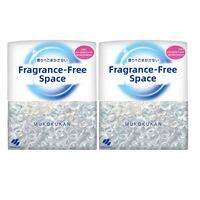
Kobayashi | Deodorizing Room Freshener
₱1,197.31
Buy on Lazada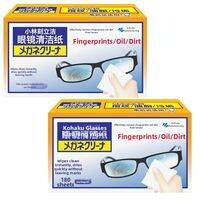
Kobayashi | Anti-fog Cleaning Wipes For Glasses And Screens Cloth
₱3,240.48
Buy on Lazada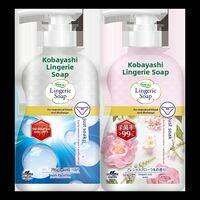
Kobayashi | Blood Stain Removal Underwear Detergent 300ml
₱1,746.79₱1,881.28

Kobayashi | Oral and Throat Disinfection Spray 15ml
₱677.02₱810.48
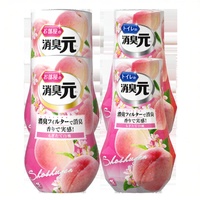
Kobayashi | Deodorizing Bathroom Air Freshener
₱1,454.76
Buy on Lazada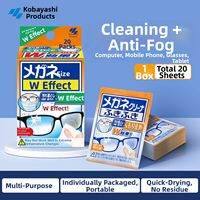
Kobayashi | Anti-Fog and Multipurpose Cleaning Wipes 20 Pieces
₱1,738.56
Buy on Lazada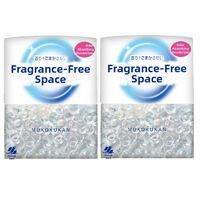
Kobayashi | Odor Eliminating Solid Air Freshener for Cabinets and Rooms
₱953.87
Buy on Lazada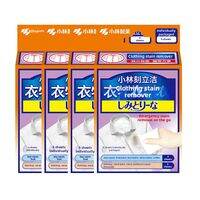
Kobayashi | Oil & Stain Remover Wet Wipes
₱616.08
Buy on LazadaAbout Kobayashi
Kobayashi Pharmaceutical Co., Ltd. (小林製薬株式会社, Kobayashi Seiyaku Kabushiki-gaisha) is a prominent Japanese manufacturer of consumer healthcare and household products headquartered in Osaka, Japan. The company is widely recognized in the Philippines and across Asia for its specialized over-the-counter (OTC) medicines, oral care solutions, cooling gel sheets, body warmers, deodorizers, sanitary goods, and household cleaners.
Kobayashi distinguishes itself through a corporate philosophy centered on identifying small, often overlooked consumer needs and developing mass-market products to address them. Its slogan, “turning things people wish existed into reality” (attara ii na o katachi ni suru), encapsulates this approach to product development.1
Note on naming: “Kobayashi” is a common Japanese surname. In this article, Kobayashi refers specifically to the corporate entity Kobayashi Pharmaceutical.
Quick Facts
| Item | Information |
|---|---|
| Japanese Name | 小林製薬株式会社 |
| English Name | Kobayashi Pharmaceutical Co., Ltd. |
| Founded | 1886 (as retail business) |
| Incorporated | 1919 |
| Headquarters | Osaka, Japan |
| Industry | Consumer healthcare, pharmaceuticals, household products, sanitary products |
| Main Markets | Japan, United States, China, Southeast Asia, and other international markets |
| President & CEO | Norikazu Toyoda |
| Key Categories | OTC medicines, oral care, cooling products, body warmers, deodorants, household cleaners, sanitary products, skincare |
| FY2025 Net Sales | ¥165.742 billion |
| FY2025 Operating Income | ¥14.923 billion |
| Employees | 3,615 (consolidated) / 1,665 (unconsolidated) based on 2024 data |
| Corporate Philosophy | Providing comfort to people and society through creativity and innovation |
Established in 1886 by Chūbei Kobayashi and incorporated as Kobayashi Daiyakubō in 1919, the company’s current identity emerged from a blend of pharmaceutical wholesaling, manufacturing, and consumer product development.2
History
Origins (1886–1919)
The origins of Kobayashi date back to 1886 when founder Chūbei Kobayashi opened a shop named Kobayashi Seidaido in Nagoya. Initially, the business sold general merchandise, cosmetics, and household goods rather than pharmaceuticals. As Japan’s pharmaceutical market matured, the company gradually shifted its focus toward medicines and healthcare products.3
In 1912, Kobayashi expanded by establishing Kobayashi Daiyakubō in Osaka. Seven years later, in 1919, the Nagoya and Osaka operations were merged to form Kobayashi Daiyakubō Co., Ltd. The company cites this 1919 incorporation as its official founding date.4
Transition to Pharmaceuticals (1920s–1950s)
During the early 20th century, Kobayashi evolved from a retailer into a pharmaceutical wholesaler and manufacturer. In 1940, the manufacturing and pharmaceutical division was spun off to establish Kobayashi Pharmaceutical Co., Ltd. By the postwar era, the company had consolidated its operations under this name, functioning as both a manufacturer and a wholesaler.
This period established a defining characteristic of the company: unlike conventional drug manufacturers, Kobayashi combined pharmaceuticals, consumer healthcare, household goods, sanitary products, deodorizers, and distribution capabilities. This diversified foundation became the basis for its future growth strategy.
Niche Market Strategy
Kobayashi is defined by a product development philosophy that avoids direct competition with established mass-market giants. Instead, the company focuses on identifying minor consumer problems that larger competitors have overlooked. Historically described as “start small but think big,” this strategy involves finding a tiny or nonexistent market, introducing a tailored product, and expanding the category if consumer response is positive.5
This approach results in an eclectic portfolio. Rather than focusing solely on traditional medicine, Kobayashi addresses specific daily inconveniences, such as forehead cooling without medication, automatic toilet tank cleaning, dedicated eye washes for contact lens users, disposable warmth packets, and odor elimination. The company aims to transform these specific consumer wishes into distinct product categories.
Major Brands
Kobayashi manages a vast portfolio, with its domestic business listing 146 brands across pharmaceuticals, oral care, food, skincare, deodorizing, sanitary, and household categories.6 Several of these brands have achieved significant recognition internationally, including in the Philippines.
Bluelet
Launched in 1969, Bluelet is a toilet-tank cleaning and deodorizing product. It exemplifies Kobayashi’s ability to create new consumer categories, originating from the insight that the spread of flush toilets in Japan would drive demand for cleaner bathroom environments.7 It remains a core household brand today.
Ammeltz
Ammeltz is a topical analgesic for muscle aches and stiff shoulders. Introduced around 1966–1967, it has become one of Kobayashi’s signature healthcare products and is closely associated with the Japanese market for topical pain relief.8
Netsusama Sheet
Netsusama Sheet is a cooling gel sheet designed for placement on the forehead. Containing cooling beads, it is one of the products that has helped establish Kobayashi as a recognizable consumer health brand outside Japan.9
Aibon
Aibon is an eye-washing product launched in 1995. Its success is attributed to targeted marketing toward contact lens users rather than positioning it as a generic eye wash. Kobayashi cites this focused segmentation as a primary factor in the brand’s strong market performance.10
Breath Care
Breath Care is an oral breath-freshening capsule designed to address bad breath from within, distinguishing it from traditional mouthwashes or mints.11
Sawaday
Originating in the 1970s, Sawaday is a household air freshener and deodorizer brand. Modern iterations include Sawaday Kaoru Stick, which utilizes a reed-stick format. Kobayashi continues to release seasonal and limited-edition fragrances under this line.12
Sarasaty
Introduced in 1988, Sarasaty is a feminine care and sanitary brand. Its launch represents another instance of Kobayashi successfully creating a specialized consumer category.13
Kiribai
Kiribai is synonymous with disposable body warmers (kairo). These products are central to Kobayashi’s international strategy, with marketing efforts extending to China, the United States, and the United Kingdom.14
Product Portfolio
Kobayashi’s offerings extend far beyond pharmaceuticals. The company reports 146 brands across the following categories:
- Healthcare: OTC medicines, pain relief, gastrointestinal products, allergy treatments, skin treatments, eye care, cooling products, and traditional herbal medicines.
- Oral Care: Breath fresheners, dental care, and oral hygiene products.
- Household Products: Toilet cleaners, air fresheners, deodorizers, and general cleaning agents.
- Personal Care: Sanitary products, skincare, and body care.
- Food and Wellness: Functional foods, supplements, and health-related food products.
- Heating and Cooling: Disposable body warmers, cooling gel sheets, and specialized warming products.
Business Model
Kobayashi operates on a model best summarized as: consumer problem → niche product → new market → brand expansion. Unlike traditional pharmaceutical companies that compete in established categories, Kobayashi frequently attempts to establish entirely new subcategories.
The company emphasizes five key steps: identifying latent needs, rapid product development, market creation, building strong positions around successful items, and continuous new product introduction. This results in products that are immediately understandable to consumers, solving specific problems with clarity—a crucial element of the Kobayashi brand identity.
Corporate Philosophy
Creativity and innovation are central to Kobayashi’s corporate identity. Its English statement pledges “providing people and society with comfort by constantly pursuing new ideas through continuous Creativity and Innovation.”
In Japan, this is expressed as attara ii na o katachi ni suru (“turning things you’d wish existed into reality”). This philosophy prioritizes convenience and the resolution of specific annoyances over technological sophistication for its own sake.
International Expansion
Kobayashi accelerated its international expansion in the late 20th century, establishing a U.S. subsidiary and a Shanghai joint venture in 1998. Today, the company sells products in more than 40 countries and regions.15
Key overseas markets include the United States, China, the United Kingdom, and Southeast Asia. Strategic international categories include body warmers, cooling sheets, OTC pharmaceuticals, deodorizing products, eyeglass cleaners, and oral hygiene items.16
Rather than simply exporting domestic products, Kobayashi adapts its marketing to local behaviors. For example, disposable warmers were introduced to China as a novel category, while in the U.S. and U.K., they were positioned for both therapeutic and warming uses.17
Corporate Structure
Kobayashi Pharmaceutical operates through a group of manufacturing and operating subsidiaries, including Toyama Kobayashi Pharmaceutical, Sendai Kobayashi Pharmaceutical, Ehime Kobayashi Pharmaceutical, Kiribai Kobayashi Pharmaceutical, Aloe Pharmaceutical, and Kobayashi Pharmaceutical Plax. These entities cover pharmaceuticals, hygienic paper products, body warmers, cosmetics, and synthetic resins.18 Consequently, the “Kobayashi” name on packaging represents a broader corporate group rather than a single manufacturing facility.
Financial Scale and Performance
While smaller than global giants like Takeda or Procter & Gamble, Kobayashi is a significant player in Japanese consumer health. For FY2025, the company reported net sales of ¥165.742 billion and operating income of ¥14.923 billion. Operating income declined by 40% year-over-year, largely due to costs associated with the red yeast rice recall, quality assurance measures, and business recovery efforts.19
Looking ahead to 2026, management forecasts net sales of ¥173.0 billion, operating income of ¥12.5 billion, and net income of ¥10.0 billion, anticipating growth in both domestic and international segments.20
2024 Red Yeast Rice Incident
In March 2024, Kobayashi recalled products containing its Beni-koji (red yeast rice) ingredient following reports of consumer health issues. The products were primarily marketed as cholesterol-related supplements. Investigations by Japan’s Ministry of Health, Labour and Welfare determined that contamination during fermentation produced puberulic acid, which can cause renal dysfunction.21
The incident resulted in kidney problems, hospitalizations, and deaths under investigation. It triggered recalls of Kobayashi products and those made by other companies using the same raw material. Regulators criticized deficiencies in Kobayashi’s reporting processes during the crisis.22 The Ministry confirmed that P. adametzioides contaminated the fermentation process, leading to the production of the toxic substance.23
Consequences and Reform
The scandal marked a major turning point. Kobayashi’s 2025 integrated report identifies restoring trust as a top priority, outlining reforms in quality assurance, governance, organizational structure, and recurrence prevention. In January 2025, the company transitioned to a function-based headquarters structure.24
Financially, the company recorded an extraordinary loss of approximately ¥12.7 billion in FY2024 related to the recall.25 Compensation and prevention measures continued into FY2025.26 It is important to note that red yeast rice represented only one part of Kobayashi’s diversified portfolio, not its core identity.
Post-Incident Transformation
Management is currently pursuing a “New Kobayashi Pharmaceutical” strategy emphasizing:
- Quality and Safety: Increased resources and authority for product safety.
- Governance Reform: Overhauled decision-making systems following regulatory criticism.
- New Product Development: Maintaining innovation as a competitive advantage.
- International Growth: Continued investment in the U.S., China, and Southeast Asia.
- Portfolio Management: A 2026–2028 strategy categorizing businesses into growth, stable, and transformation areas to optimize resource allocation.27
Current Status (2026)
As of August 2026, Kobayashi is in a transitional phase, balancing recovery from the 2024 quality crisis with ongoing product innovation. Recent announcements include Gurakku for irritable bowel syndrome symptoms, Nodonūru Nure Mask moisturizing steam masks, and Kiribai sleeping-time warming products. The company also continues to update established brands like Bluelet and Sawaday.
The prevailing strategy combines trust restoration and strengthened quality control with the preservation of successful brands, niche market creation, and international expansion.
Brand Characteristics
Kobayashi occupies a unique intersection of pharmaceuticals, consumer healthcare, personal care, household goods, and wellness. Its competitive advantage lies in understanding everyday frustrations rather than pioneering revolutionary science. Key brand attributes include:
| Characteristic | Description |
|---|---|
| Practical | Solves concrete daily problems |
| Convenient | Requires minimal consumer effort |
| Specific | Designed for particular needs |
| Innovative | Creates new product categories |
| Mass-Market | Intended for ordinary consumers |
| Japanese | Influenced by Japanese consumer habits |
| Functional | Prioritizes utility over luxury |
| Experimental | Tests unusual product concepts |
| Brand-Oriented | Develops successful items into product families |
Conceptually, Kobayashi can be understood as a “problem-solving products” company where pharmaceuticals are one major business line among many. When consumers express a wish for a solution to a minor annoyance, Kobayashi’s historical model is to create the product, brand it memorably, and build a market around it. This explains a portfolio ranging from medicines and eye washes to toilet cleaners and cooling sheets.
Timeline
- 1886: Chūbei Kobayashi establishes Kobayashi Seidaido in Nagoya.
- 1912: Expansion into Osaka.
- 1919: Incorporation of Kobayashi Daiyakubō.
- 1940: Establishment of Kobayashi Pharmaceutical Co., Ltd.
- 1966–67: Launch of Ammeltz.
- 1969: Launch of Bluelet.
- 1975: Launch of Sawaday.
- 1988: Launch of Sarasaty.
- 1995: Launch of Aibon.
- 1998: Acceleration of international expansion with U.S. and Shanghai operations.
- 2000: Listing on the First Section of the Tokyo Stock Exchange.
- 2010s: Continued expansion into China, the U.S., and other overseas markets.
- 2024: Major red yeast rice recall and health crisis.
- 2025: Norikazu Toyoda appointed President/CEO; major governance and quality reforms undertaken.
- 2026: Continued recovery, new product launches, and implementation of 2026–2028 management strategy.
Summary
Kobayashi Pharmaceutical is one of Japan’s most distinctive consumer healthcare innovators, historically defined by its ability to turn underserved niche needs into recognizable mass-market brands like Aibon, Bluelet, Ammeltz, Netsusama Sheet, Breath Care, Sarasaty, Sawaday, and Kiribai.28
However, the 2024 red yeast rice crisis is now an integral part of the company’s history. The incident exposed critical issues in product safety and corporate reporting, resulting in significant financial costs and necessitating comprehensive governance reform. Japanese regulators concluded that fermentation contamination produced puberulic acid capable of causing renal dysfunction.29
As of 2026, Kobayashi is a company in transition, working to preserve its successful niche-product business model while rebuilding trust and strengthening quality systems following one of the most serious crises in its history.
References
- Company Profile
- 国内事業 | 事業紹介 | 小林製薬株式会社
- Corporate data of Kobayashi Pharmaceutical Japan
- 小林製薬の歴史 | 企業情報 | 小林製薬株式会社
- KOBAYASHIPHARMACEUTICAL CO., LTD.ANNUAL REPORT 2
- Business Scope of Kobayashi Pharmaceutical Japan
- 小林製薬株式会社 -あったらいいなをカタチにする-
- Annual Report
- Products
- Business Scope of Kobayashi Pharmaceutical Japan
- よくあるQ&A(業績、財務に関するご質問(株式に関して)) | 投資家情報 | 小林製薬株式会社
- World Wide (Group Companies)
- Financial Statements for the Fiscal Year Ended December 31, 2025
- Financial Results Briefing for First Quarter of Fiscal Year Ending December 31, 2026
- KDX Kobayashi Doshomachi Bldg.,
- You make a wish
- 2026-2028 New Medium-term Management Plan
- 2026年秋の新製品とリニューアルに関するお知らせ | ニュースリリース | 小林製薬株式会社
- P H A R M A C E U T I C A L C O., L T D .
- 製品の出荷価格改定のお知らせ | ニュースリリース | 小林製薬株式会社
- 「小林製薬株式会社 統合報告書 2026」を公開 | ニュースリリース | 小林製薬株式会社
- “If only there were…” evolves with generative AI. Why Kobayashi Pharmaceutical established internal regulations and opened up generative AI after achieving “100% employee training completion.”|小林製薬公式note
- 役員及び執行役員人事に関するお知らせ | ニュースリリース | 小林製薬株式会社
- Overcoming the ‘Career Hire Barrier’: Kobayashi Pharmaceutical’s New Initiative to Build ‘Horizontal Connections’ for Mid-Career Employees.|小林製薬公式note
- 2026年春の新製品とリニューアルに関するお知らせ | ニュースリリース | 小林製薬株式会社
- I want to deliver ‘what I wish existed’ to our customers once again.|小林製薬公式note
- 「小林製薬株式会社 統合報告書 2025」を公開 | ニュースリリース | 小林製薬株式会社
- Kobayashi Pharmaceutical: We’ve compiled the questions we frequently receive during the career recruitment process!|小林製薬公式note
- Summary of Kobayashi Pharmaceutical’s DX Policy|小林製薬公式note