Shop on Lazada
Lindt products
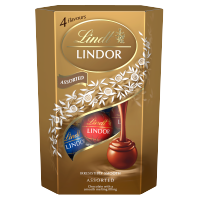
Lindt LINDOR Assorted Chocolate Truffles Cornet 200g
₱661.00
Buy on Lazada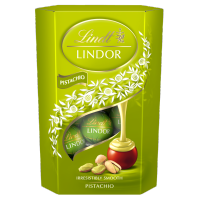
Lindt LINDOR Pistachio Chocolate Truffles Cornet 200g
₱707.00
Buy on Lazada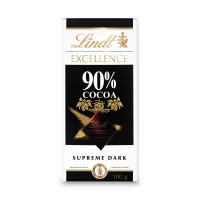
Lindt EXCELLENCE 90% Cocoa Dark Chocolate Bar 100g
₱343.00
Buy on Lazada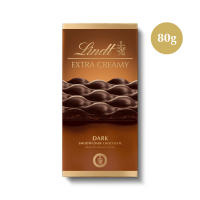
Lindt EXTRA CREAMY Dark Chocolate 80g
₱265.00
Buy on Lazada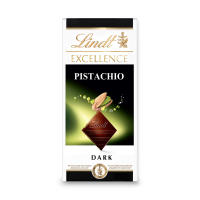
Lindt EXCELLENCE Pistachio Dark Chocolate Bar 100g
₱326.00
Buy on Lazada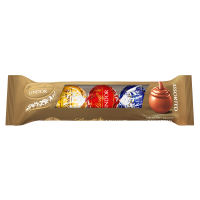
Lindt LINDOR Assorted Chocolate Truffles 3-piece Pack (37g)
₱131.00
Buy on Lazada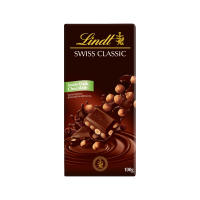
Lindt SWISS CLASSIC Hazelnut Dark Chocolate Bar 100g
₱271.00
Buy on Lazada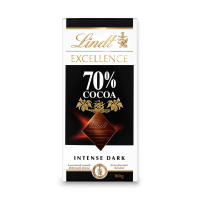
Lindt EXCELLENCE 70% Cocoa Dark Chocolate Bar 100g
₱326.00
Buy on LazadaAbout Lindt
Lindt is a Swiss premium chocolate brand owned by Chocoladefabriken Lindt & Sprüngli AG, commonly referred to as Lindt & Sprüngli. Recognised globally as a leading name in premium confectionery, the brand distributes products in more than 120 countries. While the company’s origins date back to 1845 in Zurich, Switzerland, the Lindt name became central to the business following Rodolphe Lindt’s invention of the conching process in 1879.1
Lindt & Sprüngli
Basic information
| Category | Information |
|---|---|
| Brand | Lindt |
| Full company name | Chocoladefabriken Lindt & Sprüngli AG |
| Industry | Confectionery / Food & Beverage |
| Main product | Chocolate and confectionery |
| Origin | Switzerland |
| Roots | 1845 |
| Lindt’s key breakthrough | Conching process, 1879 |
| Lindt & Sprüngli formed | 1899 |
| Headquarters | Kilchberg, Switzerland |
| Positioning | Premium / luxury chocolate |
| Global availability | 120+ countries |
| Employees | ~15,500 |
| Production sites | 12 |
| Own shops | 620+ |
| 2025 Group sales | CHF 5.92 billion |
Latest corporate figures indicate the group employs approximately 15,500 people across 12 production sites. It operates more than 620 company-owned shops alongside 41 subsidiaries and branch offices, reporting sales of CHF 5.92 billion for 2025.2
History
1845 — The Sprüngli beginnings
The company’s history began in Zurich, Switzerland, when David Sprüngli and his son Rudolf Sprüngli produced some of the first solid chocolate bars in the German-speaking region of the country. Their enterprise achieved rapid success and expanded into full-scale chocolate manufacturing.3
In 1847, the family established a chocolate factory in Horgen, significantly increasing production capacity. By 1859, they had opened another confectionery shop on Zurich’s Paradeplatz, which eventually became the renowned Confiserie Sprüngli.4
It is important to note that the modern Sprüngli confectionery company and Lindt & Sprüngli are separate entities. The original Sprüngli family business was divided between two branches in the late 19th century.5
1879 — Rodolphe Lindt changes chocolate
A pivotal moment in the brand’s history occurred in Bern in 1879. Swiss chocolatier Rodolphe Lindt developed the conching process, a technique involving the prolonged stirring and aeration of chocolate mass. This method produced chocolate with a significantly smoother texture, refined flavour, and a characteristic melt-in-the-mouth quality that distinguished it from other chocolates of the era.6
This invention was fundamental to the development of modern chocolate. Prior to this breakthrough, chocolate was often coarse and bitter. Conching created the smooth, creamy texture now synonymous with high-quality chocolate, establishing the technological foundation of the brand’s identity.
The creation of Lindt & Sprüngli
In 1899, Johann Rudolf Sprüngli recognised the value of Rodolphe Lindt’s technology and business operations. Sprüngli acquired Lindt’s enterprise, including the Lindt brand, factory, and secret conching recipe. This transaction united Sprüngli’s established manufacturing and commercial expertise with Lindt’s innovative chocolate-making techniques.7
This merger formed the company that ultimately became Lindt & Sprüngli. The headquarters remain in Kilchberg near Zurich, where Sprüngli had constructed a large factory around the time of the 1899 acquisition.8
International expansion
Throughout the 20th century, Lindt & Sprüngli evolved from a domestic Swiss producer into an international corporation. The company began establishing distributors and subsidiaries abroad during the 1920s, including operations linked to Germany and the United States. International expansion accelerated significantly from the late 1970s onwards.9
Growth was achieved through both organic expansion and strategic acquisitions. Key acquisitions included:
- Caffarel — Italian chocolatier, acquired in 1998
- Ghirardelli Chocolate Company — Acquired in 1998
- Russell Stover Chocolates — Acquired in 2014
The acquisition of Ghirardelli strengthened the group’s position in North America, while Russell Stover added another major American chocolate business to its portfolio.9
Major Lindt products
Lindt maintains an extensive portfolio comprising chocolate bars, truffles, pralines, seasonal items, and other confectionery.
Lindor
Lindor is widely regarded as Lindt’s most internationally recognisable product line. Originally introduced in 1949 as a chocolate bar with a smooth-melting centre, the Lindor truffle launched in 1969 and became one of the company’s most significant commercial successes.10 Its defining feature is a soft, creamy filling encased in a chocolate shell.
Lindt Gold Bunny
Introduced in 1952, the Gold Bunny has become a signature seasonal product closely associated with Easter. Its gold foil wrapping, ribbon, and distinctive rabbit shape make it one of the company’s strongest visual symbols.11
Excellence
Lindt Excellence represents the premium chocolate bar range, particularly dark chocolate variants. The concept traces its roots to 1899, when Lindt introduced thin dark chocolate bars characterised by intense flavours and fine texture.12
Other products
The broader portfolio includes:
- Lindt Classic Recipe
- Lindt Swiss Classic
- Lindt Excellence
- Lindor
- Gold Bunny
- Lindt Teddy
- Pralines and boxed chocolates
- Seasonal collections
- Filled chocolate bars
- Nut and caramel products
- Limited-edition chocolates
The company continuously develops new products and adapts existing lines to suit regional preferences.13
The Lindt brand identity
Lindt’s brand is anchored in the concept of premium Swiss chocolate. The company identifies five core elements of its brand essence:
- Quality
- Expertise
- Swissness
- Creativity
- Innovation
These attributes underpin Lindt’s positioning in the premium market segment.14 Rather than competing primarily on price as a mass-market producer, Lindt emphasises craftsmanship, ingredient quality, texture, presentation, and the overall consumer experience.
The Lindt Master Chocolatiers
A key branding element is the Lindt Master Chocolatier. Traditionally depicted in white uniforms holding a characteristic whisk, these figures represent the expertise and craftsmanship behind the brand.15
This imagery reinforces the message that Lindt chocolate is not merely an industrial food product but is connected to craftsmanship, tradition, and specialist expertise. The Master Chocolatier serves as a visual ambassador for the brand.
What makes Lindt different?
Several factors distinguish Lindt from standard chocolate brands.
Swiss heritage
Lindt strongly associates itself with Switzerland and the nation’s chocolate-making traditions.
Conching
Rodolphe Lindt’s 1879 conching innovation remains the historical foundation of the brand’s product quality.16
Premium positioning
Products are positioned above mainstream mass-market chocolate in terms of perceived quality, presentation, and price point.
Strong product recognition
Items such as Lindor and the Gold Bunny have developed distinct identities recognisable independently of the broader Lindt brand.
Retail experience
Lindt operates an extensive network of proprietary retail stores. As of 2026, the company reports around 620 own shops worldwide.17
Global business today
Lindt operates as part of the larger Lindt & Sprüngli Group. According to recent figures, products are available in more than 120 countries. The group manages 12 production sites, 41 subsidiaries and branch offices, over 620 own shops, and a network of approximately 100 distributors.18
For 2025, Lindt & Sprüngli reported:
- CHF 5.92 billion in sales
- 12.4% organic sales growth
- 16.4% EBIT margin
- Approximately 15,500 employees
Growth was supported by premiumisation strategies, pricing adjustments in response to elevated cocoa costs, and the global rollout of Dubai Style chocolate.19
Lindt Dubai Style Chocolate
A notable addition to the product range in the 2020s is Lindt Dubai Style Chocolate. This product combines Lindt chocolate with pistachio filling and finely textured kadayif, offering a contrast between creamy filling and crunchy texture. Lindt highlights it as one of its significant innovations for 2025.20
Its development demonstrates how the company integrates its established Swiss chocolate identity with contemporary food trends.
Lindt and sustainability
As a major manufacturer, Lindt & Sprüngli addresses challenges related to cocoa sourcing, agriculture, climate change, and environmental impact. The company publishes sustainability programmes and reports covering:
- Cocoa sourcing
- Farmer support
- Deforestation
- Agroforestry
- Climate emissions
- Responsible supply chains
- Human rights
Current corporate documentation includes a 2026–2030 Farming Program, a Climate Transition Plan, a 2030 Sustainability Plan, and reporting on deforestation and agroforestry.21 These issues are critical given the dependence of cocoa production on agricultural communities and climate-sensitive regions.
Corporate structure
It is necessary to distinguish between Lindt and Lindt & Sprüngli:
- Lindt: The consumer-facing chocolate brand.
- Lindt & Sprüngli: The Swiss corporate group owning and operating the Lindt brand alongside other businesses.
The wider portfolio includes Ghirardelli, Russell Stover, Whitman’s, Caffarel, Hofbauer, and Küfferle.22
Important historical timeline
| Year | Event |
|---|---|
| 1845 | Sprüngli family begins producing solid chocolate in Zurich |
| 1847 | Sprüngli opens its first chocolate factory |
| 1859 | Sprüngli opens its famous Paradeplatz confectionery |
| 1879 | Rodolphe Lindt develops the conching process |
| 1899 | Sprüngli acquires Lindt’s business and technology |
| 1920s | Lindt & Sprüngli begins major international expansion |
| 1930 | Company adopts the name Chocoladefabriken Lindt & Sprüngli AG |
| 1949 | Lindor is introduced |
| 1952 | Gold Bunny is introduced |
| 1969 | Lindor truffle launches |
| 1986 | Lindt & Sprüngli is listed on the Swiss stock exchange |
| 1998 | Caffarel and Ghirardelli become part of the Group |
| 2009 | Global Retail division established |
| 2014 | Russell Stover acquired |
| 2025 | Lindt Dubai Style Chocolate becomes a notable new product |
| 2026 | Group operates globally with 12 production sites and 620+ own shops |
Brand significance
Lindt’s importance in the chocolate industry stems from its combination of technological innovation with premium branding. Rodolphe Lindt’s conching process established the smooth, refined texture central to modern premium chocolate. The 1899 merger with Sprüngli provided the manufacturing and distribution foundation required to scale this innovation into an international brand.
Over more than 180 years, Lindt has evolved from a Swiss tradition into a global premium confectionery brand. Its current identity rests on Swiss heritage, chocolate craftsmanship, recognisable products, premium positioning, and continuous innovation.
References
- History
- Lindt
- At a glance
- Lindt & Sprüngli
- 175 years Lindt & Sprüngli
- A Biography of Rodolphe Lindt, Chocolate Innovater | Lindt & Sprüngli
- Lindt & Sprüngli
- Document library
- Lindt & Sprüngli delivers strong organic growth in a volatile environment
- Notes to the Financial Statements
- 175 years Lindt & Sprüngli
- Lindt & Sprüngli
- Annual Report
- Sustainability Reports | Lindt & Sprüngli
- Lindt & Sprüngli Annual Report 2019
- anhang zur jahresrechnung
- Our business model and value chain – Lindt & Sprüngli Sustainability Report 2024
- Discover Lindt: The History of Chocolate | Lindt Shop UK
- Discover Lindt: The History of Chocolate | Lindt Shop Australia
- How Two Chocolatiers Changed Chocolate | Lindt Canada
- L’Histoire de Lindt | Lindt France
- World of Lindt | Intl