Shop on Lazada
Pepperidge Farm products
![[Bundle Promo] Pepperidge Farm Goldfish Crackers - Cheddar Cheese 2 Packs](https://filebroker-cdn.lazada.com.ph/kf/S1f80071ee50d4f13a930c3c73b39647cV.jpg_200x200q80.jpg)
[Bundle Promo] Pepperidge Farm Goldfish Crackers - Cheddar Cheese 2 Packs
₱760.00
Buy on Lazada![[USA] Pepperidge Farm Goldfish Crackers - Original Cheddar Parmesan Flavor 6.6oz](https://filebroker-cdn.lazada.com.ph/kf/S85c9a41d10e54fb2b5e215e1f0924dceR.jpg_200x200q80.jpg)
[USA] Pepperidge Farm Goldfish Crackers - Original Cheddar Parmesan Flavor 6.6oz
₱390.00
Buy on Lazada![[ONE BOX] Pepperidge Farm Goldfish Crackers - Cheddar Cheese 12 Packs](https://filebroker-cdn.lazada.com.ph/kf/S20758ba6025b498d821dbc30ecb682f2x.jpg_200x200q80.jpg)
[ONE BOX] Pepperidge Farm Goldfish Crackers - Cheddar Cheese 12 Packs
₱4,200.00
Buy on Lazada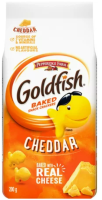
NEW and ORIGINAL - Pepperidge Farm Goldfish Crackers
₱395.00
Buy on Lazada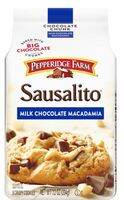
Peperidge farm sausalito milk chocolate macadamia
₱499.00₱699.00
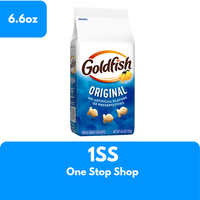
Gold Fish Original 187g
₱385.00
Buy on LazadaAbout Pepperidge Farm
Pepperidge Farm is an American bakery and packaged-food brand best known for Goldfish crackers, Milano cookies, Farmhouse breads and cookies, and frozen pastries. Founded in 1937 by Margaret Rudkin in Fairfield, Connecticut, the brand grew from a home-baked whole-wheat bread into a major American food business. Since 1961, Pepperidge Farm has been part of The Campbell’s Company (formerly Campbell Soup Company).1
Overview
| Category | Information |
|---|---|
| Brand name | Pepperidge Farm |
| Founded | 1937 |
| Founder | Margaret Rudkin |
| Origin | Fairfield, Connecticut, U.S. |
| Industry | Packaged foods / baking |
| Major categories | Crackers, cookies, breads, buns & rolls, pastries, desserts |
| Famous products | Goldfish, Milano, Farmhouse, Chessmen, Puff Pastry, Texas Toast |
| Parent company | The Campbell’s Company |
| Acquired by Campbell | 1961 |
| Brand positioning | Premium-quality baked and snack foods |
| Official website | pepperidgefarm.com |
The brand’s own history describes its philosophy as being fundamentally about baking and maintaining a commitment to quality that began with Rudkin.1
History
1937: The beginning
Pepperidge Farm began with Margaret Rudkin, a Connecticut homemaker and mother. The Rudkin family lived on a property in Fairfield called Pepperidge Farm, named after an ancient pepperidge tree growing there.
Rudkin’s youngest son suffered from asthma and food allergies and had difficulty eating commercially processed foods. Following medical advice, Margaret began preparing minimally processed foods for him. She eventually experimented with stone-ground whole-wheat bread, despite having never baked bread before.
Her early attempts were unsuccessful, but after considerable trial and error she developed a loaf that her son could eat and that her family and friends enjoyed. His doctor subsequently recommended the bread to other patients.1
The first commercial bread
Rudkin approached a local grocery store and persuaded the grocer to sell her bread. She insisted on charging 25 cents per loaf, considerably more than the prevailing price of ordinary bread, because of the quality and cost of her ingredients.
The grocer initially doubted the idea, but after tasting the bread, agreed to sell it. Demand quickly grew.
Her husband, Henry Rudkin, helped expand distribution by carrying Pepperidge Farm bread by train to New York, where it was sold through specialty stores.
What began in Margaret’s kitchen therefore evolved into a commercial bakery.1
Expansion in the 1940s
The company quickly outgrew Rudkin’s home kitchen and subsequently operated from her garage. By 1940, production had moved into a dedicated factory.
World War II presented a significant challenge because ingredients such as butter and high-quality whole-wheat flour were subject to shortages. Rather than substantially compromise the quality of her bread, Rudkin reduced production.
After the war, she proceeded with plans for a larger, modern bakery. On July 4, 1947, Pepperidge Farm opened a new bakery in Norwalk, Connecticut.1
This period established one of the central characteristics of the brand: premium positioning based on ingredients and baking quality rather than competing primarily on low price.
Diversification
Pepperidge Farm eventually expanded far beyond bread.
European-style cookies
During a trip to Belgium in the 1950s, Margaret Rudkin encountered sophisticated European chocolate cookies that were unlike most American packaged cookies of the period.
She acquired rights to produce them in the United States, leading to Pepperidge Farm’s Distinctive Cookies line.
This eventually produced some of the company’s best-known cookies, including:
- Milano
- Brussels
- Bordeaux
- Geneva
- Chessmen
- Pirouette
The European influence became an important part of Pepperidge Farm’s identity.1
Frozen foods and pastries
Rudkin also recognized the potential of frozen convenience foods.
Pepperidge Farm acquired the Black Horse Pastry Company, allowing it to enter the frozen pastry category. This led to products such as:
- Puff Pastry
- Turnovers
- Frozen breads
- Garlic bread
- Texas Toast
- Layer cakes
The company’s modern product portfolio continues to include desserts and puff pastry alongside its bakery and snack products.1
Goldfish
Perhaps the most important product in Pepperidge Farm’s history after its original bread is Goldfish crackers.
In the 1960s, Margaret Rudkin encountered a small fish-shaped cracker while traveling in Switzerland. She believed the distinctive shape would appeal to American consumers and brought the concept back to the United States.
Pepperidge Farm introduced Goldfish crackers to the American market in 1962.1
The product eventually became one of the most recognizable children’s snack brands in the United States.
The famous smiling Goldfish character was introduced much later, in 1997, creating the familiar association between Goldfish and the phrase “The Snack That Smiles Back.”1
Today, Pepperidge Farm’s Goldfish portfolio includes numerous varieties, including classic flavors, whole-grain products, Goldfish Crisps, Flavor Blasted, Goldfish Grahams, Mega Bites, mixes, pretzels and limited editions.1
Acquisition by Campbell
In 1961, Margaret Rudkin sold Pepperidge Farm to Campbell Soup Company.
The acquisition marked a major transition: Pepperidge Farm became part of a much larger food corporation while continuing to operate as a recognizable consumer brand.
Rudkin became the first woman to serve on Campbell’s board of directors. She remained influential in the food industry and later published The Margaret Rudkin Pepperidge Farm Cookbook in 1963.1
Pepperidge Farm remains part of Campbell’s portfolio today. Campbell subsequently changed its corporate name to The Campbell’s Company in 2024 to reflect its broader food portfolio.
Brand development
1950s
The 1950s were an important diversification period.
Pepperidge Farm:
- Expanded its bread business.
- Introduced European-style cookies.
- Entered frozen pastries.
- Developed a distinctive advertising identity.
- Began building a broader premium-bakery image.
One famous advertising character was Titus Moody, a country-style Pepperidge Farm deliveryman associated with a horse and wagon. The campaign eventually ran for decades.1
1960s
The 1960s brought two defining developments:
- Campbell acquired Pepperidge Farm in 1961.
- Goldfish crackers were introduced in 1962.
These developments helped transform Pepperidge Farm from primarily a bread company into a diversified packaged-food business.1
1970s
Pepperidge Farm continued expanding its manufacturing capacity and product range.
Interestingly, Pepperidge Farm bread was carried aboard Apollo 13 and Apollo 14 missions, while Goldfish advertising began appearing on television in 1977.1
The brand also became associated with the nostalgic advertising phrase “Pepperidge Farm remembers,” which emphasized traditional food and memories of earlier American life.
1980s
Pepperidge Farm continued expanding its cookie and snack portfolio.
Goldfish crackers also gained an unusual association with space exploration: they were carried aboard the Space Shuttle Discovery in 1988.1
1990s
The 1990s brought further modernization of the brand.
In 1997, the Goldfish character was given its famous smile, reinforcing the product’s playful identity. Pepperidge Farm also expanded frozen convenience products such as pot pies and Texas Toast.1
Major product categories
Today, Pepperidge Farm’s official product portfolio is organized into several major categories.1
1. Goldfish crackers
Goldfish is arguably Pepperidge Farm’s most internationally recognizable product family.
Examples include:
- Goldfish Favorites
- Flavor Blasted
- Goldfish Crisps
- Goldfish Grahams
- Mega Bites
- Goldfish Mix
- Whole-grain varieties
- Seasoned pretzels
- Special and limited editions
2. Cookies
Pepperidge Farm has a particularly broad cookie portfolio.
Major lines include:
- Milano
- Farmhouse
- Distinctive Cookies
- Pirouette
- American Cookie Collection
- Various seasonal and specialty cookies
The cookie portfolio ranges from European-inspired premium cookies to more traditional American-style cookies.1
3. Breads, buns and rolls
Bread remains fundamental to the brand’s identity.
Products include:
- Farmhouse breads
- White bread
- Whole-grain bread
- Italian bread
- Rye and pumpernickel
- Thin-sliced breads
- Very thin breads
- Hamburger buns
- Hot-dog buns
- Hoagie rolls
- Slider buns
- Dinner rolls
- Swirl breads
4. Frozen foods and pastries
The frozen category includes:
- Puff Pastry
- Turnovers
- Garlic bread
- Texas Toast
- Layer cakes
- Other frozen bakery products
5. Crackers
Pepperidge Farm also sells several traditional cracker products, including Golden Butter and Harvest Wheat varieties.1
Brand identity
Pepperidge Farm’s identity is built around several themes.
Quality
Quality was central to Margaret Rudkin’s original business philosophy. She deliberately positioned her bread as a premium product rather than trying to compete with inexpensive mass-market bread.
The company’s current messaging continues to emphasize quality ingredients and baking.1
Baking heritage
Unlike a brand built primarily around snacks, Pepperidge Farm presents itself first and foremost as a baking company.
Its current slogan-like positioning is:
“We Are Bakers.”
The company says baking is the driving force behind its products and brand identity.1
Premium + approachable
Pepperidge Farm occupies an interesting middle ground in American packaged food.
It combines:
- Traditional bakery heritage
- Premium European-style cookies
- Family-oriented snacks
- Everyday bread
- Convenient frozen products
This allows the brand to appeal both to families and to consumers looking for something more premium than basic mass-market bakery products.
Nostalgia
Nostalgia has historically been a major part of Pepperidge Farm’s advertising.
The brand’s old “Pepperidge Farm remembers” campaigns connected its products with memories of traditional American food and earlier generations.
That heritage remains important to the brand even as its products and marketing have evolved.
The Pepperidge Farm logo and visual identity
The brand’s visual identity is strongly associated with an old-fashioned American countryside/bakery aesthetic.
Historically, the Pepperidge Farm logo has been associated with the Grist Mill in Sudbury, Massachusetts, reflecting the company’s traditional, handcrafted positioning.2
This visual language complements the brand’s emphasis on:
- Heritage
- Traditional baking
- Craftsmanship
- Quality
- Family
- Nostalgia
Margaret Rudkin
Margaret Rudkin is arguably the most important individual in Pepperidge Farm’s history.
Born in 1897, she was not originally a professional baker or food-industry executive. She became an entrepreneur after developing bread for her son.
Her story is notable because she transformed a household problem into a commercial business and subsequently built a large food company.
By the time she sold Pepperidge Farm to Campbell in 1961, the company had expanded from a home kitchen into a major multi-category food business.1
She also became a notable business figure and author. Her cookbook became the first cookbook to reach the New York Times bestseller list, according to Pepperidge Farm’s historical account.1
Corporate ownership
Pepperidge Farm is currently part of The Campbell’s Company, one of North America’s major packaged-food companies.
Campbell acquired Pepperidge Farm in 1961 and has maintained it as a distinct consumer brand within its portfolio.1
In other words:
Pepperidge Farm → brand/business → owned by The Campbell’s Company
It is therefore not an independent bakery company in the traditional sense today; it is a major branded food business operating within a larger corporate group.
Importance in American food culture
Pepperidge Farm occupies a distinctive position in American food culture because its history spans several different eras of food manufacturing:
1930s: homemade-style whole-wheat bread
↓
1940s: modern commercial bakery
↓
1950s: European-style premium cookies
↓
1960s: Goldfish and corporate expansion
↓
1970s–80s: mass-market snacks and nostalgic advertising
↓
1990s: stronger character-based branding
↓
Today: diversified bakery and snack portfolio
Few American food brands have maintained such a long connection between traditional baking, premium positioning and mass-market packaged foods.
Key milestones
| Year | Milestone |
|---|---|
| 1937 | Margaret Rudkin establishes Pepperidge Farm |
| 1937–40 | Bread production grows from kitchen to factory |
| 1947 | Modern bakery opens in Norwalk, Connecticut |
| 1950s | European-style Distinctive Cookies introduced |
| 1950s | Pepperidge Farm enters frozen pastry |
| 1961 | Campbell Soup Company acquires Pepperidge Farm |
| 1962 | Goldfish crackers introduced in the U.S. |
| 1963 | Margaret Rudkin’s cookbook published |
| 1970s | Bread and Goldfish expand nationally |
| 1977 | Goldfish television advertising begins |
| 1988 | Goldfish travels aboard Space Shuttle Discovery |
| 1997 | Smiling Goldfish character introduced |
| 2001 | Pepperidge Farm surpasses $1 billion in sales |
| Today | Brand spans breads, cookies, crackers, Goldfish and frozen bakery products |