Shop on Lazada
Linksys products
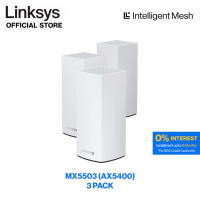
Linksys Atlas Pro 6 AX5400 Dual Band Mesh WIFI 6 System 3 Pack (MX5503)
₱23,995.00
Buy on Lazada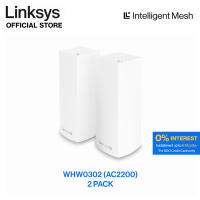
LINKSYS VELOP AC2200 (2 PACK) TRI-BAND WHOLE HOME MESH WIFI 5 SYSTEM (WHW0302)
₱17,495.00
Buy on Lazada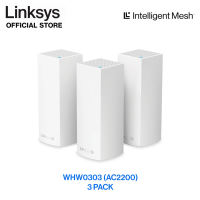
Linksys Velop AC2200 (3 Pack) Tri-Band Whole Home Mesh WIFI 5 System (WHW0303)
₱22,995.00
Buy on Lazada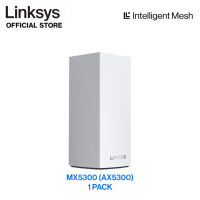
Linksys Velop AX5300 Tri-Band Whole Home Mesh WIFI 6 System 1 Pack (MX5300)
₱20,995.00
Buy on Lazada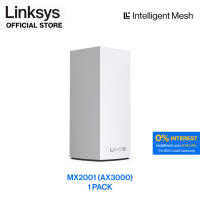
Linksys Atlas 6 Ax3000 Dual Band Mesh WIFI 6 System1 Pack (MX2001)
₱7,995.00
Buy on Lazada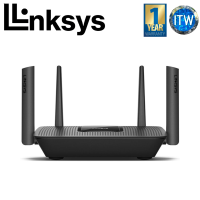
Linksys Max-Stream Tri-Band AC2200 WiFi 5 Router (EA8300-HK)
₱1,999.00
Buy on Lazada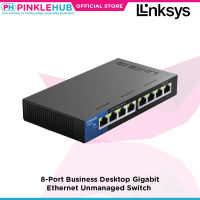
PinkleHub | Linksys 8-Port Business Desktop Gigabit Ethernet Unmanaged Switch (LGS108)
₱3,585.00₱3,738.00
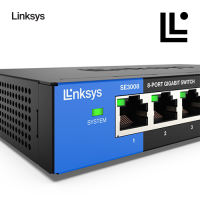
LINKSYS BUSINESS 8 PORT UNMANAGED GIGABIT SWITCH
₱3,050.00
Buy on LazadaAbout Linksys
Linksys is an American networking technology brand best known for consumer and small-business networking equipment, particularly Wi-Fi routers, mesh Wi-Fi systems, switches, and wireless networking products. Founded in 1988, the company became one of the most recognizable brands in home networking and played an important role in bringing networking technology from specialist and enterprise environments into ordinary homes.1
Today, Linksys operates as an independent networking brand and focuses heavily on Wi-Fi, mesh networking, multi-gigabit connectivity, privacy-oriented networking, and Wi-Fi 7. Its current product family includes the Velop line of mesh systems as well as wired networking products.2
Infobox
| Attribute | Information |
|---|---|
| Brand | Linksys |
| Industry | Networking / Information technology |
| Founded | 1988 |
| Origin | United States |
| Original company | The Linksys Group, Inc. |
| Founders | Janie and Victor Tsao |
| Known for | Routers, Wi-Fi, mesh networking, switches |
| Major former owner | Cisco Systems |
| Cisco acquisition | 2003 |
| Cisco divestiture | 2013 |
| Acquired by | Belkin |
| Current focus | Consumer and small-business networking |
| Major current technology | Wi-Fi 6, Wi-Fi 6E, Wi-Fi 7 |
| Major product family | Velop |
| Website | linksys.com |
History
Founding
Linksys was founded in 1988 in California by husband-and-wife entrepreneurs Victor and Janie Tsao. The company’s original objective was to make computer networking practical and accessible to ordinary consumers rather than limiting it to corporations and technically sophisticated users.
The company describes its beginnings as starting in a California garage, with the broader goal of making home networking simple and accessible.3 This was significant because personal computers were becoming increasingly common, while networking them together was still considerably more complicated than it is today. Linksys subsequently developed products aimed at the emerging consumer and SOHO (small office/home office) market.
The rise of home networking
During the 1990s and early 2000s, broadband Internet connections began replacing dial-up access. This created a new problem for households regarding how multiple computers could share one Internet connection. Linksys became one of the companies that helped solve this problem.
Its products included:
- Wired routers
- Broadband routers
- Ethernet switches
- Wireless access points
- Wireless adapters
- Home networking kits
- Small-office networking equipment
Cisco later described Linksys as a leading provider of wired and wireless networking products for consumers and SOHO users.4 This helped establish Linksys as a major consumer networking brand rather than an enterprise networking company.
The WRT54G and iconic era
One of the most famous products associated with Linksys is the WRT54G wireless router. Introduced during the early Wi-Fi era, the WRT54G became enormously influential because it combined wireless networking, broadband routing, Ethernet switching, consumer-friendly configuration, and relatively affordable pricing.
The product became particularly famous among enthusiasts because certain generations used firmware based on Linux and open-source software. This created an enthusiast community interested in modifying router firmware and experimenting with networking functionality. The WRT line therefore became more than just a consumer-product series; it became part of the history of the open-source router community.
Acquisition by Cisco
A major turning point came in 2003 when Cisco Systems acquired the Linksys business. Cisco announced the acquisition in March 2003.5 Cisco’s motivation was straightforward: it wanted a stronger presence in the rapidly expanding consumer and home-networking market.
At the time, Cisco was overwhelmingly associated with enterprise and telecommunications networking. Linksys gave Cisco a recognizable consumer brand and an established retail distribution network. After the acquisition, Linksys became a division of Cisco. Importantly, Cisco retained the Linksys brand rather than immediately replacing it with the Cisco name.
Sale to Belkin
In 2013, Cisco decided to exit the consumer home-networking business. Cisco sold its Linksys home-networking product line to Belkin, another major consumer electronics and networking company. Records indicate that the sale was finalized on March 15, 2013.67
This marked the end of Linksys’ decade under Cisco. The transition can be summarized as follows:
- 1988: Linksys founded
- 2003: Acquired by Cisco
- 2013: Sold by Cisco to Belkin
- Today: Linksys operates as a dedicated networking brand
The Belkin era and Velop
Under Belkin ownership, Linksys continued to operate as a distinct brand. One of the most important developments was the expansion from traditional standalone routers toward mesh Wi-Fi. Traditional home networking generally consisted of a modem connected to a single router. Mesh networking instead uses multiple nodes that cooperate to provide broader coverage throughout a house.
Linksys developed the Velop family specifically around this concept. Velop became one of Linksys’ most important modern product families. Rather than requiring consumers to understand networking concepts such as wireless access points, repeaters, channels, and roaming, Velop was designed around the idea of a relatively simple multi-node Wi-Fi system. This helped Linksys transition from being primarily known for “the home router” to being known for whole-home Wi-Fi.
Modern technologies
Wi-Fi 6 and Wi-Fi 6E
As the Wi-Fi industry moved beyond Wi-Fi 5 (802.11ac), Linksys introduced products based on Wi-Fi 6 and Wi-Fi 6E. These standards brought multi-gigabit Ethernet support, improved wireless capacity, and more efficient handling of numerous connected devices. Wi-Fi 6E extended Wi-Fi into the 6 GHz band, providing additional spectrum for compatible devices.
Wi-Fi 7
Wi-Fi 7 is one of the central technologies in the current Linksys product strategy. Current products include the Velop Micro 7 and Velop Pro 7.8 Wi-Fi 7 introduces technologies such as Multi-Link Operation (MLO), wider 320 MHz channels, 4K-QAM, higher throughput, lower latency, and better utilization of multiple frequency bands.
Major product categories
Routers
Routers remain one of Linksys’ core product categories. A Linksys router typically combines internet routing, Wi-Fi access, Ethernet switching, network security, DHCP, NAT, guest networking, and device management. Historically, Linksys became particularly famous for affordable consumer broadband routers.
Mesh Wi-Fi
Mesh Wi-Fi is currently one of the most significant areas for the brand. The Velop family is designed to provide whole-home wireless coverage using multiple interconnected nodes. Depending on the model, Linksys systems can use 2.4 GHz, 5 GHz, and 6 GHz bands, and can utilize either wireless or wired backhaul between nodes.
Ethernet switches
Linksys also sells unmanaged Ethernet switches. These are networking devices that allow additional wired devices to connect to an Ethernet network. Typical uses include desktop computers, game consoles, smart TVs, network storage, printers, security cameras, and access points.
Wireless networking
Wireless connectivity remains the centre of the Linksys brand. The company has historically produced wireless routers, access points, adapters, mesh systems, and range extenders. Its current positioning is strongly centred on consumer and small-business Wi-Fi.
Privacy philosophy
One of Linksys’ current differentiators is its emphasis on privacy. The company states that its approach is designed around the principle that customers’ data belongs to the customer. Linksys promotes products that do not require an app, cloud account, or subscription for its privacy-focused approach. Current messaging emphasises no tracking, no selling of personal information, no collection for machine learning or AI, and regular firmware security updates.
Open-source heritage
Linksys has an unusually important relationship with the open-source networking community. The company’s WRT products became famous among technically inclined users because firmware could be modified and replaced with alternative software. This helped popularise third-party router firmware projects and made the WRT name particularly recognizable among networking enthusiasts. This heritage remains one of the reasons the Linksys name has recognition among both ordinary consumers and technical users.
Technology philosophy
The Linksys brand philosophy can broadly be described as advanced networking technology made relatively easy for ordinary users. Today, that philosophy encompasses several themes:
- Simplicity: Products are intended to be straightforward to install and manage.
- Performance: Modern products emphasize high Wi-Fi throughput, multi-gigabit Ethernet, and low latency.
- Coverage: Mesh systems are designed to eliminate Wi-Fi dead zones.
- Privacy: The company positions privacy as a fundamental product characteristic.
- Design: Modern Velop products are designed to resemble home electronics or furniture rather than traditional networking equipment.
- Longevity: Linksys continues to support technologies ranging from conventional Ethernet switches to modern Wi-Fi 7.
Claimed scale
According to corporate information, Linksys claims to have over 35 years of networking history, more than 250 million devices shipped, presence in 209 countries, over 40 patents, more than 100 industry awards, and over 25 million currently active devices or installations.12 These figures represent the company’s own claims rather than independently audited industry statistics.
Notable products
| Product / family | Significance |
|---|---|
| WRT54G | One of the most iconic consumer Wi-Fi routers |
| WRT series | Famous among networking enthusiasts and open-source users |
| Velop | Major whole-home mesh Wi-Fi platform |
| Velop Pro | Higher-performance mesh family |
| Velop Pro 6E | Wi-Fi 6E generation |
| Velop Pro 7 | High-end Wi-Fi 7 mesh/router platform |
| Velop Micro 7 | Compact Wi-Fi 7 system |
The current catalogue particularly emphasizes the Velop Micro 7 and Velop Pro 7.8
Position in the networking industry
Linksys occupies a position between consumer electronics and networking technology. It is not primarily an enterprise networking company like Cisco or Juniper, but it is more networking-focused than many general consumer-electronics brands. Its traditional competitive environment has included brands such as NETGEAR, TP-Link, ASUS, D-Link, Eero, Google/Nest, and Ubiquiti.
Relationship with Cisco
Although the two brands have a historical connection, Linksys is not currently a Cisco consumer brand. Cisco acquired Linksys in 2003 and sold the home-networking business in 2013.9 Therefore, describing a modern Linksys router as a “Cisco router” would be inaccurate. Linksys maintains its own brand identity and product portfolio.
Current direction
Linksys describes itself as a long-established Wi-Fi brand focused on homes and businesses. Its current portfolio emphasizes Wi-Fi 7, mesh networking, multi-gigabit Ethernet, and privacy. The company is also emphasizing what it calls “Planet-Centric” design, including the use of recycled or recyclable materials and more environmentally conscious packaging.13
Timeline
| Year | Event |
|---|---|
| 1988 | Linksys founded in California |
| 1990s | Expands into consumer and SOHO networking |
| Late 1990s–2000s | Becomes a major home broadband/Wi-Fi brand |
| 2002 | WRT54G era establishes Linksys as a household networking name |
| 2003 | Cisco announces and completes acquisition of Linksys |
| 2003–2013 | Linksys operates as a Cisco division |
| 2013 | Cisco sells Linksys home-networking business to Belkin |
| 2010s | Linksys expands into whole-home mesh Wi-Fi |
| Late 2010s | Velop becomes a major product family |
| 2020s | Expansion into Wi-Fi 6/6E and multi-gigabit networking |
| 2020s | Wi-Fi 7 products introduced |
Historical dates for the founding, Cisco acquisition, and Cisco divestiture are supported by Linksys and Cisco records.1011
Brand significance
Linksys is significant in networking history because it helped turn networking from an enterprise technology into a household technology. Before inexpensive consumer routers became commonplace, connecting multiple computers to the Internet required substantially more technical knowledge. Linksys helped popularise the idea that an ordinary household could simply plug in a router, connect to broadband, create a home network, and connect computers wirelessly.
Its influence extends beyond mainstream consumers. The WRT platform also helped create a culture of experimentation around Linux-based router firmware and open networking. That combination of mass-market accessibility and enthusiast experimentation is a major part of the historical identity of Linksys.
References
- About Us – Linksys
- The Linksys Story
- Cutting-edge WIFI 7 – Linksys
- Linksys | Networking & WiFi Technology
- Cisco Systems Announces Agreement to Acquire The Linksys Group, Inc.
- Linksys | Networking & WiFi Technology
- Linksys | Networking & WiFi Technology
- Shop iPhone 17 Chargers, Screen Protectors & More
- Cisco Systems – Linksys Products Divestiture
- Cisco Systems to Acquire KiSS Technology A/S
- Cisco Systems to Acquire Sipura Technology
- Linksys|About Us
- Linksys | Networking & WiFi Technology