Shop on Lazada
Marks & Spencer products
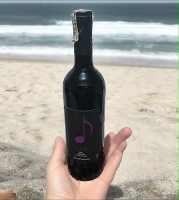
7 Hills Natural Sweet Red Wine 750mL /FINCAMIGUEL CAVA Brut Sparkling Wine -7hills
₱1,850.00
Buy on Lazada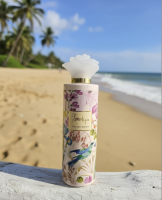
Marks & Spencer Talcum Powder Set Floral Collection BBE 2027 LIMITED STOCKS!! BEST FOR GIFT IDEAS
₱1,250.00
Buy on Lazada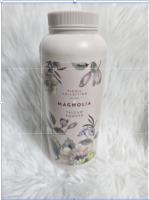
MARKS &SPENCER Floral Collection MAGNOLIA Talcum Powder 200g wd FREE paper bag FROM UK
₱950.00
Buy on Lazada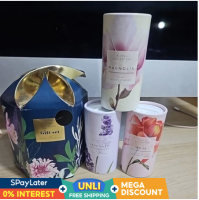
Marks & Spencer Talcum Powder Trio Set Floral Collection BBE 06/26 LIMITED STOCKS!!
₱1,750.00
Buy on Lazada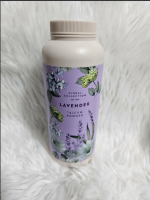
MARKS &SPENCER Floral Collection LAVENDER Talcum Powder 200g wd FREE paper bag FROM UK
₱950.00
Buy on Lazada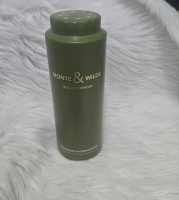
MARKS &SPENCER MONTE & WILDE Collection Talcum Powder 150g wd FREE paper bag FROM UK
₱895.00₱1,500.00
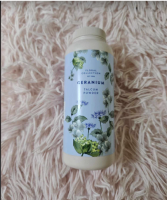
MARKS &SPENCER Floral Collection GERANIUM Talcum Powder 200g wd FREE paper bag FROM UK
₱950.00
Buy on Lazada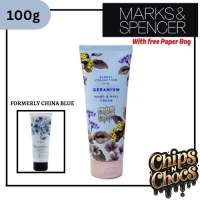
M&S Floral Geranium Hand & Nail Cream | Moisturizing Hand Care | Original UK Import with Free Paper Bag | Limited Stocks Available
₱490.00₱599.00
About Marks & Spencer
Marks & Spencer Group plc, commonly referred to as M&S, is a prominent British retailer with origins dating back to 1884. Renowned for its clothing, lingerie, food, home products, and beauty lines, the company has evolved from a modest market stall in Leeds into one of the most recognised retail brands in the United Kingdom. 1
Overview
| Full name | Marks & Spencer Group plc |
| Common name | M&S / Marks & Spencer |
| Founded | 1884 |
| Marks & Spencer partnership | 1894 |
| Founders | Michael Marks and Thomas (Tom) Spencer |
| Origin | Leeds, England, United Kingdom |
| Industry | Retail |
| Main businesses | Fashion, Home & Beauty; Food |
| Ownership | Public company |
| Stock exchange | London Stock Exchange |
| Brand positioning | British, quality-focused, value-oriented |
| International presence | More than 380 stores and 46 websites globally, according to M&S |
M&S positions itself as a British retailer offering value for money, with a primary focus on its own-label merchandise. 1
History
The beginning: 1884
The history of M&S traces back to Michael Marks, a Jewish immigrant who arrived in England from what was then Russian Poland. In 1884, Marks opened a small market stall at Kirkgate Market in Leeds. 2
His enterprise became known as a Penny Bazaar, offering affordable household items and haberdashery. An early slogan famously declared:
“Don’t ask the price, it’s a penny”
The business model was straightforward: goods were inexpensive, clearly priced, and easily accessible to shoppers.
Early merchandise included items such as needles, thread, buttons, yarn, sewing equipment, and other household necessities. Notably, M&S did not originally operate as a fashion retailer.
Formation of the partnership: 1894
As the business grew, Michael Marks sought a partner and was introduced to Thomas Spencer, a senior cashier previously employed by Isaac Dewhirst, one of Marks’ initial backers.
On 28 September 1894, Marks and Spencer formalised their partnership, establishing the entity that would become Marks & Spencer.
This union combined Marks’ retail acumen with Spencer’s financial and organisational expertise. By the turn of the 20th century, the company had expanded considerably, operating 12 high-street stores and 24 market stalls.
Transition to department-store retailing
During the early 20th century, M&S gradually moved beyond its original penny-price concept. The company cultivated a reputation for reliable quality, affordable pricing, practical household goods, clothing and textiles, strong customer service, and increasingly sophisticated store environments.
A pivotal development was the shift toward selling products manufactured to M&S specifications under its own labels. Rather than functioning as a traditional department store stocking numerous third-party brands, M&S increasingly designed, specified, sourced, and retailed its own merchandise. This own-label model ultimately became central to the company’s identity.
Clothing and lingerie
Although M&S began with haberdashery and household goods, clothing eventually emerged as one of its most significant business segments. Historically, the company built its reputation on practical, dependable apparel at accessible price points.
Over subsequent decades, M&S became particularly associated with women’s clothing, men’s clothing, childrenswear, underwear, bras and lingerie, knitwear, suits and tailoring, coats, shoes, and denim. Its lingerie business became especially prominent within the UK market.
Today, M&S describes itself as a leader in British women’s fashion, combining style and innovation with value. 3
Food business
A distinctive pillar of modern M&S is M&S Food. The division developed a reputation for offering food products positioned above conventional supermarket private-label ranges in terms of presentation, product development, and perceived quality.
The food business is particularly associated with ready meals, fresh produce, bakery items, desserts, snacks, sandwiches, seasonal products, Christmas food, wine and beverages, and premium private-label goods. M&S states that its food offering is known for quality, freshness, and innovation.
This dual focus gives the company an unusual position in British retail, as it competes simultaneously in fashion and food—two categories typically dominated by different types of retailers.
Fashion, Home & Beauty
Modern M&S divides its principal retail offer into two major areas.
Fashion, Home & Beauty
This segment encompasses women’s fashion, men’s fashion, kidswear, lingerie, beauty, home furnishings, home accessories, and selected furniture and lifestyle products. M&S strategy has increasingly emphasised making its clothing more contemporary and style-led, while retaining its historical emphasis on quality and value. 4
Food
The second major pillar is M&S Food, covering the company’s extensive food retail operations.
Market positioning
M&S has historically occupied a distinctive position in the British retail market, functioning as neither a discount retailer nor a luxury brand. Its traditional proposition can be summarised as quality, trust, British heritage, and value.
The company has benefited significantly from its reputation for dependable products. M&S clothing has historically been associated with good materials, consistent sizing, practical design, longevity, comfortable basics, strong underwear and lingerie offerings, and classic British styling. Concurrently, M&S Food has established a similar proposition centred on quality and product innovation.
Own-label model
One of the most defining characteristics of M&S is its reliance on own-label products. Instead of primarily serving as a marketplace for external brands, M&S develops products specifically for its own customers. This approach grants the company greater control over product design, materials, specifications, packaging, pricing, quality, and brand presentation.
This model is significant because the M&S name itself serves as the consumer’s guarantee of the product. Essentially, the item is not merely “a shirt sold by M&S” but rather an M&S shirt. This own-brand philosophy has been central to the company’s identity throughout much of its history.
Brand identity
M&S maintains one of the strongest associations with British retail heritage. Its image has traditionally been built around several core concepts:
- Britishness: A long-established British institution with roots in Victorian-era retail.
- Quality: A historical emphasis on product standards and reliability.
- Value: A tradition of offering products that justify their prices rather than competing solely on low cost.
- Trust: Generations of British consumers have grown up with the brand.
- Everyday sophistication: An increasing effort to combine practicality with modern style.
The company describes M&S as a “British icon.” 5
Logo and visual identity
The familiar M&S initials have become one of Britain’s most recognisable retail marks. Throughout its history, the company has utilised several visual identities reflecting changes in positioning and advertising.
A notable modern development occurred in 2015, when M&S added “EST. 1884” to its branding to emphasise its heritage. The identity generally combines strong typography, minimalist presentation, the M&S initials, green and/or black branding depending on application, and heritage cues. The visual system is deliberately restrained, reinforcing the company’s image of established British quality rather than trend-driven fashion.
Cultural significance
M&S occupies an unusual cultural position in Britain, having become part of everyday life beyond its role as a retailer. For generations, the brand has been associated with occasions such as buying school clothes, purchasing underwear and workwear, shopping for Christmas food, buying gifts, preparing for holidays, and acquiring household goods.
Its food advertisements and Christmas campaigns have also become prominent features of British retail culture. This extensive history affords M&S a level of brand recognition and emotional familiarity that newer retailers generally cannot replicate.
International expansion
Although fundamentally a British brand, M&S has expanded internationally. According to current corporate information, M&S operates more than 380 stores and 46 websites globally.
International operations have historically included markets across Europe, Asia, the Middle East, India, and other regions. However, international retail has not always been straightforward; the company has periodically restructured overseas operations to concentrate on markets and business models offering stronger opportunities.
M&S in India
India holds particular importance in the brand’s international narrative. M&S entered the Indian market with its first store in 2001 and established a joint venture with Reliance Retail in 2008. The Indian business has subsequently grown into one of the company’s largest international operations.
Digital transformation
Like many traditional retailers, M&S has undergone a significant transition from primarily physical-store retail toward an omnichannel and digital-first model. The modern business integrates physical stores, e-commerce, mobile and digital shopping, online food and fashion, loyalty programmes, digital marketing, data analytics, and modern supply-chain systems.
Current strategy places considerable emphasis on technology and leveraging data to facilitate faster and more effective decision-making. 6
Sparks loyalty programme
M&S operates Sparks, its customer loyalty programme designed to encourage engagement across the retail ecosystem through personalised rewards and offers. The programme is integral to the company’s effort to build data-driven customer relationships rather than relying solely on traditional store traffic.
Sustainability
Sustainability has become a key component of M&S corporate strategy. The company launched Plan A, its major sustainability programme, and has subsequently developed further environmental, social, and governance commitments.
The sustainability agenda covers climate change, carbon emissions, sustainable sourcing, packaging, waste reduction, food, clothing, supply chains, human rights, and responsible business practices. M&S has explicitly connected sustainability with its long-term retail strategy rather than treating it solely as a marketing initiative. 7
Corporate structure
The parent company, Marks & Spencer Group plc, is a publicly listed British company with shares traded on the London Stock Exchange. Its corporate structure encompasses the principal M&S retail businesses alongside related operations.
Headquartered in the United Kingdom, the company employs a large workforce spanning stores, support centres, warehouses, and supply-chain operations. For comparison, M&S reported £14.2 billion in group sales excluding Ocado Retail for its 2025/26 financial year and £671.4 million of adjusted profit before tax.
Partnership with Ocado
A significant development in modern British grocery retail was M&S’s relationship with Ocado. M&S acquired a substantial stake in Ocado’s retail business and became its principal retail partner for online grocery operations.
This arrangement provided M&S access to a large-scale online grocery platform while enabling Ocado to offer M&S Food products to online customers. The relationship is strategically vital given that M&S historically maintained a smaller online grocery presence compared to major supermarket competitors.
Recent transformation
In the 2010s and early 2020s, M&S faced significant challenges including changing consumer behaviour, intense competition from supermarkets and fast-fashion retailers, the growth of online retail, an ageing brand perception, underperforming stores, international difficulties, and pressure on clothing sales.
In response, M&S embarked on a major transformation strategy involving:
- Improving product quality
- Making fashion more contemporary
- Modernising stores
- Expanding successful Food formats
- Improving the online experience
- Investing in supply chains
- Closing or relocating weaker stores
- Using technology and data more extensively
- Rebuilding customer perception
The company’s 2026 annual report describes the current phase as “Reinvesting for Growth”, featuring a multi-year capital programme intended to support growth over the coming decade.
Current status
As of 2026, M&S increasingly positions itself as a modern, digitally enabled retailer rather than solely a traditional British department store. Its two primary consumer propositions remain:
Fashion, Home & Beauty
Contemporary clothing, lingerie, beauty, and home products.
Food
Fresh, prepared, and packaged food with an emphasis on quality and innovation.
The company reported a 10.2% fashion market share in its 2026 annual report metrics and a 4.1% food market share. 8 M&S also states it holds a particularly strong position in women’s fashion and is seeking further growth in categories such as denim.
Key historical timeline
| Year | Event |
|---|---|
| 1884 | Michael Marks opens a Penny Bazaar stall at Kirkgate Market, Leeds |
| 1886 | Marks moves into the indoor section of Kirkgate Market |
| 1894 | Michael Marks partners with Tom Spencer |
| 1900s | M&S expands rapidly through stores and market stalls |
| 1920s | Company becomes an increasingly important national retailer |
| 1926 | M&S becomes a public limited company |
| 20th century | Clothing, textiles and own-label products become central to the business |
| 2001 | M&S opens its first store in India |
| 2000s | International operations and business model undergo significant restructuring |
| 2015 | “EST. 1884” is incorporated into the M&S branding |
| 2016 | Steve Rowe becomes CEO |
| 2017 | Archie Norman becomes chairman |
| 2020 | M&S launches the updated Plan A 2020 sustainability programme |
| 2020s | Major store, digital, supply-chain and product transformation |
| 2026 | M&S reports £14.2bn group sales excluding Ocado Retail and £671.4m adjusted PBT for 2025/26 |
The historical timeline is documented extensively in the M&S Company Archive. 9
Origin of the name
M&S stands for Marks & Spencer. The name derives directly from its two founders, Michael Marks and Thomas Spencer, who originally created the company as a partnership in 1894.
Significance in retail
M&S represents a notably successful example of a long-established private-label retailer adapting to modern retail. Its historical significance stems from its evolution from a market stall to a Penny Bazaar, then to a national retailer, department-store brand, own-label specialist, fashion and food retailer, and finally a digital omnichannel retailer. Few British retail brands possess such a continuous history.
Its primary competitive assets today include brand heritage, customer trust, own-label expertise, a strong food proposition, women’s fashion, lingerie, a large UK customer base, a recognisable British identity, an extensive physical-store network, and growing digital capabilities.
References
- About Us | Marks & Spencer
- Homepage | Marks & Spencer
- 2026 Annual Report | Marks & Spencer
- Homepage | Marks & Spencer
- Investors | Marks & Spencer
- Annual Reports 2025 | Marks & Spencer
- M&S RETURNS TO BIRTHPLACE | Marks & Spencer
- Results Reports Webcasts & Presentations | Marks & Spencer
- Homepage | Marks & Spencer