Shop on Lazada
Blue Diamond products
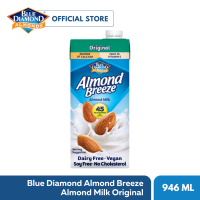
Blue Diamond Almond Breeze Almond Milk Original 946ML
₱221.00
Buy on Lazada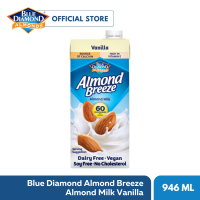
Blue Diamond Almond Breeze Almond Milk Vanilla 946ML (NOT UNSWEETENED)
₱221.00
Buy on Lazada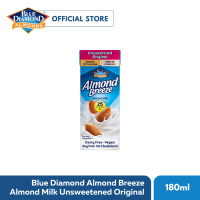
Blue Diamond Almond Breeze Almond Milk Unsweetened Original 180ML
₱60.00
Buy on Lazada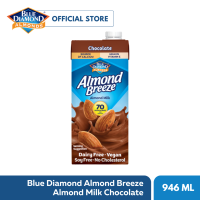
Blue Diamond Almond Breeze Almond Milk Chocolate 946ML
₱221.00
Buy on Lazada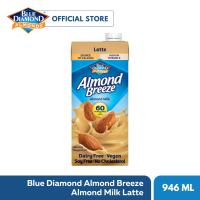
Blue Diamond Almond Breeze Almond Milk Latte 946ML
₱221.00
Buy on Lazada
Blue Diamond Almond Breeze Almond Milk Chocolate 180ML
₱60.00
Buy on Lazada
Blue Diamond Almond Breeze Almond Milk Latte 180ML
₱60.00
Buy on Lazada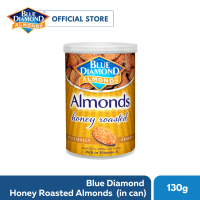
Blue Diamond Honey Roasted Almonds 130g (in can)
₱301.00
Buy on LazadaAbout Blue Diamond
Introduction
Blue Diamond is an American food brand focused on almonds and owned by Blue Diamond Growers, an agricultural cooperative headquartered in Sacramento, California. The organisation is one of the most prominent names in the global almond industry, integrating farming, processing, marketing, and consumer food products. Its history dates to 1910, when California almond growers formed the California Almond Growers Exchange to improve their collective marketing capabilities and secure better returns for farmers.12
Today, Blue Diamond is best known to consumers for packaged almonds and almond snacks, while the broader cooperative also operates the Almond Breeze brand of almond milk and supplies almond ingredients to food manufacturers worldwide. The company describes its purpose as bringing the benefits of almonds to consumers around the world.2
Overview
| Category | Information |
|---|---|
| Brand | Blue Diamond |
| Company / cooperative | Blue Diamond Growers |
| Industry | Food & beverage; agriculture; nut processing |
| Primary specialty | Almonds and almond-based foods |
| Founded | 1910 |
| Original name | California Almond Growers Exchange |
| Headquarters | Sacramento, California, United States |
| Ownership | Grower-owned agricultural cooperative |
| Major brands | Blue Diamond, Almond Breeze |
| Core products | Almond snacks, flavoured almonds, almond flour, almond milk, Nut-Thins crackers, ingredients |
| Current President & CEO | Kai Bockmann |
| Grower membership | More than 3,000 growers |
| Major markets | United States and international markets |
| Main agricultural crop | California almonds |
Blue Diamond emphasises that it is distinctive because it operates simultaneously as a century-old agricultural cooperative and a global consumer packaged-goods company.2
History
Origins: 1910
The story of Blue Diamond began on May 6, 1910, when California almond growers organised the California Almond Growers Exchange. Contemporary corporate material describes the organisation as having been created to give growers greater control over marketing their crop and to improve economic returns. According to the company’s corporate history, the cooperative began with 230 California almond growers.12
At the beginning of the 20th century, almonds were a comparatively small specialty crop in California. The cooperative helped transform almond production into a much larger commercial industry by coordinating processing, marketing, quality standards, and distribution.
Development of the Blue Diamond name
In 1915, the California Almond Growers Exchange adopted the blue diamond as its trademark symbol. The company states that the diamond represented quality and helped distinguish California almonds from imported varieties from Spain and Italy.
The Blue Diamond identity subsequently became associated with California almonds and eventually evolved into a consumer brand recognised internationally.
Expansion and innovation
During the 20th century, the cooperative increasingly moved beyond simply marketing raw almonds. It developed processing technologies and new almond products, including shelling, grading, blanching, slicing, dicing, and other forms of value-added processing.2
A notable consumer-product milestone occurred in 1949, when Blue Diamond introduced its Smokehouse Almonds.
In 1980, the cooperative officially adopted the name Blue Diamond Growers, reflecting the increasingly recognisable Blue Diamond identity.
The Blue Diamond logo
The blue diamond is one of the most recognisable elements of the brand. The symbol was originally adopted in 1915 and was intended to communicate quality and distinguish the cooperative’s California almonds from imported products.
Blue Diamond has used different versions of its identity for different purposes. Its consumer products traditionally use the recognisable Blue Diamond mark with an “Almonds” ribbon, while the cooperative’s corporate identity uses a “Growers” version.2 Thus, there is an important distinction between Blue Diamond as the consumer-facing product brand and Blue Diamond Growers as the grower-owned cooperative and operating organisation.
Business operations
Blue Diamond is more than a packaged-snack company. Its business can broadly be divided into four areas.
Almond farming and grower relationships
Blue Diamond is a cooperative owned by almond growers. The farmers who supply the cooperative are not simply conventional suppliers; they are member-owners of the organisation. The company currently states that it works with more than 3,000 growers, many of whom operate family farms in California’s Central Valley.12
Almond processing
The cooperative receives almonds from growers and processes them into various forms, including:
- In-shell almonds
- Shelled almonds
- Roasted almonds
- Blanched almonds
- Sliced almonds
- Slivered almonds
- Diced almonds
- Almond flour
- Other almond ingredients
Blue Diamond describes itself as having more than 2.5 million square feet of processing facilities across three major production locations in California.2
Consumer packaged foods
The Blue Diamond brand transforms almonds into products designed for consumers, particularly snacks and convenient foods. Its portfolio includes:
- Whole and roasted almonds
- Flavoured almonds
- Snack almonds
- Almond-based ingredients
- Almond flour
- Nut-Thins almond-based crackers
- Other almond snack products
The brand’s product strategy has gradually shifted from traditional commodity almonds towards higher-value, branded foods.
Almond beverages
Blue Diamond is also associated with Almond Breeze, a major almond-milk brand. Almond Breeze is operated within the broader Blue Diamond business and gives the cooperative a presence in the plant-based beverage category.
Major brands and products
Blue Diamond Almonds
This is the flagship consumer identity. The brand sells almonds in numerous formats and flavours, including roasted and seasoned varieties. Its positioning centres on almonds as a convenient, nutritious snack. Blue Diamond has historically invested heavily in flavour innovation, helping move almonds from a basic agricultural commodity into a branded snack category.
Nut-Thins
Nut-Thins is Blue Diamond’s cracker line. These crackers use almonds and are positioned particularly strongly towards consumers looking for gluten-free snack alternatives. The brand continues to introduce new flavours; for example, the company’s 2026 publication reported the upcoming introduction of Dill Pickle Nut Thins, reflecting a continuing emphasis on flavour trends and product innovation.2
Almond Breeze
Almond Breeze is Blue Diamond’s almond-milk brand. It provides the company with a position beyond traditional nuts and into the broader plant-based food and beverage market. Products include both refrigerated and shelf-stable almond milk.
International presence
Although Blue Diamond’s roots are firmly in California, the business has developed a significant international market. Blue Diamond states that it has helped develop markets for California almonds in more than 80 countries, including major Asian markets such as Japan and China.2
This international strategy is particularly important because California is a dominant centre of global almond production. Blue Diamond therefore functions not merely as a domestic food brand but as part of the infrastructure through which California almonds reach international consumers and food manufacturers.
Manufacturing and headquarters
Blue Diamond is headquartered in Sacramento, California, where its operations include processing, storage, distribution, cooperative administration, marketing, sales, and its Almond Innovation Center.2
The company identifies three major production locations:
- Sacramento
- Salida
- Turlock
The Salida facility is particularly significant: Blue Diamond describes it as the world’s largest almond receiving station, with the capacity to handle more than five million pounds per day.2
In 2013, the company opened a new processing plant in Turlock, California, while also establishing its Almond Innovation Center. Blue Diamond describes the latter as the world’s first research centre specifically dedicated to almond product innovation.
Business model
One of the most distinctive aspects of Blue Diamond is its cooperative structure. Unlike a typical publicly traded food company, Blue Diamond Growers is owned by the growers who participate in the cooperative.
The basic model can be simplified as:
Almond growers → Blue Diamond cooperative → Processing → Branding/marketing → Retail & food manufacturers → Consumers
This structure allows growers to participate collectively in the processing and marketing of their crop rather than simply selling raw almonds to an unrelated processor. Blue Diamond states that its fundamental objectives include maintaining strong relationships between growers and customers, communicating directly and honestly, and working collectively to generate the best return for growers.2
Innovation
Innovation has been central to Blue Diamond’s history. The cooperative states it was responsible for a number of industry developments, including:2
- Early almond shelling and grading systems
- Continuous blanching technology
- Electronic almond sorting
- Commercial almond splitting, slivering, and dicing machinery
- Development of international markets
- Promotion of the nutritional benefits of almonds
The company’s Almond Innovation Center, opened in 2013, represents the modern extension of this philosophy. It focuses on developing new ways of using almonds in consumer foods and ingredients.
Marketing and brand positioning
Blue Diamond’s marketing has historically centred on three themes.
Almond expertise
The brand presents itself as an organisation whose expertise comes directly from generations of almond growers. Its current brand storytelling describes Blue Diamond as “The Almond People”, emphasising its connection to the growers behind its products.
Quality
Quality has been part of the company’s identity since the early Blue Diamond trademark. The company connects quality with its control over growing, processing, testing, and manufacturing.1
Innovation
Rather than remaining a commodity-almond producer, Blue Diamond has continually expanded into flavoured snacks, crackers, almond milk, flour, and specialised ingredients. A famous example of its advertising history is the “A Can a Week, That’s All We Ask” campaign launched in 1986, which featured real almond growers.
Sustainability
Sustainability is a major component of the modern Blue Diamond identity. The cooperative states its sustainability programme focuses on areas such as:
- Water conservation
- Orchard stewardship
- Biodiversity
- Pollinator protection
- Carbon emissions
- Recycling
- Long-term viability of family farms
Blue Diamond describes most of its approximately 3,000 member farms as family-owned and operated, with average farm sizes below 100 acres. This is particularly significant for the brand because its agricultural supply chain begins with almond orchards in California. Environmental issues affecting almond cultivation therefore have a direct connection to Blue Diamond’s long-term business model.
Leadership
As of 2026, Kai Bockmann serves as President and CEO of Blue Diamond Growers. He became CEO on January 16, 2023. Before joining Blue Diamond, Bockmann held senior leadership positions in global consumer packaged goods and food companies, including Saputo and McCain Foods.2
His role is to lead the cooperative while balancing two sides of the business: grower interests and consumer/market growth. That balance is fundamental to Blue Diamond’s cooperative structure.
Blue Diamond in the 2020s
Blue Diamond entered the 2020s as a mature but still expanding global almond business. The company’s 2026 Almond Facts publication highlights several current priorities, including new branding, product innovation, closer connections with growers and consumers, and expansion of Almond Breeze.2
This illustrates how Blue Diamond has evolved from its original purpose of collectively marketing California almonds into a much broader food company. The modern business essentially operates at three levels:
Agriculture → Food manufacturing → Consumer brands
That combination distinguishes Blue Diamond from an ordinary snack brand.
Brand identity
At its core, Blue Diamond’s identity can be summarised through five ideas:
- California — The brand is deeply connected to California’s almond-growing industry.
- Growers — The company is owned by the farmers who produce its primary raw material.
- Almond expertise — Almonds are not simply one ingredient in its portfolio; they are the foundation of the business.
- Innovation — Blue Diamond has continually developed new processing techniques, products, flavours, and applications for almonds.
- Global reach — California-grown almonds are marketed to consumers and food manufacturers around the world.
Significance
Blue Diamond is significant not only because of its consumer products but also because of its role in the development of California’s almond industry. The cooperative helped transform almonds from a relatively minor agricultural crop into an internationally marketed food commodity. Its vertically integrated model—connecting growers, processing, marketing, product development, and consumer brands—has allowed it to capture more value from almonds than simply selling them as raw agricultural produce.1
In essence, Blue Diamond is simultaneously a farm cooperative, food manufacturer, ingredient supplier, and consumer brand.
Timeline
| Year | Milestone |
|---|---|
| 1910 | California Almond Growers Exchange established |
| 1915 | Blue Diamond symbol adopted |
| 1931 | 20 million lb of almonds delivered by 4,000 growers |
| 1949 | Smokehouse Almonds introduced |
| 1980 | Organisation officially becomes Blue Diamond Growers |
| 1986 | “A Can a Week” advertising campaign launched |
| 2010 | Cooperative celebrates its centennial |
| 2013 | Turlock facility and Almond Innovation Center opened |
| 2023 | Kai Bockmann becomes President & CEO |
| 2026 | Company emphasises renewed branding, product innovation, and continued global growth |