Shop on Lazada
Merba products
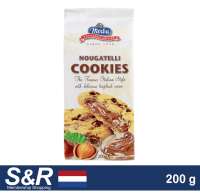
Merba Nougatelli Cookies 200 g
₱152.00
Buy on Lazada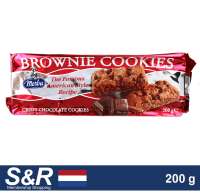
Merba Brownie Cookies 200 g
₱129.00
Buy on Lazada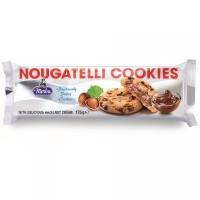
MERBA Cookies (IMPORTED) 150 grams - 200 grams | Nougatelli | Chocolate Chip Cookies | Brownie Cookies
₱170.00
Buy on Lazada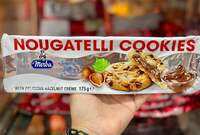
merba chocolate cookies / nougatelli 4 flavors 175g-225g
₱232.00
Buy on Lazada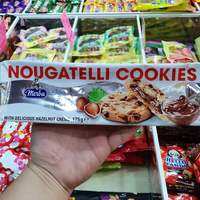
Merba Chocolate Chip Cookies
₱232.00
Buy on Lazada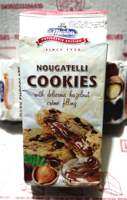
Merba Nougatelli Cookies with Delicious Hazelnut Creme Filling 200g
₱215.00
Buy on Lazada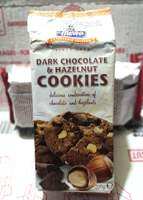
Merba Dark Chocolate & Hazelnut Cookies 200g
₱215.00
Buy on LazadaAbout Merba
Royal Merba, commonly referred to as Merba, is a Dutch bakery and cookie manufacturer based in Oosterhout, North Brabant, Netherlands. The company specialises in the large-scale production of cookies and biscuits for international markets. Merba characterises itself as a family business that has transformed from a small local bakery into a highly automated, technology-driven food manufacturer.1
Overview
| Field | Information |
|---|---|
| Company name | Royal Merba |
| Industry | Food manufacturing / bakery |
| Main products | Cookies, biscuits and related baked goods |
| Founded | 1920 (company origins); 1932 as Banketfabriek Merba |
| Origin | Sliedrecht, Netherlands |
| Current headquarters | Oosterhout, Netherlands |
| Ownership | Family business |
| Major markets | Netherlands, Europe and international markets |
| Known for | Chocolate chip cookies and private-label cookie production |
| Royal designation | Granted the Dutch Predicaat Koninklijk / Royal Warrant in 2020 |
| Official website | merba.com |
History
Origins: 1920–1932
The history of Merba dates back to 1920 with the establishment of Handelsonderneming Merwede in Sliedrecht, South Holland. Initially, the enterprise operated as a trading business dealing in confectionery and cookies rather than manufacturing them.1
In 1932, the company shifted its focus from sales to production. A former church building opposite its office was converted into a bakery, which became known as Banketfabriek Merba. According to the company, the name “Merba” was derived from the primary ingredients used in its cookies: milk, eggs, cream, butter and almonds (Dutch: Melk-Eieren-Room-Boter-Amandelen).1
World War II and reconstruction: 1940–1946
During the Second World War, commercial cookie production ceased entirely. The Merba bakery was repurposed as a community soup kitchen, preparing approximately 700 meals daily for residents of Sliedrecht.1
Following the war, production resumed and orders from small grocery stores across South Holland increased. This period marked Merba’s transition from a small regional operation to a growing commercial bakery.
The Boerman family
A significant phase in the company’s development began with Jan Boerman Sr., who joined Handelsonderneming Merwede as a driver in 1953 before becoming a sales representative. He was appointed managing director in 1975. His sons, Jan Jr. and Wim, subsequently joined the business and assumed major responsibilities, cementing Merba’s status as a family-run company.1
Expansion and automation
Demand for Merba products grew substantially during the 1970s and 1980s. In 1978, the company relocated from its original church-building site in Sliedrecht to a larger facility on a former football field. Two modern production lines were installed, each capable of processing more than 300 kg of cookies per hour at the time.1
The company increasingly adopted automation and technology as a strategic priority, recognising that large-scale cookie manufacturing requires consistent mixing, forming, baking, cooling and packaging processes.
Kletsmajoors
One of Merba’s longest-standing products is the Kletsmajoors cookie, which has been part of its range since 1939. Sales increased significantly after the recipe was modified to include butter in the 1970s, and it remains a popular accompaniment to coffee.1
Chocolate chip cookies
A pivotal moment occurred in the 1990s. During the previous decade, Jan Boerman Jr. had explored the American market; although the initial attempt to establish Merba in the United States was unsuccessful, the experience influenced the later development of chocolate chip cookies.1
Introduced in 1994, chocolate chip cookies became central to the company’s international growth and helped strengthen Merba’s position in European markets.
Robotics and high-tech manufacturing
Merba has placed considerable emphasis on automation. In 1993, it acquired a packaging robot described as the first fully automated cookie-packaging system in its sector.1 The company continued to invest heavily in automated ovens, machinery and robotics, resulting in highly automated manufacturing processes by the 2000s.
This technological focus remains integral to Merba’s identity. The company describes its modern operations as a high-tech bakery that combines traditional baking knowledge with automation, engineering and innovation.1
Move to Oosterhout
Growing demand for chocolate chip cookies prompted another major relocation in 1999. Merba acquired the former Jamin factory in Oosterhout, providing significantly more space for expansion. Oosterhout subsequently became the company’s principal manufacturing location and remains its headquarters.1
The current address is:
Royal Merba
Wilhelminakanaal Noord 2
4902 VR Oosterhout
The Netherlands1
Product portfolio
Merba’s product range has expanded considerably throughout its history. Products have included:
- Kletsmajoors
- Cream biscuits
- Chocolate chip cookies
- Coconut macaroons
- Speculaas
- Butter rings
- Almond bars
- Almond crowns
- Various other cookies and biscuits1
The chocolate chip cookie is particularly significant to Merba’s international development.
Merba also operates extensively in the private-label segment. Consumers may encounter cookies manufactured by Merba without seeing the Merba name prominently displayed, as the company produces goods sold under retailers’ own brands.1 Consequently, Merba functions as both a consumer-facing brand and a manufacturer for other brands and retailers.
Royal designation
In 2020, marking its centenary, Merba received the Dutch Predicaat Koninklijk, commonly translated as a Royal Warrant or “Royal” designation. Due to the COVID-19 pandemic, the official presentation took place on 24 June 2021.1
The company subsequently became officially known as Royal Merba. This designation is awarded to organisations with an established history and strong reputation, marking Merba’s transition from a century-old family bakery to a major modern food manufacturer.
Manufacturing philosophy
Merba’s business model integrates three primary elements:
- Baking expertise: Retaining its identity as a bakery and cookie specialist.
- Automation and technology: Automating production, packaging and logistics to achieve high volume and consistency.
- Product innovation: Continuously developing new products and manufacturing methods, including proprietary chocolate-processing capabilities.
The company aims to improve production efficiency without compromising product quality.1
Chocolate production
In 2016, Merba demonstrated vertical integration by developing its own chocolate line. This system converts liquid chocolate into chunks specifically for use in its chocolate chip cookies, providing greater control over a key ingredient.1
Sustainability and technology
Merba incorporates sustainability into its broader manufacturing strategy through automation, efficient production, technological innovation, employee development, modern equipment and supply-chain improvements. The stated goal is to maintain high product and process quality while producing efficiently and competitively.1
In 2022, Merba acquired Packaging Steenbergen following the bankruptcy of its tray supplier, intending to secure greater control over part of its supply chain.1
International presence
Although originating as a regional Dutch bakery, Merba has developed into an international cookie manufacturer. The company sells its products globally, often under retailers’ private-label brands.1 As a result, Merba may be less visible to consumers than its manufacturing scale suggests, as individuals may consume Merba-produced cookies without recognising the brand name on the packaging.
Corporate identity
Merba identifies as a family business with a history closely linked to several generations of the Boerman family. Unlike traditional artisanal biscuit makers, Royal Merba emphasises a technology-oriented identity centred on the combination of craftsmanship, technology and innovation.1
Merba today
Royal Merba currently operates from Oosterhout as a large-scale cookie manufacturer with highly automated facilities. Approximately 360 people work for the business, producing cookies for customers worldwide.1
The company’s evolution can be summarised as follows:
- 1920: Merwede trading company established
- 1932: Banketfabriek Merba established
- 1940s: Production interrupted by WWII; factory becomes soup kitchen
- 1970s–80s: Boerman family leadership, expansion and automation
- 1993: Automated packaging introduced
- 1994: Chocolate chip cookies become a major product
- 1999: Move to Oosterhout
- 2000s: Major investment in ovens, robotics and production capacity
- 2016: Own chocolate production line
- 2020/21: 100th anniversary and Royal designation
- 2022–24: Further vertical integration and development
- Today: International, high-tech cookie manufacturer1