Shop on Lazada
Milwaukee products
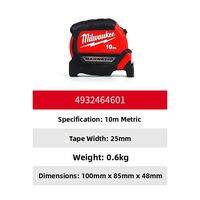
Milwaukee 5m Magnetic Steel Tape Measure High Precision Wear Resistant Measuring Tape for Construction Tools with Magnetic Attachment
₱3,279.00
Buy on Lazada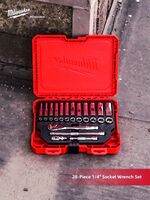
Milwaukee | Auto Repair Tool Set
₱6,234.00
Buy on Lazada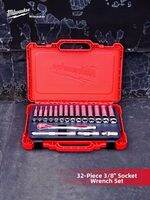
Milwaukee | Ratchet Wrench Socket Set 3/8
₱8,699.32
Buy on Lazada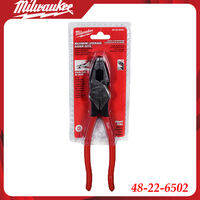
Milwaukee | Milwaukee 48-22-6502 High-Leverage Linemans Pliers 9-inch Hardened Iron Carbide Industrial Grade Hand Tools Wire Cutter
₱1,767.10₱2,297.23
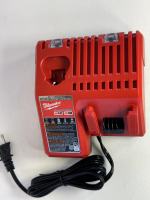
Milwaukee 4859-1812 M12 and M18 12-Volt/18-Volt Lithium-Ion Multi-Voltage Battery Charger converted to 220V For milwaukee battery only Single unit simplicity for quick charge of all M12 and M18 battery packs brand new taken from set.
₱3,400.00
Buy on Lazada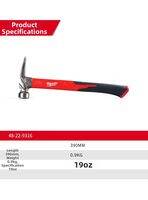
Milwaukee | Steel Curved Claw Industrial Grade One-piece Hammer 1 lbs
₱3,080.00
Buy on Lazada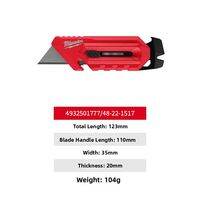
Milwaukee | Compact Utility Knife Small
₱1,636.00
Buy on Lazada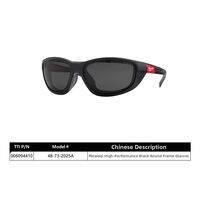
Milwaukee | High Performance Anti-impact Anti-fog Glasses
₱934.00
Buy on LazadaAbout Milwaukee
Overview
Milwaukee Tool, commonly referred to as Milwaukee, is an American manufacturer and global brand specialising in professional-grade power tools, cordless equipment, hand tools, accessories, storage systems, jobsite equipment, and safety products. The company is widely recognised for its heavy-duty tools designed for tradespeople in construction, electrical, plumbing, mechanical, industrial, and utility sectors. Founded in 1924, Milwaukee currently operates as a subsidiary of Techtronic Industries (TTI).1
The brand’s modern identity is closely tied to cordless technology, particularly the M12™, M18™, and MX FUEL™ battery platforms, alongside proprietary technologies such as FUEL™, REDLITHIUM™, PACKOUT™, SAWZALL®, and ONE-KEY™.
Quick Facts
| Category | Information |
|---|---|
| Brand | Milwaukee Tool |
| Legal Name | Milwaukee Electric Tool Corporation |
| Founded | 1924 |
| Country of Origin | United States |
| Historic Home | Milwaukee, Wisconsin |
| Global R&D Headquarters | Brookfield, Wisconsin |
| Parent Company | Techtronic Industries (TTI) |
| Industry | Power tools, hand tools, accessories, jobsite equipment |
| Primary Market | Professional trades |
| Major Cordless Platforms | M12, M18, MX FUEL |
| Key Technologies | FUEL, REDLITHIUM, ONE-KEY |
| Signature Products | Sawzall, Hole-Shooter, Hole-Hawg, PACKOUT |
| Brand Positioning | Professional, heavy-duty, trade-focused |
TTI identifies Milwaukee as the leading brand within its professional tool portfolio, with global research, design, and development headquarters located in Brookfield, Wisconsin.2
Origins and Early History
Milwaukee traces its history to 1924, when it was founded by tool-and-die maker A.H. Petersen. A significant early influence was Henry Ford, who sought a smaller, lighter portable drill for use on Ford assembly lines. In response, Petersen developed the Hole-Shooter, a compact, one-handed ¼-inch capacity drill. Designed to be more portable and easier to operate than the large drills common at the time, the Hole-Shooter is regarded as the company’s first major product and a foundational element of its professional-tool philosophy.3
This origin established a core principle that continues to define the brand: designing tools around the specific problems faced by professional users.
Throughout the 20th century, Milwaukee built its reputation on durability, industrial performance, and specialised power tools rather than general consumer products. Key milestones include:
- 1924: Hole-Shooter portable drill
- 1949: Right-angle drill
- 1951: Sawzall reciprocating saw
- 1970: Hole-Hawg high-torque drill
- 1991: Super Sawzall
- 1999: Tilt-Lok circular saw
- 2005: V28 lithium-ion cordless platform
- 2008: M12 and M18 systems
- 2010: REDLITHIUM batteries
- 2012: M18 FUEL platform4
These developments cemented Milwaukee’s status as a specialist in tools for demanding, repetitive professional applications.
Acquisition by Techtronic Industries
A pivotal moment in the company’s history occurred in 2005 when Techtronic Industries (TTI) acquired Milwaukee. This acquisition marked the beginning of a strategic transformation. Rather than serving a broad customer base, Milwaukee refocused exclusively on professional trades, including mechanical, electrical, plumbing, construction, utility, and industrial applications.5
Techtronic Industries (TTI), founded in 1985 and headquartered in Hong Kong, is a multinational company with over 48,000 employees globally. Its portfolio includes brands such as RYOBI, AEG, and Empire, alongside various floorcare brands.6 While Milwaukee is a TTI subsidiary and not an independent publicly traded entity, it maintains its own distinct brand identity, product development organisation, and professional-tool strategy.
Cordless Technology and Battery Ecosystems
Milwaukee’s modern success is largely attributed to its transition from corded tools to battery-powered professional equipment. The company entered the lithium-ion market early with the V28 system in 2005, followed by the M12 and M18 systems, and later expanded into heavier equipment with MX FUEL.7
Central to this strategy is the development of integrated battery ecosystems rather than standalone cordless tools. This approach allows users to utilise a single battery platform across multiple compatible tools, expanding their system without needing to invest in new battery platforms repeatedly.
M12 System
M12™ is Milwaukee’s compact cordless platform, featuring lightweight tools designed for applications where portability and access are critical. The ecosystem covers drilling, fastening, ratchets, inspection, electrical work, plumbing, cutting, lighting, and specialised mechanical tasks.8 For professionals working in confined spaces such as cabinets, vehicles, or machinery, the reduced size of M12 tools often provides greater utility than higher-powered alternatives.
M18 System
M18™ serves as Milwaukee’s broader professional cordless platform, covering a vast range of applications including drills, impact drivers, grinders, circular saws, reciprocating saws, rotary hammers, nailers, vacuums, and outdoor power equipment.10 For many users, M18 functions as the core professional ecosystem.
M18 FUEL
Introduced in 2012, FUEL™ represents Milwaukee’s premium technology line, combining advanced battery technology, motor design, and electronic controls.9 The objective was to deliver cordless performance that matches or exceeds traditional corded tools, offering professionals greater mobility, faster setup, and reduced dependence on generators or power outlets.
REDLITHIUM Batteries
Launched in 2010, REDLITHIUM™ is Milwaukee’s proprietary battery technology family.11 Unlike standard accessories, these batteries are treated as integral components of the tool system. The technology integrates the battery, electronics, motor, and tool to optimise performance, runtime, heat management, and protection as a unified system.
MX FUEL Equipment
MX FUEL™ targets heavier applications beyond handheld power tools, serving as a battery-powered equipment platform for concrete work, cutting, coring, compaction, drain cleaning, dewatering, demolition, and pipe work.12 The strategic aim is to replace petrol-powered and corded jobsite equipment with battery-powered alternatives.
Digital and Storage Solutions
ONE-KEY
ONE-KEY™ is a digital platform for managing compatible tools and equipment. It offers capabilities such as tool customisation, performance configuration, tracking, inventory management, and asset identification.19 This technology transforms traditional tools into connected devices comprising motors, batteries, electronics, software, and connectivity.
PACKOUT
PACKOUT™ is a modular storage and transport ecosystem consisting of interconnected toolboxes, organisers, and bags designed for jobsite, transport, and workshop use.12 This system extends the brand beyond tools, allowing contractors to integrate storage, lighting, hand tools, and accessories into a cohesive jobsite solution.
Product Categories and Markets
Milwaukee’s current catalogue spans far beyond traditional electric power tools.1314 Major categories include:
- Power Tools: Drills, impact drivers, grinders, sanders, saws, rotary hammers, nailers, and specialty tools.
- Equipment: Concrete, drain-cleaning, pipe, outdoor power, and jobsite equipment.
- Hand Tools: Pliers, screwdrivers, wrenches, sockets, ratchets, measuring, and cutting tools.
- Accessories: Drill bits, impact bits, hole saws, saw blades, and fastening accessories.
- Jobsite Products: Lighting, vacuums, storage, cooling/heating products, and safety equipment.
- Digital Products: ONE-KEY, tool tracking, and inventory management.
The brand’s strategy is heavily trade-specific, targeting professionals in general construction, electrical, plumbing, HVAC, automotive maintenance, utility, landscaping, remodelling, industrial work, and mining.15 Development teams work directly with tradespeople to identify problems and design solutions based on actual jobsite needs, a philosophy the company describes as “disruptive innovation.”20
Brand Identity and Market Position
Milwaukee’s visual identity is characterised by red, white, and black colourways, distinctive script lettering, and the slogan “Nothing but HEAVY DUTY”. This positioning communicates durability, professionalism, and performance, deliberately distinguishing the brand from consumer DIY competitors.
| Milwaukee Emphasis | Typical Consumer Tool Emphasis |
|---|---|
| Professional trades | General household use |
| High-duty applications | Occasional use |
| Trade-specific solutions | General-purpose tools |
| Battery ecosystems | Individual products |
| Jobsite productivity | Basic functionality |
| Durability | Value/price |
| Advanced electronics | Conventional mechanical design |
| Tool management | Traditional ownership |
While not necessarily the optimal choice for every application, Milwaukee’s product development is optimised for professionals who rely on their tools for their livelihood.
Competition
Milwaukee operates in a competitive global market alongside brands such as DeWalt, Makita, Bosch Professional, Hilti, Metabo, Festool, RIDGID, and Klein Tools. The competitive landscape varies by category; for instance, Milwaukee is prominent in cordless professional tools, while Hilti leads in construction systems, and Makita and DeWalt maintain extensive competing cordless ecosystems.
Global Operations and Manufacturing
Although Milwaukee is an American-origin brand, its operations are global, with research, engineering, manufacturing, sourcing, and distribution occurring across multiple countries.16 Consequently, not all products are manufactured in the United States. Like most major global tool companies, production locations vary by product line.
Contemporary Status
As of 2026, Milwaukee has evolved from a traditional electric-tool manufacturer into a global professional technology and equipment brand. Its business now encompasses five interconnected areas: professional tools, battery ecosystems (M12, M18, MX FUEL), larger cordless equipment, infrastructure (PACKOUT and accessories), and digital technology (ONE-KEY).18
The brand’s growth is driven by an “ecosystem lock-in” effect, where battery compatibility encourages users to remain within the platform. A contractor owning multiple M18 batteries and PACKOUT storage is incentivised to purchase additional M18 tools, making the platform strategically more valuable than individual products.17
Today, Milwaukee is best understood not merely as a power-tool company, but as a comprehensive professional jobsite ecosystem built around cordless technology, trade-specific productivity, and durable equipment.
References
- About MILWAUKEE® – Celebrating 100 Years of Innovation | Milwaukee Tool
- Explore the M18, M12 & MX FUEL™ Cordless Tool Systems | Milwaukee Tool
- Milwaukee® Tool Official Site | Nothing but HEAVY DUTY®
- MILWAUKEE | Cordless Power Tools Leader – Techtronic Industries TTI
- Milwaukee Firsts – Milwaukee Tool Thailand
- M18 and M12 FUEL Power Tools and Equipment | Milwaukee Tool
- Explore the M18, M12 & MX FUEL™ Cordless Tool Systems | Milwaukee Tool
- About MILWAUKEE® – Celebrating 100 Years of Innovation | Milwaukee Tool
- Explore the M18, M12 & MX FUEL™ Cordless Tool Systems | Milwaukee Tool
- Explore the M18, M12 & MX FUEL™ Cordless Tool Systems | Milwaukee Tool
- Explore the M18, M12 & MX FUEL™ Cordless Tool Systems | Milwaukee Tool
- Explore the M18, M12 & MX FUEL™ Cordless Tool Systems | Milwaukee Tool
- M18 and M12 FUEL Power Tools and Equipment | Milwaukee Tool
- M18 and M12 FUEL Power Tools and Equipment | Milwaukee Tool
- Milwaukee® Tool Official Site | Nothing but HEAVY DUTY®
- The Milwaukee® Tool story – nothing but heavy duty | Milwaukee® HK Milwaukee Tool Thailand
- Milwaukee Firsts
- About Milwaukee Tool Hong Kong | Milwaukee Tool Hong Kong
- ONE-KEY™ Overview | Milwaukee Tools Europe
- Innovation & Product Development | Milwaukee Tool Asia