Shop on Lazada
Palm products

Palm Corned Beef with Juices 3 x 326 g
₱1,349.00
Buy on Lazada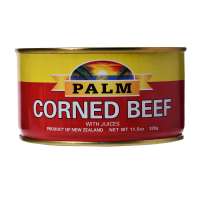
Palm Corned Beef Plain 326g
₱372.00₱380.00

Palm Corned Beef with Natural Juice - Plain 326g
₱440.00
Buy on Lazada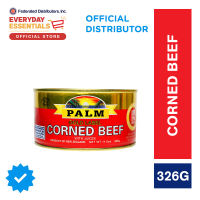
Palm Corned Beef Gold Label 326g
₱450.00
Buy on Lazada
Palm Liver Spread 227g
₱218.00
Buy on Lazada
Palm Corned Beef with Natural Juice - Plain 210g
₱315.00
Buy on Lazada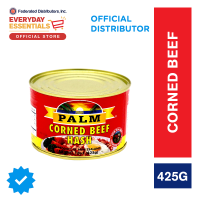
Palm Corned Beef - Hash 425g
₱440.00
Buy on Lazada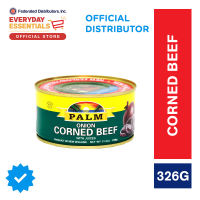
Palm Corned Beef with Natural Juice - Onion 326g
₱440.00
Buy on LazadaAbout Palm
Palm is an American technology brand originally established as Palm, Inc., a company recognised for pioneering personal digital assistants (PDAs), mobile computing, and early smartphones. Founded in 1992 as Palm Computing, Inc., it gained prominence with the introduction of the PalmPilot in 1996, which helped define the PDA as a mainstream consumer electronics category.1
Palm products were characterised by portability, simplicity, personal information management, handwriting input, computer synchronisation, and eventually mobile communications. The company’s technology evolved from dedicated PDAs to smartphones, including the Treo, Centro, Palm Pre, and Palm Pixi. Palm also developed the Palm OS operating system and later webOS, an influential smartphone platform built around multitasking and web technologies.2
Although Palm was eventually overtaken by Apple’s iPhone and Android smartphones, its hardware and software are widely regarded as significant predecessors to modern mobile devices. The original company was acquired by Hewlett-Packard (HP) in 2010, after which HP retired the Palm brand. The trademark was subsequently acquired by interests associated with TCL, leading to a separate revival of Palm-branded smartphones in 2018.2
History
Foundation
Palm was founded in 1992 as Palm Computing, Inc. by Jeff Hawkins, with Donna Dubinsky and later Ed Colligan playing major roles in the company’s development. Early efforts focused on software for handheld computers, including the Casio/Tandy Zoomer. Following the Zoomer’s commercial failure, Palm continued developing synchronisation software and handwriting-recognition technology.2
The company operated on the premise that personal computing could be made significantly smaller and simpler. Rather than attempting to replicate a desktop computer in a compact form factor, Palm concentrated on a limited set of functions—contacts, calendars, notes, tasks, and synchronisation—that users could access quickly whilst away from their primary computers.
PalmPilot
In 1996, Palm introduced the Pilot 1000 and Pilot 5000, establishing the company as a major force in handheld computing. These devices featured a stylus-operated touchscreen and Palm’s Graffiti handwriting-recognition system, offering a considerably smaller and simpler alternative to competing handheld computers of the era.1
The Pilot became one of the first PDAs to achieve widespread popularity, helping transform the PDA from a niche business tool into a recognisable consumer technology category. Palm subsequently released numerous product generations, including the Palm III, Palm V, Palm VII, Zire, and Tungsten lines.2
Ownership by U.S. Robotics and 3Com
In 1995, Palm was acquired by U.S. Robotics. In 1997, U.S. Robotics was itself acquired by 3Com, making Palm part of the 3Com corporation. Palm subsequently became an independent publicly traded company in 2000 following its separation from 3Com.1
The period surrounding the company’s initial public offering was particularly notable. Palm emerged as one of the prominent technology companies of the dot-com era, although its stock later suffered significantly as market conditions changed.2
Palm OS and the software ecosystem
A significant contribution from Palm was Palm OS, the operating system used by Palm’s own handheld computers and licensed to other manufacturers. Palm OS emphasised a simple user interface, quick access to personal information, low hardware requirements, and desktop synchronisation. This approach fostered a large ecosystem of third-party applications, utilities, games, and accessories.
Palm’s strategy extended beyond hardware manufacturing. Devices from companies such as Sony and Handspring also utilised Palm OS, creating a broader “Palm-powered” ecosystem. Corporate filings described the business as encompassing both Palm-branded devices and third-party hardware using the Palm operating system.3
Handspring and the Treo
In 1998, founders Jeff Hawkins, Donna Dubinsky, and Ed Colligan left Palm to establish Handspring. Handspring produced Palm OS devices such as the Visor and eventually developed the Treo smartphone family.2
Palm and Handspring later reunited. In 2003, Palm’s hardware business merged with Handspring, whilst the Palm OS business was separated into PalmSource. The combined hardware company initially operated under the name palmOne before returning to the Palm, Inc. name in 2005.4
The Treo became one of Palm’s most important product families, combining PDA functionality, mobile phone capabilities, email, messaging, and—in later models—a physical QWERTY keyboard. The Treo 600, in particular, helped establish the concept of a smartphone integrating telephone and handheld computer functions.5
Transition to smartphones
During the 2000s, the PDA market increasingly merged with the mobile phone market, prompting Palm to focus more heavily on smartphones. The company released products including the Treo 600, Treo 650, Treo 700, Treo 750, Treo Pro, and Centro. Some Treo models ran Palm OS, whilst others used Microsoft’s Windows Mobile, reflecting Palm’s attempt to compete in an increasingly diverse smartphone market.2
However, Palm eventually faced intense competition from BlackBerry and, later, Apple’s iPhone and Google’s Android ecosystem.
webOS and the Palm Pre
Palm’s most ambitious reinvention effort was webOS, introduced in 2009. Unlike the older Palm OS, webOS was designed specifically for the smartphone era, utilising web technologies extensively and introducing features such as card-based multitasking, a unified notification system, and an interface optimised for rapid application switching.
The first webOS device was the Palm Pre, followed by the Palm Pixi. The Pre attracted significant attention as Palm attempted to create an entirely new smartphone platform rather than merely updating existing PDA technology.2 Despite technical innovations and positive critical reception in certain areas, webOS struggled to gain sufficient market share against the rapidly expanding iPhone and Android ecosystems.
Acquisition by HP
In 2010, Hewlett-Packard acquired Palm for approximately $1.2 billion. HP intended to deploy webOS across smartphones, tablets, printers, and other connected devices.6
HP subsequently launched the HP TouchPad and additional webOS products. However, sales were disappointing, and in 2011, HP announced the discontinuation of its webOS hardware business. The original Palm brand effectively disappeared from consumer hardware at this time.2 The end of Palm was significant given the company’s status as a mobile computing pioneer for nearly two decades.
Revival of the Palm brand
The Palm name later returned under different ownership. In 2014, HP sold the Palm trademark and related intellectual property to an entity associated with TCL, the Chinese electronics company. TCL announced plans to revive the brand with a new Silicon Valley-based team.2
In 2018, a new Palm-branded company introduced a small Android device marketed simply as Palm. Unlike the original PalmPilot and Treo products, this device was not a continuation of Palm’s original hardware or operating system platform. Instead, it was designed as an ultra-small companion smartphone, intended to provide basic smartphone functions whilst encouraging users to reduce screen time on larger conventional phones.2
This distinction is significant: the 2018 Palm represented a revival of the trademark rather than a continuation of the original Palm, Inc. company or the Palm OS ecosystem.
Major products
Palm’s best-known product families include:
- Pilot/PalmPilot – The PDA family that established Palm’s reputation.
- Palm III series – Later-generation PDAs expanding the original Pilot concept.
- Palm V – Noted for its slim, premium industrial design.
- Palm VII – One of Palm’s early connected handheld computers.
- Zire – Consumer-oriented PDAs.
- Tungsten – Powerful handheld computers aimed at professional and enthusiast users.
- Treo – Smartphones combining PDA functions with cellular communications.
- Centro – A smaller, consumer-focused smartphone.
- Palm Pre – The flagship device for the webOS platform.
- Palm Pixi – A smaller webOS smartphone.
- HP TouchPad – A webOS tablet released after HP acquired Palm.
- Palm (2018) – A small Android-based companion device released under the revived Palm trademark.2
Technology and design philosophy
Palm’s historical importance stems partly from its design philosophy. The company generally favoured simplicity, portability, quick interaction, and synchronisation over attempting to reproduce a desktop computer experience on a small screen. Early devices were designed on the assumption that users would carry a small computer alongside a larger desktop or laptop, entering information on the handheld and synchronising with a desktop computer later.
Whilst this model appears obvious today, it represented an important shift in personal computing during the 1990s. Palm helped demonstrate that a handheld computer could become a personal, everyday device rather than merely a specialised business tool.6
Legacy
Palm’s primary legacy lies in its role in developing mobile computing and smartphones. The PalmPilot popularised the PDA, whilst the Treo helped establish the concept of a single handheld device combining contacts, calendars, email, messaging, web access, and telephone functions. Later, webOS introduced interface concepts that influenced discussions regarding smartphone multitasking and mobile user experience.6
Palm’s decline also illustrates the rapid pace of change in the mobile industry. The company was highly influential during the PDA era but struggled to transition successfully into the touchscreen-smartphone era dominated by iOS and Android. Today, the original Palm company no longer operates as an independent consumer electronics company. Nevertheless, the PalmPilot, Palm OS, Treo, and webOS remain historically important products and technologies in the evolution of modern smartphones.
Quick reference
| Attribute | Palm |
|---|---|
| Founded | 1992 |
| Original name | Palm Computing, Inc. |
| Founder | Jeff Hawkins |
| Key figures | Jeff Hawkins, Donna Dubinsky, Ed Colligan |
| Original headquarters | Sunnyvale, California, U.S. |
| Industry | Consumer electronics / mobile computing |
| Best known for | PalmPilot, Palm OS, Treo, webOS, Palm Pre |
| First major product | Pilot 1000 / Pilot 5000 (1996) |
| Major acquisition | U.S. Robotics (1995); later HP (2010) |
| Original company ended | HP acquisition and subsequent retirement of Palm hardware/brand |
| Later trademark owner | TCL-associated interests |
| 2018 revival | Palm-branded Android companion device |
| Historical significance | Pioneer of PDAs and early smartphones |
Palm was one of the companies that transformed computing from a desk-bound activity into something portable, laying important groundwork for the smartphone era.6