Shop on Lazada
Pepsodent products
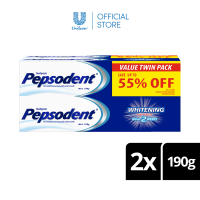
Pepsodent Toothpaste Whitening 190g Twin Pack
₱172.10₱357.00
![[BUY 2 GET 2 FREE] Pepsodent Toothpaste Whitening 190g Bundle of 4](https://ph-live.slatic.net/p/c47ef931aaa33c979307751a781eb9ab.png_200x200q80.jpg)
[BUY 2 GET 2 FREE] Pepsodent Toothpaste Whitening 190g Bundle of 4
₱343.15₱712.00
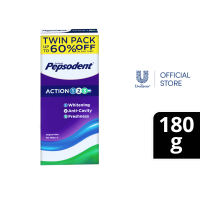
Pepsodent Action 123 2x180G
₱284.00
Buy on Lazada![[BUY 2 GET 2 FREE] Pepsodent Whitening 190g and Closeup White Now Detox Cleanse Serum 100g](https://ph-live.slatic.net/p/03771e44b2b75b81c9e61622ba33d3b8.png_200x200q80.jpg)
[BUY 2 GET 2 FREE] Pepsodent Whitening 190g and Closeup White Now Detox Cleanse Serum 100g
₱360.15₱744.00
Pepsodent Toothpaste Whitening 190g Twin Pack
₱179.00₱255.00
![[BUY 2 GET 2 FREE] Pepsodent Whitening 190g and Closeup White Now Purple Cleanse Serum 100g](https://ph-live.slatic.net/p/8b37a95207e9356b80308807a2863430.jpg_200x200q80.jpg)
[BUY 2 GET 2 FREE] Pepsodent Whitening 190g and Closeup White Now Purple Cleanse Serum 100g
₱360.15₱744.00
Pepsodent Toothpaste 12 Hour Protection Prevent Cavities 190g x 2
₱213.00
Buy on LazadaAbout Pepsodent
Overview
Pepsodent is a long-established oral care brand best known for its toothpaste products. Originating in the United States in 1915, it is now part of Unilever’s global oral care portfolio in most international markets. In the United States and Canada, however, the Pepsodent brand is owned by Church & Dwight. 1
In Southeast Asian markets such as Indonesia, Pepsodent is marketed by Unilever Indonesia and has become strongly associated with everyday family dental care. The brand features prominently on Unilever Indonesia’s corporate website as a key consumer offering. 6
| Information | Details |
|---|---|
| Brand | Pepsodent |
| Industry | Oral care / Personal care |
| Main product | Toothpaste |
| Origin | United States |
| Introduced | 1915 |
| Original company | Pepsodent Company |
| Current owner | Unilever (outside U.S. and Canada) |
| U.S./Canada owner | Church & Dwight |
| Parent company in Indonesia | Unilever Indonesia |
| Category | Oral hygiene |
| Products | Toothpaste and other oral care products |
| Global positioning | Family oral health and daily dental care |
| Major social mission | Encouraging twice-daily toothbrushing |
Pepsodent possesses more than a century of history as a toothpaste and oral hygiene brand. While it began as an American product, its modern international presence is particularly significant in emerging markets across Asia and Africa. Unilever identifies Pepsodent as one of its Power Brands within the Personal Care business segment, alongside Closeup. 11
Historically, the brand’s proposition centered on helping consumers maintain healthy teeth through regular brushing. Contemporary formulations address specific needs including cavity protection, freshness, whitening, and sensitivity.
History
Origins
Pepsodent was introduced in the United States in 1915 by the Pepsodent Company, which was based in Chicago. The original toothpaste formula contained pepsin, an enzyme promoted as aiding in the breakdown of food deposits and material on teeth. The name “Pepsodent” is generally understood to derive from pepsin and dent (teeth). 13
Historical trademark records indicate that the Pepsodent name was filed in the United States in December 1915, with registration for dentifrices occurring in 1916. 3 The brand emerged during a period when regular toothbrushing was not yet an established daily habit for much of the American population.
Advertising and Habit Formation
A defining aspect of Pepsodent’s history is its advertising strategy. Executive Claude C. Hopkins was instrumental in the brand’s early marketing, which sought to persuade consumers they had a specific problem—a thin film or coating on their teeth—that required a solution. The campaign linked the removal of this film to cleaner, brighter teeth and encouraged daily brushing. Historical accounts credit this approach with driving enormous commercial success. 4
According to the Made-in-Chicago Museum, Pepsodent became the No. 1 selling toothpaste in the United States within approximately 18 months of its first national advertising campaign. 4 This success is frequently cited in marketing history as a case study in creating and reinforcing consumer habits rather than merely differentiating a physical product.
During the early 20th century, Pepsodent became a major mass-media advertiser. It sponsored popular radio programming, including Amos ‘n’ Andy, and later The Pepsodent Show starring Bob Hope. 9 Additionally, the brand maintained a prominent illuminated sign in New York City’s Times Square during the late 1920s and early 1930s. 14
Expansion and Ownership Changes
Pepsodent expanded beyond the United States in the decades following its launch. The British Pepsodent business was established in 1919. Historical records from the History of Advertising Trust state that the brand entered the Unilever group after Lever Brothers acquired a controlling interest in the American Pepsodent Company in 1944. 5 Consequently, Pepsodent became a Unilever brand during the 1940s.
Today, Unilever owns Pepsodent in markets outside North America. In 2003, Unilever transferred North American rights to Church & Dwight. 21
Regional Presence: Indonesia
While Pepsodent is a global brand, its identity varies significantly by region. Indonesia serves as a primary example of its localization strategy. Marketed by Unilever Indonesia, the brand is positioned as part of a broader effort to encourage better oral health habits among families.
Unilever Indonesia has utilized Pepsodent for campaigns related to children’s dental health, school education, and oral health awareness. For instance, in 2019, the brand launched the “Senyum Sejak Hari Pertama” campaign focusing on children returning to school, emphasizing confidence and oral hygiene. 6 The brand has also been associated with retail-based Oral Care Centres in the country. 20
This reflects a distinction between Pepsodent’s historical American identity and its modern Southeast Asian identity; in markets like Indonesia, the brand is deeply connected with family oral health education rather than functioning solely as a toothpaste manufacturer.
Products
Pepsodent’s product portfolio is adapted to local market needs and does not follow a single worldwide range. Common product propositions include:
- Cavity protection
- Germ and antibacterial protection
- Fresh breath
- Whitening
- Sensitive teeth care
- Children’s oral care
- Complete or multi-benefit protection
Specific variants mentioned in Unilever communications include Triple Protection, Cavity Fighter, and Sensitive Expert. 16 Ingredients, packaging, and claims differ considerably between countries. 17
Brand Positioning and Identity
Pepsodent is broadly positioned as providing affordable, everyday oral care for the whole family. Its modern identity encompasses several key pillars:
- Family: Oral health is presented as a shared responsibility, with products designed for children, adults, and parents.
- Prevention: The brand emphasizes preventing dental issues through regular brushing rather than solely treating problems.
- Accessibility: Pepsodent competes in mass-market categories to ensure broad consumer access.
- Education: Significant investment is made in oral health education, particularly targeting children.
- Confidence: Modern communication links good oral health with happiness and the ability to smile freely. 10
Unilever describes the brand’s purpose as helping people improve oral health and “unlock the power of their smile.” 7
Social Mission
A central component of Pepsodent’s modern identity is its oral health social mission, anchored by the behavioral message: “Brush Day and Night.”
The brand has developed school programs and educational materials to encourage twice-daily brushing. According to Pepsodent’s social mission materials, its 21-day Brush Day and Night Programme aims to establish lasting habits among schoolchildren. 8 Company-reported figures state that these programs and free dental check-ups have reached more than 75 million people over 25 years in specific regional sites. 15 Globally, Pepsodent reports that its oral health programs have reached over 102 million consumers over more than two decades. 7
These initiatives highlight a shift from purely commercial objectives to broader public health advocacy. 18
Competitive Landscape
Pepsodent operates in a highly competitive toothpaste market. Major competitors vary by country but often include Colgate, Oral-B, Sensodyne, Closeup, Ciptadent, and Systema. In mature markets like Indonesia, competition is intense due to high category penetration. Pepsodent’s advantage relies on brand recognition, distribution networks, pricing strategies, and consumer trust alongside product formulation. 11
Controversies and Criticism
Historical advertising claims for Pepsodent illustrate the evolution of regulatory standards. Older advertisements promoted an ingredient called “Irium,” which historical accounts identify as a trade name for sodium lauryl sulfate rather than a unique scientific compound. 12
Early formulas also faced scrutiny from dental professionals. A 1917 article in JAMA discussed Pepsodent’s claims regarding pepsin and plaque dissolution, highlighting the gap between early 20th-century advertising and modern clinical standards. 2
Evolution Timeline
| Period | Main Development |
|---|---|
| 1915–1920s | Introduction and rapid growth in the United States |
| 1920s–1930s | Major advertising expansion and habit-building campaigns |
| 1930s–1940s | Product reformulation and international expansion |
| 1940s | Integration into the Unilever/Lever business |
| 1950s onward | Increasing competition from other major toothpaste brands |
| Late 20th century | Expansion and localization across developing markets |
| 2003 | North American rights transferred to Church & Dwight |
| 21st century | Focus on family oral care, innovation, and social mission |
| 2020s | Continued investment in oral care and emerging markets |
Current Status
As of 2026, Pepsodent remains an active Unilever brand within the global Oral Care business. Unilever continues to identify it as a Power Brand, with recent reporting indicating positive momentum supported by Pepsodent. 11
The brand has evolved from a 1915 American toothpaste into a multinational oral care entity with localized identities. Its modern scope extends beyond selling toothpaste to encompass oral health prevention, family care, children’s education, and confidence building. 19
References
- Pepsodent
- PEPSODENT | JAMA | JAMA Network
- PEPSODENT Trademark – Registration Number 0110079 – Serial Number 71091356 :: Justia Trademarks
- Pepsodent Company, est. 1915 – Made-in-Chicago Museum
- Pepsodent Ltd | Catalogue | History of Advertising Trust
- Pepsodent Action 123 Complete Berikan Perlindungan Menyeluruh Untuk Senyum Percaya Diri Sejak Hari Pertama Sekolah | Unilever
- Pepsodent’s Social Mission | Pepsodent | Home
- Social Mission | Pepsodent
- The Pepsodent Show
- Home | Home
- SEB MEDIA: CATCH-UP: PEPSODENT
- Pepsodent – Wikidata
- Pepsodent; 1915-; Toothpaste manufacturer · Heritage
- Pepsodent
- Pepsodent’s Social Mission | Pepsodent
- Pepsodent products | Pepsodent
- Toothpaste | Pepsodent
- The First Smile | Pepsodent
- Home | Pepsodent
- Selamat Datang di Tanya Pepsodent | Pepsodent
- PEPSODENT Trademark of CHURCH & DWIGHT CO., INC. – Registration Number 0293898 – Serial Number 71322110 :: Justia Trademarks