Shop on Lazada
Raleigh products
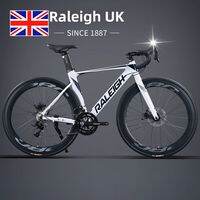
Raleigh | Ultra-light Variable Speed Bicycle
₱33,871.52₱47,387.32
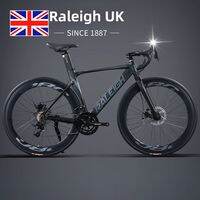
Raleigh | Lightweight Road Bicycle for Adult and Youth Mens and Womens Models With Flat or Drop Handlebars
₱29,672.04₱46,935.95
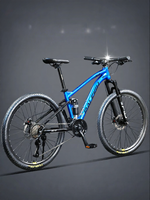
Raleigh | Dual Shock Speed Variation Mountain Bike
₱24,783.27₱34,606.21
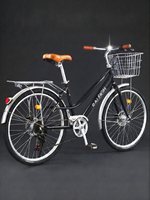
Raleigh | Urban Lightweight Gear Shift Bicycle
₱22,445.23₱37,667.63
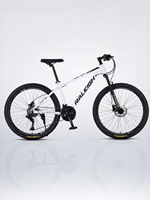
Raleigh | Aluminum Alloy Mountain Bike for Adults Students Unisex Design Oil Brake System 27.5 Inch MTB Bike for Off Road Cycling
₱26,033.65₱35,720.63
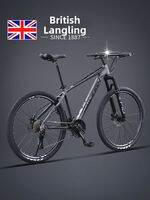
Raleigh | Alloy Mountain Bike for Adults and Teens Shock Absorption 27.5 Inch Dual Shock Bike for Students Unisex Design Compact and Durable Bicycle
₱26,033.65₱39,872.19
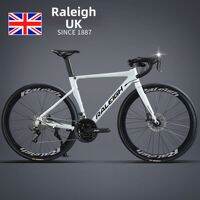
Raleigh | Speed Lightweight Racing Road Bicycle
₱28,613.15₱40,016.38
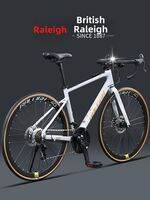
Raleigh | Ultra-light Ultra-fast Road Bicycle Adult
₱35,120.48₱36,522.94
About Raleigh
Raleigh is a historic British bicycle brand originating in Nottingham, England. Established in the late 19th century, Raleigh grew from a small bicycle workshop into one of the world’s major bicycle manufacturers. It became particularly famous for its British-made bicycles, racing heritage, commuter bikes, and iconic youth models such as the Chopper, Burner, and Grifter.1 Today, Raleigh continues to operate as a bicycle brand with a strong emphasis on everyday cycling, electric bicycles, and its heritage.1
Quick facts
| Category | Information |
|---|---|
| Brand | Raleigh |
| Industry | Bicycles and cycling |
| Origin | Nottingham, England |
| Established | 1887 (Raleigh’s official history) |
| Early founders | Richard Woodhead, Paul Angois and William Ellis |
| Key historical figure | Sir Frank Bowden |
| Headquarters / roots | Nottingham, England |
| Famous for | Road bikes, utility bicycles, racing bikes, BMX, children’s bikes, e-bikes |
| Iconic models | Chopper, Burner, Grifter, Vektar |
| Parent group | Accell Group |
| Current focus | Everyday cycling, e-bikes, leisure/urban bikes and heritage |
| Official identity | One of Britain’s oldest and best-known bicycle brands |
There is a slight historical distinction concerning the founding date: Raleigh itself uses 1887, while historical research traces the underlying Raleigh Street bicycle workshop to 1885, with Frank Bowden taking a major ownership role in 1888 and the Raleigh Cycle Company being formally established around that period.1
History
Origins: 1885–1888
The story begins on Raleigh Street in Nottingham. Richard Morriss Woodhead and Frenchman Paul Eugene Louis Angois established a small bicycle workshop there in 1885. William Ellis subsequently became involved and provided financial investment.
The business began producing bicycles under the Raleigh name, derived from the street where the workshop was located. In 1887, advertisements appeared for Raleigh’s “Safety” bicycle.2
The pivotal figure in Raleigh’s development was Sir Frank Bowden. Bowden had taken up cycling after suffering serious health problems and became convinced of the bicycle’s benefits. He acquired an interest in the Nottingham company in 1887–88 and transformed what was essentially a small workshop into a major industrial enterprise.1
Under Bowden’s leadership, Raleigh invested heavily in manufacturing capacity, engineering, and marketing.
Rise to global prominence
Raleigh expanded extraordinarily quickly. By the early 20th century, it had become one of the world’s largest bicycle manufacturers.
By 1913, historical sources describe Raleigh as the world’s largest bicycle manufacturing company. Its Nottingham operations expanded into a substantial industrial complex, helping establish the city as an important centre of bicycle production.2
During the 1920s, Raleigh’s scale was enormous. According to the company’s history, it was capable of producing approximately:
- 100,000 bicycles per year
- 250,000 hub gears
- 15,000 motorcycles
- 50,000 motorcycle gearboxes
This made Raleigh much more than a bicycle maker; for a period, it was a significant engineering and manufacturing business.3
Raleigh and bicycle technology
One reason Raleigh became important was its combination of industrial manufacturing and bicycle engineering.
The company produced a wide range of bicycles rather than concentrating exclusively on one category. Its products eventually covered:
- Road bicycles
- Touring bicycles
- Utility and city bicycles
- Racing bicycles
- Children’s bicycles
- BMX bicycles
- Mountain bikes
- Electric bicycles
- Leisure and fitness bicycles
Raleigh also became closely associated with Sturmey-Archer hub gears, an important British bicycle technology. The company eventually acquired the Sturmey-Archer business, and internally geared hubs became an important part of Raleigh’s historical product identity.2
Raleigh during World War II
During the Second World War, Raleigh’s Nottingham manufacturing operations were redirected toward wartime production, including munitions-related work.
Bicycle production was reduced, but Raleigh continued making bicycles during the conflict. The company’s own historical account says production reached around 5,400 bicycles per week despite wartime conditions.7
After the war, Raleigh returned its attention toward civilian bicycles and benefited from the renewed popularity of cycling.
The post-war era
The decades following World War II were an important period for Raleigh.
Raleigh became deeply embedded in British everyday life. Its bicycles were used for:
- Commuting
- School transportation
- Shopping
- Touring
- Recreation
- Competitive cycling
The brand also developed a strong sporting reputation.
One of the most famous riders associated with Raleigh was Reg Harris, one of Britain’s great track cyclists. Harris won two silver medals at the 1948 Olympic Games, and Raleigh subsequently signed him as a professional rider. His famous red Raleigh bicycle remains part of Raleigh’s heritage collection.3
The Raleigh Chopper
Perhaps no bicycle better represents Raleigh’s cultural impact than the Raleigh Chopper.
Introduced in the late 1960s, the Chopper was radically different from a conventional bicycle. It borrowed visual elements from the custom-car and motorcycle culture of the period, featuring a long, distinctive frame, high handlebars, and a characteristic saddle.
The model became a massive commercial success.
Raleigh states that approximately 1.5 million Choppers were sold. The bicycle became an important part of British popular culture and helped establish Raleigh as more than simply a manufacturer of practical bicycles.3
The Chopper was eventually discontinued, but its popularity never disappeared. Raleigh brought it back in 2004, approximately three decades after its original era, and the revival attracted both children and adults who remembered the original.3
The Chopper is now regarded as one of the most recognizable British bicycle designs of the 20th century.
The Burner and BMX era
During the 1980s, Raleigh became heavily associated with BMX.
The Raleigh Burner became one of the defining BMX bicycles of the era, particularly in Britain. The company’s BMX racing program also achieved international success.
In 1985, Raleigh’s BMX team competed at the World Championships in Canada. The team finished fifth in the overall medal count, while rider Schofield won the Superclass 20-inch title on a Raleigh Team Aero Pro Burner.3
The Burner subsequently became a major collector’s item.
Raleigh later celebrated the model’s heritage with a 35th Anniversary Aero Pro Burner in 2017. Raleigh reported that more than 7,000 Burner enthusiasts pre-registered for the limited production of 350 individually numbered bicycles.3
Other iconic Raleigh bicycles
Raleigh’s historical importance is not limited to the Chopper and Burner.
Raleigh Grifter
The Grifter appeared in 1976 as a follow-up to the Chopper. It had a BMX-inspired appearance but retained practical features such as mudguards and a three-speed hub.
It became another recognizable British children’s bicycle of the 1970s.3
Raleigh Vektar
The Vektar, associated with the 1980s, pushed Raleigh further toward futuristic styling and technology-oriented children’s bicycles.
It is now remembered as one of Raleigh’s more unusual and collectible designs.
Raleigh Burner
The Burner family became one of Britain’s most recognizable BMX lines and remains particularly important to Raleigh’s retro identity.
Raleigh’s own heritage project describes the Chopper, Burners, Grifters and Vektar as among the company’s defining bicycles of the 1970s and 1980s.4
Raleigh and professional cycling
Raleigh has also had a substantial connection with competitive cycling.
The company’s bicycles have been used in international competition, and Raleigh’s historical material highlights its participation in events ranging from Olympic competition to professional road racing.
In 2010, Raleigh returned to professional cycling with the revival of Team Raleigh. The team achieved victories including the Welsh National Road Race Championship, British National Hill Climb Championship, and Tour Doon Hame.3
Raleigh therefore occupies an interesting position: it has simultaneously been a manufacturer of ordinary family bicycles and a participant in elite competitive cycling.
Mountain bikes and the 1990s
Raleigh adapted to the changing bicycle market during the late 20th century.
In the 1990s, the company became an early British manufacturer of mass-produced suspension mountain bikes and also entered the developing market for electrically assisted bicycles.3
This was significant because the bicycle industry was shifting away from the traditional road/utility-bike model toward specialized categories such as:
- Mountain bikes
- BMX
- Fitness bikes
- Suspension bikes
- Hybrid bicycles
- Electric bicycles
Raleigh attempted to participate in these emerging categories rather than relying exclusively on its traditional British road and utility bicycles.
Ownership and corporate changes
Raleigh’s corporate history became increasingly complex during the second half of the 20th century.
In 1960, Raleigh was acquired by Tube Investments, becoming part of TI-Raleigh.5
The company subsequently went through further changes in ownership and manufacturing strategy.
One particularly important development came in 2012, when Raleigh was acquired by the Netherlands-based Accell Group, a major European bicycle company whose portfolio included brands such as Lapierre, Haibike, and Winora.3
The acquisition connected Raleigh with a much larger European bicycle group and gave it access to shared technology and expertise, particularly in the growing electric-bike sector.
Manufacturing and Nottingham
Nottingham is fundamental to Raleigh’s identity.
The brand’s history began on Raleigh Street, and for much of the 20th century, Raleigh was one of Nottingham’s most important employers.
The company’s huge Triumph Road factory employed thousands of people. The factory eventually closed in 2002, bringing an end to more than a century of large-scale bicycle manufacturing in Nottingham.6
Despite the changes in manufacturing, Raleigh continues to emphasize Nottingham as its historical home.
This distinction is important: Raleigh is a British brand with Nottingham origins and identity, but that does not mean every modern Raleigh bicycle is manufactured in Britain.
Raleigh today
In the modern era, Raleigh has evolved from being primarily a traditional bicycle manufacturer into a broader cycling brand.
Its contemporary range includes bicycles intended for:
- Urban transportation
- Commuting
- Leisure riding
- Fitness
- Mountain/trail riding
- Children
- Electric-assisted cycling
The company continues to use its British heritage as a major part of its brand identity while developing modern bicycle technology.1
Raleigh ONE
One of the company’s more recent developments is the Raleigh ONE, introduced in 2025.
Raleigh describes it as a connected electric bicycle combining traditional British-inspired design with modern connectivity, smartphone integration, and smart security features. The model represents Raleigh’s attempt to connect its historic brand identity with contemporary urban e-bike technology.3
In other words, Raleigh’s modern strategy is not simply to reproduce its old bicycles. It is trying to use its heritage as a foundation for newer forms of cycling.
Brand identity
Raleigh’s identity can broadly be understood through four ideas:
🇬🇧 British heritage
Raleigh is strongly associated with British industrial and cycling history. Its Nottingham origin is central to its branding.
🚲 Everyday cycling
Unlike brands focused exclusively on racing or high-performance cycling, Raleigh has historically produced bicycles for ordinary riders as well as professionals.
🏆 Sporting heritage
Raleigh has a long history in track, road, and BMX competition and has been associated with championship-level riders and teams.
🕰️ Nostalgia and design
The Chopper, Burner, Grifter, and Vektar have given Raleigh an unusually strong retro following. The company actively maintains this heritage through its Retro Raleigh project, which documents iconic historical models.7
Why Raleigh is historically important
Raleigh is significant because its story mirrors the development of the bicycle itself.
It began during the Victorian bicycle boom, expanded alongside Britain’s industrialization, became a global manufacturer, participated in wartime production, developed racing technology, helped popularize children’s and BMX bicycles, entered mountain biking, and eventually moved into electric bicycles.
Few bicycle brands have existed across such a broad range of cycling eras.
Its importance therefore is not simply that it has existed for more than a century. Raleigh has repeatedly adapted its products to different generations of cyclists.
Raleigh’s legacy
Today, Raleigh’s greatest asset may be its heritage.
For older British cyclists, the name can evoke traditional steel bicycles and Sturmey-Archer gears. For people who grew up in the 1970s, it may mean the Chopper. For an 1980s BMX generation, it may mean the Burner. For modern commuters, it increasingly means urban and electric bicycles.
That ability to mean something different to different generations is unusual for a bicycle company.
Raleigh itself describes the brand as having more than 135 years of cycling history, while continuing to develop modern products such as connected e-bikes.3