Shop on Lazada
Ricola products
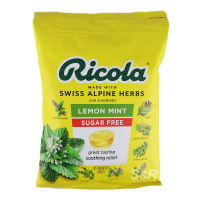
Ricola Lemon Mint Sugar Free Drops 105pcs
₱919.00
Buy on Lazada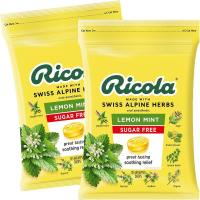
SUNPLAN.PH Ricola Lemon Mint No Sugar Added Throat 105Drops
₱879.00₱1,500.00
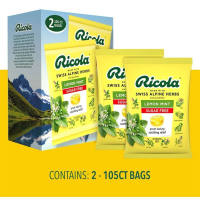
Ricola Sugar Free Lemon Mint Herb Throat Drops 105 Drops 2 ct
₱1,649.00₱2,999.00
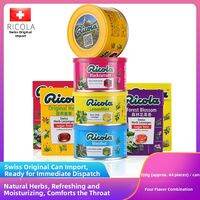
Sugar-Free Mint Throat Soothing Candy 40g
₱258.00
Buy on Lazada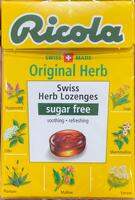
Ricola Original Herb Sugar Free Swiss Herb Lozenges 40g
₱138.00
Buy on Lazada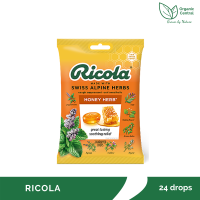
Ricola Honey Herb 24 Drops
₱389.00
Buy on Lazada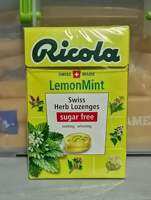
Ricola Sugar Free Swiss Herb Lozenges LemonMint 40g
₱120.00
Buy on Lazada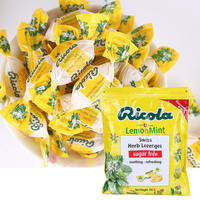
Vanilla Mint Flavor Cooling Hard Candy 100g
₱1,247.00
Buy on LazadaAbout Ricola
Ricola is a Swiss confectionery and herbal-products brand best known for its distinctive herbal drops made from a traditional blend of 13 Swiss-grown herbs. Founded in 1930 in Laufen, Switzerland, the company has developed from a small confectionery into an international, family-owned brand whose identity is strongly associated with Swiss quality, alpine herbs, natural ingredients, and humorous advertising.1
Basic information
| Category | Information |
|---|---|
| Brand | Ricola |
| Company | Ricola Group AG / Ricola AG |
| Founded | 1930 |
| Founder | Emil Richterich |
| Origin | Laufen, Switzerland |
| Headquarters | Laufen, Basel-Landschaft, Switzerland |
| Industry | Confectionery / herbal products |
| Core product | Herbal drops |
| Signature formula | Blend of 13 herbs |
| Products | 60+ herbal products and teas |
| Countries | 45+ markets |
| Employees | 600+ worldwide |
| Ownership | Family-owned |
| Current CEO | Thomas P. Meier |
| Board chairman | Felix Richterich |
| Major markets | Switzerland, Germany, France, Italy, United States |
Ricola reports having more than 600 employees, selling products in over 45 countries, and offering more than 60 distinct products. Approximately 90% of its production is exported.2
Origins and history
The company’s history began in Laufen, a small town in northwestern Switzerland. In 1930, baker and confectioner Emil Richterich established a business named Richterich & Co., Laufen, which initially produced a broad assortment of sweets and confectionery items.3 Driven by an interest in herbs and their traditional applications, Richterich experimented with various herbal mixtures throughout the 1930s.
A significant milestone occurred in 1940 when he developed the proprietary 13-herb mixture that would become the foundation of the classic Ricola herbal drop.5 The name “Ricola” was adopted in the late 1940s to distinguish the company from another local confectioner also named Richterich. The brand name is a portmanteau derived from RIchterich, COmpagnie, and LAufen.4
Rather than focusing on a single herb, the company built its identity around this specific combination intended to provide a characteristic flavor and herbal profile. This blend has remained central to the brand for over 80 years, with herbs grown in Switzerland according to Bio Suisse standards.5
Sourcing and agriculture
Ricola collaborates with approximately 100 Swiss mountain farmers to cultivate its herbs across five regions: Valais, Val Poschiavo, Emmental, Central Switzerland, and the southern foothills of the Jura. The total organically cultivated area is equivalent to roughly 130 football pitches.8 This agricultural network supports the brand’s positioning as a combination of Swiss agriculture, herbal tradition, and modern confectionery manufacturing.
Product portfolio
While primarily associated with herbal drops, Ricola has developed a broader portfolio comprising over 60 herbal products and specialty teas.6 The range includes:
- Herbal drops: The core category featuring traditional and flavored herbal sweets.
- Sugar-free drops: Sugar-free variants of several products.
- Specialty teas: Herbal teas and related beverages.
- Filled and flavored products: Market-specific variations incorporating flavors such as lemon, honey, mint, sage, eucalyptus, berry, orange, and caramel.
The exact product assortment varies by country as the company adapts its offerings to individual market preferences.
Manufacturing
Ricola manufactures its entire range of herbal drops at its headquarters in Laufen, Switzerland.7 Herbs are processed at the company’s Herb Center through a series of steps including quality and quarantine checks, freshness examination, drying, cleaning, cutting, blending, storage, and extraction.
The facility processes approximately 1,500 tonnes of fresh herbs annually. Production capacity stands at roughly 43,000 herbal drops per minute, totaling around nine billion drops per year.8 This scale allows the company to maintain industrial efficiency while marketing itself as a traditional Swiss herbal brand.
Brand identity and advertising
Ricola’s branding rests on three primary pillars: Swissness, nature, and humor. The company emphasizes Swiss-grown herbs, domestic production, mountain farming, and national origin as fundamental components of its personality rather than mere labeling. Visual imagery frequently features mountains, alpine landscapes, green herbs, and farmers to reinforce the connection to nature.
Advertising campaigns
Unlike many competitors in the throat-soothing category who use pharmaceutical-style marketing, Ricola is noted for integrating comedy into its advertising. In 1993, the brand introduced its distinctive yodel-like pronunciation of “Riiicooolaaa!” in television commercials, utilizing exaggerated Swiss stereotypes such as traditional clothing, alpine settings, and unexpected humorous situations.9
Another major campaign revolves around the German phrase “Wer hat’s erfunden?” (“Who invented it?”). Launched in the late 1990s, this campaign plays on the cultural association between Switzerland and precision or invention. It effectively turned the brand’s origin into a recurring cultural joke and became a significant part of its international marketing strategy.10
Sustainability and corporate responsibility
Sustainability is integrated into Ricola’s operations, notably through its Herb Center in Laufen, which opened in 2014. The building incorporates locally sourced materials such as clay, gravel, and marl from the surrounding Laufental Valley.11 Approximately half of the facility’s electricity is generated via rooftop photovoltaic panels, and the company implements measures to reduce energy consumption, water usage, and production waste.11
In 2023, Ricola achieved certification as a B Corporation, formally incorporating social and environmental performance standards into its corporate framework.7
Ownership and culture
Ricola remains a family-owned enterprise, with the fourth generation of the founding Richterich family active in the business.12 This independence distinguishes it from many traditional brands acquired by multinational confectionery groups.
Beyond confectionery, the company maintains a significant relationship with architecture and contemporary art. Shareholders of the Ricola Family Holding have collected contemporary Swiss art since 1975, and the renowned architectural practice Herzog & de Meuron has designed multiple Ricola buildings since 1983.6 This reflects a corporate philosophy that treats design, culture, and aesthetics as integral to the brand’s identity.
Competitive positioning
Ricola occupies a hybrid position between several categories. While its products are technically confectionery, they serve functional roles as breath fresheners and throat-soothers, while also competing in the natural products and premium Swiss goods segments. This multi-faceted positioning allows consumers to purchase the brand for taste, herbal benefits, soothing properties, or Swiss heritage.
Key brand assets include the proprietary 13-herb formula, Swiss origin, recognizable yellow packaging, distinctive cube-like drop shape, the “Riiicooolaaa!” sonic signature, and alpine imagery. These elements combine to create a cultural story that extends beyond the physical product.14
Current scale and milestones
According to recent corporate data, Ricola employs over 600 people and exports 90% of its production to more than 45 markets, with the United States, Germany, France, Italy, and Switzerland serving as its largest territories.28
Key milestones
- 1930: Emil Richterich establishes Richterich & Co. in Laufen.
- 1940: Creation of the 13-herb mixture.
- 1948: Adoption of the name Ricola.
- 1960s: Expansion of export business begins.
- 1970s: Entry into markets including Japan, Hong Kong, Singapore, and the United States.
- 1980s: Development of systematic partnerships with Swiss mountain farmers.
- 1993: Establishment of the “Riiicooolaaa!” advertising style.
- 1990s–2000s: International recognition through the “Who invented it?” campaign.
- 2014: Opening of the new Ricola Herb Center in Laufen.
- 2021: Update of brand identity and packaging.
- 2023: Certification as a B Corporation.13
References
- About Our Milestones | Ricola
- RicolaMedia kitJuly 2025
- RicolaMedia kitJune 2024
- 90 Jahre Ricola – Handelskammer beider Basel
- Nos moments clés | Ricola
- Ricola Collection | Art from Switzerland
- Ricola is re-certified as a B Corporation | Ricola
- Ricola – Swiss herbal candies with Alpine power and tradition
- Ricola delivers solid results in 2024 | Ricola
- Company Profiles | Springer Nature Link
- Sustainability In Our Production | Ricola
- A proposito della nostri momenti importanti | Ricola
- Ricola Sustainability Partnerships | Ricola
- Markenlexikon | Ricola