Shop on Lazada
Ritter Sport products
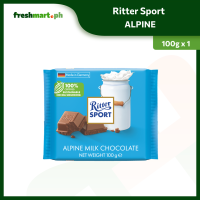
Ritter Sport Alpine Milk Chocolate 100g
₱304.00
Buy on Lazada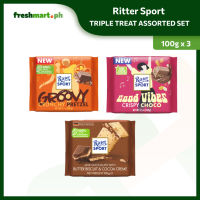
Ritter Sport Triple Treat Assorted Set 100g x 3 – Crunchy Pretzel + Crispy Choco + Butter Biscuit
₱864.00
Buy on Lazada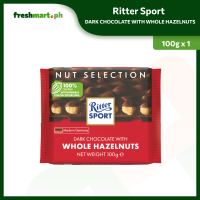
Ritter Sport Dark Chocolate with Whole Hazelnuts 100g
₱300.00
Buy on Lazada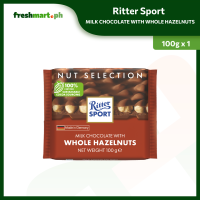
Ritter Sport Milk Chocolate with Whole Hazelnuts 100g
₱304.00
Buy on Lazada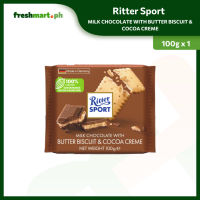
Ritter Sport Butter Biscuit 100g
₱290.00
Buy on Lazada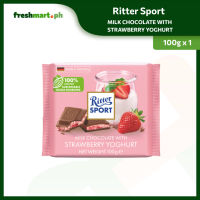
Ritter Sport Milk Chocolate Strawberry Yoghurt 100g
₱270.00
Buy on Lazada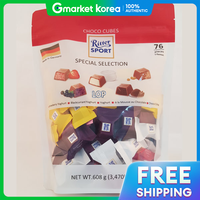
Ritersport|Ritersport 5 Types Mini Cube Chocolate Total 76 Pieces / Costco
₱1,569.65₱2,345.45
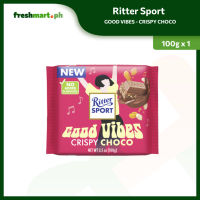
Ritter Sport Tasty Vibes Crispy Choco 100g
₱290.00
Buy on LazadaAbout Ritter Sport
Ritter Sport is a German chocolate brand distinguished by its square-shaped bars, vibrant color-coded packaging, and extensive flavor variety. The brand is owned by Alfred Ritter GmbH & Co. KG, a family-operated manufacturer headquartered in Waldenbuch, Baden-Württemberg. Established in 1912, the company remains under family ownership and distributes its products in over 100 countries.1
Quick facts
| Category | Information |
|---|---|
| Brand | Ritter Sport |
| Company | Alfred Ritter GmbH & Co. KG |
| Founded | 1912 |
| Founders | Alfred Eugen Ritter and Clara Ritter |
| Origin | Stuttgart-Bad Cannstatt, Germany |
| Headquarters | Waldenbuch, Baden-Württemberg, Germany |
| Industry | Chocolate & confectionery |
| Ownership | Family-owned |
| Signature product | Square chocolate bar |
| Famous slogan/concept | Quadratisch. Praktisch. Gut. (“Square. Practical. Good.”) |
| Main identity | Square format + colorful packaging + variety |
| International presence | 100+ countries |
| Employees | About 1,700 |
| Reported sales | €538 million in 2022 |
The company currently operates as a family business with approximately 1,700 employees and sales reaching more than 100 countries.2
Brand identity
While fundamentally a chocolate manufacturer, Ritter Sport possesses a distinct identity defined by three core characteristics.
Square shape
Unlike conventional rectangular bars, Ritter Sport chocolate is designed as a square. This format originated from a practical concept rather than mere aesthetics. In 1932, Clara Ritter proposed creating a chocolate that would fit into a sports jacket pocket without breaking, while maintaining the same weight as a standard long bar. It was subsequently introduced as “Ritter’s Sport Schokolade.”3
Colorful packaging
The brand is strongly associated with bright, color-coded packaging that allows consumers to easily distinguish between varieties. The introduction of the “Bunte Palette” (“Colorful Variety”) in 1974 marked a significant turning point in the brand’s visual identity.4
Variety
Ritter Sport emphasizes a broad assortment of flavors and ingredients. The range extends from traditional milk and dark chocolate to varieties containing nuts, marzipan, biscuits, fruit, mint, caramel, and vegan options.5
The brand proposition combines square chocolate, colorful design, diverse flavors, and German family-business heritage.
History
1912–1930: Early years
The history of Ritter Sport began in 1912 when Alfred Eugen Ritter and Clara Ritter founded a chocolate and sugar confectionery factory in Stuttgart-Bad Cannstatt. The first Ritter chocolates were produced and sold locally.6 As the original facilities in Bad Cannstatt became insufficient, the company relocated to Waldenbuch in 1930. This location remains the headquarters and primary German production site today.7
1932: Birth of the square format
In 1932, Clara Ritter suggested producing a chocolate that would fit in a sports jacket pocket, resist breaking, and match the weight of a normal long bar. The result was the square-shaped Ritter’s Sport Schokolade, a practical design that eventually became the defining visual characteristic of the entire brand.8
1940s–1950s: Wartime disruption and recovery
During World War II, the company faced severe shortages of cocoa and other raw materials. Production ceased in 1940, and during the post-war period, the factory was temporarily used by another company to manufacture toothpaste. Chocolate production resumed in 1950 once cocoa became available without restrictions.9
Following the death of founder Alfred Eugen Ritter in 1952, his son Alfred Otto Ritter assumed management, marking the transition to the second generation of the family business.10
1970s: Modern visual identity
A major transformation occurred in 1974 when Alfred Otto Ritter introduced the “Bunte Palette” (“Colorful Variety”). This initiative established color as a central component of product identity, allowing different chocolates to be easily recognized on shelves. This visual system became nearly as iconic as the square shape itself.11
In 1976, Ritter Sport introduced tubular-style packaging with a Snap-Open mechanism. This reinforced the brand philosophy of being easy to carry, easy to open, and easy to recognize.12
Corporate structure and philosophy
Family ownership
Ritter Sport has remained a family-owned company since 1912. The business emphasizes long-term generational planning over short-term results. The third generation became involved in the late 20th century, with Alfred Theodor Ritter and his sister Marli Hoppe-Ritter taking active roles.13
Name origin
The name combines the family surname Ritter with Sport. The “Sport” element references the original functional benefit of the square chocolate: a bar designed for people wearing sports jackets. Over time, this practical shape evolved into a powerful trademark and visual symbol.
Corporate purpose
The company’s current purpose is expressed as “Doing the right thing to create really good chocolate.” This philosophy encompasses five pillars:
- The right ingredients: Emphasizing quality as the foundation of good chocolate.
- The right cocoa: Prioritizing knowledge of cocoa origins and growers.
- Right for people: Fostering relationships with employees, suppliers, and farmers.
- Right for nature: Linking production with environmental protection and biodiversity.
- Right with conviction: Connecting these values to its identity as a long-term family business.5
Product range
Ritter Sport produces a wide variety of chocolate products, combining a recognizable format with substantial flavor diversity. Key categories include:
- Milk chocolate: Classic creamy styles forming a core part of the portfolio.
- Dark chocolate: Varieties with higher cocoa content and darker flavor profiles.
- Nut chocolates: Bars featuring hazelnuts, almonds, and other nuts.
- Filled and specialty chocolates: Varieties with caramel, marzipan, biscuits, fruit, and other fillings.
- Mint and flavored chocolate: Distinctive flavor combinations including mint.
- Vegan chocolate: Plant-based varieties developed in response to changing consumer preferences.
Cocoa sourcing and sustainability
Sourcing standards
Since 2018, all cocoa sourced by Ritter Sport has been certified through Rainforest Alliance and Fairtrade programs. The company describes its cocoa as segregated and traceable throughout the supply chain.14 Primary sourcing regions include Côte d’Ivoire, Ghana, Nigeria, Nicaragua, and Peru.7
As of 2025, approximately 91% of its cocoa comes through long-term partnerships with producer organizations.15 The company invests around €7 million annually in cocoa programs across Latin America and West Africa.16
El Cacao farm
Unusually for a chocolate manufacturer, Ritter Sport operates its own cocoa farm called El Cacao in Nicaragua. Development began in 2012, transforming former pastureland into an agricultural and ecological system.17 The farm covers approximately 2,500 hectares, comprising:
- About 1,200 hectares of cultivated land
- About 1,200 hectares of protected forest
- Around 30,000 forest trees
- Approximately 1 million cocoa trees18
Environmental strategy
Ritter Sport achieved certified carbon-neutral status in 2020 through emission avoidance, reduction, and compensation via Gold Standard climate certificates.19 However, the company views compensation as a transitional measure. Having joined the Science Based Targets initiative, it aims to reduce Scope 1–3 emissions by 42% by 2030.13
Additional sustainability priorities include responsible sourcing, traceability, biodiversity, sustainable agriculture, packaging recyclability, and improving social conditions in cocoa-growing regions.14
Manufacturing and international presence
Production sites
Waldenbuch, Germany, remains the historic home of Ritter Sport, where visitors can learn about the taste, origin, and production of chocolate.20 The company also operates a production site in Breitenbrunn, Austria.21 Despite its global reach, German manufacturing heritage remains central to the brand’s identity.
Global market
Ritter Sport sells products in more than 100 countries.17 Its international appeal is partly attributed to a visual identity that transcends language barriers: a small, square, colorful chocolate bar.
Market positioning
Ritter Sport occupies a distinct position within the global chocolate market, differing from both luxury chocolatiers and mass-market confectionery.
| Positioning | Typical emphasis |
|---|---|
| Luxury chocolate | Exclusivity, craftsmanship |
| Premium Swiss chocolate | Heritage, smoothness, indulgence |
| Mass-market chocolate | Price, distribution, familiarity |
| Organic/ethical chocolate | Sustainability, ingredients |
| Ritter Sport | Shape + variety + color + practicality + quality |
The brand is not positioned purely as inexpensive everyday candy, nor does it rely exclusively on luxury branding. Instead, it has built a strong product identity around the physical shape of the chocolate. From a branding perspective, the square format is perhaps the company’s greatest asset; even without logos or text, the combination of a square package, bright color, and square chocolate renders the product recognizable.
Brand personality
Ritter Sport projects a personality that is colorful, friendly, playful, practical, modern, accessible, and environmentally conscious. Unlike traditional luxury chocolatiers, the brand suggests that chocolate can be high quality without being overly formal or elitist.
Key milestones
- 1912: Alfred Eugen Ritter and Clara Ritter establish the confectionery company in Stuttgart-Bad Cannstatt.16
- 1930: Company moves to Waldenbuch.16
- 1932: The square Ritter’s Sport chocolate is introduced.16
- 1940: Chocolate production halts due to wartime conditions and raw-material shortages.16
- 1950: Cocoa becomes available again and production resumes.16
- 1952: Alfred Otto Ritter takes over following his father’s death.16
- 1974: “Bunte Palette” / colorful variety becomes central to brand identity.16
- 1976: Snap-open packaging is introduced.16
- 1978: Third-generation family members become involved.16
- 2012: Development of the El Cacao cocoa farm in Nicaragua begins.17
- 2018: Entire cocoa supply becomes certified through Rainforest Alliance and Fairtrade programs.14
- 2020: Company achieves certified carbon-neutral status.19
- 2025: Approximately 91% of cocoa reported as coming through long-term partnership programs.15
- 2026: Sustainability remains a strategic priority, including the 2030 emissions-reduction target.13
Distinctive factors
Five key factors differentiate Ritter Sport in the confectionery sector:
- Distinctive product shape: The square bar is immediately recognizable.
- Packaging architecture: Systematic use of color creates a cohesive visual product family.
- Long history: The company dates back to 1912 and has remained family-owned.
- Product variety: Continuous introduction of diverse ingredient combinations.
- Cocoa and sustainability strategy: Responsible sourcing and environmental issues are integral to corporate identity.
References
- Ritter Sport History
- About Us
- Ritter Sport
- Ethical Chocolate & Sustainable Sourcing | Ritter Sport
- Ritter Sport Purpose
- Our Cocoa
- Cocoa Sourcing | Ritter Sport
- Our Cocoa | Ritter Sport
- Cocoa Farm | Ritter Sport
- Sustainability in Chocolate | Ritter Sport
- Accessibility Statement – Ritter Sport
- Der Kakao macht’s
- Sustainability Objectives | Ritter Sport
- Biodiversity in Chocolate | Ritter Sport
- Climate & Energy | Ritter Sport
- Die Ritter Sport Geschichte
- Travel Chocolate Editions | Ritter Sport
- Biodiversity in Chocolate | Ritter Sport
- Imprint
- Legal Information & Privacy Policy
- RITTER SPORT | offizielle Website | Herzlich willkommen