Shop on Lazada
Sankei products
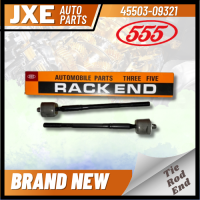
Sankei Tie Rod End for Toyota Innova/Hilux/Fortuner 2005-2021(45503-09321)Genuine Parts
₱700.00
Buy on Lazada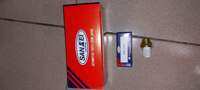
honda civic 90-2001/accord 93-96/city 97-2001 thermo switch sankei brand
₱850.00
Buy on Lazada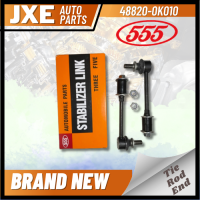
Sankei Tie Rod End for Toyota Innova 2005-2022(48820-0K010)Genuine Parts
₱420.00
Buy on Lazada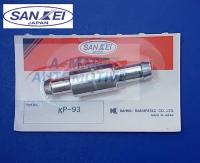
SANKIE PCV Valve for Toyota FX 5K7KRevo 7KELiteace 5K
₱375.00
Buy on Lazada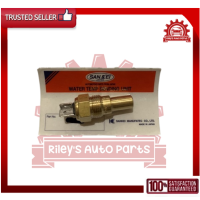
SANKEI TEMPERATURE SWITCH FOR MITSUBISHI L300/PAJERO/ADVENTURE DSL
₱650.00
Buy on Lazada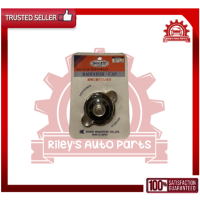
SANKEI RADIATOR CAP SMALL 1.3lbs FOR MOST CARS/SUVS/AUVS MADE IN JAPAN
₱300.00
Buy on Lazada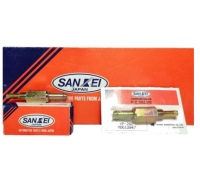
PCV valve for Mitsubishi Lancer 4G13 Delica 4G63 4g15 4G92 Galant DOHC Mirage
₱419.00
Buy on Lazada
Water Temperature Sending Unit for Nissan Sentra Terrano Vanette
₱336.00
Buy on LazadaAbout Sankei
Overview
Sankei is a Japanese automotive aftermarket brand that specialises in replacement components for Japanese vehicles. The brand is operated by SANKEI MANUFATEC CO., LTD., a manufacturer headquartered in Osaka, Japan, with roots in automotive component production dating back to 1940 1. Its products are positioned around Japanese manufacturing quality, durability, precision, compatibility, and cost performance.
The Sankei brand is particularly associated with automotive electrical and engine-related components. These include water-temperature sensors, oil-pressure switches, thermoswitches, starter switches, fuel pumps, radiator caps, and other parts used in vehicle control and monitoring systems.
| Field | Information |
|---|---|
| Brand | Sankei |
| Country of origin | Japan |
| Industry | Automotive aftermarket / auto parts |
| Parent / manufacturer | SANKEI MANUFATEC CO., LTD. |
| Headquarters | Ikuno-ku, Osaka, Japan |
| Automotive roots | 1940 |
| Company incorporation | November 7, 1950 |
| Main market | Replacement parts for Japanese vehicles |
| International reach | Approximately 60 countries |
| Related brand | DREIK |
| Quality certification | ISO 9001:2015 / JIS Q 9001:2015 |
| Industry association | Japan Auto Parts Industries Association (JAPIA) |
The company states that its products are supplied to roughly 60 countries worldwide, reflecting a business model focused heavily on international aftermarket demand for Japanese vehicles 1.
History
Origins: 1940
The history of SANKEI MANUFATEC traces back to approximately 1940, when the business began as a supplier to Daihatsu and the company now known as Mazda. This placed the company in the Japanese automotive supply chain during the early development of Japan’s modern automotive industry.
In 1943, the company became a cooperating plant for Kawanishi Aircraft Company and began manufacturing Bakelite moulded products. Following the end of World War II, it returned to automotive component manufacturing and resumed supplying switches to Daihatsu and Mazda.
Incorporation: 1950
The company was formally incorporated on November 7, 1950. It expanded beyond automotive parts into small precision gears and became a cooperating plant for Matsushita Electric Industrial and Matsushita Electric Works.
Development of the Sankei brand
Beginning around 1975, the company increasingly shifted towards exporting automotive components and began transitioning products to its own Sankei brand. This marked an important change from primarily supplying other manufacturers towards developing an internationally recognisable aftermarket brand of its own.
DREIK
In 1989, the company introduced the DREIK brand as a sister brand to Sankei and began supplying aftermarket products internationally. According to the company’s current description, DREIK is positioned alongside Sankei, with both brands emphasising precision, durability, and value 1.
International expansion
The company subsequently expanded its manufacturing and distribution capabilities while maintaining its focus on replacement parts for Japanese automobiles. Today, Sankei states that its products reach approximately 60 countries worldwide.
Products
The Sankei portfolio focuses heavily on electrical, sensing, and engine-support components. Major product categories include:
- Water-temperature sensors
- Thermoswitches
- Oil-pressure switches
- Oil-pressure senders
- Starter switches
- Stop-light switches
- Glow plugs
- Fuel pumps
- Radiator caps
- Back-up lamp switches
- PCV valves
- Temperature switches
- Safety valves
- Other automotive electrical components 1
For example, Sankei water-temperature sensors use a thermistor to measure engine coolant temperature and communicate that information to the vehicle’s ECU. Its thermoswitches use temperature-sensitive components to activate overheating warning systems.
Brand positioning
Sankei’s central proposition is providing Japanese-quality replacement parts that offer a balance between reliability and cost. The company describes Sankei as its flagship brand, emphasising high quality and cost performance. It positions the products as a premium alternative to genuine manufacturer parts rather than simply as the cheapest aftermarket option.
This places Sankei in a specific market tier:
Genuine/OEM replacement part
↓
High-quality Japanese aftermarket
↓
Sankei
↓
Low-cost generic aftermarket
However, exact quality and suitability can vary by individual part and vehicle application. The brand name alone should not be treated as proof that every part is equivalent to an original-equipment component.
Manufacturing philosophy
SANKEI MANUFATEC’s corporate messaging emphasises several key characteristics:
Japanese engineering
The company traces its manufacturing expertise to decades of Japanese automotive component production. Its stated objective is to use this accumulated engineering knowledge to supply reliable components for Japanese vehicles around the world.
Precision
Many Sankei products are relatively small components but perform critical functions in vehicle operation. Sensors and switches, for example, can influence engine monitoring, warning systems, and electrical control.
Durability
The company states that its products undergo repeated testing with an emphasis on durability and accuracy, including operation in demanding, high-temperature environments.
Cost performance
Rather than competing solely on price, Sankei explicitly highlights cost performance, attempting to provide an economical alternative while maintaining Japanese manufacturing standards.
Sankei vs. DREIK
Sankei and DREIK are sister brands from the same manufacturer.
| Sankei | DREIK | |
|---|---|---|
| Positioning | Flagship brand | Sister brand |
| Origin | Japan | Japan |
| Main focus | Japanese automotive replacement parts | Automotive aftermarket |
| Brand emphasis | Quality + cost performance | Reliability + value |
| History | Own brand developed from the 1970s | Introduced in 1989 |
| International market | Yes | Yes |
The manufacturer describes Sankei as its flagship brand, while DREIK was created as a separate sister brand. The name DREIK comes from the German word Drei, meaning “three,” combined with the company’s naming concept 1.
Quality standards
SANKEI MANUFATEC states that it holds JIS Q 9001:2015 / ISO 9001:2015 certification. The company is also a member of the Japan Auto Parts Industries Association (JAPIA).
ISO 9001 is a quality-management standard. Its presence indicates that the company’s quality-management system is certified against the standard; it does not, by itself, mean that every individual Sankei part is OEM-equivalent.
Global market
One of Sankei’s defining characteristics is its international aftermarket orientation. The company says its components are supplied to roughly 60 countries, serving drivers and distributors dealing with Japanese vehicles outside Japan.
This aligns with the global prevalence of Japanese vehicles—including Toyota, Nissan, Mitsubishi, Mazda, Honda, Suzuki, and Isuzu—which have large populations throughout Asia, Africa, the Middle East, Latin America, and other markets. Sankei therefore operates in a sector where replacement parts need to remain available long after a vehicle has left its original domestic market.
Notable characteristics
Several aspects distinguish the brand:
- Long automotive history: The company’s automotive roots go back to 1940.
- Japanese origin: Sankei is a Japanese automotive aftermarket brand.
- Own-brand manufacturing: The company transitioned towards its own Sankei brand rather than operating solely as an OEM supplier.
- Specialisation: It focuses substantially on smaller but important electrical, sensing, and engine-related components.
- International distribution: Products reach approximately 60 countries.
- Long aftermarket experience: Sankei has been developing its own branded replacement parts since the 1970s.
- Value positioning: The brand deliberately combines Japanese quality claims with cost-performance positioning.
Reputation and market position
Sankei is best understood as a Japanese aftermarket replacement-parts brand rather than a vehicle manufacturer or a luxury automotive marque. Its reputation is built around supplying components that are relatively small but essential to vehicle operation. A radiator cap, oil-pressure switch, temperature sensor, or starter switch may not be visually impressive, but failure of such components can affect vehicle reliability, warning systems, or engine operation.
The company’s long history supplying Japanese automakers and its subsequent transition into international aftermarket sales form the foundation of the Sankei brand identity.
Corporate identity
The current company is SANKEI MANUFATEC CO., LTD., headquartered at 4-12-37 Tatsumi-Kita, Ikuno-ku, Osaka, Japan. Its president is listed as Hironori Kado 1. The company presents its broader mission around supporting Japanese vehicles worldwide, describing its products as components designed around precision, durability, and reliable performance.