Shop on Lazada
Martell products
About Martell
Martell (Maison Martell) is a historic French cognac house established in 1715 in Cognac, France, by Jean Martell, a native of Jersey. Widely recognised as the oldest of the great Cognac houses, it is currently owned by Pernod Ricard, one of the world’s leading beverage groups.12
The identity of Martell is anchored in three core concepts: French art de vivre, craftsmanship (savoir-faire), and audacity. Its cognacs are distinguished by elegance, floral and fruit-driven aromas, and the prominent use of eaux-de-vie from the Borderies cru, which is both the smallest growing area in Cognac and the signature terroir of the house.1
Brand overview
| Category | Information |
|---|---|
| Brand | Martell |
| Full name | Maison Martell |
| Founded | 1715 |
| Founder | Jean Martell |
| Origin | Cognac, France |
| Industry | Wine & spirits |
| Category | Cognac |
| Parent company | Pernod Ricard |
| Signature product | Martell Cordon Bleu |
| Signature terroir | Borderies |
| Historic emblem | Swift |
| Core positioning | Luxury / prestige cognac |
| Key qualities | Elegance, finesse, fruitiness, complexity |
| Official website | martell.com |
Pernod Ricard describes Martell as its international prestige cognac brand and notes that the house has been part of the group since 2001.2
The founding of Martell
The history of Martell began in 1715, when Jean Martell, then only 21 years old, left Jersey in the Channel Islands to settle in Cognac.
During this period, Cognac was gaining an international reputation for its wine-based eaux-de-vie, particularly among British consumers and aristocrats. Martell established a trading business centred on these spirits, gradually developing the expertise that would form the foundation of Maison Martell.1
The location was essential. Cognac is situated in the Charente region of southwestern France, where the climate, soils, grape varieties, and centuries of distillation tradition created ideal conditions for producing Cognac.
From its inception, Martell operated not merely as a distillery but also as a merchant and international trading house.
Rachel Martell and early expansion
A significant chapter in the history of Martell involves Rachel Martell, the widow of Jean Martell.
Following Jean Martell’s death in 1753, Rachel assumed control of the business. She managed the House for nearly three decades, guiding it through a crucial period of growth.
Martell associates her philosophy with the maxim:
“The best, without artifice.”
This principle became integral to the House’s identity, asserting that quality should derive from the intrinsic character of the product and its craftsmanship rather than unnecessary embellishment.1
International expansion
Martell began exporting its Cognac at an early stage in its history.
According to the House’s historical records:
- 18th century: Exports were directed primarily to England and Northern Europe.
- 1781: Martell reached India.
- 1783: Exports extended to North America.
- 1817: Expansion into South America.
- 1848: Entry into African markets.
- 1858: Expansion into Asia.
This international orientation became a defining characteristic of Martell.1
Consequently, the modern identity of Martell is not simply “French Cognac” but rather French craftsmanship presented as an international luxury product.
Understanding Cognac
To appreciate Martell, it is necessary to understand the nature of Cognac.
Cognac is a type of brandy produced exclusively in the Cognac region of France under strict geographical and production regulations.
The fundamental production process follows this sequence:
Grapes → wine → distillation → eau-de-vie → oak ageing → blending → Cognac
The dominant grape variety used is Ugni Blanc. The wine produced from these grapes is distilled, traditionally in copper pot stills, and the resulting clear spirit—known as eau-de-vie—is aged in oak.
Martell describes its traditional process as involving the double distillation of clear wines, followed by ageing in fine-grained oak barrels.1
The six Cognac crus
The Cognac appellation is divided into six principal growing areas, known as crus:
- Grande Champagne
- Petite Champagne
- Borderies
- Fins Bois
- Bons Bois
- Bois Ordinaires
For Martell, the Borderies cru holds particular significance.
Borderies is the smallest of the six Cognac crus, comprising approximately 5% of Cognac vineyards. Martell has historically maintained a strong relationship with this terroir, whose eaux-de-vie are celebrated for their floral aromas, elegance, and smoothness.1
This connection explains a key component of the typical Martell style:
fruit + flowers + elegance + smoothness
This profile stands in contrast to styles defined primarily by heavy oak or intense spice.
Distinctive production methods
Martell’s production philosophy emphasises several specific elements.
Clear-wine distillation
Martell traditionally prioritises the distillation of clear wines rather than relying on lees-heavy distillation. The company attributes greater aromatic finesse to this method.3
Copper pot stills
Traditional copper pot stills, or alambics, are employed to distil the wine into eau-de-vie.1
Fine-grained oak
The eaux-de-vie are aged in oak barrels. The wood imparts colour, structure, spice, and additional aromatic complexity.
Blending
A finished Cognac is rarely the product of a single barrel or vineyard. A Cellar Master selects and blends eaux-de-vie of varying ages and origins to achieve a consistent house style.
This practice is central to the identity of major Cognac houses such as Martell.
Sensory profile and style
Martell generally positions itself around the concepts of elegance and finesse.
Descriptions of the house style repeatedly highlight characteristics such as:
- Fruit
- Flowers
- Smoothness
- Elegance
- Complexity
- Subtle spice
- Long finishes
The influence of Borderies contributes significantly to this profile. Martell describes Borderies eaux-de-vie as particularly floral and smooth.1
In simplified terms, the Martell profile is:
Martell → elegant, fruity, floral, refined
This distinguishes it from brands that position themselves primarily around a heavier, intensely oaky style. Naturally, the specific character varies across different Martell expressions.
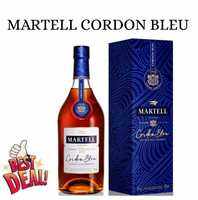
Martell Cordon Bleu
If one product represents Martell internationally, it is Martell Cordon Bleu.
Created in 1912 by Édouard Martell, the great-grandson of Jean Martell, it quickly became one of the House’s signature products.1
It was officially launched at the Hôtel de Paris in Monaco in 1912.1
Cordon Bleu is renowned for its rich fruit and spice character. Martell identifies tasting notes including:
- Candied plum
- Apple
- Orchard fruit
- Spices
- Rich fruit
- A long finish
According to Pernod Ricard, the blend contains more than 100 eaux-de-vie.2
Its historical associations are equally notable. It was served on the maiden voyage of the Queen Mary in 1936 and on the first Concorde flight in 1977.1
Cordon Bleu thus transcended its status as a Cognac to become a symbol of international luxury and celebration.
Main Cognac range
While the exact portfolio varies by market, major Martell expressions include:
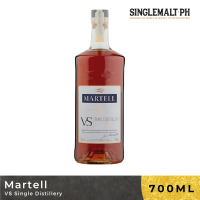
Martell VS
VS = Very Special
This expression serves as an accessible entry point to the Martell range and is designed for both neat drinking and mixed drinks or cocktails.
The bottle is strongly associated with Martell’s contemporary electric-blue visual identity.1
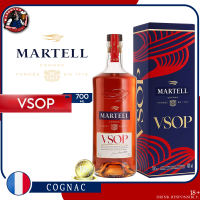
Martell VSOP
VSOP = Very Superior Old Pale
A step above VS, this expression generally offers more developed fruit, spice, oak, and depth.
Martell uses a distinctive red colour for its VSOP presentation.1
Martell Noblige
Noblige occupies a premium position within the range and features a distinctive elongated bottle.
Its name references the French expression noblesse oblige, traditionally associated with the responsibilities accompanying noble status.
Martell XO
XO = Extra Old
XO expressions sit in the premium to ultra-premium segment of the conventional Cognac hierarchy.
Martell’s XO is characterised by richer fruit, spice, dried-fruit, and woody notes. Pernod Ricard lists aromas including fig, walnut, and sandalwood.4
Martell Cordon Bleu
The historic flagship and arguably the most internationally recognisable Martell expression.
L’Or de Jean Martell
One of the House’s luxury prestige Cognacs.
Pernod Ricard describes L’Or de Jean Martell as a blend of more than 400 rare eaux-de-vie, featuring notes of citrus, fruit, gingerbread, and precious wood.2
Age classifications: VS, VSOP and XO
These designations are not merely marketing terms; they relate to the age category of the youngest eau-de-vie in the blend, according to Cognac’s regulatory classification system.
| Classification | General meaning |
|---|---|
| VS | Youngest eau-de-vie aged at least 2 years |
| VSOP | Youngest eau-de-vie aged at least 4 years |
| XO | Youngest eau-de-vie aged at least 10 years |
Crucially, these ages refer to the youngest component, not the average age of the contents. A premium Cognac may therefore contain eaux-de-vie considerably older than the minimum requirement.
Visual identity and symbolism
Martell possesses one of the most recognisable visual identities in the Cognac category.
The swift
The swift is Martell’s signature animal emblem.
It represents:
- Freedom
- Speed
- International travel
- Audacity
- Crossing borders
The House traces the symbol back to the Martell family coat of arms and historic shipments.1
Three golden hammers
The Martell family coat of arms features three gold hammers alongside a swift.
This emblem has appeared on Martell shipments since the early history of the House.1
Blue
Blue is intrinsically linked to Martell.
According to the House, the colour carries two historical associations: Jean Martell’s early business as an indigo trader, and the blue of the ocean, reflecting the family’s seafaring origins.1
Thus, the famous blue of Cordon Bleu and other Martell packaging is more than a purely aesthetic choice.
Martell and luxury culture
Martell has historically positioned Cognac within the realm of French art de vivre.
This concept encompasses:
- Gastronomy
- Fine dining
- Craftsmanship
- Hospitality
- Fashion
- Travel
- Celebration
- Sophisticated social occasions
The House explicitly cites gastronomy, tasting, and craftsmanship as fundamental pillars of its identity.3
Consequently, Martell’s advertising promotes an idea of sophisticated living rather than solely focusing on the liquid itself.
Association with historic occasions
Throughout its history, Martell has aligned itself with prominent cultural and historical events.
Examples cited by the House include:
- The coronation of King George V
- The maiden voyage of the Queen Mary
- The wedding banquet of Grace Kelly and Prince Rainier of Monaco
- The first Concorde flight
- Appearances in popular culture, including Apocalypse Now1
These associations helped transform Martell from a French Cognac producer into a recognisable global luxury brand.
Ownership: Pernod Ricard
Martell is no longer an independent family-owned Cognac house.
It is part of Pernod Ricard, the French multinational spirits and wine group.
Pernod Ricard acquired Martell in 2001.2
The group owns a vast portfolio of international beverage brands, making Martell part of a larger global spirits organisation.
However, the brand continues to operate under the identity of Maison Martell, emphasising its historic Cognac heritage.
Relationship with the Cognac appellation
An important distinction exists between the brand and the category:
Martell is a brand/house; Cognac is the protected geographical and product category.
In other words:
All Martell Cognac is Cognac, but not all Cognac is Martell.
Martell’s production is centred in Cognac, France, in the Charente region near the Atlantic coast.1
The terroir is therefore fundamental to the brand rather than merely a marketing narrative.
Sustainability initiatives
As a modern Cognac house, Martell focuses on the environmental future of grape growing.
Pernod Ricard reports that Martell’s vineyards and wine-growing partners have engaged in sustainable viticulture initiatives, with the House receiving HVE and VDC certification in 2016.2
Sustainability efforts encompass:
- Protecting biodiversity
- Improving vineyard practices
- Adapting viticulture to climate change
- Supporting winegrowers
- Preserving Cognac’s terroir for future generations
This focus is increasingly vital as Cognac depends fundamentally on agricultural production.
Brand positioning
From a marketing perspective, Martell occupies the premium-to-luxury spirits segment.
Its brand proposition can be summarised as:
Three centuries of French Cognac craftsmanship combined with elegance, audacity and international sophistication.
The brand’s competitive advantage extends beyond age, combining several key assets:
1. Heritage
More than three centuries of history.
2. Authenticity
Production is based entirely in Cognac, France.
3. Terroir
A strong association with Borderies.
4. Craftsmanship
Expertise in distillation, ageing, and blending.
5. Iconic products
Particularly Cordon Bleu.
6. Visual recognition
The colour blue, the swift emblem, and distinctive bottle designs.
7. International reputation
Global exports spanning centuries.
Brand personality
If Martell were personified, its personality would likely be described as:
Elegant — polished rather than flashy
French — deeply connected to Cognac and art de vivre
Audacious — willing to challenge tradition
Sophisticated — aimed at discerning consumers
Generous — strongly connected with hospitality and sharing
Confident — possessing heritage without needing to constantly prove it
International — historically comfortable crossing cultures and borders
Notably, Martell does not present heritage as purely conservative.
Its communications emphasise “audacity”, suggesting that tradition and innovation can coexist.3
Comparison with other Cognac houses
Martell belongs to the traditional group of major Cognac houses alongside brands such as Hennessy, Rémy Martin and Courvoisier.
Broadly speaking:
| House | Common brand association |
|---|---|
| Martell | Elegance, fruit, floral character, Borderies, audacity |
| Hennessy | Scale, prestige, global cultural influence |
| Rémy Martin | Fine Champagne, Grande/Petite Champagne, luxury |
| Courvoisier | French luxury, historical/Imperial associations |
These are general brand-positioning observations rather than strict statements regarding every Cognac produced.
Martell’s most distinctive territory is arguably its combination of Borderies expertise, an elegant fruit-driven style, and over 300 years of history.
Significance of Cordon Bleu
Cordon Bleu warrants special attention as it effectively became a brand within a brand.
Prior to Cordon Bleu, Martell was already a historic Cognac house. However, the 1912 expression provided the company with an exceptionally recognisable luxury icon.
Its significance stems from four factors:
Age: Created more than a century ago
Recognition: One of the world’s famous Cognac names
Taste: Rich fruit and spice character
Symbolism: Strongly associated with luxury, travel, and celebration
Martell itself refers to it as an international emblem of excellence.1
Contemporary operations
Today, Martell continues to operate as a global luxury Cognac brand while maintaining its base in Cognac.
Its contemporary strategy combines:
- Traditional Cognac craftsmanship
- Luxury positioning
- Modern bottle design
- Premium hospitality experiences
- International marketing
- Cultural collaborations
- Sustainability
- New Cognac expressions
The House has thus evolved from an 18th-century trading business into a global luxury spirits brand without abandoning its original Cognac identity.
Timeline
1715 — Jean Martell establishes Maison Martell in Cognac.1
1753 — Jean Martell dies; Rachel Martell takes over the House.1
1781 — Martell exports to India.1
1783 — Martell exports to North America.1
19th century — International distribution expands across multiple continents.1
1912 — Martell Cordon Bleu is created by Édouard Martell.1
1936 — Cordon Bleu is served on the maiden voyage of the Queen Mary.1
1977 — Martell Cordon Bleu is associated with the first Concorde flight.1
2001 — Martell becomes part of Pernod Ricard.2
2016 — Martell’s sustainable viticulture initiatives receive HVE and VDC certification.2
Today — Martell continues as one of the world’s major prestige Cognac houses.
Core identity
Reduced to its essential elements, Martell is defined by:
1715
Its heritage and legitimacy.
Cognac
Its geographic and cultural identity.
Borderies
Its distinctive terroir connection.
Swift
Its symbol of freedom and audacity.
Blue
Its instantly recognisable visual code.
Cordon Bleu
Its great historic icon.
Art de vivre
Its lifestyle philosophy.
Elegance
Its desired sensory and emotional character.
Pernod Ricard
Its modern corporate ownership.